
Last Updated on November 21, 2026
Check coolant level and condition, trace the exact leak, rule out trapped air, verify thermostat operation, inspect radiator restrictions, test cooling fans, examine belts and pulleys, and confirm the pump’s mechanical or electrical operation.
Replace the pump when testing confirms a failed seal, bearing, impeller, motor, or internal electronics—not simply because the engine overheats.
What Does a Car Water Pump Actually Do?
The water pump circulates coolant through the engine’s cooling passages, helping carry heat toward the radiator.
Without adequate circulation, heat can build up inside the engine even when the radiator and thermostat are working properly.
Many vehicles use a mechanical pump driven by a serpentine belt, timing belt, or timing chain. Others use an electric pump controlled by the vehicle’s computer.
Some vehicles also have auxiliary electric coolant pumps for separate cooling circuits. That matters because a pump-related trouble code doesn’t always identify the main engine water pump.
What Are the Signs You Might Need Water Pump Replacement?
A failing water pump may produce one or more of these symptoms:
- Engine overheating: Coolant circulation may be inadequate.
- Coolant leakage: Fluid may escape from the pump seal, gasket, or housing.
- Whining or grinding: A damaged mechanical-pump bearing may create noise.
- Pulley movement: Excessive wobble can indicate shaft or bearing trouble.
- Weak cabin heat: Poor circulation or low coolant may affect the heater.
- Steam or coolant odor: A leak may worsen as the engine warms.
- Cooling-system warning: Certain electric pumps may trigger fault codes.
None of these signs confirms water pump failure by itself. The most useful evidence comes from locating the leak, identifying abnormal mechanical operation, or testing coolant circulation.
8 Things to Check Before Water Pump Replacement
Start with what you can observe safely while the engine is cold. More involved checks, particularly pressure testing and electric-pump diagnosis, are best handled by a qualified technician.
1 Check the Coolant Level and Condition
Low coolant can make an otherwise healthy cooling system struggle to remove engine heat.
When the engine is completely cold, check the coolant reservoir against its markings and follow the owner’s manual for any additional checks.
If the level is low, don’t assume the water pump is responsible. Coolant can escape through hoses, radiator connections, a pressure cap, or internal engine leaks.
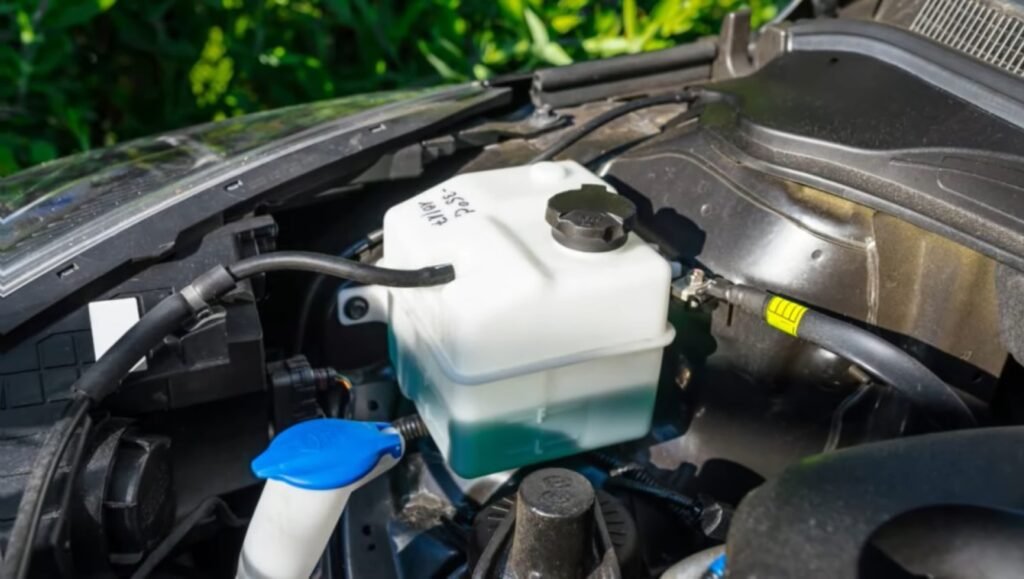
Also look at coolant condition. Heavy rust, sludge, or contamination may contribute to corrosion and premature water pump seal or impeller damage.
Use the coolant specification approved for your vehicle. Color alone isn’t a reliable way to identify compatibility.
Next step: Investigate coolant loss and contamination before replacing the pump. Simply topping off the reservoir isn’t a lasting repair.
2 Find the Actual Source of the Coolant Leak
Coolant dripping near a water pump doesn’t always mean it’s leaking from the pump.
Fluid from an upper radiator hose, thermostat housing, or nearby fitting can travel along the engine and collect beneath the pump.
A mechanical water pump may leak through its mounting gasket or internal shaft seal. Many designs have a small opening called a weep hole, which allows coolant to escape when the internal seal leaks.
Persistent dripping from that opening is strong evidence of a failing pump seal.
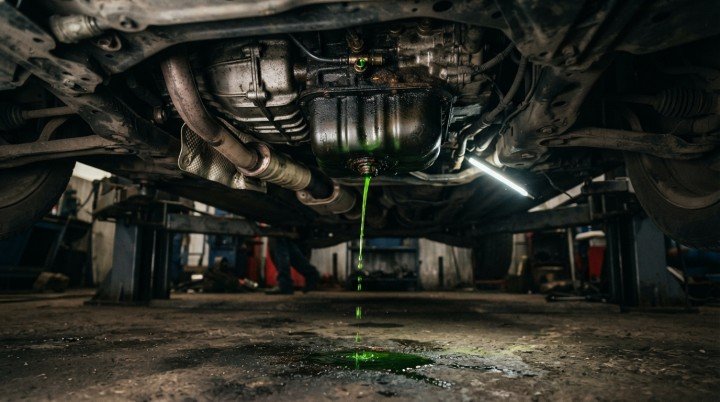
However, slight seepage can occur briefly during the break-in period of some newly installed mechanical pumps. That isn’t the same as continuous leakage from a pump that’s been operating normally.
When the source isn’t obvious, a technician can perform a cooling-system pressure test or use UV dye to trace the leak.
Next step: Confirm that coolant originates from the pump’s seal, housing, or mounting surface before approving water pump replacement.
3 Rule Out Trapped Air in the Cooling System
Did the overheating begin after a coolant change or another cooling-system repair?
Air trapped inside the engine, radiator, or heater circuit can interfere with circulation and create localized hot spots.
Symptoms may include a heater that alternates between hot and cold, fluctuating temperature readings, or overheating shortly after a coolant refill.
Some vehicles require vacuum-filling equipment or a specific bleeding procedure. Electric-pump systems may have a dedicated computer-controlled bleeding routine.
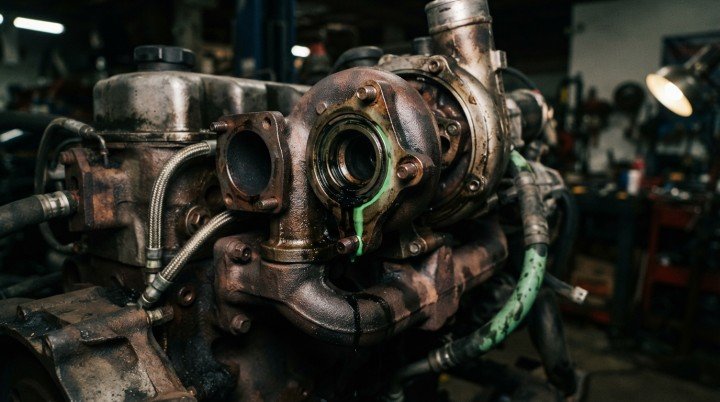
A full-looking reservoir doesn’t guarantee that every air pocket has been removed.
Next step: Have the system filled and bled according to manufacturer instructions, then verify temperature stability before suspecting the pump.
4 Verify the Thermostat Is Opening Correctly
The thermostat regulates coolant flow through the radiator. When it remains closed, overheating can develop even though the water pump is functioning.
A thermostat stuck open creates a different problem: the engine may take too long to reach normal operating temperature, sometimes triggering code P0128.
A scan tool can help monitor coolant temperature during warm-up. A technician may also compare temperature changes across the cooling system to investigate thermostat behavior.
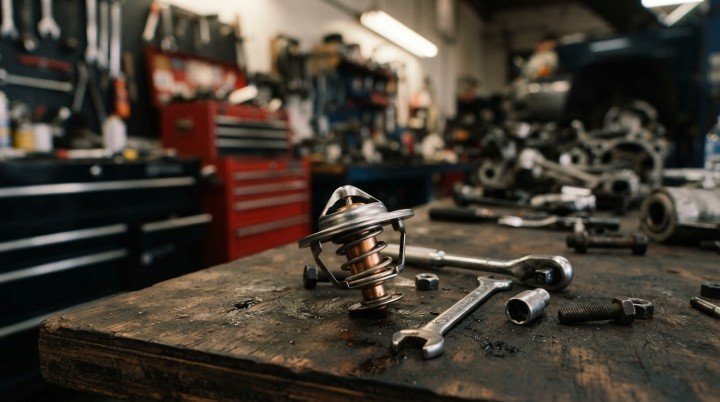
Don’t assume that a cool radiator hose proves a bad pump or stuck thermostat. Low coolant and trapped air can also affect hose temperature.
Next step: Diagnose thermostat opening and closing separately. A water pump replacement won’t correct a thermostat that cannot regulate flow.
5 Inspect the Radiator and Coolant-Flow Restrictions
A water pump can circulate coolant properly while the radiator struggles to release heat.
Leaves, dirt, and road debris may block airflow through the radiator or condenser. Inside the radiator, corrosion and deposits can restrict coolant passages.
A damaged or collapsed hose can also interfere with circulation.
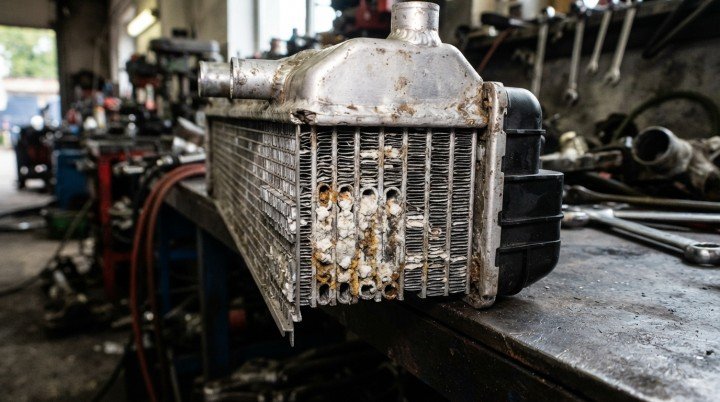
Overheating during sustained highway driving or uphill acceleration may point toward inadequate cooling capacity, although low coolant and other faults can produce similar symptoms.
A technician can investigate radiator airflow, pressure, temperature distribution, and coolant-flow restrictions using suitable equipment.
Next step: Correct confirmed radiator or hose restrictions before replacing a pump that passes its own tests.
6 Check Cooling Fan Operation
If the temperature rises in traffic but improves after the vehicle starts moving, the cooling fans deserve attention.
At low speeds, the radiator relies heavily on fans to move air across its fins.
Electric fan motors, relays, wiring, control modules, or temperature-related commands can fail. Some older vehicles use mechanical fan clutches that can lose effectiveness.
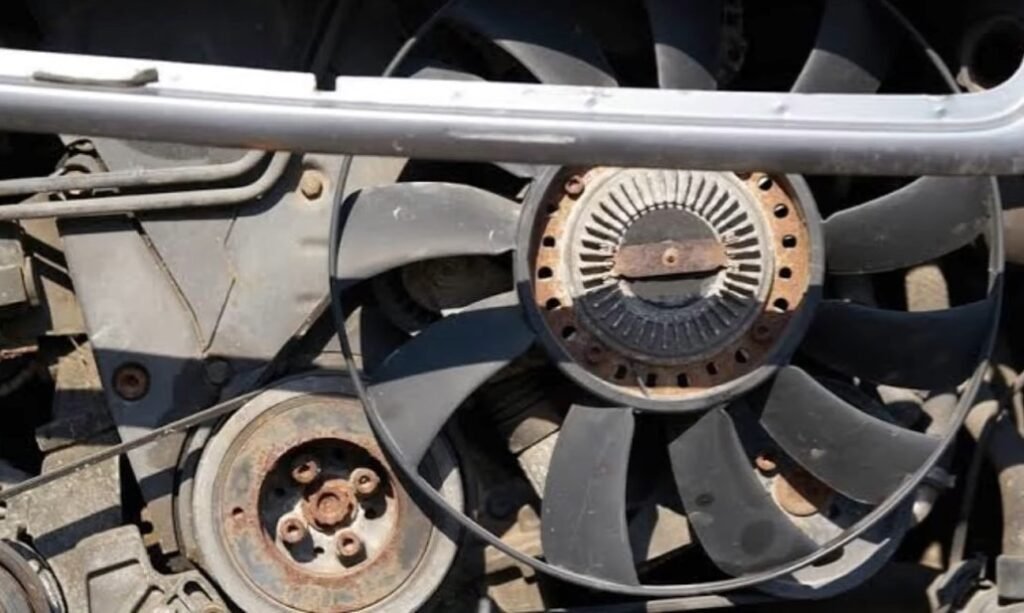
Fan operation varies between vehicles. A fan that isn’t running immediately after startup may be behaving normally.
A technician can compare the requested fan operation with the actual response and diagnose faults in the appropriate circuit.
Next step: Repair a failed fan or control component rather than replacing the water pump without evidence.
Safety: Electric radiator fans can start unexpectedly, even after the engine is switched off. Keep hands and tools clear.
7 Inspect the Belt, Tensioner, and Pump Pulley
On a mechanically driven pump, the drive system matters almost as much as the pump itself.
A worn serpentine belt, damaged tensioner, or misaligned pulley can interfere with pump operation and create noise near the front of the engine.
A failing water pump bearing may produce grinding or rumbling, but idler pulleys and belt tensioners can sound similar.
That’s why the exact source of the noise needs to be identified.
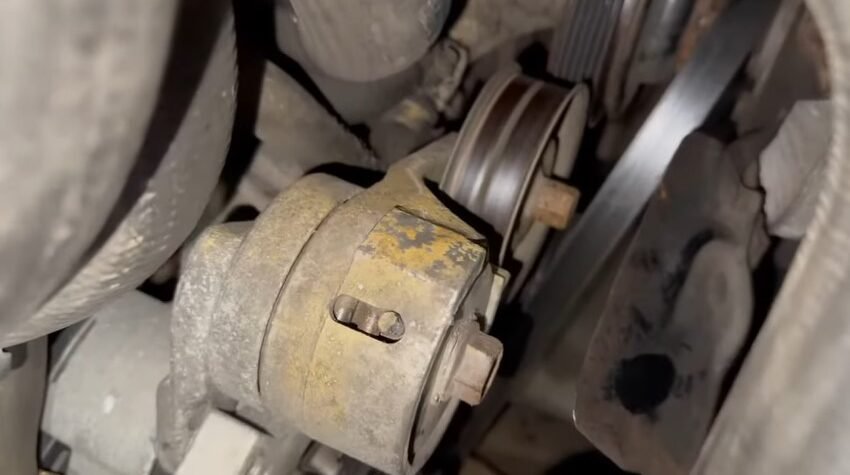
Some pumps are driven by the timing belt or timing chain and don’t have an accessible external pulley. Their inspection requires different procedures.
Any bearing or drive problem that could seize or damage the belt requires prompt attention.
Next step: Repair belt-drive faults when the pump is healthy. Replace the pump if its own bearing or shaft has failed.
8 Confirm Pump Circulation or Electric Motor Failure
A water pump can fail internally without dripping coolant onto the ground.
Its impeller may corrode, become damaged, or lose its connection to the shaft. That can reduce coolant circulation even when the exterior looks normal.
Internal pumps on certain engines may also develop leaks that contaminate engine oil.
Electric pumps can fail because of motor damage, internal electronics, or problems with their power supply or control circuits.

Professional diagnosis may involve coolant temperature data, pump commands, electrical measurements, and manufacturer-specific circulation tests.
Seeing fluid move in the reservoir isn’t a universal pass/fail test. Cooling-system plumbing and pump operating modes vary.
Next step: Replace the pump when its actual mechanical operation, circulation, or internal electronics fail the specified tests.
What Does Your Water Pump Symptom Suggest?
The way the problem appears can point you toward the next useful test.
| What You Notice | What to Investigate |
|---|---|
| Coolant dripping near the pump | Pump seal, mounting gasket, or nearby hose |
| Grinding or whining that changes with RPM | Pump bearing, tensioner, or idler pulley |
| Overheating mainly at idle | Cooling fan, coolant level, or airflow |
| Overheating under heavy load | Radiator, coolant circulation, or other cooling faults |
| Heater turns cold while engine runs hot | Low coolant, trapped air, or poor circulation |
| Temperature rises and falls unexpectedly | Air pockets, thermostat, sensor, or circulation |
| Electric coolant pump trouble code | Pump motor, wiring, controls, or auxiliary pump |
This table helps narrow the possibilities; it doesn’t replace testing.
Mechanical vs Electric Water Pump: What’s Different?
Not every water pump operates the same way, and that changes the diagnosis.
Mechanical Water Pump
- Driven by an engine belt or timing mechanism.
- May develop bearing, shaft-seal, or impeller failure.
- Belt alignment, tension, and pulley condition matter.
- Usually circulates coolant while being driven by the engine.
Electric Water Pump
- Uses an electrically powered motor.
- Can develop motor, electronic, wiring, or control faults.
- Requires vehicle-specific electrical and diagnostic tests.
- May run on demand or continue operating after shutdown.
Some engines use both a primary pump and auxiliary electric pumps. Always identify which pump serves the affected cooling circuit before replacing a part.
How to Confirm a Bad Water Pump Before Replacing It
Three types of evidence make a water pump replacement recommendation more convincing.
1. Confirm the Leak Comes From the Pump
A pressure test can help reveal leaks from the shaft seal, mounting gasket, or pump housing. Coolant merely collecting beneath the pump isn’t sufficient proof.
Some leaks occur only while the engine is hot or the system is pressurized, so the inspection should match the conditions under which the complaint occurs.
2. Confirm Mechanical Bearing or Shaft Failure
A technician can isolate noises and inspect accessible bearings or pulleys with the engine off, following the manufacturer’s service procedure.
Grinding, excessive pulley play, or a seized pump can justify replacement. Don’t touch moving belts or pulleys to locate a noise.
3. Confirm Circulation or Electric Pump Failure
If overheating occurs without external leakage, coolant-flow testing and temperature data may help reveal impeller failure or inadequate pumping.
For electric pumps, testing should distinguish a defective pump motor from a wiring, supply, communication, or control problem.
Water pump replacement makes sense when the evidence identifies the pump itself as the failed component.
What Do Water Pump and Cooling-System Codes Mean?
Cooling-system trouble codes provide useful clues, but they don’t all indicate a failed water pump.
| Code | General Meaning |
|---|---|
| P0217 | Engine coolant overtemperature condition |
| P0128 | Coolant below expected thermostat regulating temperature |
| P0115–P0119 | Engine coolant temperature sensor circuit faults |
| P2600 | Coolant pump A control circuit/open |
| P2601 | Coolant pump A control range/performance |
| P2602 | Coolant pump A control circuit low |
| P2603 | Coolant pump A control circuit high |
Exact definitions depend on the vehicle. The P2600 family may relate to an auxiliary coolant pump rather than the primary engine pump. A circuit fault can also originate in wiring or controls.
Water Pump vs Thermostat vs Radiator: Which Is Bad?
These components share the same cooling system, but they perform different jobs.
| Component | Possible Failure | Useful Evidence |
|---|---|---|
| Water pump | Leaking seal, bearing, impeller, or motor | Leak tracing and pump-operation tests |
| Thermostat | Stuck open or closed | Warm-up and opening behavior |
| Radiator | Restricted coolant flow or airflow | Flow and cooling-capacity tests |
| Cooling fan | Insufficient airflow at low speed | Fan commands and actual operation |
| ECT sensor | Incorrect temperature information | Live data and circuit testing |
These distinctions also matter when comparing overheating symptoms with other problems using our car troubleshooting guides.
When Does Water Pump Replacement Actually Make Sense?
Replacement is generally justified when a pump has a confirmed non-serviceable failure.
That includes persistent shaft-seal leakage, serious housing damage, a failed bearing, loose or broken impeller, seized shaft, or an electric motor or internal control failure verified through appropriate testing.
For certain new mechanical pumps, a small amount of brief initial weep-hole seepage may be normal. Ongoing dripping after the seal’s break-in period is not.
If the problem comes from a hose, fan, thermostat, or external wiring fault, replacing the water pump may not help.
Should You Replace the Water Pump With the Timing Belt?
If your water pump is timing-belt-driven, replacing it during scheduled timing belt service can make financial sense.
Much of the labor needed to reach the pump may already be included in the timing belt job. Replacing an aging pump at the same time may prevent paying for similar disassembly again.
Depending on the engine and manufacturer’s recommendations, the repair may include the timing belt, tensioner, idler pulleys, water pump, seals, and coolant.
A leaking pump can also contaminate the timing belt and require additional attention.
However, not every water pump is timing-belt-driven. An accessible external pump doesn’t necessarily need replacement just because another belt is being serviced.
Follow the manufacturer’s maintenance interval and consider pump age, access, condition, and parts warranty.
Why Do Some Water Pumps Fail Again After Replacement?
If a replacement pump fails prematurely, the cause may be somewhere else in the system.
Contaminated or incompatible coolant can damage internal seals and cause corrosion. Incorrect belt tension or pulley alignment can put excessive load on mechanical pump bearings.
Improper gasket installation, excess sealant, or incorrect bleeding may also create problems after repair.
When changing a water pump, the shop should inspect coolant condition and related drive components rather than installing a new part into a system with unresolved faults.
How Much Does Water Pump Replacement Cost in 2026?
Water pump replacement cost depends heavily on the pump location, drive system, and vehicle design.
RepairPal’s national US estimate updated September 3, 2026 places the average repair between $891 and $1,135.
| Cost Component | Estimated US Price |
|---|---|
| Parts | $525–$598 |
| Labor | $366–$536 |
| Total | $891–$1,135 |
These estimates exclude taxes, location differences, and related repairs. Some accessible mechanical pumps cost considerably less, while buried timing-driven or electric assemblies can cost more.
The estimate should specify coolant, new seals, any necessary belt or tensioner work, proper bleeding, and warranty coverage.
Before approving the repair, check whether a manufacturer warranty extension, service campaign, or recall applies to your vehicle.
Can You Drive With a Bad Water Pump?
A failing water pump can reduce coolant circulation and cause the engine to overheat rapidly. A serious leak may also drain the system without much warning.
Severe overheating can damage the cylinder head, head gasket, or internal engine components. A failing mechanical pump bearing may also affect its belt drive.
Stop Driving If You Notice:
- An overheating warning or temperature gauge in the danger zone
- Steam from the engine compartment
- Significant coolant loss
- Severe grinding noise from the pump or belt area
- Loss of coolant circulation accompanied by rising engine temperature
Pull over safely, switch off the engine, and arrange professional assistance. There is no guaranteed safe driving distance with a failing water pump.
Never open a hot radiator cap or pressurized coolant reservoir. Hot coolant and steam can cause serious burns.
New Water Pump but the Engine Still Overheating?
If the vehicle still runs hot after water pump replacement, don’t assume the new pump is defective.
Check for trapped air, incorrect coolant level, or an incomplete bleeding procedure.
A stuck thermostat, blocked radiator, cooling fan problem, defective pressure cap, or internal engine leak may also remain unresolved.
For electric pumps, verify that any manufacturer-required bleeding and control procedures were completed.
The repair should be confirmed by checking coolant temperature, leak-free operation, and normal cooling performance under the conditions that previously caused overheating.
Questions to Ask Before Approving Water Pump Replacement
- Is the pump itself leaking, or is coolant coming from another component?
- Was the cooling system pressure-tested?
- Is there confirmed bearing, impeller, circulation, or electric motor failure?
- Were the thermostat, radiator, and cooling fan checked?
- Is this pump driven by a belt, timing chain, or electric motor?
- Does the quote include coolant, seals, bleeding, related belts, and warranty?
A clear diagnosis should explain both why the pump has failed and how the proposed repair will solve the original complaint.
Common Water Pump Replacement Mistakes to Avoid
- Replacing the pump simply because the engine overheats.
- Assuming coolant near the pump comes from its seal.
- Ignoring coolant contamination or corrosion.
- Failing to bleed trapped air after installation.
- Confusing tensioner or idler noise with pump bearing noise.
- Using coolant that doesn’t meet manufacturer specifications.
- Applying sealant when the installation procedure doesn’t require it.
- Reusing seals or damaged drive components.
- Ignoring electric pump testing or bleeding requirements.
- Continuing to drive with serious overheating symptoms.
Frequently Asked Questions About Water Pump Replacement
1. How do I know if my water pump really needs replacing?
Confirm the source of any coolant leak and test the pump’s mechanical or electrical operation. A failed shaft seal, bearing, impeller, or electric motor is stronger evidence than overheating alone.
2. Can a bad water pump cause overheating without leaking?
Yes. A damaged impeller, seized bearing, or failed electric pump may reduce circulation without leaving an external coolant puddle.
3. Is coolant leaking from the weep hole always a bad sign?
Persistent leakage from an established pump generally indicates seal failure. Some newly installed mechanical pumps may show slight seepage during the initial seal break-in period.
4. Should I replace the thermostat with the water pump?
Not automatically. It may be worth considering when access and labor overlap or when the thermostat has its own problem. Otherwise, a working thermostat doesn’t necessarily require replacement.
5. How long does a car water pump usually last?
Many last beyond 100,000 miles, but there’s no universal lifespan. Pump design, coolant maintenance, belt condition, and operating conditions affect durability.
6. Should I replace the water pump when changing the timing belt?
Often, yes, when the pump is timing-belt-driven and shared labor makes replacement economical. Follow the vehicle manufacturer’s recommendations and evaluate the pump’s age and condition.
Final Thoughts: Confirm the Pump Failure Before Buying Parts
Water pump replacement is sometimes necessary, but coolant leaks and overheating can originate in several parts of the cooling system.
Before approving the repair, check coolant level, leak location, trapped air, thermostat operation, radiator restrictions, cooling fans, belts, and actual pump performance.
When testing confirms a failed seal, bearing, impeller, or electric motor, replacing the pump makes sense. Otherwise, correcting the real cooling-system fault may save you from paying for a repair that doesn’t solve the problem.

Kevin Nicholas is an automotive mechanic and editor of The Effective Guide. He writes about warning lights, car problems, and diagnostic tools, helping drivers understand what to check before replacing a part.