
Last Updated on November 21, 2026
QUICK ANSWERBefore TPMS sensor replacement, check every tire’s cold inflation pressure, inspect for slow leaks, consider temperature changes, identify whether your vehicle uses direct or indirect TPMS, complete the correct reset or relearn, and test sensor communication and battery condition.
A confirmed dead battery, damaged sensor, or failed transmitter may require replacement. Low pressure or an incomplete relearn usually does not.
How Does a TPMS Sensor Work?
TPMS stands for Tire Pressure Monitoring System. It warns drivers when tire pressure becomes dangerously low or when the monitoring system develops certain faults.
There are two main designs.
Direct TPMS uses electronic pressure sensors mounted inside individual wheels, usually attached to the valve stem. These sensors transmit information to the vehicle.
Indirect TPMS uses wheel-speed and related information to estimate changes in tire pressure. It doesn’t use individual in-wheel pressure sensors.
Direct TPMS sensors commonly contain sealed batteries. Their radio frequency and communication protocol must match the vehicle.
Some vehicles also monitor a spare tire, although not every TPMS system does.
What Are the Signs You Might Need TPMS Sensor Replacement?
Possible signs of a tire pressure sensor problem include:
- The TPMS warning light flashes and then remains illuminated.
- One tire’s pressure reading disappears from the dashboard.
- The vehicle reports a tire pressure sensor fault.
- The warning appears after installing new tires or wheels.
- One sensor repeatedly loses communication.
- The system doesn’t recognize a recently installed sensor.
- An older sensor stops transmitting because its battery is exhausted.
However, a warning light that stays on steadily may simply mean a tire is underinflated.
The warning-light behavior is one of the first clues to check.
Steady vs Flashing TPMS Light: What’s the Difference?
Many US vehicles use the same dashboard symbol for low tire pressure and a TPMS malfunction, but the light behaves differently.
Steady TPMS Light
Usually indicates that one or more tires are significantly underinflated.
Check actual tire pressure first.
Flashes, Then Stays On
Often indicates a TPMS malfunction. On many US vehicles, the symbol flashes for about 60–90 seconds before staying illuminated.
Check system communication and sensor operation.
Some vehicles use separate warnings or additional dashboard messages. Always check your owner’s manual for the exact meaning.
6 Things to Check Before TPMS Sensor Replacement
1. Check the Pressure in Every Tire
Start with a reliable tire pressure gauge, not the dashboard display.
Check the tires when they’re cold, preferably before driving or after the vehicle has been parked for at least three hours.
Compare each reading with the recommended cold tire pressure on the driver’s door-jamb placard or in the owner’s manual.
Do not use the maximum pressure printed on the tire sidewall as your normal inflation target. That number is not necessarily the correct pressure for your vehicle.
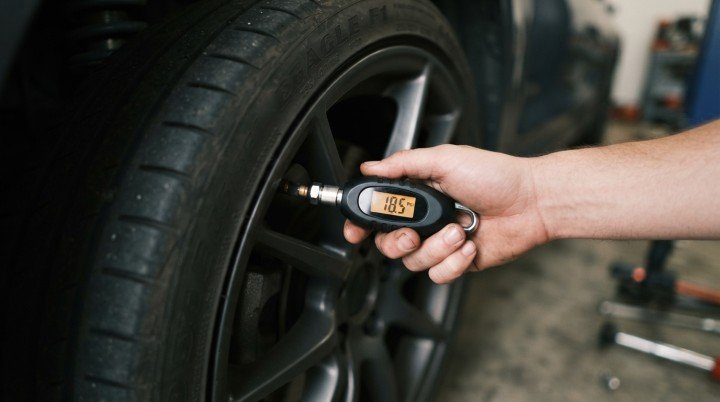
Check all four road tires and any monitored spare tire.
A tire can be several PSI low without looking noticeably flat. That’s why visual inspection alone isn’t reliable.
If one or more tires are low, inflate them correctly and follow the vehicle’s instructions for allowing the warning to clear.
Repair decision: If the light goes away after correcting tire pressure, there was no reason to replace the sensor.
2. Look for Slow Leaks and Valve-Stem Problems
If you keep adding air to the same tire, investigate where that pressure is escaping.
A small nail or screw can create a slow leak that takes several days to trigger the warning again.
Air can also escape through a damaged valve core, cracked valve stem, corroded valve hardware, or poor sealing between the tire bead and wheel.
Direct TPMS sensors often attach to the valve stem. Some designs have replaceable valve cores, seals, nuts, or compatible service kits.
That means a leaking valve stem doesn’t always require replacing the electronic sensor.

However, a cracked sensor housing, severe corrosion, or damaged integrated valve assembly may require more extensive replacement.
A tire shop can inspect the leak and determine whether the tire, valve components, or complete sensor assembly needs attention.
Repair decision: Fix confirmed air leaks before considering TPMS sensor replacement.
3. Consider Cold Weather and Temperature Changes
Does the warning appear during the first cold morning of the season?
Tire pressure generally drops as temperature falls. A commonly used estimate is approximately 1 PSI for every 10°F decrease, although the exact change depends on starting pressure and conditions.
For example, a tire inflated to 35 PSI during warmer weather might read several PSI lower after a large overnight temperature drop.
This can trigger a low-pressure warning even when there’s no puncture or failed sensor.
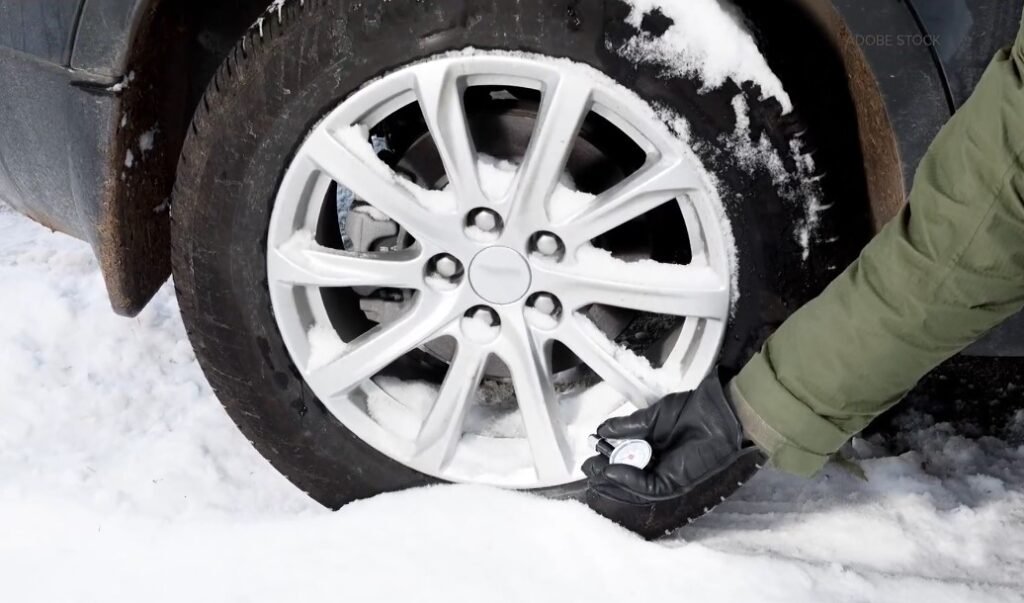
Pressure also rises as tires warm during driving. Don’t release air from hot tires simply to match the cold-pressure specification.
Instead, measure and adjust the tires when cold.
If pressure repeatedly falls in only one tire, investigate a slow leak rather than assuming temperature is responsible.
Repair decision: Correct seasonal pressure changes first. Temperature-related warnings don’t justify replacing a working sensor.
4. Determine Whether Your Vehicle Uses Direct or Indirect TPMS
This step can prevent an unnecessary purchase before diagnosis even begins.
Not every TPMS-equipped vehicle has individual sensors inside its wheels.
| Direct TPMS | Indirect TPMS |
|---|---|
| Uses electronic pressure sensors inside wheels | Uses wheel-speed and related information |
| Usually has sensor batteries | No individual in-wheel TPMS sensor batteries |
| May display individual tire pressures | Often displays a general warning |
| Can require sensor replacement | Usually requires pressure correction, calibration, or system diagnosis |
| May need sensor ID registration | May need initialization after inflation or tire service |
If your car uses indirect TPMS, a wheel-speed or ABS-related problem may interfere with tire pressure monitoring.
In that situation, replacing a nonexistent in-wheel pressure sensor obviously isn’t the answer.
Consult your owner’s manual or manufacturer service information to identify the system.
Repair decision: Confirm the TPMS design before ordering parts.
5. Complete the Correct TPMS Reset or Relearn
A warning that remains after tire service doesn’t always mean the sensor has failed.
Some vehicles need a TPMS reset or calibration after tire pressure adjustments. Others require sensor positions or IDs to be relearned following certain wheel changes.
Requirements differ between manufacturers.
Some direct TPMS systems recognize sensors automatically after driving. Others require a specific button sequence, activation tool, or diagnostic scanner.
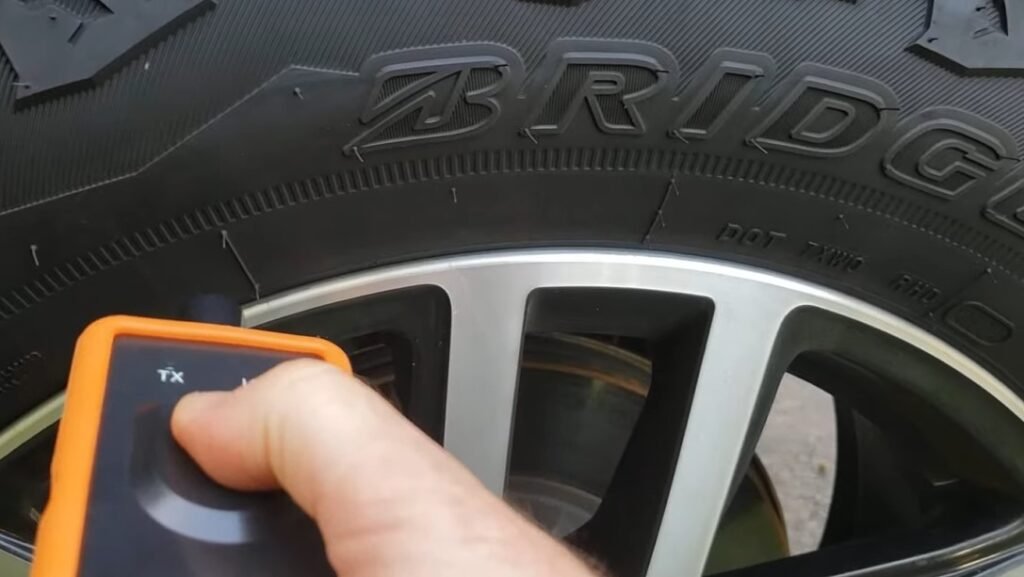
When replacement sensors are programmable, the shop may also need to configure them before the vehicle can recognize them.
These are different procedures. A reset cannot repair dead sensor electronics, and relearning won’t correct a genuine tire leak.
Repair decision: Follow the vehicle-specific procedure before assuming the sensor needs replacement.
6. Test Sensor Battery, Transmission, and Compatibility
If the tires are correctly inflated and the correct relearn doesn’t solve the problem, it’s time to investigate the sensor itself.
A tire shop can use a compatible TPMS activation tool to communicate with individual direct-TPMS sensors.
The tool may display each sensor’s ID, reported pressure, temperature, and battery condition where supported.
Many original sensors last roughly five to ten years, although battery life varies with design, mileage, operating conditions, and transmission frequency.
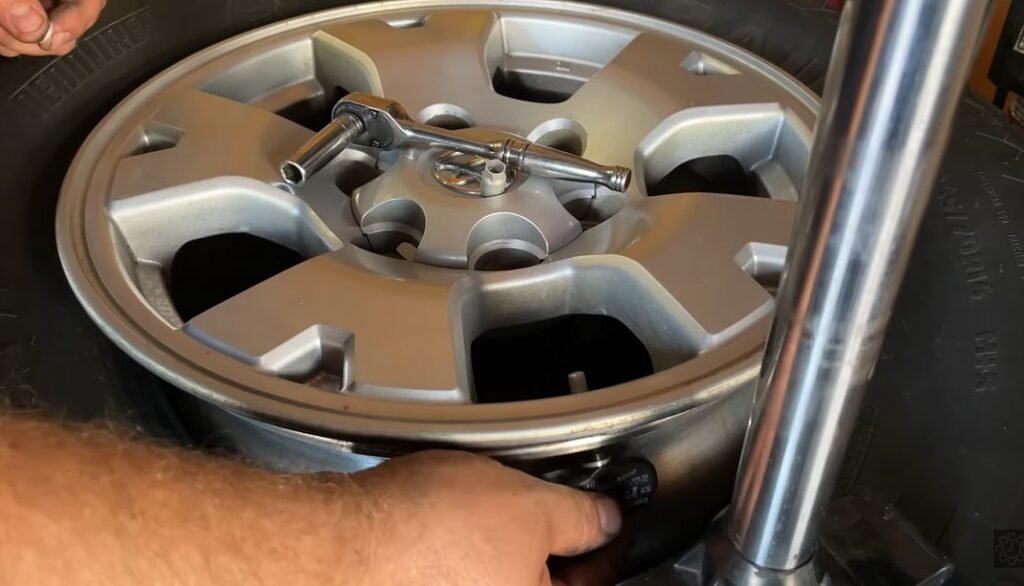
When a sealed internal battery is exhausted, the complete sensor normally requires replacement.
However, a sensor that responds to the handheld tool but isn’t recognized by the vehicle may have a registration, compatibility, or receiver problem.
Replacement sensors must support the correct radio frequency and vehicle communication protocol.
Repair decision: Replace the sensor when testing confirms failed electronics, an exhausted battery, physical damage, or an incompatible sensor that cannot be configured correctly.
How to Confirm a Bad TPMS Sensor Before Replacing It
A proper diagnosis should separate three different possibilities: low tire pressure, a functioning sensor the vehicle doesn’t recognize, and a sensor that no longer works.
01
Verify Tire Pressure
Use a manual gauge and check for slow leaks.
02
Activate the Sensor
Check whether each direct-TPMS sensor reports its ID and pressure.
03
Check Vehicle Recognition
Verify the correct sensor IDs, compatibility, and relearn procedure.
04
Choose the Repair
Fix pressure or configuration problems, or replace confirmed failed hardware.
If a sensor won’t respond, the technician should also verify that the activation tool supports the correct sensor type.
If every sensor responds but the vehicle still shows a malfunction, check registration, receiver operation, and TPMS-related fault codes before purchasing another sensor.
TPMS Reset vs Relearn vs Programming
These terms are sometimes used interchangeably, but they don’t mean the same thing.
| Procedure | What It Does | When It May Be Needed |
|---|---|---|
| Reset / Calibration | Establishes or initializes pressure-monitoring settings | After adjusting pressure or certain tire services |
| Relearn | Allows the vehicle to recognize sensor IDs or wheel positions | After sensor replacement or rotation on applicable vehicles |
| Programming | Configures a programmable replacement sensor | Before installing certain aftermarket sensors |
Some replacement sensors support ID cloning, which copies an existing compatible sensor ID. Even then, the required installation and verification procedures depend on the vehicle.
The important question is whether the hardware is defective or simply hasn’t been configured correctly.
Valve-Stem Repair vs TPMS Sensor Replacement
Not every TPMS-related tire leak requires an electronic sensor.
A leaking valve core or worn sealing washer can sometimes be repaired with suitable service parts.
On compatible sensors, rubber snap-in stems or clamp-in valve hardware may also be separately replaceable.
But if the sensor housing is cracked, its electronics fail, or its sealed battery is exhausted, replacing the complete sensor is usually necessary.
Ask the tire shop whether the problem is with the valve hardware or the electronic sensor itself.
Should You Replace One TPMS Sensor or All Four?
If one sensor has failed and the others are functioning correctly, replacing only that sensor is usually reasonable.
However, if all four original sensors are similar in age and approaching the end of their battery life, replacing them together may prevent repeat tire dismounting and labor charges.
This decision becomes more relevant when you’re already purchasing four new tires.
Ask the shop to evaluate the remaining sensors and compare the cost of replacing one against replacing the complete set.
There’s no need to replace all four simply because one stopped transmitting.
How Much Does TPMS Sensor Replacement Cost in 2026?
TPMS sensor replacement cost depends on the vehicle, sensor design, tire-shop labor, and programming or relearn requirements.
RepairPal’s national US estimate updated September 3, 2026 lists the following ranges:
| Service | Estimated US Cost |
|---|---|
| Replacement parts | $164–$187 |
| Replacement labor | $77–$112 |
| TPMS sensor replacement total | $240–$299 |
| Standalone TPMS relearn | $49–$71 |
These are national estimates, not guaranteed prices for every vehicle or a complete set of four sensors. Taxes, location, and related repairs can change the quote.
Replacement pricing may include tire removal, installation of new valve hardware, balancing, and any required programming or relearn.
Before agreeing to the repair, ask whether the relearn charge is already included. It shouldn’t automatically be added twice.
Also compare OEM and compatible aftermarket sensor options and check the warranty.
New TPMS Sensor but the Warning Light Is Still On?
If the light remains on after installing a new sensor, don’t automatically replace another one.
The new sensor may need programming or registration. It could also use an incompatible frequency or protocol.
Check whether another tire remains underinflated, whether a monitored spare was overlooked, and whether the vehicle has completed the correct relearn.
If sensors transmit normally to a TPMS tool but not to the vehicle, the receiver or related communication system may need diagnosis.
The repair isn’t complete until the shop verifies correct tire pressures, sensor communication, and normal warning-light behavior.
Can You Drive With a Bad TPMS Sensor?
A failed TPMS sensor usually doesn’t prevent the vehicle from moving or stop the brakes from working.
However, the automatic low-pressure warning may be unavailable or unreliable.
Until the system is repaired, check tire pressures manually and inspect the tires regularly.
Don’t Confuse a Sensor Fault With a Tire Safety ProblemIf a tire is visibly flat, damaged, or rapidly losing air, don’t keep driving simply because you believe the TPMS sensor is defective. Have the tire inspected and repaired or replaced as appropriate.
Underinflated tires can overheat, wear abnormally, and increase the risk of tire failure.
Questions to Ask Before Approving TPMS Sensor Replacement
- Were all tire pressures checked with a gauge while cold?
- Does my vehicle use direct or indirect TPMS?
- Which sensor failed the activation test?
- Was the correct reset or relearn procedure completed?
- Could the problem be repaired with valve service hardware?
- Does the estimate include tire service, programming, relearn, and warranty?
Common TPMS Sensor Replacement Mistakes to Avoid
- Replacing sensors when a tire is genuinely underinflated.
- Ignoring slow tire or valve leaks.
- Using the tire sidewall maximum as the inflation target.
- Assuming every TPMS system uses in-wheel sensors.
- Confusing reset, relearn, and sensor programming.
- Buying a sensor with the wrong frequency or protocol.
- Replacing all four sensors without evaluating them.
- Overlooking replaceable valve hardware.
- Forgetting a monitored spare tire.
- Skipping communication verification after installation.
Frequently Asked Questions About TPMS Sensor Replacement
1. How can I confirm a TPMS sensor is bad?
First check actual tire pressure. Then use a compatible TPMS tool to test the sensor’s response, reported data, and communication. A confirmed internal failure or exhausted battery usually requires replacement.
2. Can the battery inside a TPMS sensor be replaced?
Most original direct-TPMS sensors have sealed batteries that aren’t designed for separate replacement. When the battery dies, the complete sensor is generally replaced.
3. Will adding air turn off the TPMS light?
It often clears a genuine low-pressure warning after the tires reach the correct cold pressure and the vehicle completes its required update procedure. It won’t repair a dead sensor or system communication fault.
4. Do new TPMS sensors need programming or relearning?
Some do. Programmable aftermarket sensors may need configuration, and certain vehicles require sensor IDs to be relearned. Others recognize compatible sensors automatically.
5. Should I replace all four TPMS sensors together?
Not necessarily. One failed sensor can be replaced individually. A full set may be worth considering when all sensors are old or new tires are already being installed.
6. Can I drive with a faulty tire pressure sensor?
The vehicle may remain mechanically drivable if all tires are correctly inflated and undamaged. But you’ll need to monitor pressure manually until the faulty TPMS is repaired.
Final Thoughts: Check Tire Pressure Before Buying Sensors
TPMS sensor replacement makes sense when testing confirms a failed battery, damaged electronics, or a sensor that cannot communicate correctly.
But low tire pressure, slow leaks, cold weather, incorrect calibration, and relearn problems should be ruled out first.
Check the tires, identify the TPMS system, and confirm which component is actually faulty. That way, you can fix the warning without paying to replace a sensor that was working all along.

Kevin Nicholas is an automotive mechanic and editor of The Effective Guide. He writes about warning lights, car problems, and diagnostic tools, helping drivers understand what to check before replacing a part.