
Last Updated on November 21, 2026
START HERE
Before replacing your thermostat, check seven things: coolant level and leaks, trapped air, radiator restrictions, cooling fan operation, water pump performance, coolant temperature sensor readings, and cooling-system pressure or internal leaks. Then verify whether the thermostat is stuck open, stuck closed, or operating correctly.
What Does a Car Thermostat Actually Do?
The thermostat controls coolant flow between the engine and radiator to help maintain the correct operating temperature.
When the engine is cold, a conventional thermostat restricts flow through the radiator so the engine can warm up. As coolant temperature rises, the thermostat opens progressively, allowing more coolant to reach the radiator.
Most conventional thermostats use a temperature-sensitive wax element. Some newer vehicles use electronically controlled thermostats that adjust operation according to engine conditions.
Opening temperatures differ between engines, so there isn’t one universal thermostat temperature that applies to every car.
What Are the Signs You Might Need Thermostat Replacement?
A thermostat can fail in several ways. It may remain open, stay closed, open at the wrong temperature, or operate inconsistently.
Common warning signs include:
- Engine overheating: Coolant temperature rises beyond its normal operating range.
- Slow warm-up: The engine takes unusually long to reach normal temperature.
- Weak cabin heat: The heater stays lukewarm after an extended drive.
- Temperature fluctuations: The gauge moves unexpectedly.
- Check engine light: Code P0128 or another temperature-related fault appears.
- Coolant leakage: Fluid escapes around the thermostat housing or nearby connections.
None of these symptoms confirms thermostat failure by itself. The pattern matters more than any single warning sign.
7 Cooling Problems to Check Before Thermostat Replacement
Start with the condition of the cooling system. A thermostat cannot regulate temperature properly if the system is low on coolant, full of air, or unable to circulate coolant.
01 Low Coolant or External Cooling-System Leaks
Low coolant is one of the first things to investigate when an engine begins overheating or the temperature gauge behaves unpredictably.
Without enough coolant, the system may struggle to transfer heat away from the engine. Low coolant can also interfere with accurate temperature sensing on some vehicles.
With the engine completely cold, inspect the coolant reservoir and follow the owner’s manual for checking the level.
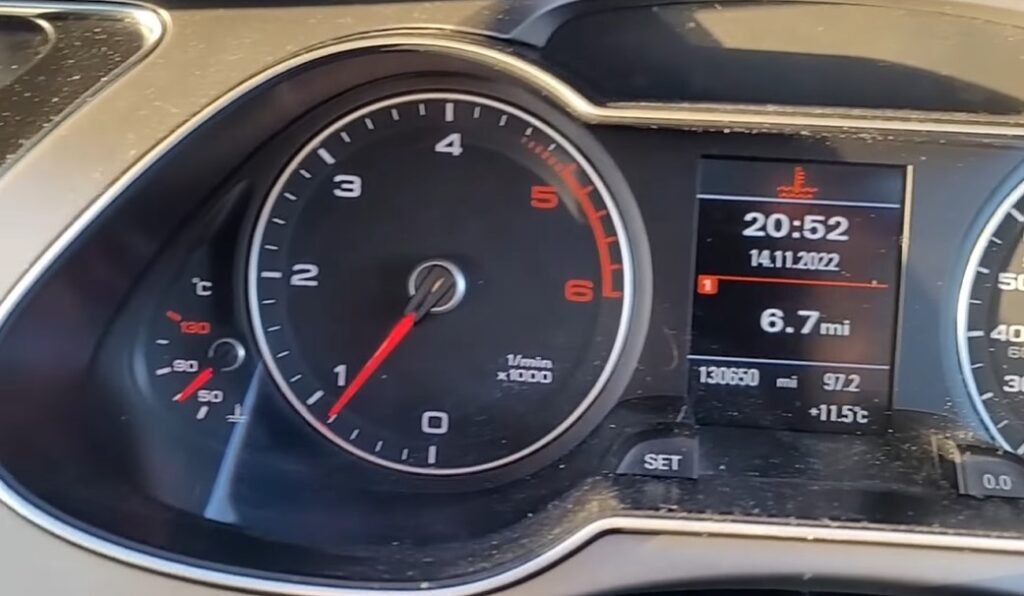
Look for dried coolant deposits, damaged hoses, loose clamps, radiator leaks, and seepage around the water pump or thermostat housing.
Coolant doesn’t normally disappear without a reason. Repeatedly adding more without finding the source may allow the problem to worsen.
02 Air Trapped Inside the Cooling System
Did the temperature problem begin after a coolant change, radiator repair, or water pump replacement?
Air trapped in the cooling system can interfere with circulation and create localized hot spots.
You may notice a heater that alternates between hot and cold air, unexpected temperature changes, or an engine that overheats after recent cooling-system work.
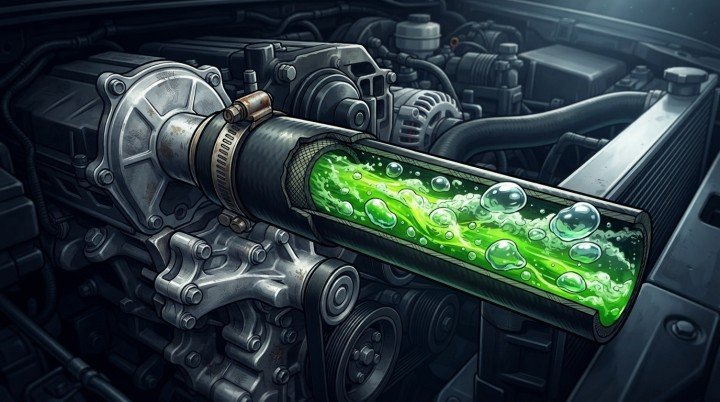
Some vehicles require a specific bleeding sequence, vacuum-fill equipment, or an electronically controlled bleeding procedure.
Simply filling the reservoir doesn’t guarantee all trapped air has been removed.
03 Radiator Restrictions or Poor Coolant Flow
A radiator can lose cooling capacity when internal passages become restricted or outside airflow is blocked.
Dirt, leaves, and debris can collect around the radiator and air-conditioning condenser. Internal deposits or damaged hoses may also restrict coolant movement.
The engine may run hotter during long climbs or sustained driving when additional heat needs to be removed.
However, overheating under load can have other causes, including weak coolant circulation, insufficient coolant, or combustion gases entering the system.
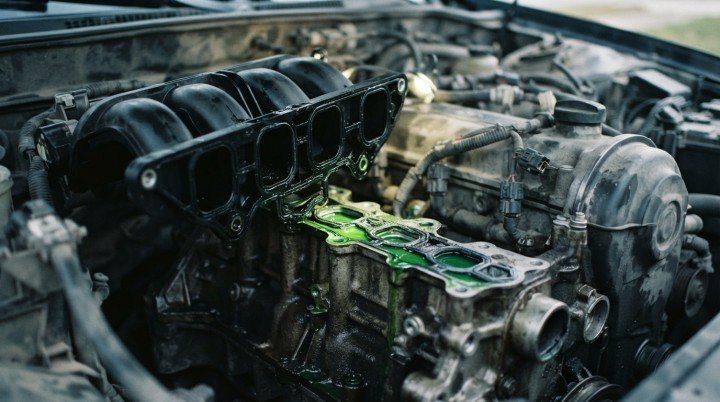
A technician may inspect radiator airflow and use temperature measurements or manufacturer-approved flow tests to investigate restrictions.
Don’t squeeze, remove, or touch hot radiator hoses to judge thermostat operation. Pressurized coolant can cause severe burns.
04 Cooling Fan or Fan-Control Failure
If your car overheats in traffic but cools down once you reach highway speed, the cooling fan deserves special attention.
At low speeds, the radiator depends heavily on the fan to draw air through it. When the vehicle moves faster, natural airflow increases.
A failed electric fan motor, fuse, relay, fan-control module, or damaged wiring can reduce airflow while stopped.
Some vehicles use mechanical cooling fans with a clutch instead.
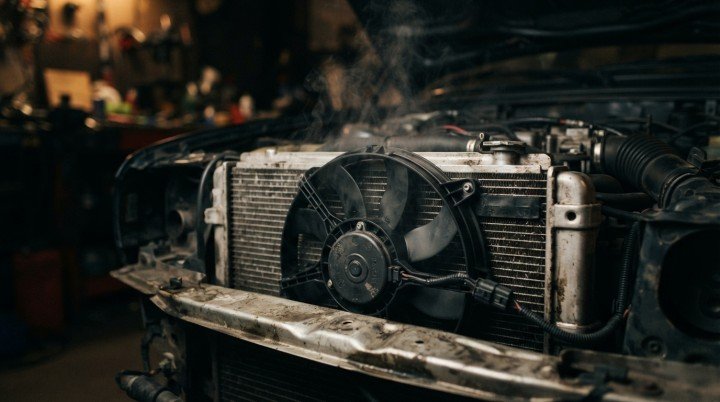
Fan operation also varies with coolant temperature, air-conditioning demand, and computer commands. A fan not running immediately after startup isn’t necessarily defective.
A technician can compare the requested fan operation with actual fan response and test the circuit when necessary.
Safety: Electric cooling fans can start unexpectedly, including after engine shutdown. Keep hands, clothing, and tools away from the fan blades.
05 Water Pump or Coolant-Circulation Problems
The water pump moves coolant through the engine and cooling system. If circulation becomes inadequate, overheating can occur even with a properly working thermostat.
Some pumps develop external leaks, bearing noise, or pulley problems. Others lose pumping performance because of impeller damage or internal failure.
Modern vehicles may use electric water pumps that require different diagnostic procedures from belt-driven pumps.
Poor circulation can also affect cabin heater performance.
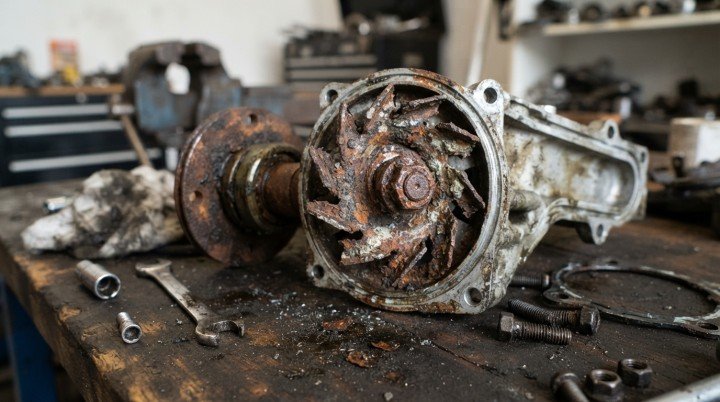
Because several cooling faults produce similar temperature patterns, a mechanic may need to test pump operation, electrical commands, coolant flow, or related components. If the results point to the pump, the water pump replacement decision guide covers the other faults to exclude before approving the job.
06 Coolant Temperature Sensor or Wiring Problems
Sometimes the reported temperature is wrong even though the engine isn’t actually overheating.
The engine coolant temperature sensor, usually called the ECT sensor, provides temperature information to the engine computer.
On many vehicles, that information helps control fuel delivery, cooling fans, and temperature-related diagnostics.
A faulty sensor or damaged connector may cause implausible readings, incorrect fan operation, or temperature-related trouble codes.
One useful diagnostic approach is checking ECT live data after the engine has been completely cold for several hours.
Its reading should generally be reasonably close to ambient or intake-air temperature, allowing for sensor placement and environmental differences.
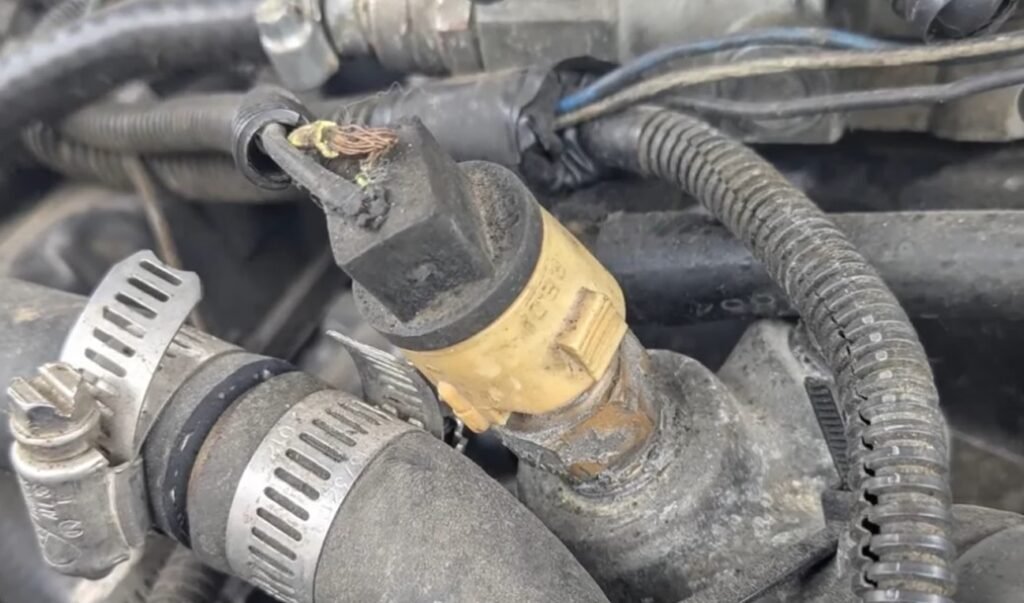
If a cold engine reports an extremely high temperature, electrical or sensor testing is needed.
07 Cooling-System Pressure Loss or Internal Engine Leaks
The cooling system operates under pressure to help prevent coolant from boiling at normal operating temperatures.
A defective radiator cap or pressurized reservoir cap may prevent the system from holding the intended pressure.
Leaks can also occur internally. For example, a damaged head gasket may allow combustion gases into the cooling system or coolant into an engine cylinder.
Possible clues include repeated coolant loss, unexplained pressure buildup, persistent overheating, or unusual exhaust vapor after the engine is warm.
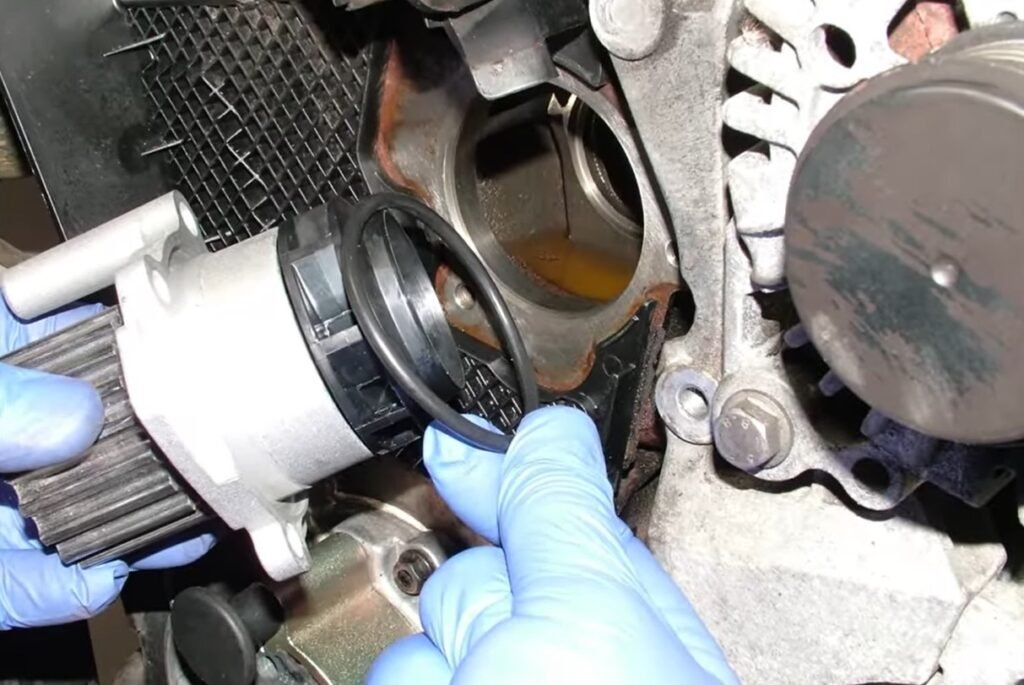
These symptoms aren’t enough to confirm a head gasket failure. Cooling-system pressure tests, combustion-gas testing, and other engine checks may be necessary.
If coolant loss occurs alongside unusual exhaust vapor, our guide to white smoke from exhaust causes explains several possibilities.
P0128 vs Overheating: What Is Your Engine Telling You?
One of the biggest mistakes in cooling-system diagnosis is treating every temperature problem as overheating.
P0128 generally means coolant temperature is below the thermostat’s expected regulating temperature under specified operating conditions. It commonly points toward slow warm-up, not an engine that’s running too hot.
Use the symptom pattern to decide what deserves attention first.
| Temperature Pattern | Possible Explanation |
|---|---|
| Engine warms up unusually slowly | Thermostat stuck open or inaccurate temperature data |
| P0128 with low coolant temperature | Early thermostat opening, low coolant, or sensing issue |
| Overheats mainly in traffic | Cooling fan or low-speed airflow problem |
| Overheats uphill or at highway speed | Radiator restriction, circulation, or another cooling fault |
| Heater alternates between hot and cold | Low coolant, trapped air, or circulation problem |
| Gauge behaves strangely but actual temperature is normal | Sensor, gauge, or wiring issue |
These patterns are starting points, not final diagnoses. Our car troubleshooting decision trees also cover temperature increases, overheating at idle, and coolant loss.
Thermostat Stuck Open vs Stuck Closed: What’s the Difference?
A failed thermostat can create opposite symptoms depending on how it fails.
Stuck Open
- Slow engine warm-up
- Weak cabin heating
- P0128 may appear
- Possible decrease in fuel economy
- Repair should be scheduled promptly
Stuck Closed
- Rapid overheating possible
- Coolant flow to radiator restricted
- Overheat warning may appear
- Serious engine damage possible
- Stop driving if overheating
A thermostat may also stick partially open or closed, making symptoms less predictable. Electronically controlled thermostats can develop control-circuit faults as well as mechanical problems.
The correct conclusion depends on actual coolant temperature and thermostat operation, not the dashboard gauge alone.
How to Test a Car Thermostat Before Replacing It
A thermostat test should answer two questions: Is the engine reaching its expected temperature, and is the thermostat controlling coolant flow correctly?
Check Engine Warm-Up With OBD2 Live Data
With the engine completely cold, a capable OBD2 scanner can display engine coolant temperature.
Compare that first reading with approximate ambient temperature. Then monitor how coolant temperature changes during a normal warm-up under safe conditions.
A thermostat stuck open may allow the engine to warm slowly or remain below its intended operating range.
A thermostat stuck closed may contribute to a rapid temperature rise. However, low coolant and circulation problems can produce similar behavior.
Exact warm-up expectations depend on the vehicle, weather, engine load, and thermostat design. Use manufacturer specifications instead of one universal temperature target.
Verify Thermostat Opening and Coolant Flow
A mechanic may compare engine-side and radiator-side temperature trends using appropriate diagnostic equipment.
An infrared thermometer can help identify temperature differences, but surface readings depend on the measurement location and material. They aren’t automatically equal to internal coolant temperature.
Some removed mechanical thermostats can be tested in heated water with controlled temperature measurement. Integrated electronic designs may require electrical or scan-tool testing instead.
Thermostat replacement is justified when testing confirms that the valve isn’t opening or closing at the required conditions.
Cooling-System Trouble Codes Worth Checking
Temperature-related codes can help identify which part of the cooling system needs testing.
| Code | General Meaning |
|---|---|
| P0128 | Coolant below expected thermostat regulating temperature |
| P0115 | ECT sensor circuit malfunction |
| P0116 | ECT circuit range/performance |
| P0117 | ECT circuit low input |
| P0118 | ECT circuit high input |
| P0119 | ECT circuit intermittent fault |
| P0597 | Thermostat heater control circuit/open |
| P0598 | Thermostat heater control circuit low |
| P0599 | Thermostat heater control circuit high |
P0597–P0599 apply to certain electronically controlled thermostat systems. They may involve wiring, connectors, or control circuits rather than a mechanically stuck thermostat.
Code definitions and testing procedures vary by vehicle. For additional code descriptions, see our car diagnostic trouble code list.
Thermostat vs Water Pump vs Radiator: Which One Is Bad?
Several cooling components can create similar symptoms. The distinguishing factor is what testing shows.
| Component | Typical Fault | Useful Check |
|---|---|---|
| Thermostat | Incorrect opening or closing | Warm-up and operating-temperature test |
| Water pump | Weak circulation or leakage | Pump and coolant-flow diagnosis |
| Radiator | Restricted coolant flow or airflow | Cooling capacity and restriction testing |
| Cooling fan | Insufficient airflow at low speed | Fan command and circuit testing |
| ECT sensor | Incorrect temperature information | Scan data and electrical tests |
Replacing one component won’t correct a confirmed failure somewhere else in the cooling system.
When Does Thermostat Replacement Actually Make Sense?
Thermostat replacement becomes reasonable when diagnosis confirms a fault within the thermostat or its non-serviceable housing assembly.
Examples include a valve stuck open or closed, opening outside its specified temperature range, physical damage, or a verified internal electronic thermostat failure.
An external housing leak may require a housing or seal repair, depending on the design.
There is no universal mileage interval requiring every thermostat to be replaced. The vehicle’s service schedule and the condition of the cooling system should guide maintenance decisions.
How Much Does Thermostat Replacement Cost in 2026?
Thermostat replacement cost varies significantly between a simple mechanical thermostat and a complex electronically controlled assembly.
RepairPal’s US national estimate, updated September 3, 2026, places the average repair at approximately $616–$716.
| Cost Component | Estimated US Price |
|---|---|
| Parts | $421–$429 |
| Labor | $195–$286 |
| Total | $616–$716 |
This national estimate isn’t the price for every vehicle. RepairPal lists model-specific estimates that can be substantially lower or higher.
Costs depend on thermostat design, housing assembly, accessibility, coolant requirements, sealing components, and labor rates.
Before approving the work, confirm whether the estimate includes coolant, new seals, proper system bleeding, diagnostic charges, and warranty coverage.
Can You Drive With a Bad Thermostat?
The answer depends on whether the engine is running too hot or too cool.
If the Engine Is OverheatingStop as soon as it’s safe, switch off the engine, and arrange assistance. Continued operation can damage the head gasket, cylinder head, and other engine components.
If the Engine Is Running Too Cool
The situation is usually less immediately dangerous, but poor heater performance, reduced efficiency, and increased emissions may occur. Schedule diagnosis and repair promptly.
Never remove a radiator cap or pressurized coolant reservoir cap while the system is hot. Hot coolant and steam can cause serious burns.
If you’re uncertain whether the temperature warning makes the car unsafe to drive, use our vehicle warning-sign checker before considering further use.
New Thermostat but the Engine Still Overheating?
If a newly installed thermostat doesn’t solve the problem, don’t immediately replace it again.
Trapped air, an incorrect coolant level, or improper bleeding can cause trouble after cooling-system work.
The cooling fan, water pump, radiator, and pressure cap should also be checked.
Confirm that the correct thermostat was fitted and installed in the specified orientation. On electronically controlled systems, inspect related wiring and any required diagnostic procedures.
If coolant loss or overheating continues without an obvious external leak, testing for internal engine leakage may be necessary.
Questions to Ask Before Approving Thermostat Replacement
- Is the engine actually overheating or simply warming up too slowly?
- Was the coolant level checked and the cooling system pressure-tested?
- Were the radiator fans and water pump evaluated?
- What did the ECT sensor show during warm-up?
- Which test confirmed the thermostat itself failed?
- Does the quote include coolant, seals, housing, and proper bleeding?
If the repair is unusually expensive, ask whether a manufacturer service bulletin, warranty extension, or recall applies to your vehicle.
Common Thermostat Replacement Mistakes to Avoid
- Replacing the thermostat for every overheating complaint.
- Assuming P0128 means the thermostat is stuck closed.
- Ignoring low coolant or trapped air.
- Failing to check fan operation.
- Using coolant that doesn’t meet the vehicle specification.
- Installing an incorrect thermostat or reversing its orientation.
- Reusing seals that require replacement.
- Skipping the proper cooling-system bleeding procedure.
- Opening a hot, pressurized cooling system.
- Continuing to drive while the engine overheats.
Frequently Asked Questions About Thermostat Replacement
1. How do I know if my car thermostat really needs replacing?
Verify coolant level, sensor accuracy, and thermostat operation. A confirmed stuck-open, stuck-closed, or incorrectly operating thermostat generally requires replacement.
2. Can a bad thermostat cause overheating without a check engine light?
Yes. A stuck-closed thermostat may cause overheating without immediately triggering a check engine light. Respond to the temperature warning rather than waiting for a code.
3. Does P0128 always mean the thermostat is bad?
No. A stuck-open thermostat is common, but low coolant and inaccurate temperature information can also contribute. Diagnosis should confirm the cause.
4. Can low coolant make a good thermostat appear faulty?
Yes. Low coolant can disrupt circulation, heating, and temperature readings. Locate any leaks and restore the correct level before drawing conclusions.
5. How long does a car thermostat usually last?
Many last for years without a scheduled replacement. Service life depends on coolant condition, engine design, corrosion, and component quality. Follow the manufacturer’s maintenance recommendations.
6. Should I replace the thermostat when changing the water pump?
Not always. If the thermostat is functioning normally, replacement may be unnecessary. However, overlapping labor, accessibility, age, and manufacturer instructions may make preventive replacement worth considering.
Final Thoughts: Diagnose the Cooling Problem Before Buying Parts
Thermostat replacement can solve an overheating or slow warm-up problem when the thermostat itself has failed. But low coolant, air pockets, radiator restrictions, cooling fan faults, water pump problems, inaccurate sensors, and pressure loss can cause similar symptoms.
The best first step is to determine whether the engine is genuinely too hot, running too cool, or displaying incorrect temperature information.
Once testing identifies the real fault, you can approve the repair with greater confidence—and avoid replacing a thermostat that was working all along.

Kevin Nicholas is an automotive mechanic and editor of The Effective Guide. He writes about warning lights, car problems, and diagnostic tools, helping drivers understand what to check before replacing a part.