
Last Updated on October 7, 2026
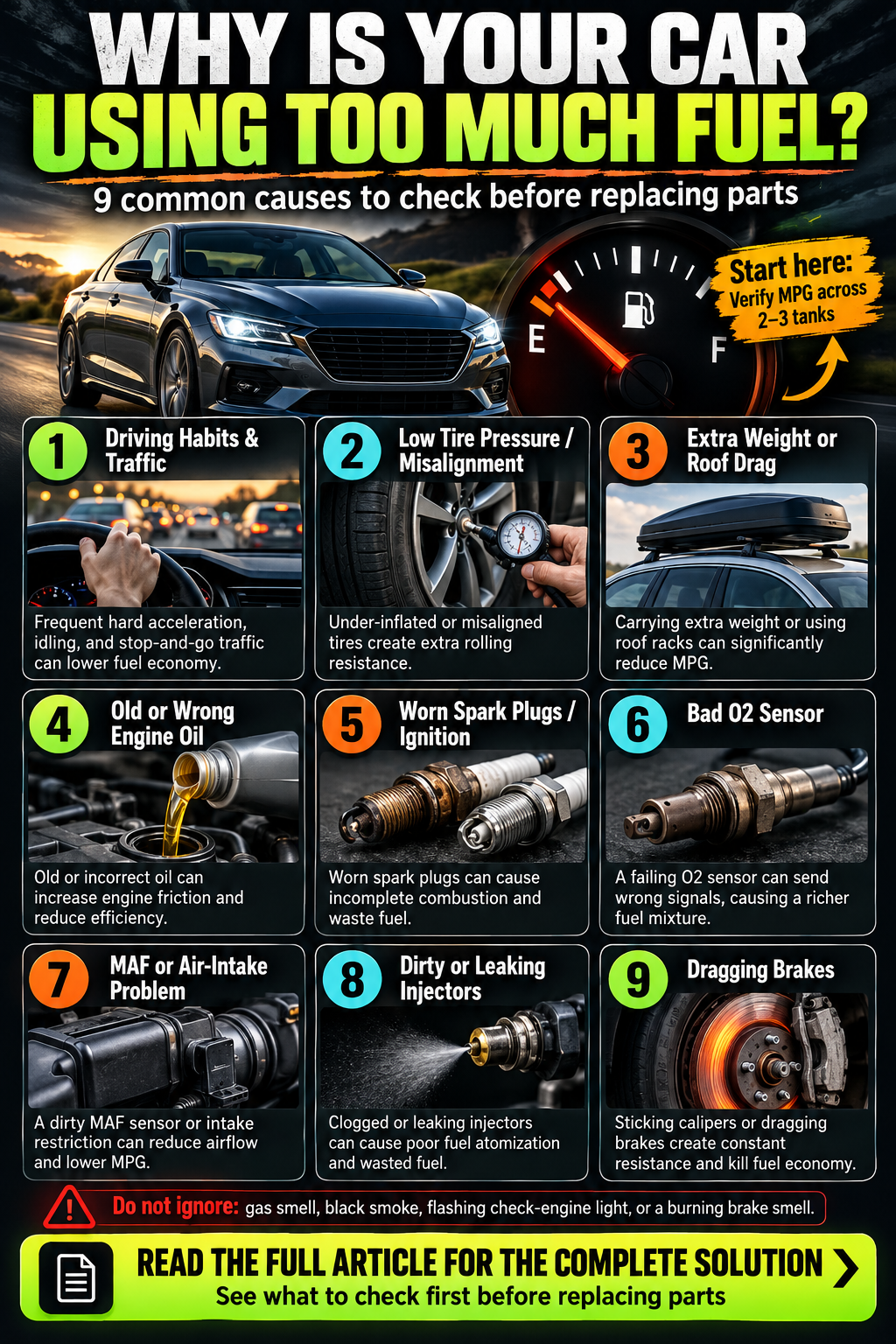
You fill the tank, drive your normal routes, and then notice the fuel gauge dropping much faster than it used to. Maybe the dashboard MPG has fallen, or you are returning to the gas station several days earlier than expected.
If your car is using too much fuel, it does not automatically mean the engine is failing. The cause could be something simple, such as low tire pressure, heavier traffic, excessive idling, or extra weight inside the vehicle. However, a car suddenly using more gas can also point to worn ignition parts, incorrect sensor readings, fuel-injector problems, or brakes that are not releasing properly.
The key is to verify the change first and then investigate the possible causes in a logical order. This can help you avoid replacing parts that are still working, restore lost fuel economy, and prevent a smaller problem from becoming a more expensive repair.
Why Is My Car Using So Much Gas?
When a car is using too much fuel, the cause usually falls into one of three categories: changed driving conditions, overdue maintenance, or a mechanical problem that makes the engine or vehicle work harder.
Common causes of high fuel consumption include:
- Aggressive driving or excessive idling
- Frequent short trips and stop-and-go traffic
- Underinflated or misaligned tires
- Extra weight or aerodynamic drag
- Incorrect engine oil
- Worn spark plugs or ignition problems
- Faulty oxygen or mass airflow sensors
- Dirty or leaking fuel injectors
- Dragging brakes
Some of these problems cause poor gas mileage without turning on a warning light. Others may produce symptoms such as rough idling, hesitation, black exhaust smoke, reduced power, unusual smells, or a check-engine light.
Before replacing anything, confirm that your fuel consumption has actually increased.
First, Confirm That Your Car Is Actually Using More Fuel
Dashboard fuel-economy displays are useful, but they are still estimates. The most reliable way to determine whether your car is burning more gas than usual is to calculate its fuel economy manually over multiple fill-ups.
Calculate Your Actual MPG
Follow these steps:
- Fill the fuel tank completely and reset the trip odometer.
- Drive normally until the tank needs to be refilled.
- Fill the tank completely again.
- Record the miles driven and the gallons required to refill the tank.
- Divide the miles driven by the gallons used.
Use this formula:
MPG = Miles driven ÷ Gallons used
For example, if you drove 300 miles and needed 12 gallons to refill the tank, the vehicle achieved 25 MPG.
One tank may not tell the whole story. Pump shutoff points, traffic, weather, and driving routes can create small differences between fill-ups. For a more dependable result, calculate the average over two or three tanks. This method is also recommended in guidance from the U.S. Environmental Protection Agency.
If the calculation confirms that your car is using too much fuel across several comparable tanks, move on to the driving, tire, cargo, and mechanical checks below.
Compare Similar Driving Conditions
Do not compare a week of steady highway driving with a week of short city trips. Your MPG can change even when nothing is mechanically wrong with the vehicle.
Consider whether any of these factors have changed:
- You are making more short trips.
- Your route now includes heavier traffic.
- You have been idling or using remote start more often.
- The weather has become much colder or hotter.
- You are carrying more passengers or cargo.
- You are using the air conditioner more frequently.
- You recently installed a roof rack, cargo box, or different tires.
- You are driving faster or accelerating more aggressively.
Cold weather can reduce fuel economy because the engine takes longer to reach its normal operating temperature. Frequent short trips make this effect more noticeable because the engine may spend much of the journey warming up.
Hot weather can increase air-conditioning use, while heavy traffic creates more idling, braking, and acceleration. These changes can make it appear that the vehicle has developed excessive fuel consumption when the real cause is the way it is currently being used.
If your driving conditions have remained similar but the vehicle is still using noticeably more fuel, begin checking for maintenance or mechanical problems.
Do Not Trust the Dashboard MPG Alone
The MPG displayed on the dashboard is calculated using information from the engine computer. It can help identify a trend, but it may not match the vehicle’s actual tank-to-tank fuel economy.
The dashboard estimate can also be affected by idling, short trips, recent battery disconnection, or resetting the trip computer. Use the manual MPG calculation to confirm whether the fuel economy is getting worse.
Quick Symptom-to-Cause Guide
| What You Notice | Possible Cause | What to Check First |
|---|---|---|
| MPG has gradually decreased | Tire pressure, maintenance, or driving habits | Tires and service history |
| Car suddenly started using more gas | Sensor, injector, ignition, or brake problem | Additional symptoms and trouble codes |
| MPG dropped after your route changed | Traffic, short trips, or increased idling | Recent driving conditions |
| Rough idle or hesitation | Spark plugs, sensors, or fuel injectors | Scan for trouble codes |
| Black exhaust smoke | Engine running too rich | O₂ sensor, MAF sensor, and injectors |
| Vehicle pulls to one side | Misalignment or dragging brake | Tires, alignment, and brakes |
| Strong gasoline smell | Possible fuel leak | Turn off the engine and arrange an inspection |
| No warning light but MPG is lower | Tires, cargo, driving habits, or early mechanical trouble | Start with the simple checks |
9 Reasons Your Car Is Using Too Much Fuel
1. Your Driving Habits or Driving Conditions Have Changed
Before replacing any parts, consider how and where the car has been driven recently. A change in driving habits is one of the most common—and most overlooked—causes of poor gas mileage.
Rapid acceleration demands more power from the engine, which requires more fuel. Hard braking also wastes the energy used to accelerate the vehicle, especially when you immediately have to speed up again. Speeding, frequent lane changes, stop-and-go traffic, and following other vehicles too closely can all increase fuel consumption.

Excessive idling is another common reason a vehicle starts burning more gas than usual. The engine continues consuming fuel while the car covers no distance, so the effective MPG falls. Long warm-ups, drive-through lines, traffic jams, and frequent use of remote start can make the change more noticeable.
Short trips can also increase fuel use. A cold engine needs time to reach its normal operating temperature. If most trips end after only a few miles, the engine may spend much of its time operating below its most efficient temperature.
According to the U.S. Department of Energy, speeding, rapid acceleration, and hard braking can significantly reduce fuel economy.
Other clues:
- Fuel economy is worse in the city but improves on the highway.
- MPG changed after you started using a different route.
- There are no warning lights or unusual engine symptoms.
- Fuel consumption improves when another person drives the car.
- The engine spends more time idling than it did previously.
- The drop began during a period of unusually hot or cold weather.
How to fix it:
Accelerate smoothly, leave enough space to avoid unnecessary braking, and maintain a steady speed whenever conditions allow. Avoid long periods of idling and combine several short errands into one longer trip when practical.
Track your MPG for the next two or three tanks after making these changes. If fuel economy improves, your driving pattern was probably contributing to the problem. If your car is using too much fuel even after your driving conditions return to normal, continue with the tire and mechanical checks.
2. Your Tires Are Underinflated or Misaligned
Tires create rolling resistance as they move across the road. When they are underinflated, more of the tire contacts the pavement and the tire flexes more than it should. The engine must work harder to keep the vehicle moving, which increases fuel consumption.
Low tire pressure is easy to overlook because a tire can be underinflated without appearing completely flat. Pressure also changes with temperature, so a tire that was correctly inflated during warmer weather may become low when the temperature falls.
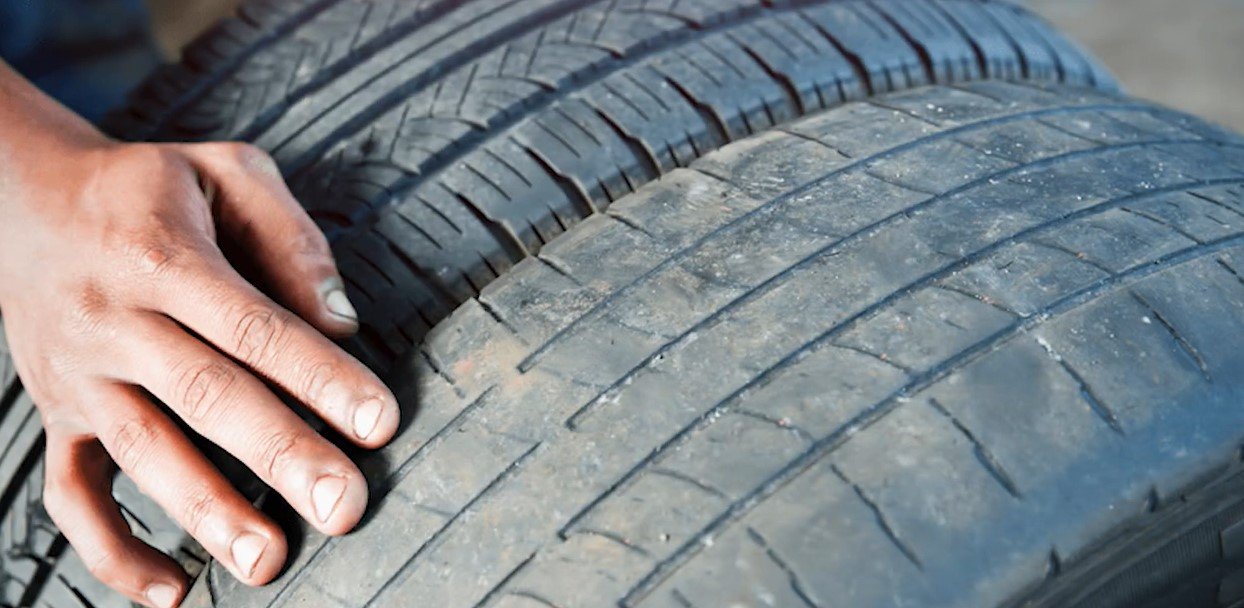
Check tire pressure when the tires are cold and inflate them to the specification listed on the driver-side door jamb, inside the fuel door, or in the owner’s manual. Do not use the maximum pressure printed on the tire sidewall as the normal inflation target.
The U.S. Department of Energy estimates that fuel economy can fall by approximately 0.2% for every 1 PSI drop in the average pressure of all four tires. Proper inflation also helps the tires last longer and supports safer braking and handling.
Wheel misalignment can create a similar problem. If the wheels are not pointing in the correct direction, the vehicle may experience additional resistance as it moves. This makes the engine work harder and can contribute to high fuel consumption.
Other clues:
- The car pulls to the left or right.
- The steering wheel is off-center on a straight road.
- One or more tires show uneven wear.
- The tires feel soft or require frequent inflation.
- Fuel economy changed after hitting a pothole or curb.
- The vehicle does not coast as freely as it once did.
How to fix it:
Set all four tires to the manufacturer’s recommended cold pressure and inspect them for damage or uneven wear. If the car pulls, the steering wheel is off-center, or the wear pattern is uneven, have the alignment and suspension inspected.
If one tire repeatedly loses pressure, do not simply keep adding air. It may have a puncture, damaged valve stem, wheel problem, or another leak that requires repair.
3. You Are Carrying Extra Weight or Creating More Aerodynamic Drag
The heavier a vehicle becomes, the more energy it needs to accelerate and climb hills. A few light items may not make a noticeable difference, but regularly carrying tools, equipment, boxes, or other heavy cargo can gradually increase fuel consumption.
External accessories can have an even greater effect at highway speeds. Roof racks, cargo boxes, bicycles, and other roof-mounted equipment disturb the airflow around the vehicle. The faster you drive, the harder the engine must work to overcome the additional aerodynamic drag.
Driving with the windows fully open at higher speeds can also increase drag. Air-conditioning use requires engine power too, so the most efficient choice depends on vehicle speed, temperature, and driving conditions.
Extra weight and drag may not cause a dramatic overnight MPG drop, but they can explain why a car is burning more gas than usual after a work assignment, road trip, or accessory installation.
Other clues:
- MPG dropped after loading the vehicle for work or travel.
- A roof rack or cargo box was recently installed.
- Fuel economy is affected more on the highway than in the city.
- The engine feels less responsive when the vehicle is heavily loaded.
- MPG returns closer to normal after removing the cargo.
How to fix it:
Remove unnecessary items from the trunk or cargo area. Take off unused roof racks, carriers, and cargo boxes when they are not needed. Before a long drive, carry what is necessary without treating the vehicle as permanent storage.
If removing the extra weight and external accessories does not improve fuel economy, the next step is to examine the engine oil, ignition system, fuel-mixture sensors, and fuel injectors.
4. You Are Using Old or Incorrect Engine Oil
Engine oil reduces friction between moving engine components. When the oil level is too low, the oil is badly degraded, or the wrong viscosity is used, the engine may have to work harder than intended. That additional resistance can contribute to reduced fuel economy.
Oil viscosity is especially important. Using oil that is thicker than the manufacturer recommends does not automatically provide better protection, even in an older vehicle. Oil that is too thick may circulate more slowly during cold starts and create additional internal resistance. Oil that is too thin may not provide the protection required for that particular engine.
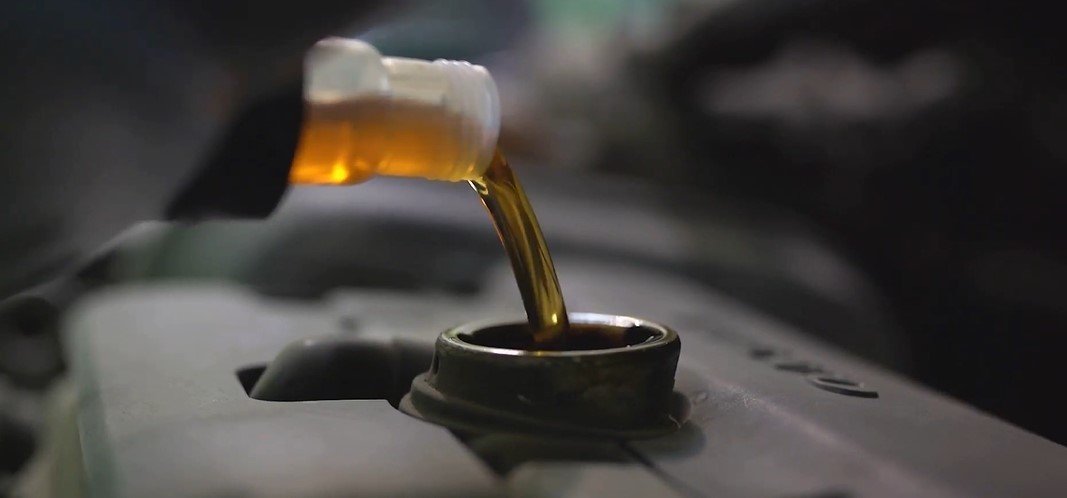
Some newer vehicles also use variable valve timing, cylinder deactivation, turbochargers, and oil-pressure-controlled components that depend on the correct oil specification. The wrong oil can affect more than gas mileage.
Old oil alone usually does not explain a dramatic, sudden MPG drop. However, incorrect oil combined with overdue maintenance can contribute to gradually worsening fuel economy and engine performance.
If your car is using too much fuel after a recent oil change, check the service receipt to confirm that the correct oil viscosity and specification were used.
Other clues:
- Fuel economy declined after an oil change.
- The wrong viscosity appears on the service receipt.
- The oil level is below the recommended range.
- The oil-change reminder is overdue.
- The engine sounds noisier than normal.
- Performance is worse during cold starts.
- An oil-pressure or oil-level warning appears.
How to fix it:
Check the oil level according to the procedure in your owner’s manual and review the oil grade listed on your most recent service receipt. If the wrong viscosity or specification was used, have it corrected rather than waiting for the next scheduled oil change.
Continue using the manufacturer-recommended oil type and service interval. The U.S. Department of Energy notes that using the recommended grade of motor oil can improve fuel economy by approximately 1% to 2%.
Do not assume that thicker oil is automatically better for a high-mileage engine. If the vehicle is leaking or burning oil, diagnose the cause instead of trying to hide the problem with an unapproved viscosity.
5. The Spark Plugs or Ignition System Are Worn
A gasoline engine needs a strong, correctly timed spark to ignite the air-fuel mixture inside each cylinder. If a spark plug, ignition coil, plug wire, or related electrical connection is failing, some of the fuel may not burn efficiently.
This is known as a misfire. A misfiring cylinder produces less power, so the driver may press the accelerator harder to maintain speed. The engine computer may also make fuel adjustments as it attempts to keep the engine running, resulting in poor gas mileage.
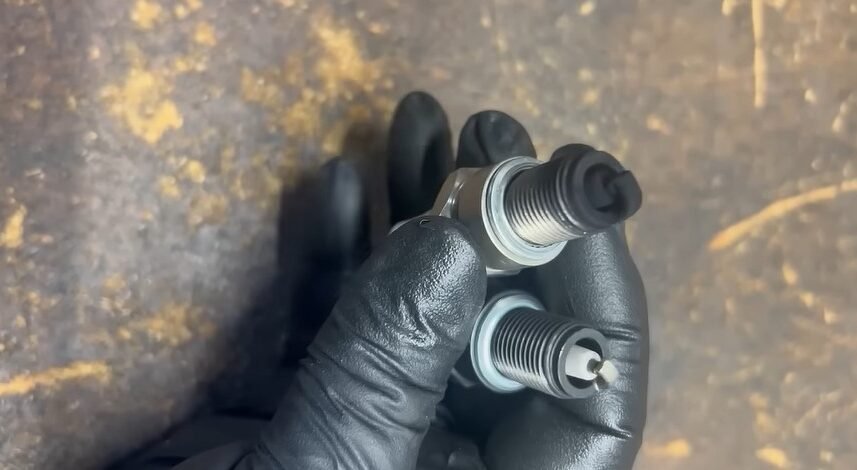
Spark plugs wear gradually. Their electrodes can erode, become contaminated, or develop an excessive gap. However, spark plugs are not the only possible cause of a misfire. Ignition coils, wiring, injectors, compression problems, vacuum leaks, and incorrect sensor information can produce similar symptoms.
A vehicle with worn ignition components may start burning more gas than usual before the problem becomes severe enough to affect everyday drivability.
Other clues:
- Rough or uneven idle
- Hesitation during acceleration
- Reduced engine power
- Difficult starting
- Engine vibration
- Unusual exhaust odor
- A steady or flashing check-engine light
- Diagnostic codes such as P0300 or a cylinder-specific misfire code
- MPG dropping at the same time the engine begins running roughly
How to fix it:
Start by scanning the vehicle for stored and pending trouble codes. A misfire code identifies the affected cylinder or pattern, but it does not automatically prove that the spark plug is faulty.
The plugs should be inspected for wear, deposits, damage, and the correct gap. Ignition coils, wiring, connectors, injector operation, and engine compression may also need to be tested. Replace parts only after the cause has been confirmed.
Use the spark-plug type and replacement interval specified by the vehicle manufacturer. Installing a different plug simply because it is advertised as an upgrade may not improve performance or fuel economy.
A flashing check-engine light commonly indicates an active misfire severe enough to damage the catalytic converter. If the light flashes and the engine runs roughly, reduce speed, avoid hard acceleration, and arrange an inspection promptly. If the shaking is severe or the vehicle cannot maintain power safely, stop driving and have it transported.
6. The Oxygen Sensor Is Sending Incorrect Information
Oxygen sensors monitor the exhaust gases and send information to the engine computer. The computer uses this data to adjust the air-fuel mixture so the engine can operate efficiently while controlling emissions.
Most modern vehicles have more than one oxygen sensor. The upstream sensor, located before the catalytic converter, usually plays the larger role in controlling the fuel mixture. The downstream sensor mainly monitors catalytic-converter operation, although the exact strategy varies by vehicle.
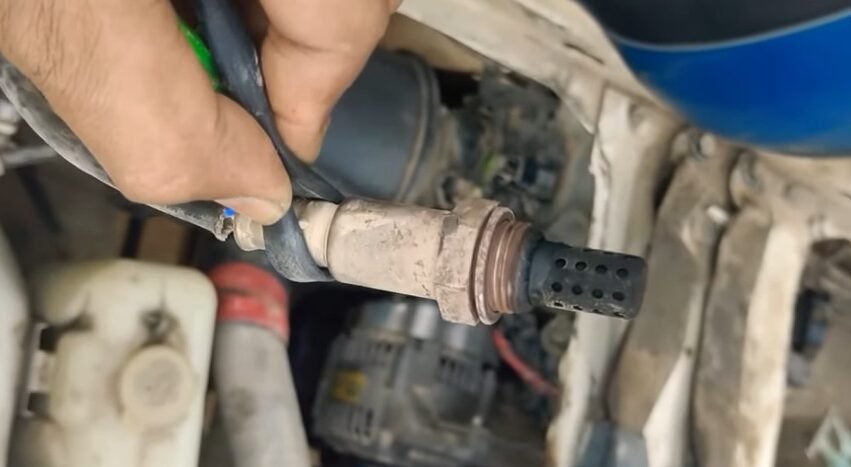
If an upstream oxygen sensor becomes slow, contaminated, or electrically faulty, it may report an inaccurate mixture. The engine computer could then command more fuel than necessary, causing the engine to run rich and creating excessive fuel consumption.
An oxygen-sensor problem may be difficult to notice at first. The engine can still start and drive normally while using more fuel. In other cases, it may produce noticeable performance or exhaust symptoms.
When a car is using too much fuel without an obvious change in driving conditions, an inaccurate oxygen sensor is one possible cause—but it should be tested before being replaced.
Other clues:
- Check-engine light
- Poor fuel economy without a major change in driving conditions
- Rough idle or hesitation
- Failed emissions test
- Stronger-than-normal exhaust odor
- Dark or black exhaust smoke
- Soot around the tailpipe
- Fuel-mixture or oxygen-sensor trouble codes
- A car burning more gas than usual without a noticeable loss of power
How to fix it:
Do not replace an oxygen sensor based only on a code description. An oxygen-sensor code can also be triggered by damaged wiring, a poor electrical connection, an exhaust leak, a vacuum leak, fuel-pressure problems, or an engine that is already running too rich or too lean for another reason.
A proper diagnosis should include:
- Checking stored and pending trouble codes
- Inspecting the sensor wiring and connector
- Examining live sensor data
- Reviewing short-term and long-term fuel trims
- Checking for intake and exhaust leaks
- Confirming fuel pressure and injector operation when necessary
If testing confirms that the sensor is responding incorrectly, replacement may restore the correct fuel mixture and improve gas mileage. However, if oil burning, coolant contamination, or an excessively rich condition damaged the sensor, the underlying problem should also be repaired. Otherwise, the replacement sensor may fail again.
7. The MAF Sensor or Air-Intake System Has a Problem
The mass airflow sensor, commonly called the MAF sensor, measures how much air is entering the engine. The engine computer combines this information with data from other sensors to calculate the correct amount of fuel.
If the MAF sensor becomes contaminated, develops an electrical fault, or sends inaccurate readings, the computer may calculate the wrong air-fuel mixture. Depending on how the reading is distorted, the engine may run too rich, hesitate, lose power, idle roughly, or use more fuel than normal.
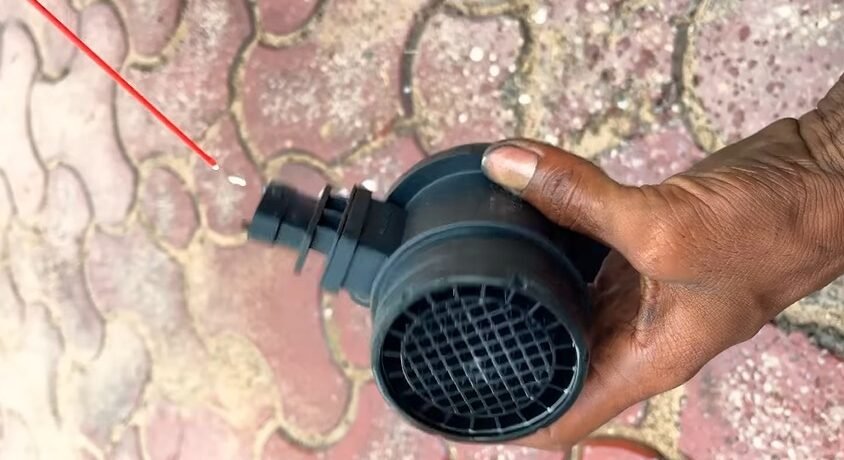
Not every vehicle uses a MAF sensor. Some engines rely more heavily on a manifold absolute pressure sensor, or MAP sensor. The diagnostic approach should therefore match the specific engine-management system.
Problems elsewhere in the intake system can produce similar symptoms. These include:
- A loose or damaged air-intake hose
- Cracks in the ductwork after the MAF sensor
- Vacuum leaks
- Loose clamps
- Damaged electrical wiring
- An improperly installed air filter
- Restrictions in the intake system
A dirty air filter is often blamed when a car has high fuel consumption, but the effect depends on the vehicle. On modern computer-controlled fuel-injected gasoline engines, replacing a clogged filter generally improves acceleration and performance rather than producing a major MPG improvement.
Older carbureted vehicles may experience a more direct loss of fuel economy from restricted airflow. This distinction is supported by FuelEconomy.gov.
A severely restricted filter should still be replaced because the engine needs adequate airflow and the filter protects it from dirt. It simply should not be presented as a guaranteed fix for poor gas mileage on every modern vehicle.
Other clues:
- Hesitation during acceleration
- Rough or unstable idle
- Hard starting
- Reduced power
- Engine stalling
- Black exhaust smoke
- Check-engine light
- MAF, MAP, lean-mixture, or rich-mixture codes
- Fuel economy that changed after air-filter or intake work
How to fix it:
Begin with a visual inspection of the air-filter housing, intake ductwork, clamps, wiring, and electrical connectors. Make sure nothing was left loose or installed incorrectly during recent maintenance.
The next step is to compare airflow or pressure readings with the engine’s operating conditions and review the fuel-trim data. This helps determine whether the sensor is actually inaccurate or whether an intake leak, wiring problem, or another fault is affecting the readings.
Some MAF sensors can be cleaned using an approved procedure, but the delicate sensing element can be damaged by touching it or using the wrong product. If contamination is suspected, follow the vehicle manufacturer’s guidance or have the service performed professionally.
Do not replace the MAF sensor only because a code mentions airflow. Confirm the sensor’s power supply, ground, wiring, live data, and intake integrity first. If the sensor is proven faulty, replacement may restore normal performance and help correct the reduced fuel economy.
8. The Fuel Injectors Are Dirty, Leaking, or Stuck
Fuel injectors deliver a controlled amount of fuel into the engine. Their spray pattern and timing must be precise so the fuel can mix properly with air and burn efficiently.
A restricted injector may not deliver enough fuel to one cylinder, potentially causing hesitation, a lean condition, or a misfire. A leaking or stuck-open injector creates the opposite problem by allowing too much fuel into the engine. That extra fuel lowers MPG and may produce black exhaust smoke, rough running, or a strong fuel odor.
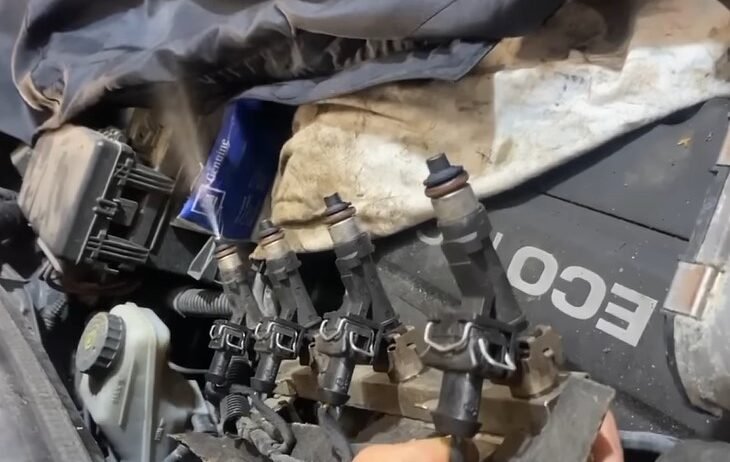
Injector problems are frequently oversimplified. A fuel-injector code or cylinder misfire does not automatically mean the injector needs replacement. Wiring faults, ignition problems, low fuel pressure, intake leaks, and engine-compression problems can create similar symptoms.
If your car is using too much fuel and also produces black smoke, rough idling, or a gasoline odor, a leaking injector or another rich-running condition should be investigated promptly.
Other clues:
- Rough or uneven idle
- Hesitation or reduced power
- Difficult starting, especially after the car has been parked
- Black exhaust smoke
- Unusual gasoline odor
- Poor gas mileage
- Misfire, rich-mixture, or lean-mixture codes
- One spark plug that looks noticeably different from the others
- Engine oil that smells like gasoline or appears overfilled
- Fuel economy that continues falling without a change in driving habits
How to fix it:
Begin with trouble codes, fuel-trim data, and a basic ignition inspection. If an injector problem remains likely, a technician may perform a fuel-pressure test, injector balance test, electrical test, or leak-down test.
Cleaning may help an injector that is restricted by deposits, but it will not repair damaged internal parts, faulty wiring, or an injector that cannot seal properly. Fuel additives should not be treated as a guaranteed solution for excessive fuel consumption.
If testing confirms that an injector is leaking or mechanically damaged, it should be repaired or replaced. Continuing to drive with excessive fuel entering a cylinder can contaminate the engine oil, foul the spark plug, increase emissions, and overheat the catalytic converter.
9. One or More Brakes Are Dragging
When you release the brake pedal, the brakes should stop applying significant pressure to the wheels. If a caliper, brake pad, parking-brake mechanism, or hydraulic component does not release correctly, the affected wheel creates continuous resistance.
The engine must then produce additional power just to maintain the same speed. This can cause a noticeable drop in fuel economy even when the engine itself is operating normally.
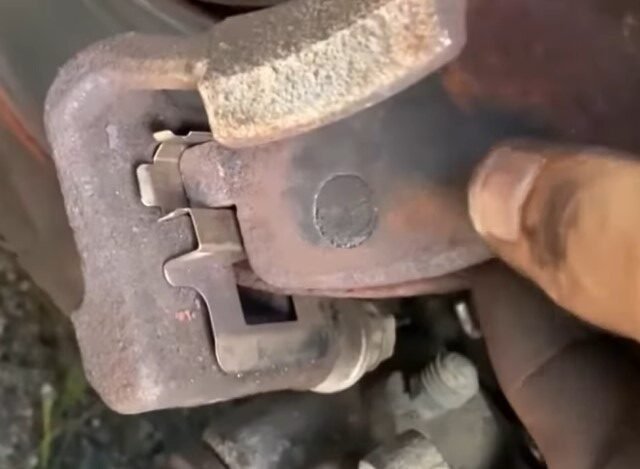
Brake drag may develop gradually, making it difficult to recognize. A driver may become accustomed to the vehicle slowing down quickly or requiring more accelerator input. In other cases, the problem appears suddenly after brake work, corrosion, or a caliper failure.
Because brake drag does not directly affect the engine’s air-fuel mixture, it may cause high fuel consumption without turning on the check-engine light.
Other clues:
- The vehicle pulls to one side.
- The car does not coast as freely as it once did.
- Acceleration feels unusually slow or heavy.
- One wheel produces more brake dust than the others.
- There is a hot or burning smell near a wheel.
- Fuel economy falls without engine-related symptoms.
- The parking brake does not release normally.
- A wheel or brake becomes excessively hot after driving.
- The car starts using more gas after recent brake work.
How to fix it:
Have the braking system inspected for a sticking caliper, seized slide pins, trapped hydraulic pressure, damaged brake hose, parking-brake problem, or incorrectly installed component.
Do not touch a wheel, brake rotor, or caliper to determine whether it is hot. Brake components can reach temperatures capable of causing injury. A technician can compare wheel temperatures safely and inspect the vehicle on a lift.
If the vehicle pulls strongly, produces smoke near a wheel, has a powerful burning smell, or requires significantly more accelerator input, stop driving and arrange transportation to a repair facility. Dragging brakes can reduce braking performance and create excessive heat.
Warning Signs You Should Not Ignore
Poor fuel economy is not always an emergency. However, a car burning more gas than usual becomes more concerning when the MPG drop is accompanied by symptoms suggesting a fuel leak, severe misfire, rich fuel mixture, or brake problem.
Arrange prompt professional help if you notice any of the following:
- Strong raw-gasoline odor
- Visible fuel leaking beneath the vehicle
- A flashing check-engine light
- Severe engine shaking or loss of power
- Thick black exhaust smoke
- Smoke or a strong burning smell near a wheel
- A wheel that appears to be binding
- Engine oil that smells strongly of gasoline
- Fuel economy that suddenly falls along with difficult starting
If you see leaking fuel or smell a strong raw-fuel odor, turn off the engine and do not continue driving. Keep the vehicle away from flames or ignition sources and arrange for it to be transported. Do not attempt to locate a fuel leak around a hot or running engine.
A flashing check-engine light combined with rough running often indicates an active misfire. Continuing to drive may send unburned fuel into the catalytic converter and cause additional damage.
What to Check First When Your Car Is Using Too Much Fuel
If your car is using too much fuel, checking the possible causes in a sensible order can prevent unnecessary part replacement and reduce diagnostic costs.
1. Verify the MPG
Calculate fuel economy manually for two or three tanks. Make sure the change is consistent rather than relying on one dashboard reading or fill-up.
2. Review Recent Driving Changes
Consider traffic, short trips, idling, weather, speed, A/C use, passengers, and cargo. These factors can create poor gas mileage without a mechanical failure.
3. Check Tire Pressure
Set cold tire pressure to the specification on the vehicle’s door-jamb label or in the owner’s manual.
4. Remove Unnecessary Weight and Drag
Take unused cargo, roof racks, and cargo carriers out of the vehicle and monitor the MPG during the next tank.
5. Review Maintenance History
Confirm that the correct engine oil was used and determine whether spark plugs, filters, and other scheduled services are overdue.
6. Scan for Trouble Codes
Check stored and pending codes, even if the check-engine light is not currently illuminated. Record the codes before clearing anything.
7. Inspect Basic Engine Systems
Examine accessible intake hoses, electrical connectors, and visible wiring for loose, damaged, or incorrectly installed components.
8. Analyze Live Data
If the simple checks do not reveal the cause, fuel trims, oxygen-sensor activity, MAF or MAP readings, coolant temperature, and misfire data can help narrow the diagnosis.
9. Test the Fuel and Brake Systems
Fuel pressure, injector balance, brake drag, alignment, and engine compression may require professional equipment and inspection.
A trouble code should be treated as a starting point, not as a command to replace the part named in its description.
Can a Car Use Too Much Fuel Without a Check-Engine Light?
Yes. Several problems can reduce fuel economy without immediately turning on the check-engine light.
Low tire pressure, extra weight, poor alignment, aggressive driving, excessive idling, incorrect oil, and dragging brakes are not always monitored directly by the engine computer. A sensor may also become inaccurate enough to affect MPG before its reading exceeds the limit required to set a code.
Some faults first appear as pending codes, which may not illuminate the warning light. That is why checking live data and pending codes can be useful when a real MPG drop cannot be explained by driving conditions.
A missing warning light does not prove that everything is operating correctly. If high fuel consumption continues across several comparable tanks, the vehicle still deserves a systematic inspection.
How to Prevent Poor Gas Mileage From Returning
A few consistent habits can help maintain fuel economy and reveal problems earlier:
- Record your MPG at each fill-up.
- Check tire pressure at least monthly and before long trips.
- Use the oil grade specified by the manufacturer.
- Follow the vehicle’s maintenance schedule.
- Avoid unnecessary idling and aggressive acceleration.
- Remove unused cargo and external carriers.
- Investigate rough running or warning lights promptly.
- Check MPG after maintenance or repair work.
- Do not approve sensor or injector replacement without supporting test results.
Tracking fuel economy is useful because it creates a baseline for your specific vehicle. A gradual decline becomes easier to identify when you have several months of records for comparison.
Frequently Asked Questions
Why Is My Car Suddenly Using More Gas?
A sudden increase in fuel consumption may be caused by low tire pressure, changed driving conditions, a misfire, incorrect sensor data, a leaking injector, or dragging brakes.
First, calculate the actual MPG and look for additional symptoms such as rough running, pulling, black smoke, warning lights, or unusual smells.
How Much of an MPG Drop Is Abnormal?
There is no single percentage that applies to every vehicle. Weather, traffic, trip length, driving style, and seasonal fuel changes can create normal variation.
However, a consistent, unexplained MPG drop across two or three comparable tanks deserves investigation, especially when accompanied by other symptoms.
Can a Bad Oxygen Sensor Cause High Fuel Consumption?
Yes. A faulty upstream oxygen sensor may report the exhaust mixture incorrectly, causing the engine computer to command more fuel than necessary.
The sensor and related wiring should be tested because exhaust leaks, fuel-pressure problems, wiring faults, and other engine conditions can produce similar codes.
Will Premium Gas Improve Fuel Economy?
Not necessarily. If the manufacturer recommends regular gasoline, switching to premium usually will not correct reduced fuel economy.
Use the fuel grade specified in the owner’s manual. If premium fuel is required, using the correct grade is important for proper engine operation.
Can a Bad Thermostat Cause Poor Fuel Economy?
Yes. A thermostat stuck open may prevent the engine from reaching its intended operating temperature. The engine computer may then maintain a richer warm-up strategy for longer than normal.
A faulty coolant-temperature sensor can create a similar effect, so coolant-temperature data should be tested before replacing either component.
Final Takeaway
If your car is using too much fuel, do not begin by replacing sensors or adding fuel-system products. First verify the MPG across multiple tanks and compare similar driving conditions. Then check the tires, cargo, oil specification, and maintenance history.
If the problem continues, use symptoms, trouble codes, and live data to guide the diagnosis. Worn spark plugs, faulty oxygen or airflow sensors, fuel-injector problems, and dragging brakes can all cause poor gas mileage, but each should be tested before parts are replaced.
Most importantly, do not ignore strong gasoline odors, visible leaks, a flashing check-engine light, severe misfiring, black smoke, or overheating brakes. Correct diagnosis can restore lost fuel economy while preventing a smaller issue from becoming a much more expensive repair.
Kevin Nicholas is an automotive mechanic and editor of The Effective Guide. He writes about warning lights, car problems, and diagnostic tools, helping drivers understand what to check before replacing a part.