
Last Updated on October 7, 2026
The check engine light can appear even when your car seems to be driving normally. Sometimes the cause is as simple as a loose gas cap. Other times, the light warns about a misfire, incorrect fuel mixture, failing sensor, or emissions problem.
If your check engine light is on, do not immediately reset it or replace the first part mentioned in an OBD2 code. Start by checking whether the light is solid or flashing and whether the car has developed any other symptoms.
The 30-Second Check: Solid or Flashing?
| What You Notice | What You Should Do |
|---|---|
| Solid light and car runs normally | Check the gas cap and arrange an OBD2 scan soon |
| Solid light with rough running or power loss | Minimize driving and arrange prompt diagnosis |
| Flashing light with shaking or hesitation | Reduce engine load and stop safely if symptoms continue |
| Light with smoke, overheating, or strong odors | Pull over safely, shut off the engine, and arrange assistance |
A flashing check engine light often indicates an active misfire that may overheat and damage the catalytic converter. Manufacturer guidance also recommends avoiding hard acceleration when the light flashes.
What Does the Check Engine Light Mean?
The technical name for the check engine light is the Malfunction Indicator Lamp, or MIL. It is controlled by the vehicle’s onboard diagnostic system.
The computer monitors ignition, fuel mixture, airflow, emissions, and certain transmission functions. When it detects a qualifying fault, it stores a diagnostic trouble code and may turn the light on.
However, a code identifies a detected condition—not necessarily the failed part. For example, a lean code does not prove the oxygen sensor is bad, and a misfire code does not prove the spark plug has failed.
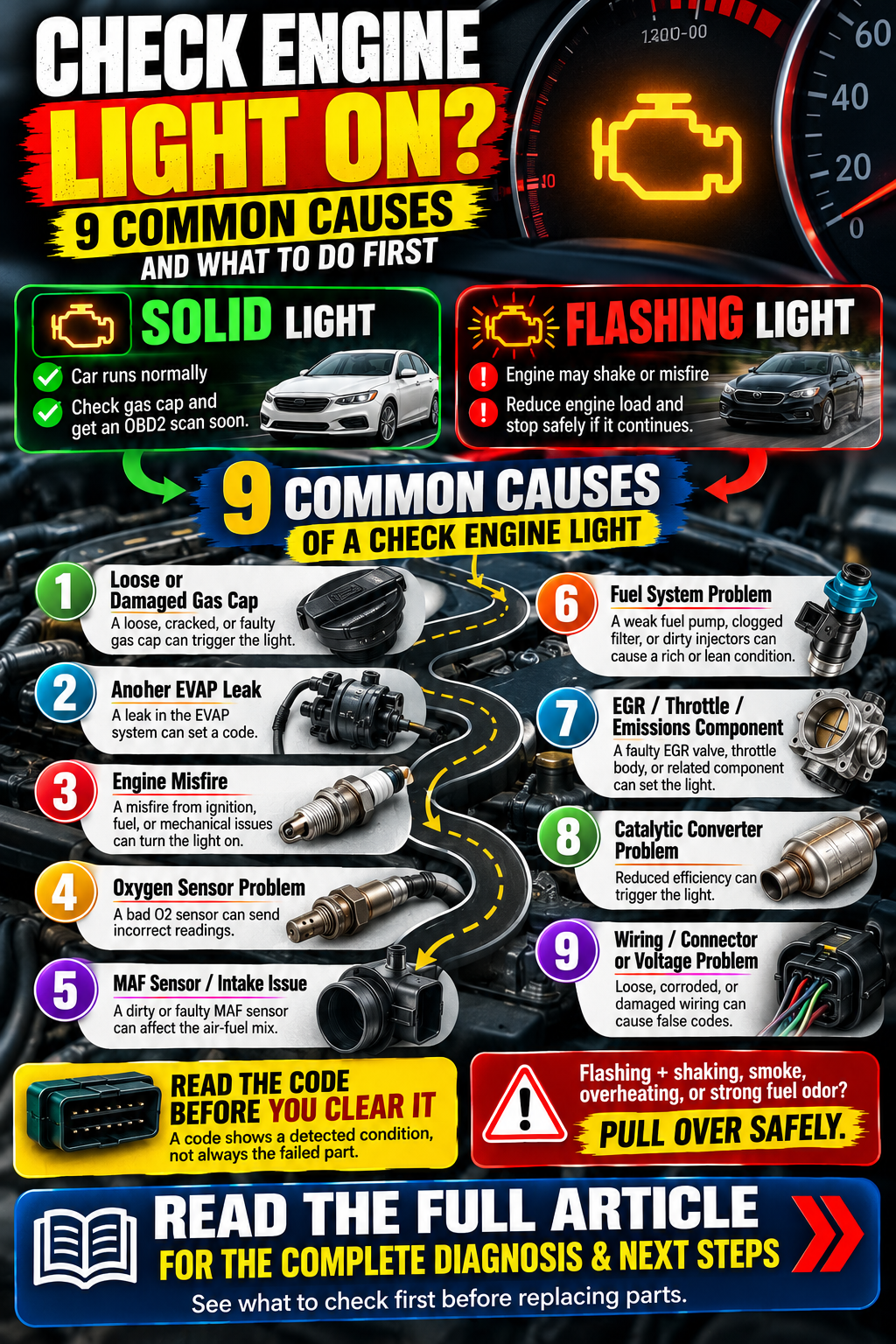
If your check engine light is on, read and record the codes before clearing them. Resetting the light or disconnecting the battery can erase useful diagnostic information without repairing the problem.
Related: Why is the RPM fluctuating while driving?
9 Reasons Your Check Engine Light Is On
1. The Gas Cap Is Loose or Damaged
The gas cap helps seal the evaporative-emissions system, or EVAP system. If it is loose, missing, or damaged, the computer may detect a fuel-vapor leak and turn on the engine warning light.
Signature clue: The light appeared shortly after refueling, but the car still runs normally.
What to do first: With the vehicle safely parked and the engine off, make sure the cap is correctly secured and inspect it for visible damage. The light may require several successful drive cycles to turn off.
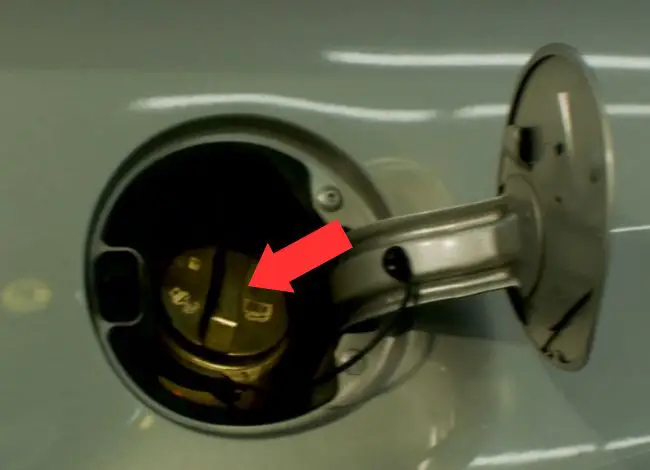
If the light remains on, do not keep replacing gas caps. Another EVAP component may be responsible.
Urgency: Usually low when the light is solid and there are no other symptoms.
2. The EVAP System Has Another Leak
A secure gas cap does not rule out the rest of the EVAP system. A cracked hose, faulty purge valve, blocked vent valve, damaged charcoal canister, or fuel-tank pressure-sensor problem can also trigger the check engine light.
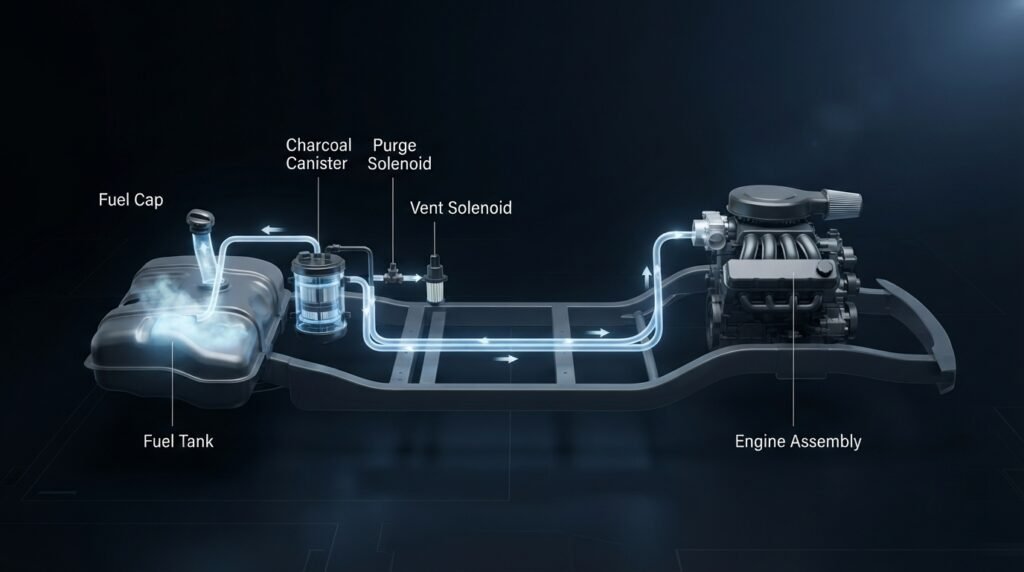
Signature clues:
- Fuel smell near the vehicle
- Difficult starting after refueling
- Rough idle after filling the tank
- EVAP leak or purge-flow codes
Small EVAP leaks may be too difficult to see. A technician may need to test the valves and use a professional low-pressure smoke test to locate the leak.
Urgency: Usually low to moderate, but a strong fuel smell needs prompt attention.
3. The Engine Is Misfiring
A misfire occurs when one or more cylinders fail to burn the air-fuel mixture correctly. Possible causes include a worn spark plug, weak ignition coil, injector problem, damaged wiring, air leak, or low compression.
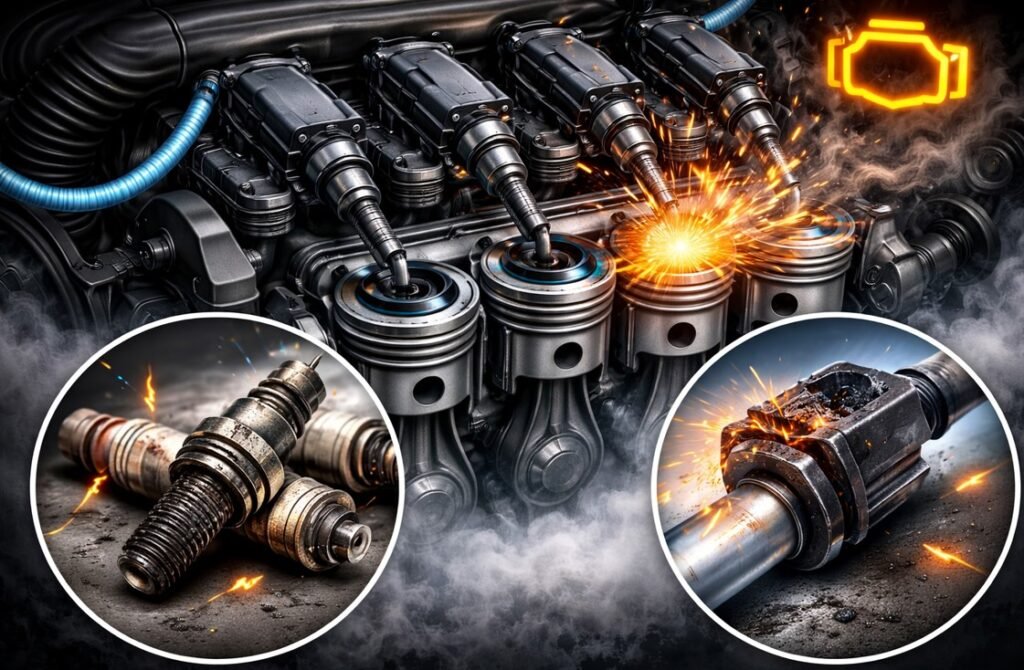
Signature clues:
- Engine shaking
- Rough idle
- Hesitation
- Reduced power
- Flashing check engine light
- P0300 or cylinder-specific P0301–P0308 codes
A cylinder-specific code identifies where the misfire was detected, but not why it happened. The ignition, fuel, wiring, and mechanical systems may all need testing.
If your check engine light is on and the engine is shaking, avoid unnecessary driving and hard acceleration. A flashing light makes the situation more urgent because unburned fuel may overheat the catalytic converter.
Urgency: High when the light flashes or the engine shakes severely.
The next group of causes involves oxygen sensors, airflow measurement, fuel delivery, and other emissions components that usually require code interpretation and live-data testing.
4. The Oxygen Sensor Is Reporting Incorrectly
Oxygen sensors monitor the exhaust and help the engine computer adjust the air-fuel mixture. If an upstream sensor becomes slow, contaminated, or electrically faulty, the computer may add too much or too little fuel.
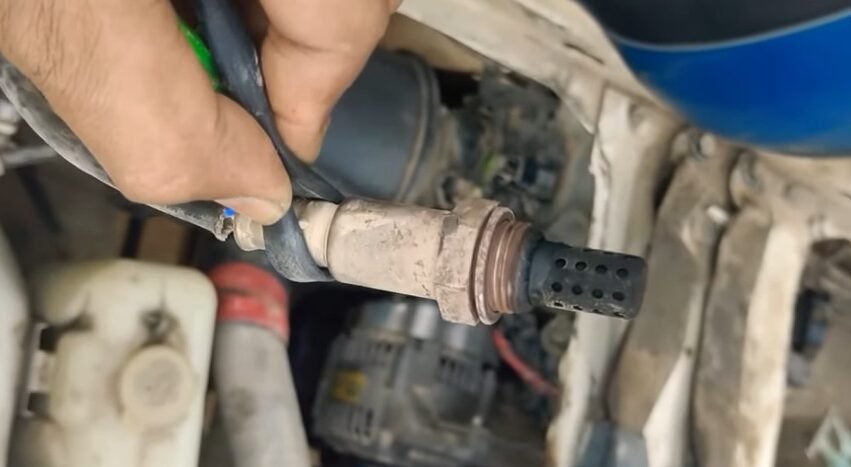
When you have the check engine light on but the car runs normally, an early-stage oxygen-sensor problem is one possible cause.
Signature clues:
- Poor fuel economy
- Rough idle or hesitation
- Failed emissions test
- Rich- or lean-mixture codes
- O₂-sensor circuit or response codes
An oxygen-sensor code does not automatically prove that the sensor has failed. Damaged wiring, an exhaust leak, intake leak, incorrect fuel pressure, or an existing rich or lean condition may affect its readings.
First diagnostic move: Review sensor activity, fuel trims, wiring, and intake or exhaust leaks before approving replacement.
Urgency: Moderate. The car may continue running, but an incorrect fuel mixture can increase emissions and damage other components over time.
5. The MAF Sensor or Intake System Has a Problem
The mass airflow sensor, or MAF sensor, measures how much air enters the engine. The computer uses that information to calculate the correct amount of fuel.
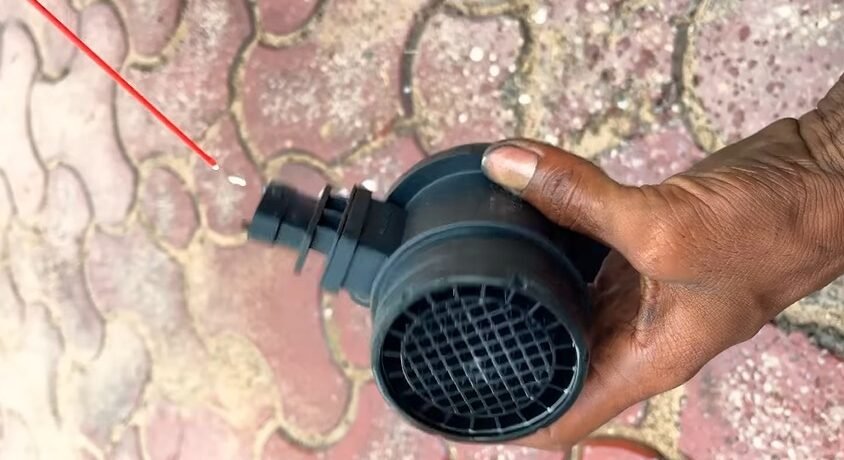
A contaminated sensor, cracked intake hose, loose clamp, wiring fault, or vacuum leak can produce incorrect airflow data and turn on the engine warning light.
Signature clues:
- Hesitation during acceleration
- Rough or unusually high idle
- Hard starting or stalling
- Reduced engine power
- Black smoke
- Lean-, rich-, or airflow-related codes
Not every vehicle uses a MAF sensor; some rely more heavily on a manifold absolute pressure, or MAP, sensor. Diagnosis must match the vehicle’s actual system.
First diagnostic move: Inspect the intake ductwork, hoses, clamps, wiring, and sensor data. Do not replace the MAF sensor only because an airflow code appears.
Urgency: Moderate, but more urgent if the vehicle stalls, loses significant power, or produces black smoke.
6. The Fuel System Is Delivering the Wrong Amount
The engine computer expects fuel pressure and injector delivery to remain within a specific range. A restricted injector, leaking injector, faulty pressure regulator, weak fuel pump, or electrical problem can create a rich or lean mixture.
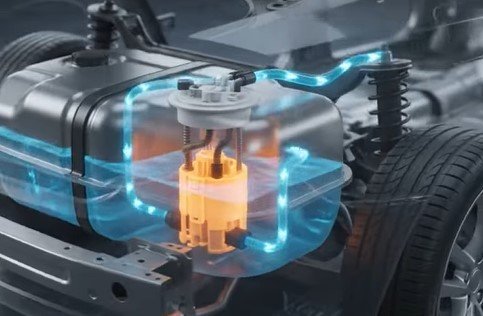
If the check engine light is on together with difficult starting, rough running, or black smoke, the fuel system should be included in the diagnosis.
Signature clues:
- Long cranking or hard starting
- Rough idle
- Hesitation under load
- Fuel smell
- Black exhaust smoke
- Misfire, rich-, or lean-mixture codes
An injector-related code does not always mean the injector itself is bad. Ignition problems, damaged wiring, low compression, or incorrect fuel pressure can produce similar symptoms.
First diagnostic move: Compare fuel trims, fuel pressure, misfire data, and injector operation before replacing components.
Urgency: Moderate to high. A leaking injector or severely rich mixture can foul spark plugs and overheat the catalytic converter.
7. The EGR, Throttle Body, or Another Emissions Component Has Failed
Depending on the vehicle, the computer may monitor an exhaust gas recirculation valve, electronic throttle body, purge system, and several other emissions-related components.
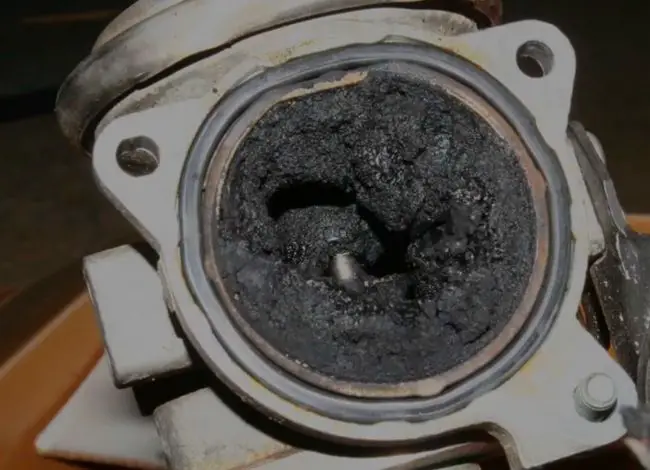
A stuck EGR valve stuck EGR valve can cause rough idling, hesitation, or stalling. A throttle-control problem may produce reduced power, while a position-sensor fault can store codes even before severe symptoms appear.
Signature clues:
- Rough or unstable idle
- Stalling
- Reduced-power mode
- Hesitation
- EGR-flow or throttle-position codes
- Additional traction-control or stability warnings
The exact system varies between makes, models, and engine designs. A generic code description may not explain the complete diagnostic procedure.
First diagnostic move: Check manufacturer-specific code information, live data, wiring, and commanded-versus-actual component position.
Urgency: Moderate. Treat it as more urgent if the throttle response becomes unpredictable, the engine stalls, or the vehicle enters reduced-power mode.
The remaining causes include catalytic-converter efficiency and electrical faults. Those sections also explain whether you can continue driving, why codes should not be cleared too early, and when professional diagnosis becomes necessary.
8. The Catalytic Converter Is Not Working Efficiently
The catalytic converter reduces harmful exhaust emissions. The downstream oxygen sensor monitors its performance, and the computer may turn on the check engine light when converter efficiency falls below the expected level.
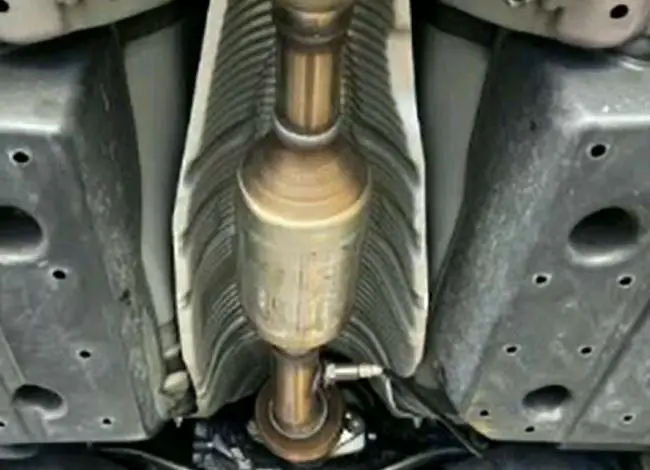
Signature clues:
- Sluggish acceleration
- Poor fuel economy
- Unusual exhaust odor
- Excessive heat beneath the vehicle
- Catalyst-efficiency codes such as P0420 or P0430
A catalyst code does not automatically mean the converter should be replaced. Misfires, incorrect fuel mixture, exhaust leaks, oil burning, or coolant entering the engine may damage the converter or create misleading test results.
First diagnostic move: Check for misfires, fuel-mixture problems, exhaust leaks, and abnormal sensor readings before approving converter replacement.
Urgency: Moderate to high, especially with power loss or excessive heat.
9. A Wiring, Connector, or Voltage Problem Is Present
Modern vehicles depend on electrical signals from many sensors. A loose connector, corroded terminal, damaged wire, poor ground, or low-voltage event can create incorrect readings and store multiple trouble codes.
This possibility is especially important when the check engine light came on after battery work, maintenance, or another repair.
Signature clues:
- Several unrelated codes appear together
- The light started after recent service
- Intermittent starting or stalling
- Sensors lose communication
- The warning disappears and returns
First diagnostic move: Inspect recent work, electrical connections, voltage, grounds, and wiring before replacing sensors or the engine computer.
Urgency: Varies with the symptoms. Stalling, starting problems, or reduced-power mode require prompt attention.
A Code Is Not a Diagnosis
An OBD2 code identifies the condition the computer detected. It does not always identify the failed part.
The correct sequence is:
Read the code → preserve freeze-frame data → compare symptoms → test the system → confirm the repair.
Clearing codes before diagnosis may erase useful evidence. Disconnecting the battery may turn the light off temporarily, but it does not repair the fault.
Can You Drive With the Check Engine Light On?
A short necessary drive may be reasonable when the light is solid, the car runs normally, and there are no other warnings. Avoid hard acceleration and arrange a scan soon.
Minimize driving if the vehicle runs roughly, hesitates, or loses power. If the light flashes continuously, or the car develops severe shaking, smoke, overheating, or a strong fuel or burning odor, pull over safely and arrange assistance.
Always follow the specific instructions in the vehicle’s owner’s manual.
Quick Questions
Why Is the Check Engine Light On but the Car Runs Fine?
A small EVAP leak, loose gas cap, slow sensor, or early emissions fault may not create noticeable driving symptoms. The codes should still be read.
How Long Will the Light Stay On After Tightening the Gas Cap?
It may take several successful drive cycles for the computer to retest the EVAP system. If the light remains on, another fault may be present.
Should You Reset the Check Engine Light?
Not before reading and recording the codes. After the correct repair, the light may turn off when the system confirms that the fault is gone.
Final Takeaway
If your check engine light is on, first determine whether it is solid or flashing and note how the car is behaving. Check the gas cap, preserve the codes, and use proper testing before replacing parts.
A steady light does not require panic, but it should not be ignored. A flashing light with severe symptoms requires immediate attention. The smartest first move is diagnosis—not guessing, resetting, or replacing parts at random.
🔗 Related Articles
- Why Is My RPM Fluctuating While Driving?
- How to Use an OBD-II Scanner to Diagnose Your Car
- Complete Car Diagnostic Codes List
Russell D. Steele writes trouble-code and repair guides for The Effective Guide. His work helps drivers understand what a code means, what might cause it, and which checks to make first.