
Last Updated on October 7, 2026
Smooth acceleration depends on the engine, transmission, fuel system, and drivetrain working together. When your car jerks when accelerating, that smooth delivery of power is being interrupted. The problem may feel like a brief hesitation, repeated bucking, a hard jolt during a gear change, or a vibration at a particular speed.
The way the symptom feels—and when it happens—can help narrow down the responsible system. However, similar problems can produce nearly identical symptoms, so replacing parts based on guesswork can become expensive.
This guide mainly covers gasoline- and diesel-powered vehicles. Hybrid and electric vehicles use different power-delivery systems and may require specialized diagnosis.
Quick Answer
If your car jerks when accelerating, common causes include worn spark plugs, failing ignition coils, dirty fuel injectors, unstable fuel pressure, incorrect airflow readings, intake leaks, transmission trouble, worn drivetrain components, restricted exhaust flow, or internal engine problems.
Start by noting the conditions you have already observed and checking for warning lights or stored diagnostic codes. Do not deliberately recreate severe jerking. If the check engine light is flashing or the vehicle becomes difficult to control, stop using it and arrange professional assistance.
Use This Acceleration Phase Map First
The timing and character of the jerking can provide useful diagnostic direction. This responsive table can be viewed on mobile devices by scrolling horizontally.
Treat this map as a starting point, not a final diagnosis. A technician may need scan data and system-specific tests to confirm which component has failed.
| What You Notice | When It Happens | Possible Diagnostic Direction |
|---|---|---|
| Hesitation followed by a sudden surge | Light or moderate acceleration | Fuel delivery, airflow measurement, or electronic throttle control |
| Repeated bucking or stumbling | Hard acceleration or climbing a hill | Ignition misfire, weak fuel pressure, or restricted exhaust |
| One noticeable jolt | During a particular gear change | Transmission, clutch, engine mount, or drivetrain issue |
| Rumble-strip-like shudder | Within a narrow speed range | Torque converter, transmission, wheel, or drivetrain vibration |
| Jerking with a flashing check engine light | Under any amount of acceleration | Active engine misfire—stop further use to reduce catalytic-converter damage |
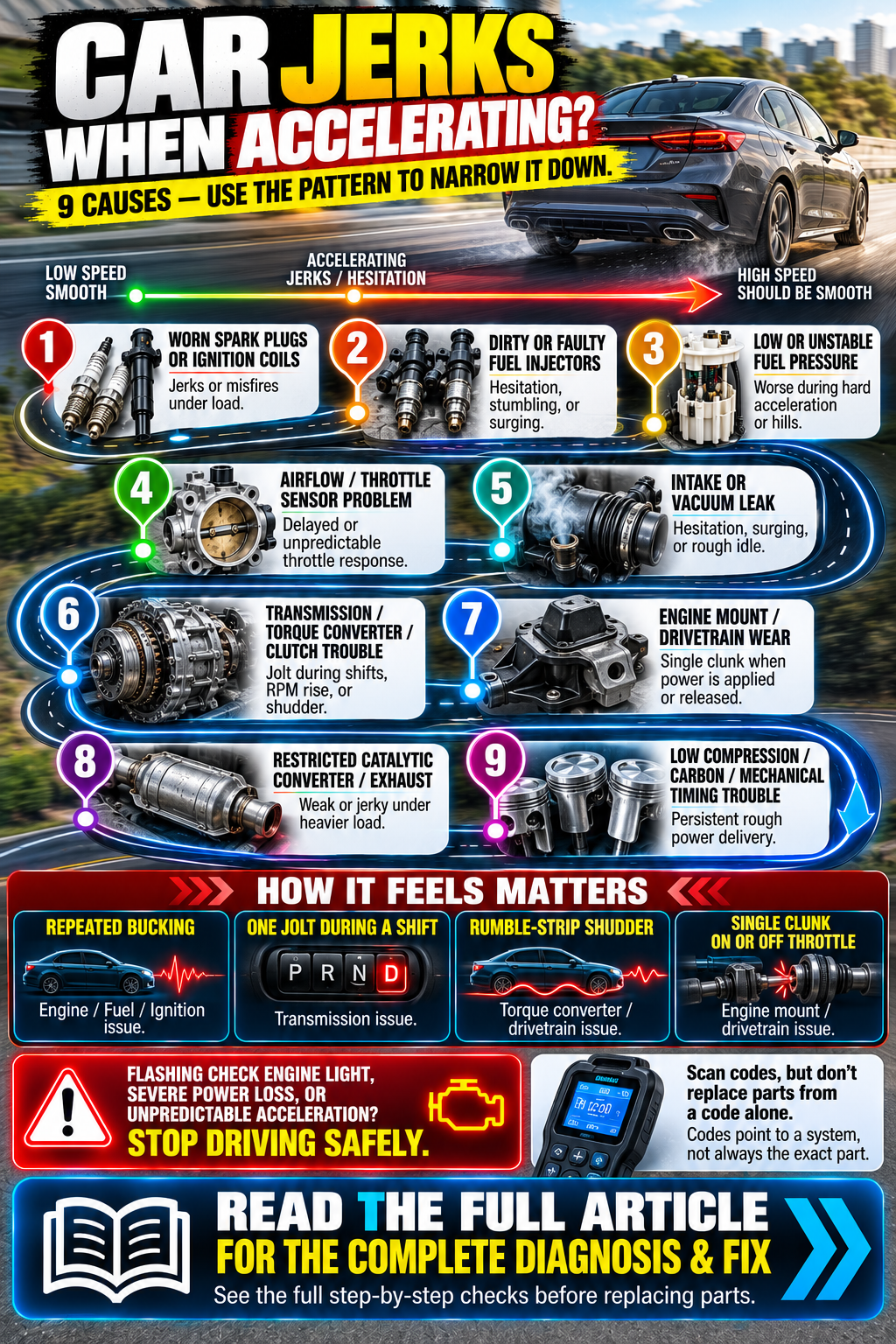
1. Worn Spark Plugs or Failing Ignition Coils
In a gasoline engine, each spark plug must ignite the compressed air-fuel mixture at precisely the right moment. Acceleration places the engine under greater load and increases the voltage needed to produce a reliable spark. A worn plug or weak ignition coil may work during idle but begin misfiring when more power is requested.
Typical accompanying signs include a rough idle, sluggish performance, reduced fuel economy, engine vibration, or an illuminated check engine light. The symptoms may become more noticeable during heavy acceleration or while going uphill.
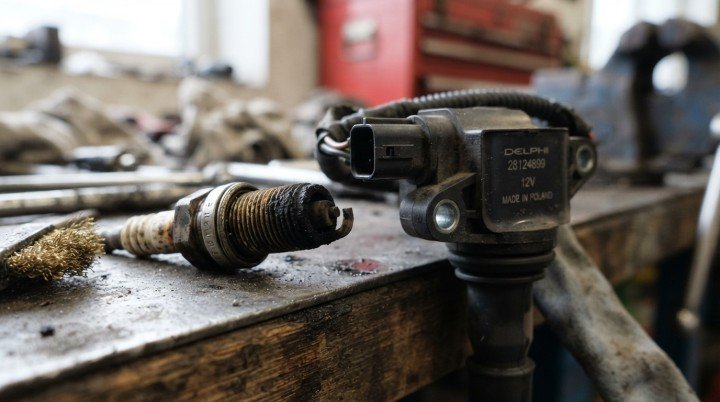
A misfire code can identify the affected cylinder, but it does not automatically prove that the spark plug or coil is defective. Fuel-injector trouble, damaged wiring, low compression, and intake leaks can produce similar codes. The ignition system should therefore be inspected and tested before parts are replaced. Diesel engines use a different combustion process, so spark-plug diagnosis does not apply to them in the same way.
2. Dirty, Clogged, or Faulty Fuel Injectors
Fuel injectors deliver carefully measured amounts of fuel to individual cylinders. If one injector becomes restricted, leaks, sticks, or develops an electrical problem, that cylinder may receive the wrong quantity of fuel. The result can be uneven combustion that feels like hesitation, stumbling, or repeated surging.
Injector trouble may also cause a rough idle, difficult starting, increased fuel consumption, a fuel odor, or misfire-related trouble codes. Contaminated fuel and internal deposits can contribute to restricted flow, but not every injector problem is caused by dirt.
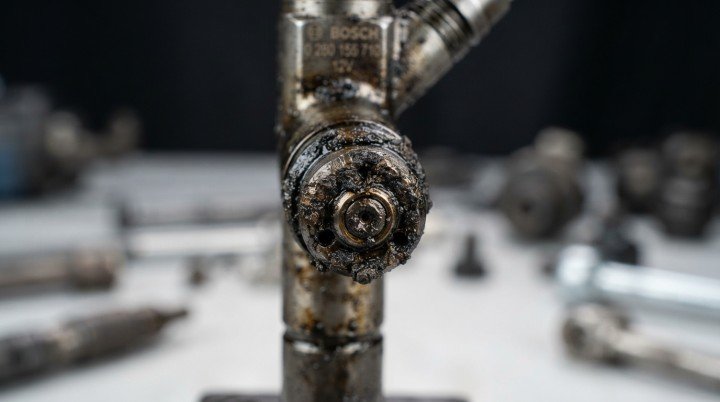
Injector cleaner may help with minor deposits in limited situations, but it cannot repair a failed internal component, damaged electrical circuit, or leaking injector. Professional electrical testing, fuel-trim analysis, and injector balance testing can separate a restricted injector from another fuel or ignition fault.
3. Low or Unstable Fuel Pressure
The engine needs a steady fuel supply as its workload increases. A weak fuel pump, restricted fuel filter, faulty pressure regulator, electrical supply problem, or contaminated fuel can prevent the system from maintaining the required pressure.
This shortage may not be obvious at idle because the engine needs relatively little fuel. During acceleration, however, demand rises quickly. If the system cannot keep up, the engine may hesitate, lose power, or surge as fuel pressure fluctuates. The problem can be especially noticeable under heavier load.
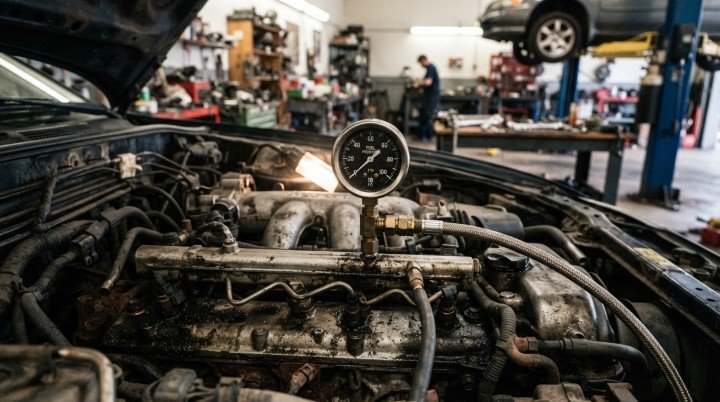
Fuel-pressure readings must be compared with the manufacturer’s specifications. Scan data such as fuel trims can provide additional evidence, but it cannot replace direct system testing in every vehicle. Because automotive fuel systems may remain pressurized and fuel is highly flammable, diagnosis involving fuel lines, pressure gauges, or pump access should be handled by a qualified technician.
4. Incorrect Airflow or Throttle Information
The engine computer calculates fuel delivery using information from several sensors. Depending on the vehicle, these may include the mass airflow sensor, manifold absolute pressure sensor, throttle position sensor, and accelerator pedal position sensor.
If one of these components sends an inaccurate or unstable signal, the computer may briefly command the wrong air-fuel mixture or throttle opening. The vehicle can then hesitate, surge, or respond unpredictably when the accelerator is pressed. A contaminated throttle body or an electronic throttle-control fault may create similar symptoms.
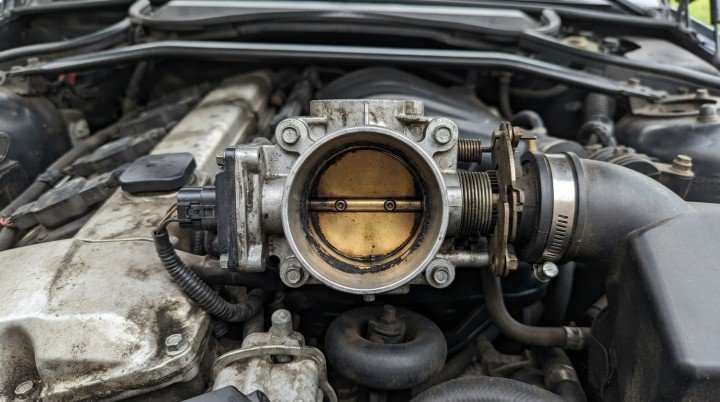
Other clues can include unstable idle speed, reduced power, poor fuel economy, delayed throttle response, or a check engine light. Some vehicles may enter reduced-power or “limp” mode when the computer detects a serious disagreement between throttle-related signals.
A sensor-related trouble code identifies the circuit or reading that needs investigation; it does not necessarily prove the named sensor has failed. Damaged wiring, loose connections, air leaks, low voltage, or another incorrect sensor input can produce the same code. A technician can compare live sensor data with expected values before recommending replacement.
5. An Intake or Vacuum Leak
Air entering the engine should be measured before the computer determines how much fuel to inject. A cracked intake hose, loose connection, damaged intake gasket, or leaking vacuum line can allow additional unmeasured air into the engine.
The unexpected air creates a lean mixture, meaning there is too much air for the commanded amount of fuel. The computer may compensate within a limited range, but a larger or changing leak can cause hesitation, surging, rough idle, or misfires. Some leaks are most noticeable at idle or during gentle acceleration, while others become obvious as the engine moves under load.
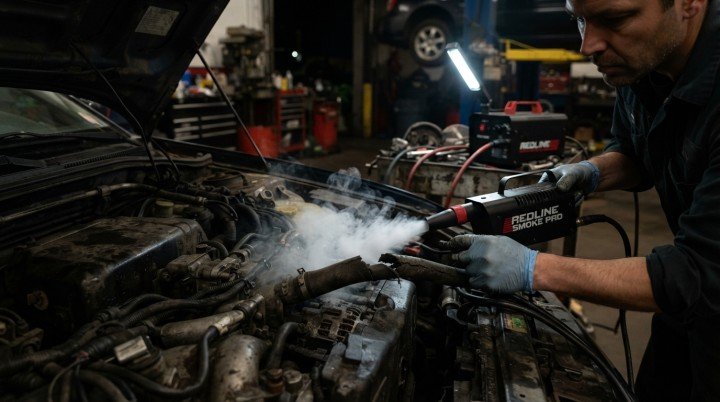
Possible supporting evidence includes unusually high positive fuel-trim readings, lean-condition codes, a whistling or hissing sound, and an idle speed that rises or fluctuates. However, low fuel pressure and inaccurate airflow-sensor readings can also produce lean codes.
A professional smoke test is one of the safer and more reliable ways to locate an intake leak. Spraying flammable chemicals around a running engine is hazardous and should not be used as a home diagnostic method.
6. Transmission, Torque Converter, or Clutch Trouble
Not every acceleration jolt begins inside the engine. The transmission must apply the correct gear smoothly while transferring increasing engine torque to the wheels. If that process is interrupted, the resulting movement can feel very similar to an engine hesitation.
An automatic transmission problem may cause a hard jolt during one particular gear change, delayed engagement, a brief rise in engine speed without matching vehicle acceleration, or repeated shuddering within a narrow speed range. Torque-converter clutch shudder is sometimes described as a rumble-strip vibration rather than a sharp jerk.
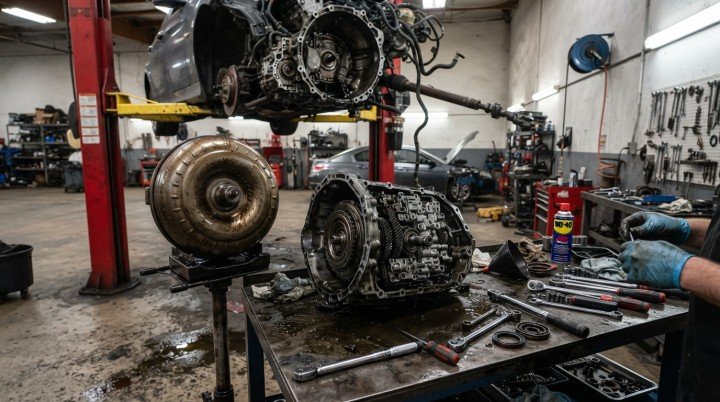
In a manual-transmission vehicle, a worn clutch can allow engine speed to rise without a proportional increase in road speed. Clutch engagement problems may also produce grabbing or shuddering when moving away from a stop.
If a car jerks when accelerating only as the transmission shifts, the timing of the symptom is an important clue. Still, one hard movement does not automatically mean the transmission needs replacement. Incorrect fluid condition or level, control-solenoid faults, software issues, sensor problems, worn mounts, and internal wear can overlap.
Accurate diagnosis may require transmission-specific scan data, manufacturer service information, and inspection by a qualified technician. If the vehicle slips badly, loses drive, displays a transmission warning, or produces severe unpredictable jolts, further use should stop until it has been inspected.
7. Worn Engine Mounts or Drivetrain Components
Engine and transmission mounts hold the powertrain in position while absorbing normal movement. When a mount becomes weak or damaged, the engine may shift excessively as torque increases, creating a thump or jolt when power is applied or released.
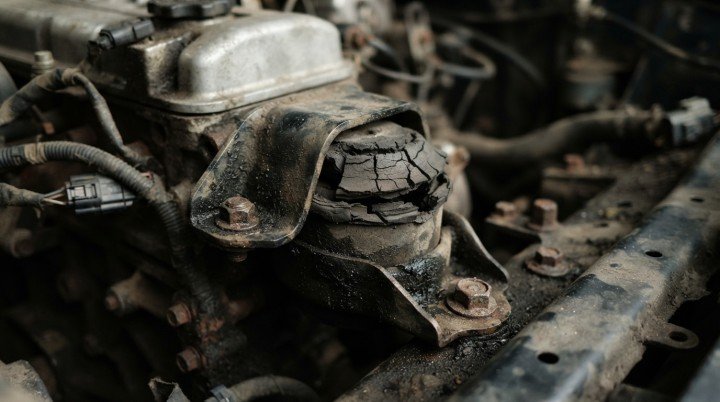
Worn CV joints, driveshaft components, universal joints, or excessive drivetrain play can produce similar symptoms. These problems are more likely when the movement feels like a single clunk rather than repeated engine stumbling. A physical inspection can help distinguish drivetrain movement from a combustion problem.
8. A Restricted Catalytic Converter or Exhaust System
Exhaust gases must leave the engine efficiently. A partially blocked catalytic converter or damaged exhaust component can create excessive backpressure, making it difficult for the engine to breathe as speed and load increase.
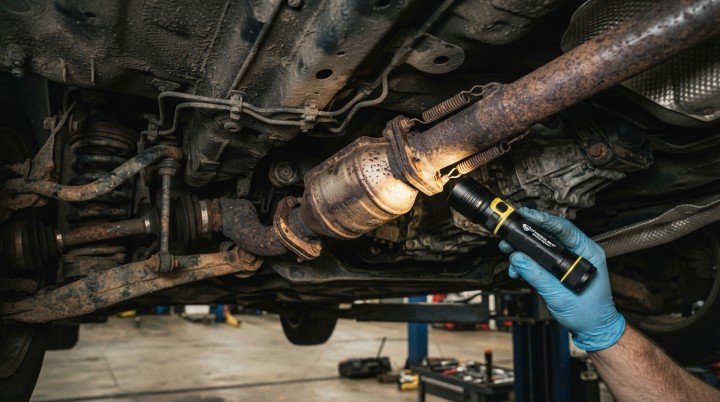
The vehicle may idle normally but feel weak, hesitant, or jerky during heavier acceleration. Other possible clues include poor fuel economy, unusual exhaust heat, a sulfur-like odor, or catalyst-efficiency codes. Because ignition and fuel problems can damage a catalytic converter, the underlying cause should be identified before a replacement is approved.
9. Low Compression, Carbon Buildup, or Mechanical Timing Trouble
Every cylinder needs adequate compression and correct valve timing to produce consistent power. Worn internal components, valve problems, heavy carbon buildup, or incorrect mechanical timing can weaken one or more cylinders.
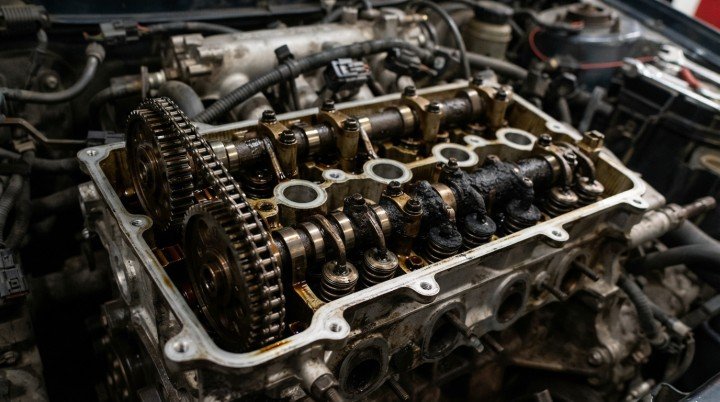
The resulting imbalance may cause rough running, misfires, slow acceleration, difficult starting, or persistent jerking that remains after common ignition and fuel faults have been ruled out. Compression, cylinder-leakage, and timing checks can confirm an internal engine problem. These tests require appropriate equipment and should be performed by a qualified technician.
Engine vs. Transmission vs. Drivetrain: Quick Comparison
| Likely Area | Typical Pattern | Supporting Clues |
|---|---|---|
| Engine, ignition, or fuel system | Repeated stumbling, hesitation, or bucking under load | Rough idle, misfire codes, reduced power, or flashing check engine light |
| Transmission or clutch | Jolt during a particular shift or shudder at a narrow speed range | Delayed engagement, slipping, RPM flare, or transmission warning |
| Mounts or drivetrain | Single clunk when power is applied or released | Excessive engine movement, vibration, or noise from underneath the vehicle |
What to Check First When Your Car Jerks When Accelerating
Begin with evidence that is already available. Note whether the problem appeared after refueling, recent maintenance, or a warning light. Record whether it occurs during light acceleration, heavy load, one gear change, or a particular speed range.
Next, have the vehicle scanned for stored and pending trouble codes. Codes can provide direction, but they should be supported by live data and system testing before parts are replaced. A technician will commonly evaluate misfire counts, fuel trims, airflow readings, throttle signals, fuel pressure, transmission data, and the physical condition of mounts and drivetrain components.
Can You Continue Driving?
A mild, occasional hesitation still deserves prompt inspection because the condition may worsen. Continuing to use a vehicle with an active misfire can overheat and damage the catalytic converter.
Stop further use and arrange roadside assistance if the check engine light flashes, power loss becomes severe, acceleration is unpredictable, the vehicle becomes difficult to control, or you notice a strong fuel or burning odor. A transmission warning, overheating, or a heavy mechanical clunk also calls for immediate caution.
Common Diagnostic Mistakes
The most common mistake is replacing the component named in a trouble code without confirming the failure. Other costly errors include assuming every jerk is a transmission problem, using injector cleaner as a universal fix, or ignoring the exact moment the symptom occurs. Diagnosis should follow evidence, not the most familiar part name.
Frequently Asked Questions
Can I drive if my car jerks when accelerating?
It depends on the severity. A slight hesitation may allow careful movement to a nearby repair facility, but severe jerking, a flashing check engine light, major power loss, or unpredictable response means the vehicle should not be driven.
Can bad fuel cause sudden jerking?
Yes. Contaminated fuel or incorrect fuel can disrupt combustion, especially if the problem began soon after refueling. Save the fuel receipt and tell the technician when the symptom started.
Will an OBD2 scanner identify the exact failed part?
Usually not. A scanner identifies detected faults and abnormal circuits. Proper diagnosis may still require live-data analysis, pressure testing, electrical checks, or mechanical inspection.
Conclusion
When a car jerks when accelerating, the sensation is only the beginning of the diagnosis. Repeated bucking often points toward ignition, fuel, or airflow trouble; a shift-related jolt suggests transmission involvement; and a clunk may indicate mounts or drivetrain wear. Paying attention to the pattern and confirming it with proper testing can prevent unnecessary repairs—and stop a smaller fault from becoming a more expensive one.
Kevin Nicholas is an automotive mechanic and editor of The Effective Guide. He writes about warning lights, car problems, and diagnostic tools, helping drivers understand what to check before replacing a part.