
Last Updated on October 7, 2026
A white cloud behind your car can mean two completely different things. It may be harmless water vapor on a cold morning, or it may be an early warning that coolant is entering the engine.
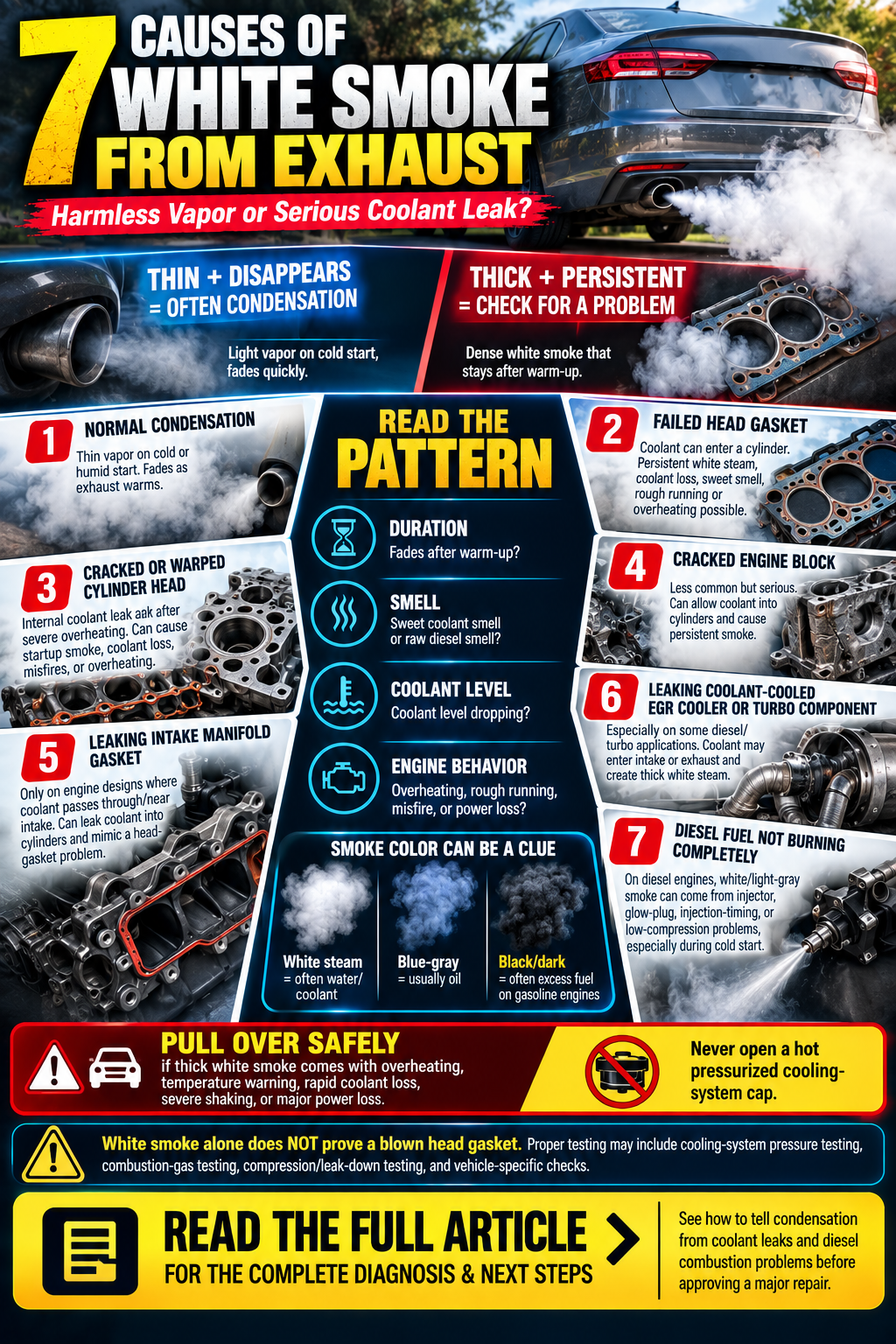
The difference is usually revealed by the pattern. Temporary vapor is thin, disappears quickly, and normally stops once the exhaust warms up. Smoke caused by a mechanical problem is more likely to be thick, persistent, or accompanied by coolant loss, overheating, rough running, or an unusual smell.
Understanding white smoke from exhaust causes therefore starts with observing when the smoke appears—not immediately assuming that the engine needs a major repair.
Read the Smoke Before Assuming the Repair
Before blaming a particular component, note whether the engine is cold or warm, how long the cloud remains visible, and whether the vehicle has developed any additional symptoms.
| Smoke Pattern | What It May Mean | Suggested Response |
|---|---|---|
| Thin vapor during a cold start that quickly disappears | Normal condensation | Continue monitoring |
| Thick smoke that continues after the engine warms up | Possible internal coolant leak | Arrange prompt diagnosis |
| White smoke with a sweet smell and falling coolant level | Coolant may be entering a cylinder or the exhaust | Avoid unnecessary driving |
| White smoke with a rough diesel cold start | Possible incomplete fuel combustion | Have the diesel system tested |
| Blue-gray smoke with an oily smell | Engine oil may be burning | Investigate an oil-related problem |
The first step in narrowing down white smoke from exhaust causes is separating harmless moisture from smoke that remains after normal operating temperature is reached.
1. Normal Condensation Creates Temporary White Vapor
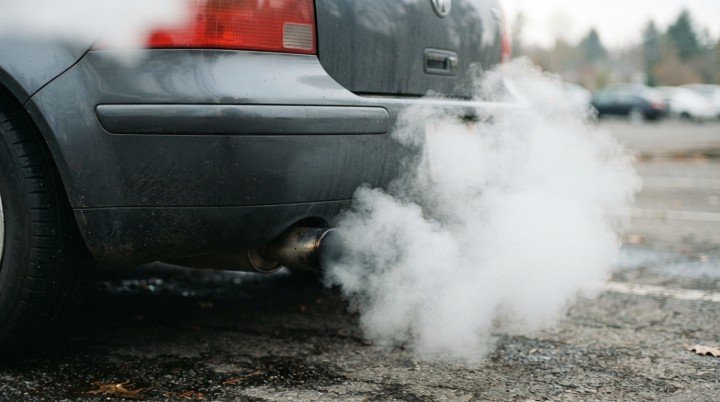
An engine naturally produces water vapor during combustion. After the vehicle is parked and the exhaust system cools, some moisture may collect inside the exhaust. When the engine is started again, the warming exhaust turns that moisture into a visible white cloud.
This is especially common during cold or humid weather. A small amount of water may also drip from the tailpipe, which can be normal when no other warning signs are present.
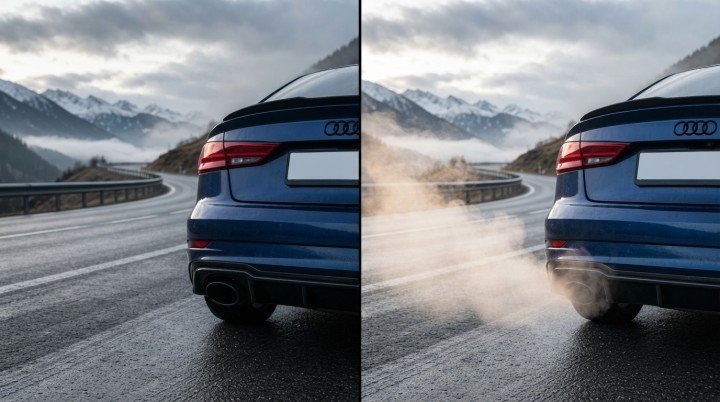
Condensation usually has a recognizable pattern: the vapor is light, disappears into the air quickly, and becomes less visible as the engine and exhaust warm up. It should not cause the coolant level to fall, make the engine overheat, or create severe drivability problems.
If the cloud becomes thicker instead of fading, continues after the engine is fully warm, or returns during normal driving, condensation becomes a less convincing explanation.
2. A Failed Head Gasket Allows Coolant Into a Cylinder
The head gasket seals the joint between the cylinder head and engine block. It helps keep combustion pressure, engine oil, and coolant in their correct passages. If part of this seal fails, coolant may enter one or more combustion chambers.
The heat inside the cylinder converts that coolant into steam, which then leaves through the exhaust as dense white smoke. Unlike ordinary condensation, this cloud may continue after warm-up and can remain visible while the vehicle is being driven.
Among serious white smoke from exhaust causes, head-gasket failure is one of the most widely recognized. It may be accompanied by unexplained coolant loss, a sweet exhaust odor, rough idle, misfires, reduced power, or rising engine temperature.
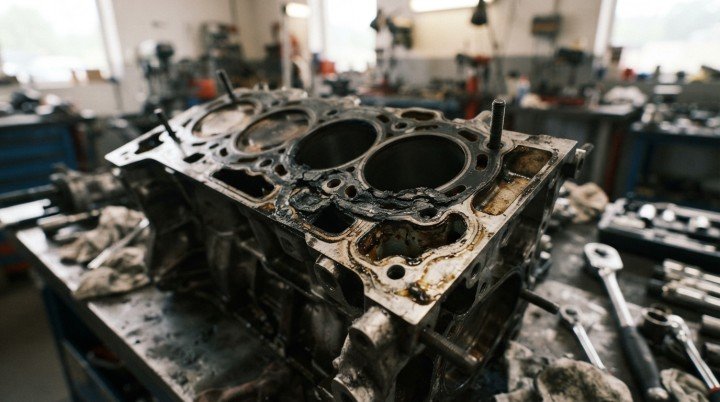
However, white smoke alone does not confirm a failed head gasket. A cracked cylinder head, damaged engine block, leaking intake gasket, or a vehicle-specific coolant-to-exhaust leak can create a similar result. Proper testing is needed before approving an expensive repair.
A technician may use a cooling-system pressure test, a combustion-gas test, and compression or leak-down testing to identify the leak. Any inspection involving the cooling system must be performed carefully. Never remove a radiator or pressurized coolant cap while the engine is hot.
If thick white smoke appears with overheating or a temperature warning light, pull over safely and shut off the engine. Continuing to drive an overheating vehicle can turn a repairable cooling-system problem into extensive engine damage.
3. The Cylinder Head Is Cracked or Warped
The cylinder head forms the upper portion of the combustion chambers and contains passages for coolant and engine oil. It must remain flat against the engine block so the head gasket can maintain a reliable seal.
Severe overheating can cause an aluminum cylinder head to warp. Extreme temperature stress may also create a crack between a coolant passage and a combustion chamber. Either type of damage can allow coolant to enter a cylinder and leave the tailpipe as thick white steam.
The accompanying clues may include coolant loss without an obvious external leak, repeated overheating, rough starting, misfires, or reduced power. Smoke may be strongest immediately after startup if coolant has slowly entered a cylinder while the vehicle was parked.
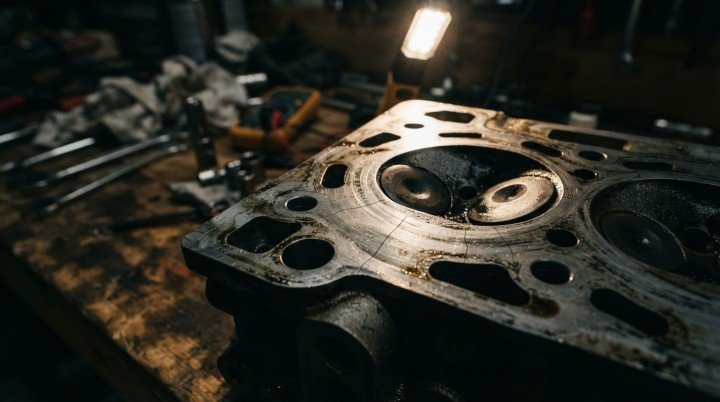
These symptoms overlap heavily with head-gasket failure. In fact, an overheating event can damage both the gasket and the cylinder head. Replacing only the gasket without checking the head for flatness or cracks could allow the problem to return.
Cooling-system pressure testing, compression testing, and leak-down testing may show that an internal leak exists, but the cylinder head may need professional inspection to confirm the exact damage.
4. The Engine Block Has Developed a Crack
The engine block contains the cylinders and many of the passages that carry coolant through the engine. Although it is designed to tolerate high temperatures and pressures, it can crack in extreme circumstances.
A block may be damaged by severe or repeated overheating. Freezing can also create excessive internal pressure if the cooling system contains an improper coolant mixture. Manufacturing defects are possible but comparatively uncommon.
If a crack connects a coolant passage with a cylinder, coolant can enter the combustion process and create persistent white smoke. Depending on the crack’s location, coolant might also mix with engine oil or leak outside the engine.
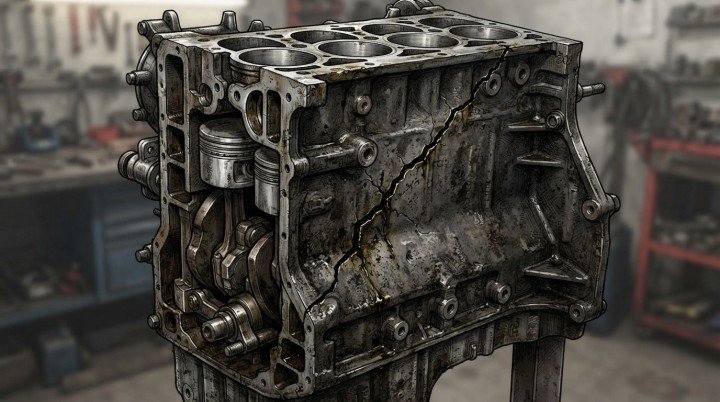
Possible supporting signs include rapid coolant loss, overheating, poor compression, rough operation, contaminated oil, or pressure building abnormally in the cooling system. However, none of these signs can confirm a cracked block by itself.
This is generally less common than condensation or head-gasket failure, but it can require extensive repair. The best solution depends on the location and severity of the damage, the engine’s condition, and the vehicle’s value. A confirmed crack may require specialized repair, block replacement, or engine replacement.
5. The Intake Manifold Gasket Is Leaking
This cause applies only to engine designs in which coolant flows through or near the intake manifold. The intake manifold distributes air to the cylinders, while its gasket seals the manifold against the cylinder heads or engine.
If the gasket fails beside a coolant passage, coolant may leak into an intake port and then enter one or more cylinders. Once heated during combustion, it can create white exhaust smoke similar to a head-gasket problem.
A leaking intake manifold gasket may also cause a rough idle, startup misfire, unexplained coolant loss, or overheating. In some cases, smoke is more noticeable during startup because coolant collects while the engine is off.
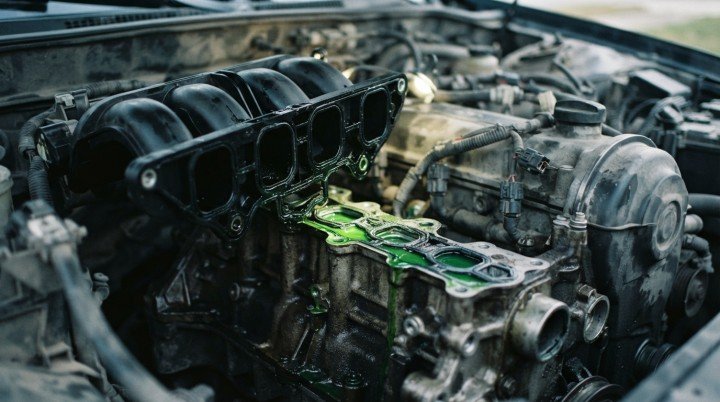
Not every modern engine routes coolant through the intake manifold, so this possibility must be checked against the vehicle’s specific engine design. An intake vacuum leak without coolant involvement can cause rough running, but it will not normally create thick white exhaust smoke.
When comparing serious white smoke from exhaust causes, smoke timing can help guide the investigation but cannot provide a final diagnosis. A technician may inspect the spark plugs for evidence that one cylinder is unusually clean or contaminated, pressure-test the cooling system, and examine the intake manifold’s coolant passages where applicable.
Radiator, hose, and water-pump leaks deserve attention because they can reduce coolant and cause overheating. However, an external leak does not directly create smoke from the tailpipe unless coolant also finds an internal path into a cylinder or exhaust component.
6. A Coolant-Cooled EGR Cooler or Turbo Component Is Leaking
Some diesel engines use an EGR cooler to reduce the temperature of exhaust gases before recirculating them into the intake. Engine coolant flows through this component to absorb heat.
If the EGR cooler develops an internal crack, coolant can enter the exhaust or intake path. The result may be thick white steam, unexplained coolant loss, a sweet exhaust smell, and possibly rough running. Because the coolant may go directly into the exhaust system, the symptoms can resemble a head-gasket failure even when the gasket is intact.
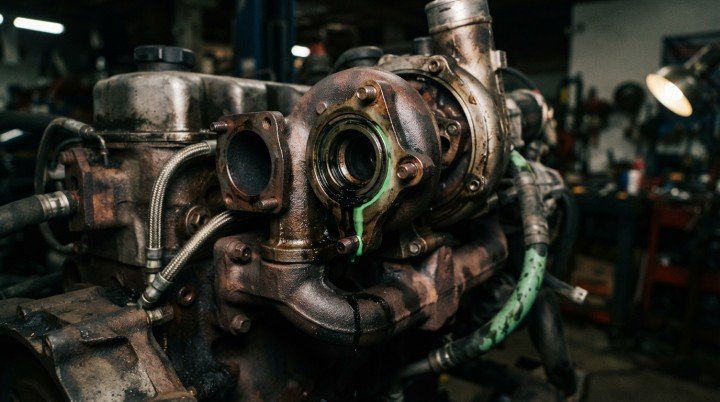
Certain turbochargers are also cooled by engine coolant. Although less common, a coolant-side failure may allow coolant to reach the intake or exhaust. A turbo oil-seal problem is different: burning engine oil generally creates blue or blue-gray smoke rather than pure white steam.
These failures are vehicle-specific. A naturally aspirated gasoline engine without a cooled EGR system will not have the same possible leak paths. The mechanic should confirm the engine’s equipment before recommending EGR-cooler or turbocharger replacement.
7. Diesel Fuel Is Not Burning Completely
White smoke from a diesel engine does not always mean coolant is present. Diesel fuel can leave the exhaust as a white or light-gray haze when cylinder temperature or compression is too low for complete combustion.
This may happen because of a faulty fuel injector, failed glow plug, incorrect injection timing, low cylinder compression, or another cold-start combustion problem. The smoke may be accompanied by difficult starting, shaking, misfires, reduced power, or a noticeable raw-diesel smell.
Timing offers an important clue. Smoke that appears during a cold diesel start and improves as the engine warms may point toward glow-plug or compression-related trouble. Smoke that continues with falling coolant levels suggests that an internal coolant leak or EGR-cooler problem should also be investigated.
On a gasoline engine, excessive fuel more commonly produces dark or black smoke. Therefore, the engine type must be identified before using smoke color to judge the problem.
Four Clues That Help Narrow the Cause
Sorting white smoke from exhaust causes becomes easier when four observations are considered together: duration, smell, coolant level, and engine behavior.
Thin vapor that disappears after warm-up favors condensation. Thick smoke that continues from a warm engine is more concerning. A sweet smell and unexplained coolant loss support an internal coolant leak, while a raw-fuel smell with a difficult diesel cold start points more toward incomplete combustion.
Overheating, rough running, misfires, or power loss increase the urgency. Smoke color should be treated as one clue—not as proof of a particular failed part.
What Should a Mechanic Check First?
Diagnosis should begin by confirming whether the substance is water vapor, coolant steam, unburned diesel fuel, or blue-gray oil smoke. The technician should record when it appears and scan the vehicle for relevant trouble codes and misfire data.
If coolant loss is suspected, a cooling-system pressure test and combustion-gas test can help identify an internal leak. Compression or leak-down testing may provide further evidence of cylinder sealing problems. Depending on the vehicle, the technician may then inspect the head gasket, cylinder head, engine block, intake gasket, EGR cooler, or coolant-cooled turbo components.
For a diesel engine with stable coolant level, diagnosis may shift toward injector performance, glow-plug operation, injection timing, and cylinder compression. This sequence helps prevent an expensive component from being replaced based only on smoke color.
Can You Continue Driving?
Brief vapor during a cold start that disappears completely is generally normal. Persistent thick smoke should be treated differently.
Pull over safely and shut off the engine if the smoke is accompanied by overheating, a temperature warning light, rapid coolant loss, severe shaking, or major power loss. Continuing to drive could worsen cylinder-head, head-gasket, or engine-block damage.
If the engine temperature remains normal but the smoke repeatedly returns, arrange an inspection promptly. Do not open the cooling-system cap while the engine is hot or pressurized.
Frequently Asked Questions
Does White Smoke Always Mean a Blown Head Gasket?
No. Condensation, a damaged cylinder head or block, an intake gasket leak, a leaking EGR cooler, and diesel combustion problems can produce a similar appearance.
Why Does It Happen Only During Startup?
Temporary cold-start vapor is often condensation. Persistent startup smoke may indicate coolant collecting in a cylinder while parked or incomplete combustion in a cold diesel engine.
Can White Smoke Appear Without Overheating?
Yes. A small internal coolant leak may create smoke before the temperature gauge rises. Coolant level and other symptoms still need monitoring.
Can Too Much Engine Oil Cause White Smoke?
Excess oil can enter the combustion process, but the resulting smoke is normally blue or blue-gray and may have an oily smell.
Will Head-Gasket Sealer Permanently Fix the Problem?
Sealer is not a substitute for diagnosis and may not provide a lasting repair. It also cannot fix every crack, warped surface, or vehicle-specific coolant leak.
Final Thoughts
The most useful way to understand white smoke from exhaust causes is to follow the pattern rather than the color alone. Smoke that disappears after a cold start is usually harmless vapor, while thick persistent smoke may indicate coolant intrusion or a diesel combustion fault. Confirm the engine type, supporting symptoms, and test results before approving a major repair.
Kevin Nicholas is an automotive mechanic and editor of The Effective Guide. He writes about warning lights, car problems, and diagnostic tools, helping drivers understand what to check before replacing a part.