
Last Updated on October 7, 2026
An ignition coil can fail without leaving one unmistakable sign. The engine may shake, hesitate, lose power, use more fuel, or illuminate the check engine light—but spark plugs, injectors, wiring faults, intake leaks, and low compression can produce many of the same results.
That is why bad ignition coil symptoms should be treated as evidence, not confirmation. One symptom creates suspicion. Several connected symptoms make an ignition problem more likely. The coil should be considered confirmed only after scan data, circuit integrity, and other possible causes have been evaluated.
Ignition coils are used in gasoline engines to convert low battery voltage into the much higher voltage needed by the spark plugs. Many modern engines use one coil for each cylinder, while some vehicles use shared coil packs or older distributor-style systems. A single failed coil may therefore affect one cylinder, multiple cylinders, or—in some older designs—the entire engine.
This article focuses on spark-ignition engines. Diesel engines use compression ignition and generally do not use the same type of ignition coil and spark-plug system.
How Strong Are Bad Ignition Coil Symptoms as Evidence?
Not every warning sign deserves the same diagnostic weight. To avoid replacing a coil based on guesswork, each symptom in this guide receives an evidence-strength rating.
Weak Evidence
The symptom can occur with a coil fault, but it is also common with unrelated engine, fuel, sensor, or transmission problems. Poor fuel economy and general power loss fall into this category when they appear alone.
Moderate Evidence
The symptom fits an ignition-related misfire, especially when it appears with rough running, a check engine light, or a repeatable cylinder-specific pattern. It still does not prove that the coil itself is responsible.
Strong Evidence
Professional testing shows that one coil—not its spark plug, injector, wiring, power supply, control command, or cylinder compression—is responsible for the misfire. A trouble code by itself rarely reaches this level.
The most useful way to interpret bad ignition coil symptoms is to look for a connected evidence trail rather than the largest number of warning signs.
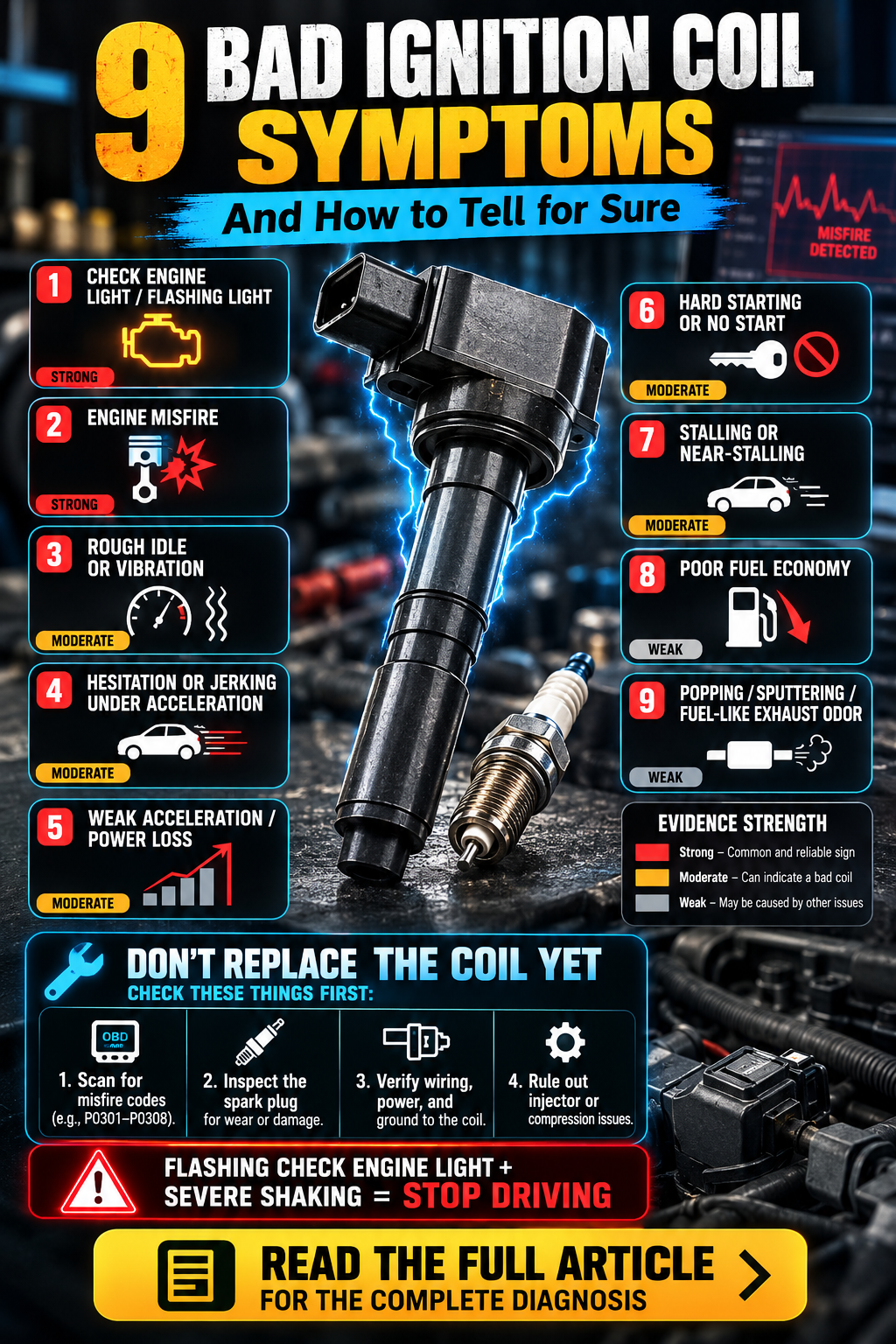
Symptom 1: The Check Engine Light Comes On or Flashes
Evidence strength: Moderate
A weak or failed ignition coil can prevent a cylinder from burning its air-fuel mixture correctly. The engine computer may recognize the resulting misfire and illuminate the check engine light.
A scanner may retrieve a random-misfire code such as P0300 or a cylinder-specific code such as P0301, P0302, or another P030x code. These codes identify where the misfire was detected; they do not identify its cause. A worn spark plug, restricted injector, intake leak, wiring problem, or low compression could affect the same cylinder.

A P035x code provides a different type of evidence. It generally points toward an ignition-coil primary or secondary circuit problem. The fault may be inside the coil, but it may also involve the connector, wiring, power supply, control signal, or engine computer driver. The complete circuit still needs to be evaluated.
A flashing check engine light is more urgent than a steady one because it may indicate an active, catalyst-damaging misfire. If the light flashes while the engine shakes or loses significant power, stop further use and arrange professional assistance.
Symptom 2: The Engine Develops a Noticeable Misfire
Evidence strength: Moderate to strong
A misfire occurs when a cylinder fails to produce its expected combustion event. If the coil cannot provide enough voltage at the required moment, the spark may become weak, intermittent, or absent.
From the driver’s seat, the engine may feel as though it briefly skips, stumbles, or loses its normal rhythm. The symptom can become more noticeable when the engine is asked to produce additional power because higher cylinder pressure places greater demand on the ignition system.
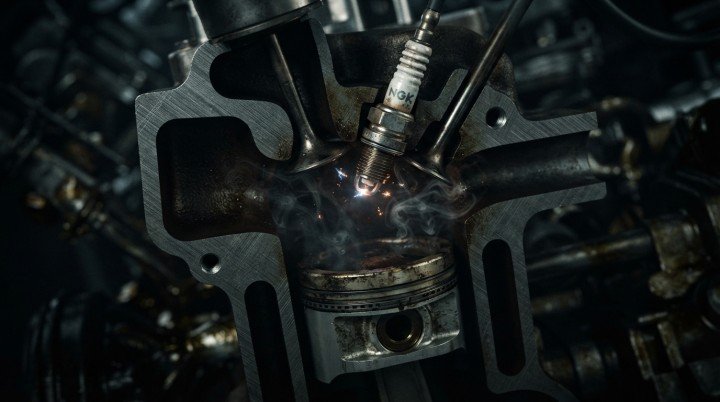
A misfire that repeatedly affects the same cylinder creates stronger evidence than a general stumble with no supporting data. Even then, the coil is only one suspect. The spark plug, injector, air-fuel mixture, mechanical timing, compression, and electrical command all influence combustion.
A technician can review cylinder-specific misfire counts and freeze-frame information to determine when the fault occurred. This evidence helps separate a consistent single-cylinder problem from a random or system-wide condition without deliberately recreating severe symptoms.
Symptom 3: The Engine Idles Roughly or Vibrates
Evidence strength: Moderate
At idle, each cylinder contributes a small, evenly timed amount of power. When one cylinder fires inconsistently, the engine can lose that smooth rhythm. The driver may notice shaking through the steering wheel, seat, or vehicle body while stopped.
A coil-related rough idle may occur continuously or appear only when the coil becomes hot, damp, or electrically stressed. Engine speed may fluctuate, and the exhaust note may sound uneven. A check engine light or increasing misfire count strengthens the ignition-related direction.
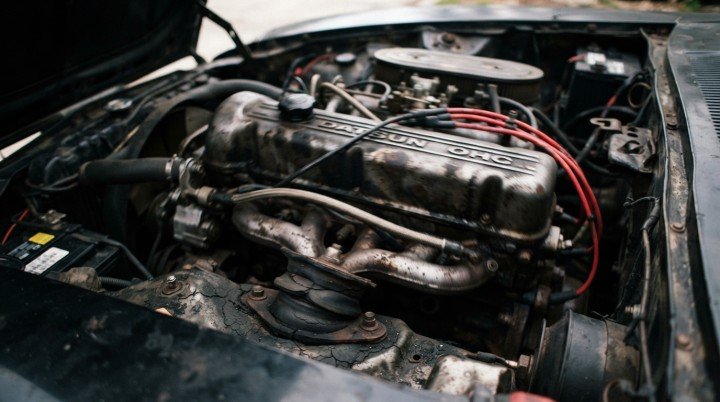
However, rough idle is not exclusive to the ignition system. A vacuum leak, dirty injector, throttle-control problem, incorrect airflow reading, low compression, or damaged engine mount can create similar complaints. An engine mount may transmit more vibration without causing a true combustion misfire, while an ignition fault usually affects engine smoothness and may produce diagnostic evidence.
Because ignition coils generate high voltage, diagnosis should not involve touching or unplugging ignition components while the engine is operating. Coil and circuit testing should be performed using the correct manufacturer procedure and appropriate professional equipment.
Symptom 4: The Vehicle Hesitates or Jerks During Acceleration
Evidence strength: Moderate
Acceleration increases the pressure inside the cylinders and raises the voltage needed to fire each spark plug. A weakening coil may still create enough spark for a smooth idle but begin failing when the engine is placed under greater load.
The driver may notice a brief hesitation, repeated stumbling, or jerking as power is requested. The symptom may be intermittent and appear only during stronger acceleration, although it can become more consistent as the coil deteriorates.

This pattern supports an ignition problem, especially when a cylinder-specific misfire count rises at the same time. It does not isolate the coil, however. A worn spark plug, dirty injector, weak fuel pressure, intake leak, or incorrect airflow reading can also disrupt acceleration.
The condition should be evaluated using previously observed symptoms and scan evidence. Deliberately recreating severe jerking or power loss is unnecessary and may be unsafe.
Symptom 5: Acceleration Feels Weak or the Engine Loses Power
Evidence strength: Weak to moderate
An engine produces less total torque when one cylinder contributes inconsistent power. The vehicle may feel unusually slow, struggle to respond, or require more accelerator input than normal.
Some engine computers respond to repeated misfires or ignition-circuit faults by limiting power. This protective strategy is commonly called reduced-power or limp mode. A warning message or additional trouble codes may appear when it is active.

General power loss provides weaker coil evidence than a cylinder-specific misfire because many systems affect acceleration. Low fuel pressure, a restricted catalytic converter, inaccurate sensors, throttle-control faults, transmission problems, and low compression can all make the vehicle feel underpowered.
The RPM pattern offers useful context. An engine that runs roughly while power drops points more strongly toward combustion. An engine that revs while vehicle speed fails to rise proportionally may direct attention toward the transmission or clutch instead.
Symptom 6: The Engine Becomes Difficult to Start—or Will Not Start
Evidence strength: Weak to moderate
The engine needs a reliable spark from its first combustion cycles. A weak coil can cause extended cranking, an uneven start, or immediate stumbling after the engine begins running. Cold temperatures or moisture may expose weaknesses in damaged insulation or electrical connections.
The result depends heavily on ignition-system design. In a modern coil-on-plug engine, one failed coil usually affects a single cylinder, so the engine may still start and run roughly. An older system using one main coil—or a shared coil pack affecting multiple cylinders—has a greater chance of producing a complete no-start.

Hard starting alone is weak evidence because the battery, starter, fuel pump, crankshaft sensor, spark plugs, wiring, and engine compression can create similar results. The diagnostic direction becomes stronger when starting trouble appears with a misfire code, rough running, or a confirmed loss of ignition output.
A no-start should not lead directly to replacing the ignition coils. The technician must first determine whether the engine is missing spark, fuel delivery, correct timing, electrical power, or adequate compression.
Taken together, these bad ignition coil symptoms strengthen the ignition direction only when acceleration, power, and starting problems connect to the same misfiring cylinder or coil circuit. Without that connection, the coil remains one possibility among several.
Symptom 7: The Engine Stalls or Nearly Stalls
Evidence strength: Weak to moderate
A severe or intermittent ignition failure can prevent the engine from maintaining stable combustion, particularly at lower engine speeds. The RPM may drop suddenly, the engine may nearly stop, or it may stall and restart later.
Heat, vibration, moisture, and damaged electrical connections can make an intermittent coil fault appear and disappear. However, stalling has many possible causes, including a weak fuel pump, crankshaft-position sensor fault, electronic throttle problem, charging-system issue, or electrical power interruption.

Stalling becomes stronger ignition evidence when it occurs with rough running, a cylinder-specific misfire, or an ignition-circuit code. Repeated or unpredictable stalling is a safety concern and requires prompt professional diagnosis.
Symptom 8: Fuel Economy Drops
Evidence strength: Weak
When a cylinder misfires, the engine cannot convert every measured amount of fuel into useful power. The engine computer may adjust fuel delivery while attempting to maintain performance, and the driver may use more throttle to compensate for reduced power.

A noticeable MPG decrease can accompany a failing coil, but it is one of the least specific signs. Tire pressure, driving conditions, short trips, fuel injectors, oxygen sensors, thermostats, air filters, and other engine-control faults can also increase fuel consumption.
Fuel economy becomes more meaningful when the decline begins alongside rough running, misfire codes, or acceleration problems. By itself, it is not a reason to purchase ignition coils.
Symptom 9: Popping, Sputtering, or a Fuel-Like Exhaust Odor
Evidence strength: Moderate when combined with a misfire
Inconsistent combustion can change the engine and exhaust sound. The driver may hear irregular popping or sputtering and notice an unusual fuel-like odor. These signs may indicate that part of the air-fuel mixture is not burning as expected.
A failing coil is one possible cause, but incorrect fuel delivery, leaking injectors, mechanical timing problems, and an overly rich mixture can produce similar results. A strong fuel odor may also indicate a leak, which requires immediate caution.

Unburned fuel reaching the catalytic converter can cause excessive heat and expensive damage. If the symptom appears with a flashing check engine light, severe shaking, or major power loss, stop further use and arrange roadside assistance.
When Bad Ignition Coil Symptoms Become Proof
No single symptom confirms a failed coil. This responsive evidence matrix shows what each finding actually supports.
| Evidence | Strength | What It Actually Shows |
|---|---|---|
| Poor MPG alone | Weak | Efficiency changed, but the cause is unknown |
| Rough idle with hesitation | Moderate | One or more cylinders may be misfiring |
| Cylinder-specific P030x code | Moderate | A misfire was detected in that cylinder |
| P035x coil-circuit code | Moderate to strong | The coil circuit, wiring, command, or coil has a fault |
| Misfire pattern follows the suspected coil during professional testing | Strong | The coil becomes the leading cause |
| Correct power, ground, and command but inadequate coil output | Strong | Coil failure is strongly supported |
The Coil Proof Chain: How a Technician Confirms the Fault
Proof Point 1: Confirm Which Cylinder Is Misfiring
The technician reviews stored and pending codes, freeze-frame information, and cylinder-specific misfire counters. This establishes where and under what conditions the misfire occurred.
Proof Point 2: Separate the Coil From Its Circuit
A coil cannot work without correct power, ground, wiring, connector condition, and control command. A P035x code may identify this circuit, but it cannot determine which part of the circuit failed.
Proof Point 3: Rule Out the Closest Mimics
The spark plug, injector, intake sealing, compression, mechanical timing, and plug-well condition must be considered. Oil or moisture around the coil can damage insulation or create a fault that returns after coil replacement.
Proof Point 4: Confirm the Pattern Professionally
Depending on the vehicle, a qualified technician may use manufacturer-approved coil substitution, ignition-waveform analysis, or electrical measurements. The repair is supported when the fault pattern follows the coil or testing shows inadequate output despite correct power and command.
Ignition systems generate high voltage. Coils should not be touched, unplugged, or open-spark tested while the engine is operating.
What Can Damage an Ignition Coil?
Heat and internal insulation breakdown can cause age-related failure. Worn or incorrectly specified spark plugs may increase the voltage demand placed on a coil. Oil or water contamination, damaged boots, corroded connections, low system voltage, wiring resistance, and control-circuit faults can also contribute.
Finding the cause matters because replacing the coil without correcting contamination, plug wear, or a circuit problem may allow the symptom to return.
Should One Coil or Every Coil Be Replaced?
One confirmed failed coil does not automatically mean every coil is defective. The decision depends on system design, vehicle age, mileage, access difficulty, service history, and manufacturer guidance.
Ask whether the shop confirmed a single failure and inspected the related spark plug and connector. If replacement of every coil is recommended, request the technical reason rather than approving the additional parts solely because they are the same age.
The Proof to Request Before Approving the Repair
A useful question is:
“Which cylinder is misfiring, what evidence identified the coil, and were the spark plug, injector, wiring, and compression considered?”
A clear answer should connect the symptom, code, circuit check, and confirmation method.
When the Vehicle Should Not Be Used
Stop further use if the check engine light flashes, the engine shakes severely, power loss becomes unpredictable, or the vehicle repeatedly stalls. A strong fuel or burning odor, overheating, or difficulty maintaining safe control also calls for roadside assistance or towing.
Final Evidence Verdict
One symptom creates suspicion. Several related symptoms point toward an ignition misfire. Cylinder-specific scan data, a verified electrical circuit, ruled-out alternatives, and a confirmed fault pattern provide the evidence needed to identify the coil.
The safest way to interpret bad ignition coil symptoms is to ask what the evidence proves before replacing any part. That approach prevents unnecessary repairs and reduces the risk of an unresolved misfire damaging the catalytic converter.
Kevin Nicholas is an automotive mechanic and editor of The Effective Guide. He writes about warning lights, car problems, and diagnostic tools, helping drivers understand what to check before replacing a part.