
Last Updated on October 7, 2026
You press the start button or turn the key. The dashboard lights come on, the radio works, and the battery appears to have power—but the engine does not start.
That situation often leads drivers to assume the battery cannot be responsible. However, lights and accessories require much less electrical power than the starter motor. A battery or connection may operate the dashboard while still failing under the heavy demand of starting the engine.
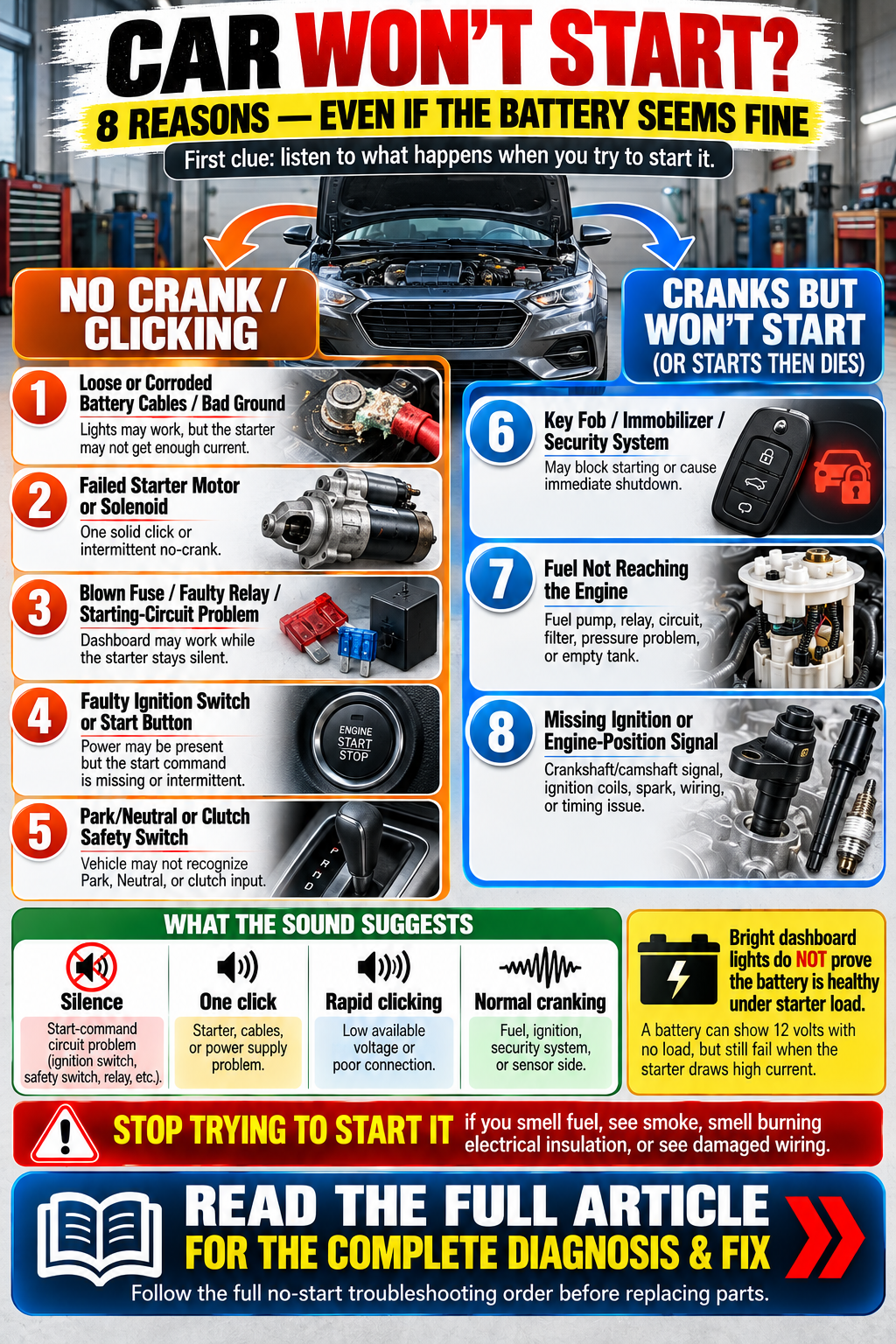
When a Car Won’t Start, the most useful first clue is not a warning light. It is what happens during the first few seconds of the starting attempt. Silence, a single click, rapid clicking, slow cranking, and normal cranking all point toward different parts of the vehicle.
This article primarily covers conventional gasoline and diesel vehicles. Hybrids and electric vehicles use different starting systems and may require model-specific diagnosis.
Quick Answer
If your Car Won’t Start even though the battery seems fine, possible causes include poor battery connections, a failed starter, a faulty relay or fuse, a defective ignition switch, a park/neutral safety switch problem, an immobilizer issue, lack of fuel delivery, or a missing ignition or engine-position signal.
Before replacing anything, identify whether the engine does not crank at all or cranks normally but fails to run. That distinction can prevent unnecessary battery, starter, or alternator replacement.
First, Listen to What the Car Does
Use the vehicle’s response as a starting point—not as a final diagnosis.
| What Happens | What It Suggests | Likely Areas to Check |
|---|---|---|
| Complete silence | The starter may not be receiving a start command | Connections, fuse, relay, ignition switch, interlock, or immobilizer |
| One solid click | The starter solenoid may engage, but the motor does not crank | Starter, cables, grounds, or battery under load |
| Rapid clicking | Available voltage drops when the starter is requested | Weak charge or high-resistance battery connection |
| Slow cranking | The starter is turning without enough speed | Battery condition, connections, starter, or cold-related load |
| Normal cranking but no start | The starting motor works, but the engine is missing something required to run | Fuel delivery, ignition, sensor signal, security system, or mechanical timing |
| Starts and immediately dies | The engine begins running but cannot stay running | Immobilizer, fuel supply, ignition switch, or charging-related problem |
1. Loose or Corroded Battery Cables or a Bad Ground
The battery may test healthy, but its power still has to travel through the positive cable, terminals, ground cable, and engine ground before reaching the starter.
A loose connection, damaged cable, or corrosion can create electrical resistance. Small accessories may continue working, while the starter cannot receive enough current to crank the engine.
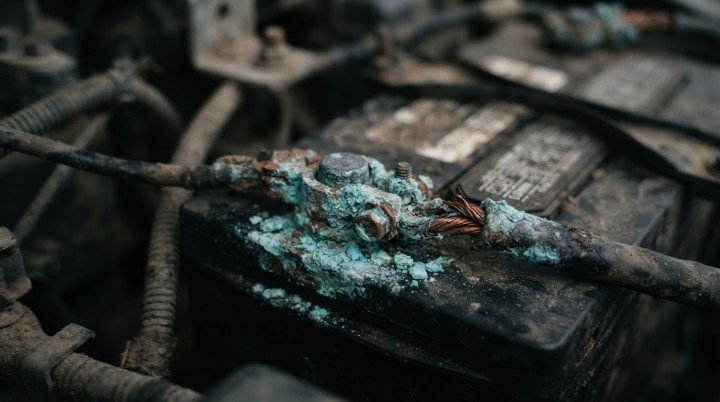
This problem may be intermittent. The vehicle might start normally several times and then suddenly produce a click, slow crank, or complete silence. Dashboard lights that become much dimmer during a starting attempt can also support this possibility.
Visible corrosion or a loose-looking connection may provide a clue, but appearance alone cannot confirm the problem. A technician can perform a voltage-loss test across the cables and grounds. Avoid touching damaged, hot, leaking, or heavily corroded battery components.
2. A Failed Starter Motor or Starter Solenoid
The starter motor physically turns the engine during startup. Its solenoid controls the high-current connection needed to operate that motor.
A failing starter may produce one solid click without cranking. It may also work only occasionally or fail without making an obvious sound. Rapid clicking, however, more commonly indicates low available power or a poor connection rather than automatically proving that the starter is defective.
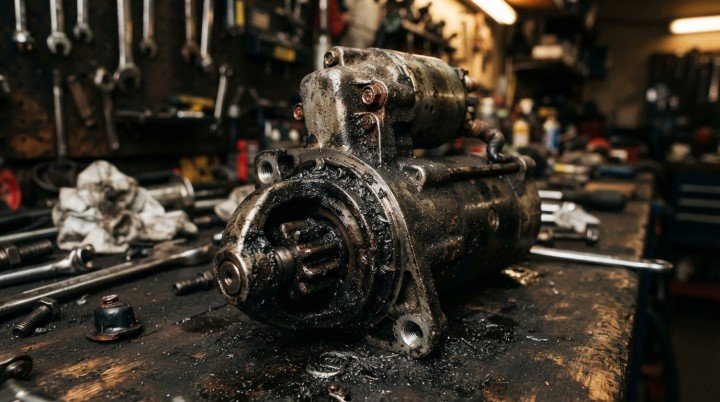
A working radio and bright dashboard do not rule out starter failure. Those accessories can operate even when the starter motor is worn, internally damaged, or unable to engage.
Do not strike the starter or repeatedly hold the key in the start position. Repeated attempts can overheat electrical components without solving the underlying fault.
3. A Blown Fuse, Faulty Relay, or Starting-Circuit Problem
The starter needs more than battery power. It also needs a control signal that passes through switches, relays, fuses, wiring, and sometimes a computer module.
If any part of that control path fails, the dashboard may operate normally while the starter remains completely silent. The problem may appear suddenly or become intermittent if a relay or electrical connection is beginning to fail.
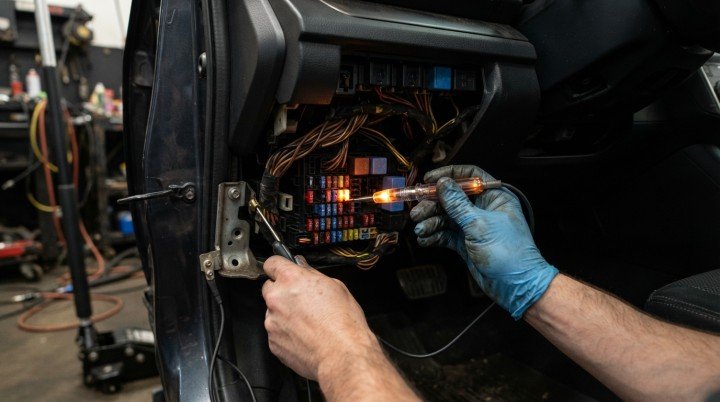
A blown fuse should not automatically be treated as the entire problem. Fuses usually open because excessive current or another electrical fault occurred. Repeatedly replacing one without identifying the cause can allow the problem to return.
A technician can verify whether the starter is receiving the correct command and trace where that command is being lost before recommending a new starter or other component.
4. A Faulty Ignition Switch or Start Button
The ignition switch does more than turn on the dashboard. It sends electrical signals that allow the starter, engine computer, fuel system, and ignition system to operate in the correct sequence.
An ignition switch can fail internally while still providing enough power for the radio or some dashboard lights. The engine may remain silent, start only occasionally, or begin running and then shut off when the electrical connection is interrupted.
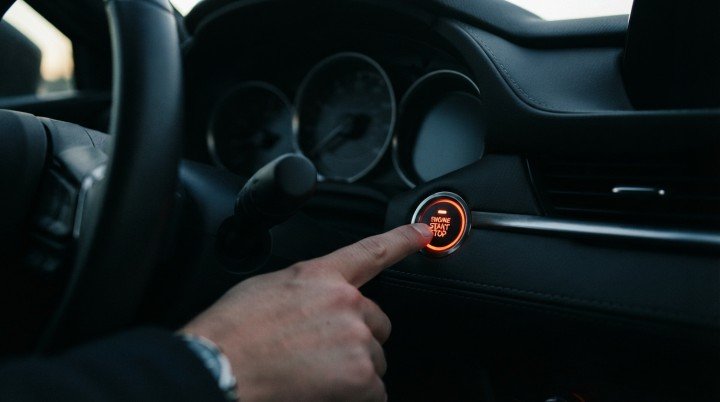
Possible warning signs include flickering dashboard lights, accessories that lose power when the key is moved, difficulty turning the key, or a start button that responds inconsistently. However, these symptoms can also come from wiring, battery connections, control modules, or the key-recognition system.
Vehicles with push-button starting may depend on several inputs before accepting the command, including key detection and brake-pedal information. A failed button, brake switch, wiring connection, or control module can interrupt that sequence.
Start-response clue: The dashboard has power, but there is no starter sound—or electrical power changes unexpectedly when starting is requested.
A technician can check whether the ignition switch or start button is producing the correct signals before any part is replaced.
5. The Park/Neutral or Clutch Safety Switch Is Not Recognizing the Vehicle
Automatic vehicles are designed to start only when the transmission is in Park or Neutral. Manual-transmission vehicles generally require the clutch pedal to be fully pressed. These safety systems help prevent the vehicle from moving unexpectedly during startup.
If a transmission-range sensor, neutral-safety switch, clutch switch, shifter connection, or related wiring fails, the vehicle may incorrectly believe it is in gear. The dashboard and accessories can work normally, but the starter command may be blocked.
An incorrect or missing gear-position display can support this possibility. Other vehicles may start intermittently, depending on the shifter position, while some produce no sound at all.
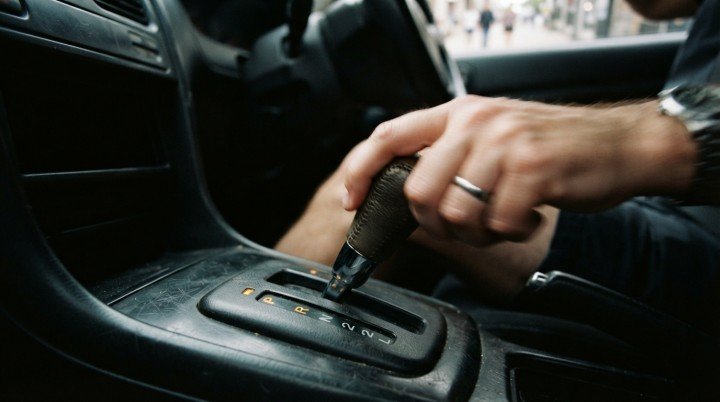
Start-response clue: The vehicle has normal electrical power, but the starter remains silent and the displayed gear position looks incorrect or inconsistent.
A licensed driver can confirm that the selector is fully in the manufacturer-approved starting position. If the vehicle does not recognize the correct gear or pedal input, avoid repeatedly moving controls or attempting to defeat the safety system. A technician should inspect the switch, sensor, adjustment, and wiring.
6. The Key Fob, Immobilizer, or Security System Is Blocking the Start
Modern vehicles use an immobilizer to prevent the engine from operating without an authorized key. The key or fob contains identification information that must be recognized before the vehicle permits starting.
A weak key-fob battery, damaged key, communication problem, faulty antenna, immobilizer fault, or security-module issue can prevent recognition. Depending on the vehicle, the starter may remain silent, the engine may crank without starting, or the engine may start and immediately shut down.
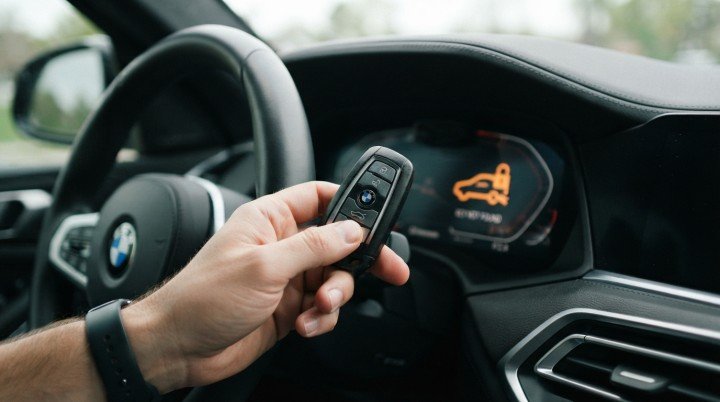
A flashing key symbol, padlock icon, or security warning light is an important clue. Messages such as “Key Not Detected” or “No Key” can narrow the problem further, but a warning light alone does not identify which security component has failed.
When a Car Won’t Start and a security indicator appears, replacing the starter or alternator is unlikely to address the actual issue.
Start-response clue: Starting is blocked or the engine immediately stops while a key-related or security warning remains visible.
Try only manufacturer-approved options, such as the supplied spare key or the key-recognition method described in the owner’s manual. Do not attempt to bypass the immobilizer or modify security wiring. If neither authorized key is recognized, roadside assistance or a qualified technician may be required to diagnose and reprogram the system safely.
7. Fuel Is Not Reaching the Engine
An engine needs the correct amount of fuel to start. If the fuel pump, pump relay, electrical circuit, filter, or pressure-control system fails, the engine may crank normally without running.
An empty tank can also cause this condition, especially if the fuel gauge or fuel-level sensor is inaccurate. In other cases, the engine may briefly start, sputter, and stop because only a small amount of fuel is reaching it.
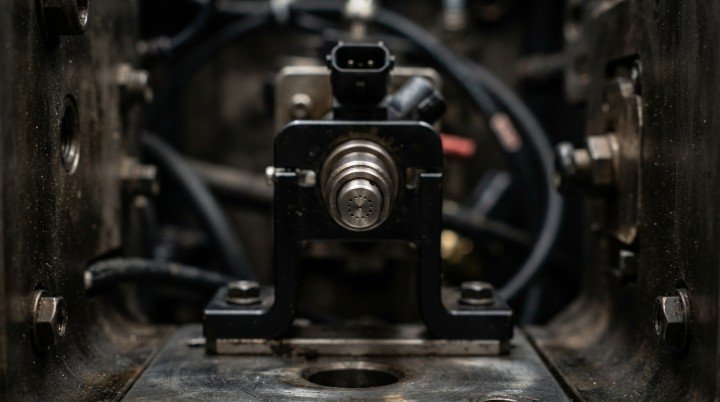
A silent fuel pump does not automatically confirm pump failure. Many modern pumps are difficult to hear, and a relay, fuse, wiring problem, control module, or security system may prevent the pump from operating.
Start-response clue: The engine cranks at normal speed but does not fire, or it starts briefly and then loses power.
Do not open pressurized fuel lines or use starting fluid to test the engine. Fuel-system diagnosis requires safe pressure testing and electrical checks by a qualified technician.
8. The Engine Is Missing an Ignition or Position Signal
Fuel alone is not enough. A gasoline engine also needs properly timed spark, while both gasoline and diesel engines depend on accurate crankshaft and camshaft position information.
A failed crankshaft position sensor can prevent the engine computer from recognizing that the engine is turning. Without that signal, the computer may not operate the ignition system or fuel injectors correctly.
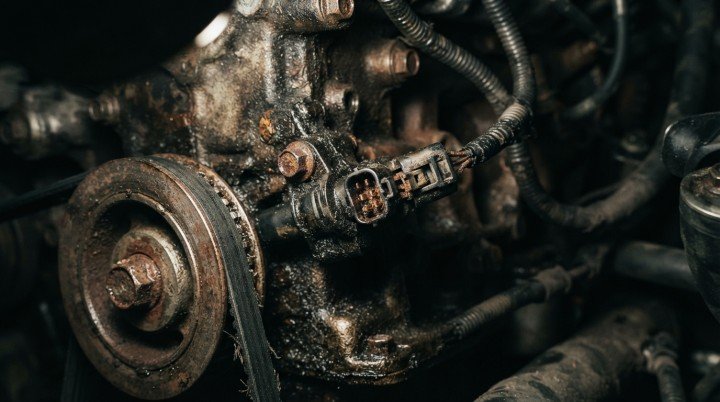
Damaged ignition coils, worn spark plugs, wiring faults, control-module problems, or mechanical timing issues can also create a crank-but-no-start condition. One worn spark plug usually will not prevent the entire engine from starting, but a system-wide loss of spark or timing signal can.
Start-response clue: The engine cranks consistently but never begins running, possibly with a check-engine or security warning.
An OBD2 scanner may reveal sensor, ignition, or communication codes, but codes identify the affected system—not automatically the failed part.
Why the Battery Can Seem Fine
Dashboard lights and a radio require far less power than the starter. Therefore, working accessories do not prove that the battery can supply enough current under load.
Even a recently installed battery may be discharged, incorrectly specified, poorly connected, or affected by damaged cables. Battery condition, connections, and starter performance should be tested together.
Does a Bad Alternator Prevent Starting?
A bad alternator does not usually explain why a Car Won’t Start when the battery is fully charged. The alternator operates after the engine begins running; it does not turn the engine during startup.
However, a failed alternator can leave the battery discharged after the previous drive. A vehicle that starts with outside assistance but loses electrical power or dies again may have a charging-system problem. The battery, alternator, belt drive, cables, and charging circuit must be evaluated before replacing parts.
What Should You Do First?
Listen and identify whether the engine is silent, clicking, cranking slowly, or cranking normally. Note any security symbol, gear-position problem, fuel warning, burning odor, smoke, or recent repair.
Do not repeatedly crank the engine. If smoke, a strong electrical smell, damaged wiring, or fuel odor is present, stop attempting to start it and move away from the vehicle if necessary. Arrange roadside assistance or professional inspection instead of guessing with replacement parts.
How a Mechanic Diagnoses the Problem
A technician generally begins by confirming battery condition and cable integrity. The next step depends on the start response.
For a no-crank condition, the technician may test the starter command, voltage loss, relay, fuse, ignition switch, interlock, and immobilizer. For a crank-but-no-start condition, diagnosis may include scan data, fuel pressure, ignition output, injector control, crankshaft signal, and mechanical timing.
This sequence prevents unrelated components from being replaced simply because they can cause similar symptoms.
Common Mistakes to Avoid
Common mistakes include assuming bright lights prove the battery is healthy, replacing the alternator because the engine will not crank, replacing a starter without checking its control circuit, and repeatedly installing a blown fuse without finding the electrical fault.
Another mistake is treating every no-start condition as the same problem. “No crank” and “cranks but will not run” require different diagnostic paths.
Frequently Asked Questions
Why is there no sound even though the dashboard works?
The starter may not be receiving a command because of a relay, fuse, ignition switch, interlock, immobilizer, wiring, or connection problem.
What does one click usually mean?
One solid click can indicate a starter or solenoid problem, but weak available power, damaged cables, and poor grounds can produce a similar response.
Can a new battery still be involved?
Yes. It may be undercharged, incorrectly installed, poorly connected, defective, or repeatedly discharged by another vehicle fault.
Can an OBD2 scanner find the exact cause?
It can provide codes and live data that narrow the search, especially for sensor, security, or communication problems. It may not detect a failed starter or poor high-current connection directly, and a code does not prove that the named component needs replacement.
Final Thoughts
If your Car Won’t Start, begin with its response rather than assuming the battery, starter, or alternator is responsible. Silence and clicking usually direct attention toward the starting circuit, while normal cranking shifts the diagnosis toward security, fuel, ignition, sensor signals, or mechanical timing. Following that sequence helps identify the real fault without unnecessary repairs.
Kevin Nicholas is an automotive mechanic and editor of The Effective Guide. He writes about warning lights, car problems, and diagnostic tools, helping drivers understand what to check before replacing a part.