
Starter replacement isn’t cheap, and installing a new starter won’t help if the original problem is somewhere else in the starting circuit.
Before spending money, pay attention to exactly what happens when you try to start the car. Then work through these seven checks to find out whether the starter actually needs replacing.
Before You Replace the StarterCheck the battery, cables and grounds, starter fuse and relay, ignition or push-button start circuit, park/neutral or clutch switch, power and control signals at the starter, and engine or flywheel condition. A starter should be replaced when testing confirms the fault—not simply because the engine won’t crank.
First, Know the Difference Between No-Crank and No-Start
These two problems sound similar but require different repairs.
No-crank means the engine doesn’t turn when you try to start it. You may hear clicking, a brief mechanical noise, or nothing at all.
Crank-but-no-start means the starter turns the engine normally, but the engine never begins running. That usually shifts the investigation toward fuel delivery, ignition, engine-position signals, security authorization, or mechanical problems.
If you’re unsure which situation applies, our guide explaining why a car won’t start even when the battery seems fine covers the differences.
What Are the Signs You Might Need Starter Replacement?
A failing starter may produce one or more of these symptoms:
- One solid click: The solenoid may engage without successfully turning the engine.
- Intermittent starting: The engine cranks normally sometimes but refuses at other times.
- Grinding noise: The starter pinion may not engage correctly with the flywheel or flexplate.
- Free-spinning sound: The starter motor operates, but the engine doesn’t turn.
- Slow cranking: A dragging starter may turn the engine slowly despite adequate battery power.
- Burning smell or smoke: An electrical or mechanical problem may be overheating components.
None of these symptoms alone confirms a defective starter. A single click, for example, can also occur when the battery or main cables cannot deliver sufficient current.
For additional symptom details, see our guide to warning signs of a bad starter.
7 Things to Check Before Starter Replacement
The following checks move from common electrical problems to faults that may require professional testing. Not every step is suitable for DIY work, particularly when accessing high-current starter connections.
1. Make Sure the Battery Has Enough Starting Power
The starter draws far more current than dashboard lights or the radio. That’s why your lights can work normally even when the battery cannot crank the engine.
A rested, fully charged conventional 12-volt lead-acid battery typically reads around 12.6 volts. But voltage alone doesn’t establish whether it can supply sufficient starting current.
A battery load or conductance test provides a better assessment of its available starting performance.
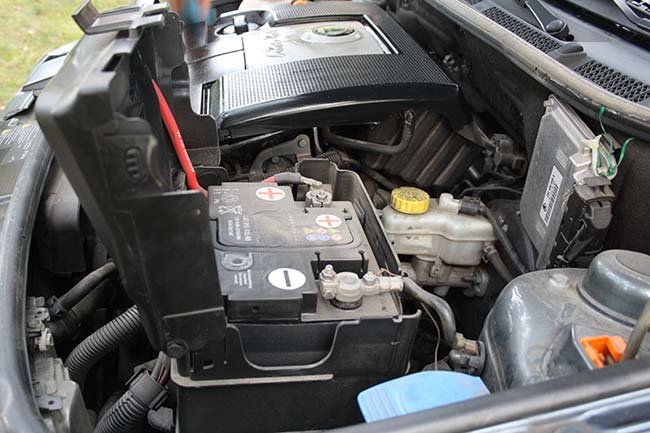
Rapid clicking, lights dimming sharply during a starting attempt, or noticeably slow cranking can suggest insufficient available power.
Even a successful jump-start doesn’t prove the original battery was defective. Poor connections or other electrical faults may still be involved.
What to do: Recharge and properly test the battery before approving starter replacement. If the battery fails testing, address that problem first.
2. Inspect Battery Cables and Engine Ground Connections
A healthy battery is useless to the starter if electricity cannot flow through the main cables efficiently.
Check for loose terminals, corrosion, damaged cable insulation, and deteriorated engine ground straps.
Corrosion may appear as white or greenish buildup around battery connections. However, internal cable damage isn’t always visible.
Excessive resistance in a positive cable or ground connection can cause the starter to click without cranking. It may also create intermittent starting problems.
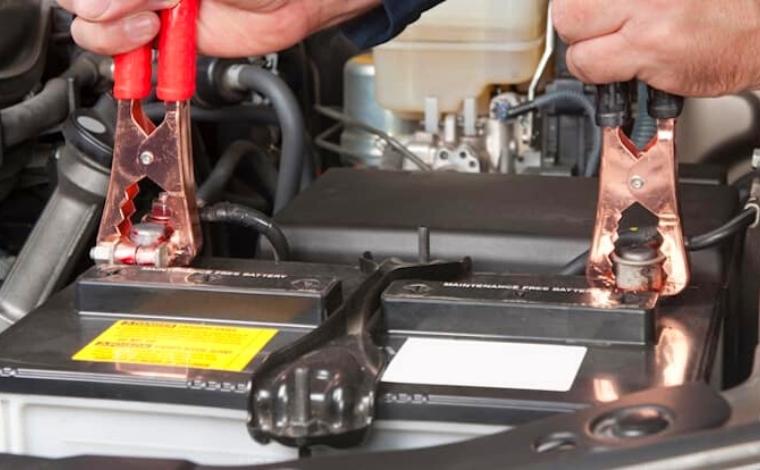
A voltage-drop test during a starting attempt helps identify excessive electrical resistance. This is more useful than checking a disconnected cable with a simple continuity test.
Turn the vehicle off before inspecting connections, and follow manufacturer precautions when working around battery cables.
What to do: Repair or replace defective cables and ground connections. Don’t replace a working starter to compensate for poor electrical connections.
3. Check the Starter Fuse, Relay, and Solenoid Circuit
The starter requires two things: enough electrical power to turn the engine and a control signal telling it when to operate.
The starter relay helps control that signal. The starter solenoid typically engages the starter drive and connects high-current power to the motor.
If a relay, fuse, connection, or control wire fails, the starter may never receive the correct command.
Check the owner’s manual or service information for the starter-related fuse and relay locations.
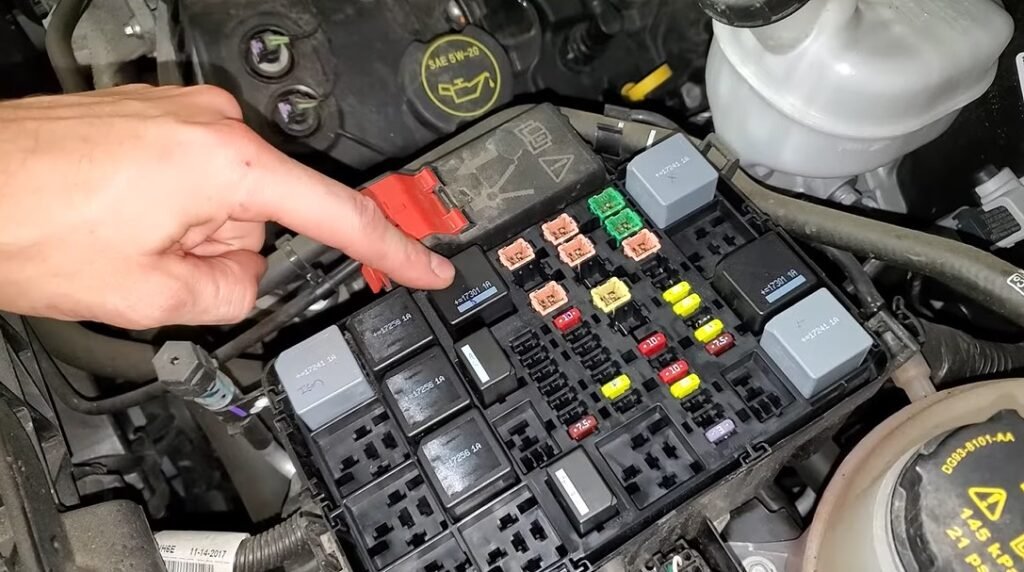
Don’t assume a clicking relay is working correctly. A relay can make an audible click while its internal contacts fail to carry electricity properly.
Likewise, a blown fuse may indicate an underlying circuit problem that requires diagnosis.
Never bypass a fuse or use a higher-rated replacement to force the circuit to operate.
What to do: Confirm the control circuit works before blaming the starter motor. Repair faulty relays, wiring, or circuit protection as necessary.
4. Check the Ignition Switch and Push-Button Start System
On older vehicles, the ignition switch directly participates in requesting starter operation. On many newer vehicles, the start button sends a request to an electronic control system.
If the request isn’t recognized or authorized, the starter may remain silent.
Possible causes include a defective ignition switch, faulty start button, key recognition problem, security system fault, or missing brake pedal signal.
A warning such as “Key Not Detected” may point toward the keyless entry or immobilizer system rather than the starter.
Some vehicles also prevent cranking until specific starting conditions are satisfied.

A compatible diagnostic scanner may help identify missing authorization signals or relevant control-module fault codes.
What to do: Verify that the vehicle recognizes and permits the start request before replacing the starter.
5. Check the Neutral Safety Switch or Clutch Switch
Automatic and manual transmission vehicles use safety interlocks to prevent unintended engine starting.
On automatic vehicles, the transmission range system generally allows starting only in Park or Neutral.
For example, suppose the car refuses to crank in Park but starts normally in Neutral. That may point toward a transmission range switch, selector adjustment, or related wiring problem.
On manual vehicles, a clutch pedal switch commonly prevents cranking unless the clutch is depressed.

These symptoms can make a perfectly good starter appear defective.
If you safely check whether an automatic vehicle starts in Neutral, keep the parking brake applied, hold the service brake, and follow the owner’s manual. Never bypass the interlock.
What to do: Have the affected switch, sensor, or wiring tested rather than replacing the starter.
6. Verify Power, Ground, and the Start Signal at the Starter
This is one of the most decisive diagnostic steps.
A technician checks whether the starter receives adequate battery power and a valid control signal during a starting attempt.
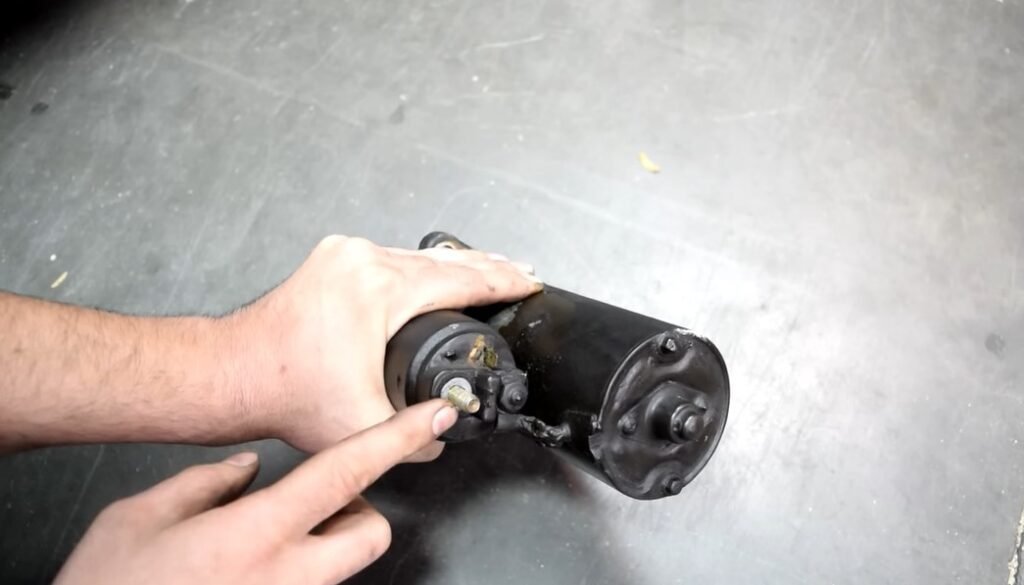
The test may include:
- Voltage at the starter’s main power connection
- Control voltage reaching the solenoid
- Voltage drop across positive and ground circuits
- Starter current draw under the appropriate conditions
If the starter receives the proper power, ground, and start command but still cannot turn a mechanically free engine, an internal starter or solenoid fault becomes a strong possibility.
However, if the start command never arrives, replacing the starter probably won’t solve the problem.
These circuits can carry hundreds of amps and may be located near exhaust components or moving engine parts. Electrical probing should be left to a qualified technician when safe access and proper equipment aren’t available.
What to do: Base the replacement decision on actual electrical test results, not clicking noises alone.
7. Rule Out Engine Lockup and Flywheel Problems
Occasionally, the starter is trying to turn an engine that cannot rotate normally.
A mechanically seized engine, hydrolock, or damaged engine accessory can prevent cranking and may be mistaken for starter failure.
Problems with the flywheel or flexplate ring gear can also prevent the starter pinion from engaging correctly.
A grinding sound or a starter motor that spins without turning the engine deserves mechanical inspection.
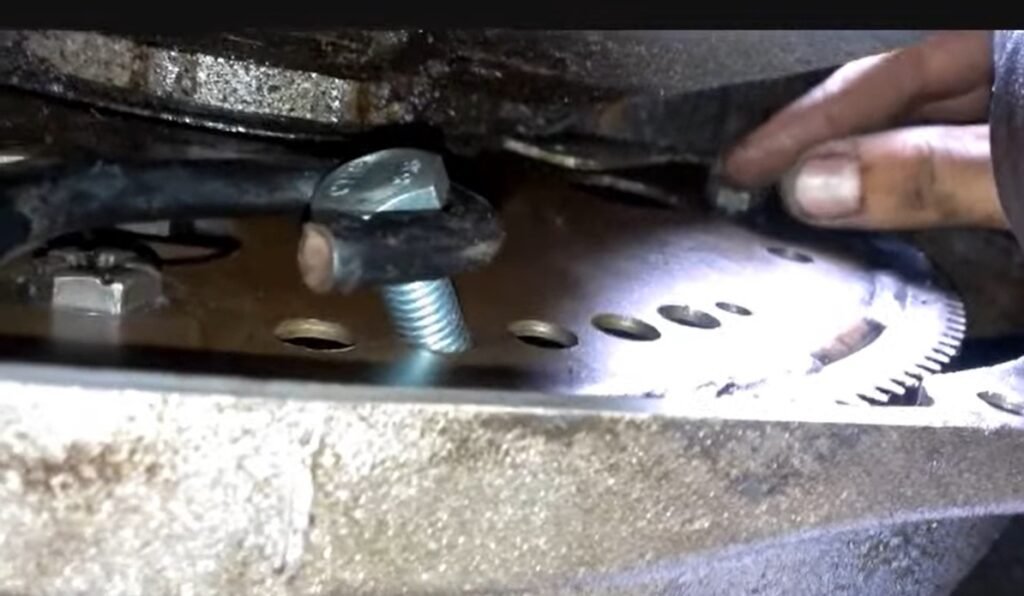
Repeated starting attempts against a mechanically locked engine can damage the starter, wiring, or other components.
A technician can determine whether the engine rotates freely and inspect the starter drive and ring gear as appropriate.
What to do: Correct mechanical faults before installing another starter. A new motor cannot solve a locked engine or badly damaged ring gear.
What Does the Clicking or Grinding Sound Mean?
The sound you hear provides a useful starting point. It doesn’t identify the failed component by itself.
| Starting Symptom | Possible Cause | First Check |
|---|---|---|
| Rapid clicking | Weak battery or poor connections | Battery and cables |
| One solid click | Solenoid, starter, or high-resistance cables | Battery under load and voltage drop |
| No sound | Missing start signal, relay, interlock, or battery fault | Start-control circuit |
| Slow cranking | Battery, connections, starter drag, or engine resistance | Battery and current draw |
| Grinding | Starter drive or ring gear problem | Mechanical engagement |
| Whirring without cranking | Starter drive not engaging | Pinion and ring gear |
| Normal cranking, no start | Fuel, ignition, sensor, or engine fault | Engine diagnosis |
If you’re hearing clicking but cannot narrow down the cause, the car troubleshooting decision trees include separate paths for single-click, rapid-clicking, and no-crank problems.
Why Does the Starter Work When Cold but Fail When Hot?
You stop at a gas station after driving for thirty minutes. The engine was running perfectly, but now the starter only clicks. After the car cools down, it starts again.
This pattern is sometimes called a heat-soak starting problem.
Worn starter components, deteriorated solenoid contacts, or temperature-sensitive electrical connections may behave differently when hot.
Heat can also expose resistance problems in cables and connections.
The most useful test happens while the failure is occurring. If the car starts normally again before the technician checks it, the fault may be difficult to reproduce.
Record whether the starter clicks, remains silent, or cranks slowly when hot. That detail helps distinguish starter trouble from other intermittent starting faults.
Starter vs Battery vs Alternator: Which Is Actually Bad?
These three components work together, but each has a different job.
| Component | Main Function | Typical Problem |
|---|---|---|
| Battery | Supplies starting power | Weak cranking or insufficient stored energy |
| Starter | Turns the engine during startup | No crank despite verified power and control signals |
| Alternator | Recharges the battery while the engine runs | Battery loses charge because of insufficient charging |
A faulty alternator can leave the battery discharged, causing symptoms that resemble starter failure. That’s why the battery and charging system should be tested together when the cause is uncertain.
When Does Starter Replacement Actually Make Sense?
Starter replacement becomes justified when testing confirms that the starter cannot perform correctly despite adequate electrical power, a good ground, a valid start command, and an engine that can rotate.
Common confirmed failures include:
- Worn internal motor components or electrical contacts
- Defective solenoid contacts or engagement mechanism
- Confirmed internal short or open circuit
- Damaged starter drive or pinion gear
- Intermittent internal failure verified during diagnosis
Some starters can be rebuilt or repaired. However, complete replacement is often more practical because of labor costs, parts availability, and warranty coverage.
Ask whether the recommended repair addresses the entire problem, particularly if the starter has failed repeatedly.
How Much Does Starter Replacement Cost in 2026?
Starter replacement cost varies depending on the vehicle, starter design, and how difficult the component is to access.
According to RepairPal’s national estimate updated September 3, 2026, the average US starter replacement costs approximately $565–$796, including parts and labor.
| Cost Component | Estimated Cost |
|---|---|
| Starter parts | $375–$516 |
| Labor | $191–$280 |
| Total estimate | $565–$796 |
These national estimates exclude taxes, location differences, and additional repairs. A starter buried beneath other engine components may cost considerably more to replace.
Replacement options include new OEM, aftermarket, and remanufactured starters. Compare the exact fitment, warranty, labor charges, and any refundable core deposit before choosing.
A cheaper starter isn’t automatically a bargain if it fails prematurely or doesn’t match the vehicle’s electrical and mechanical specifications.
Can You Drive With a Bad Starter?
The starter normally operates only when the engine is being started. Once the engine is running, a faulty starter may not prevent the vehicle from continuing to drive.
However, you could become stranded the next time you shut off the engine.
If the starter grinds, smokes, smells like burning insulation, or remains engaged after startup, stop safely and arrange professional assistance. Continued operation may cause additional damage.
Repeatedly attempting to start a vehicle with an electrical or mechanical fault can also overheat components.
Don’t rely on bypassing electrical controls or striking the starter as a routine solution. Roadside assistance or towing is safer when the fault is unresolved.
Questions to Ask Before Approving Starter Replacement
Before authorizing an expensive repair, ask the shop to explain what testing confirmed the failure.
Repair Approval Checklist
- Did the battery pass an appropriate load or health test?
- Were the battery cables and engine grounds tested under load?
- Was the starter relay and control circuit checked?
- Did the starter receive the correct power and start signal?
- Were engine or ring gear problems ruled out?
- Does the quoted price include labor, part warranty, and diagnostic charges?
A clear diagnosis should connect the test results to the recommended repair. If the evidence is uncertain, a second opinion may be worthwhile.
What Should Be Checked After Starter Replacement?
A new starter should crank the engine consistently without unusual grinding, hesitation, or free-spinning.
After installation, the shop should verify that electrical connections are secure, the starter engages and disengages correctly, and no related starting problems remain.
Battery condition and charging performance should also be checked when the original complaint involved weak or intermittent cranking.
If the starter was replaced because of a hot-start problem, testing after the engine reaches operating temperature can help confirm that the original fault has been resolved.
Common Starter Replacement Mistakes to Avoid
- Assuming one click means a bad starter: Weak available power and cable resistance can produce the same symptom.
- Ignoring battery testing: Working headlights don’t prove the battery can supply starter current.
- Skipping ground checks: A defective ground can prevent a healthy starter from operating.
- Overlooking start authorization: Security systems and transmission interlocks can intentionally prevent cranking.
- Replacing parts without testing: Guesswork can turn one repair into several.
- Ignoring mechanical noises: Grinding and free-spinning can involve gear or ring gear damage.
- Buying an incompatible starter: Mounting, electrical connections, and engagement design must match.
Frequently Asked Questions About Starter Replacement
1. How do I know if my starter really needs replacing?
Confirm that the battery, cables, ground connections, and start-command circuit work correctly. If the engine can rotate but the starter still fails despite receiving proper power and control signals, replacement may be necessary.
2. Can a bad battery cause a single click when starting?
Yes. A weak battery may provide enough power to activate the solenoid but not enough to turn the engine. Poor cable connections can produce similar symptoms.
3. Can a starter fail without making any noise?
Yes. An internal failure may cause silence, although missing start commands, relays, safety switches, and electrical connections must also be investigated.
4. How long does a starter motor usually last?
Many starters operate for 100,000 miles or more, but there’s no fixed replacement interval. Heat, starting frequency, contamination, and component quality affect lifespan.
5. Can a bad starter drain the battery?
A faulty starter circuit or stuck relay can sometimes draw unwanted current, but an ordinary failed starter doesn’t necessarily drain the battery while parked. Electrical testing is needed to confirm the source.
6. Is starter replacement worth it on an older car?
Often, yes. If the engine, transmission, and overall vehicle condition are good, repairing a confirmed starter fault may be worthwhile. Compare the estimate with the vehicle’s condition and expected future repairs.
Final Thoughts: Confirm the Problem Before Paying
A car that won’t crank doesn’t automatically need a starter replacement.
Start with the battery, cables, relay, ignition controls, and safety switches. Then verify the electrical signals reaching the starter and rule out mechanical problems.
If those checks confirm an internal starter fault, replacement is reasonable. Otherwise, fixing the actual cause can save money and prevent another no-start problem.
The most useful question to ask before approving the repair is simple: What test proved the starter was bad?

Kevin Nicholas is an automotive mechanic and editor of The Effective Guide. He writes about warning lights, car problems, and diagnostic tools, helping drivers understand what to check before replacing a part.