
In those moments, Fuel Pump Replacement feels like the obvious repair. But a fuel pump is not cheap, and it is not always the real problem. A bad relay, blown fuse, weak battery, poor ground, clogged fuel filter, wiring issue, crank sensor fault, immobilizer problem, or no-spark condition can all mimic a failing fuel pump.
Before approving Fuel Pump Replacement, check these 7 things first.
What Does a Fuel Pump Do?
The fuel pump moves fuel from the tank to the engine. On most modern vehicles, the main pump is electric and located inside the fuel tank. It creates the pressure needed for the fuel injectors to spray the correct amount of fuel into the engine.
The engine needs fuel, air, spark, compression, and correct timing to run. If fuel pressure is too low, the engine may crank for a long time, hesitate, stumble, lose power, or not start at all
A weak fuel pump may still work sometimes. It may prime when the key is turned on, then fail under load. It may work cold, then quit after heating up. It may provide enough fuel at idle but not enough for acceleration.
Some direct-injection engines also use a high-pressure fuel pump on the engine in addition to the in-tank pump. That means “fuel pump problem” does not always point to the same part. Testing matters before replacement.
Fuel Pump Replacement: Check These 7 Things First
A bad fuel pump is possible, especially on a high-mileage vehicle. But before Fuel Pump Replacement, these checks can prevent wasted money and wrong diagnosis.
1. Empty Tank, Bad Fuel, or Wrong Fuel Gauge Reading
It sounds too simple, but it happens. A car may show fuel on the gauge even when the tank is nearly empty. A failing fuel level sending unit, inaccurate gauge, sloped parking position, or low fuel level can create confusion.
If the car cranks but will not start, confirm there is actually fuel in the tank. Adding a few gallons of fresh fuel is a cheap first step before deeper diagnosis.
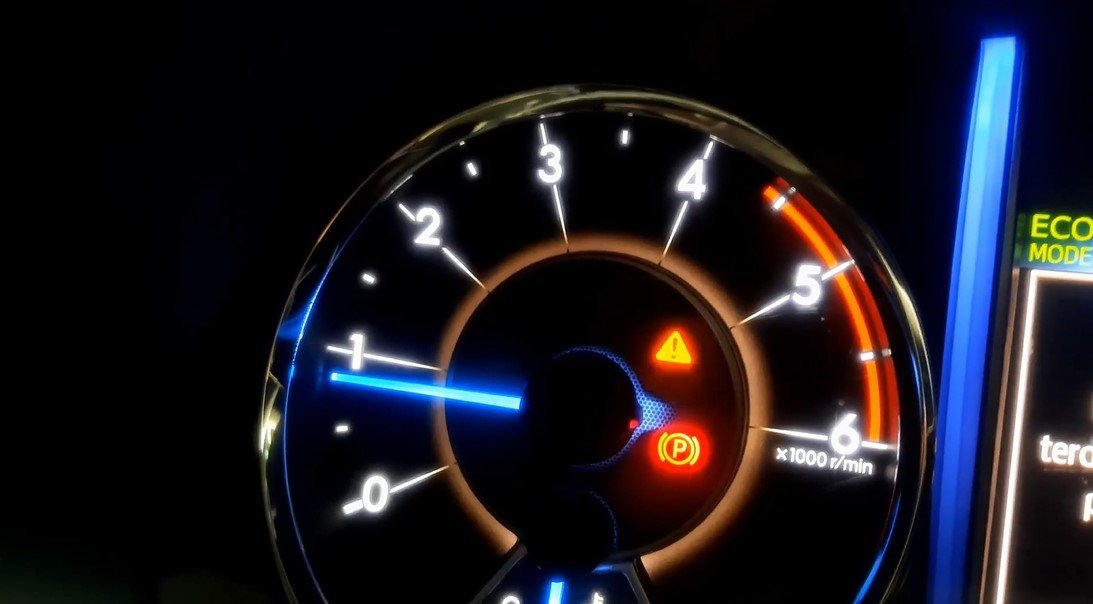
Bad fuel can also act like a fuel pump problem. Old gasoline, water contamination, dirt in the tank, or the wrong fuel can cause hard starting, rough running, stalling, or no-start. If the problem started right after refueling, fuel quality should be questioned.
Very low fuel can also shorten fuel pump life. In-tank pumps are cooled by fuel, so constantly driving near empty can make the pump run hotter.
Before Fuel Pump Replacement, make sure the issue is not low fuel, contaminated fuel, or a wrong fuel reading.
2. Fuel Pump Fuse and Relay
A fuel pump needs electrical power. If the fuse is blown or the relay fails, the pump may not run at all. That can create the same symptom as a dead pump.
When you turn the key to the ON position, many vehicles run the pump for a few seconds to prime the system. You may hear a soft hum from the fuel tank. But no sound does not always prove the pump is bad. Some pumps are quiet, and some vehicles do not prime the pump the same way every time.
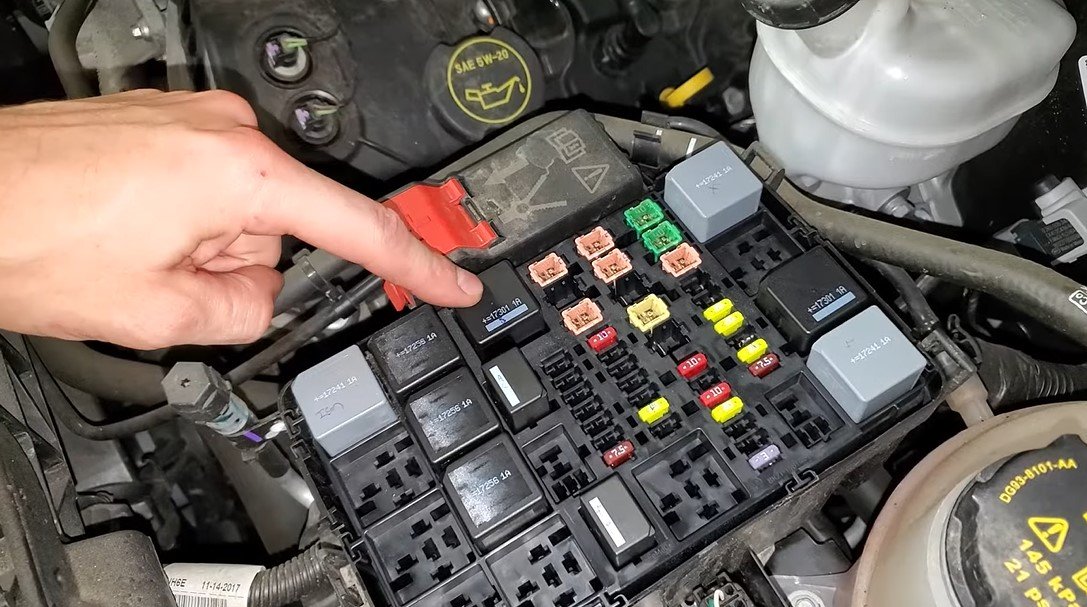
Check the fuel pump fuse first. If it is blown, replacing it may restore pump operation. But if the fuse blows again, there may be a shorted wire, failing pump, or circuit problem.
The relay should also be checked. Some vehicles use the same relay type in another circuit, so a relay swap test may be possible. A mechanic can also test whether the relay is being commanded on and whether power is reaching the pump.
Replacing a fuel pump without checking the fuse and relay is one of the easiest ways to waste money.
3. Battery Voltage, Ground, and Pump Power
A weak battery can make a fuel issue look worse. If the engine cranks slowly, the fuel pump, injectors, ignition system, and engine computer may not receive stable voltage.
Even if the battery is strong enough to crank, there could still be a voltage problem at the pump. Corroded wiring, loose connectors, poor ground, or voltage drop in the circuit can keep the pump from working correctly.
A proper test checks power and ground at the fuel pump connector. If power and ground are good but the pump does not run, the pump becomes more suspicious. If power or ground is missing, the issue is in the circuit, not necessarily the pump.
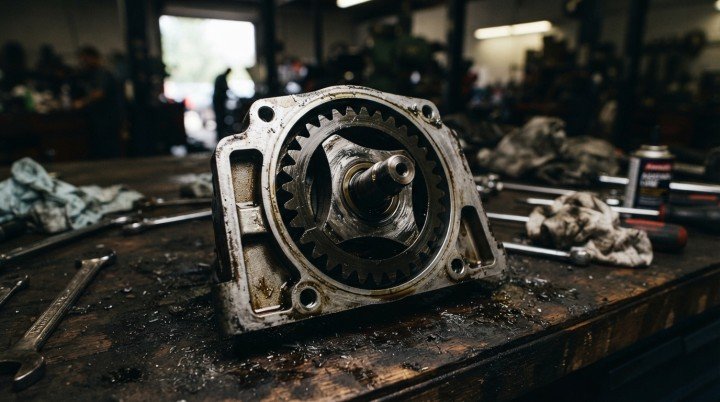
This matters because many fuel pumps are inside the tank. Replacing them can involve removing the rear seat, opening an access panel, or dropping the fuel tank. You do not want to do that only to discover the pump never had proper voltage.
Before Fuel Pump Replacement, confirm the pump is actually receiving the power and ground it needs.
4. Clogged Fuel Filter or Restricted Fuel Line
A clogged fuel filter can mimic a weak fuel pump. The pump may be working, but fuel cannot flow freely to the engine.
Some vehicles have an external serviceable fuel filter. Others have the filter built into the fuel pump module or tank assembly. If the filter is restricted, the engine may start but hesitate, sputter, or lose power when more fuel is needed.
A restricted fuel line can create similar symptoms. Damage under the car, rust, debris, or a kinked line can reduce fuel flow.
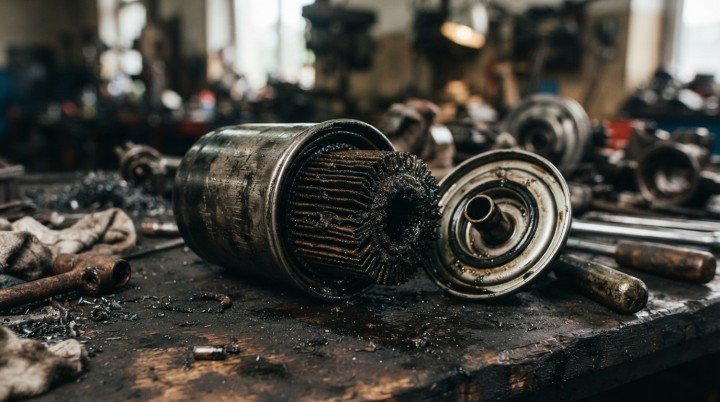
Fuel pressure testing helps separate these problems. If pressure is low, the pump could be weak, but a restriction should also be considered. Fuel volume testing can be useful too because pressure alone does not always tell the full story.
If the fuel filter is serviceable and overdue, replacing it may be part of the repair. In some cases, a clogged filter makes the pump work harder and contributes to pump failure.
5. Fuel Pump Driver Module, Control Module, or Wiring
Many modern vehicles do not power the fuel pump with a simple relay only. They may use a fuel pump driver module or fuel pump control module to adjust pump speed and pressure.
If that module fails, the pump may not run, may run weakly, or may work only sometimes. This can look exactly like a bad fuel pump.
Some trucks and SUVs are known for fuel pump driver module corrosion because the module is mounted under the vehicle or near the frame. Moisture and road salt can damage the module and its connector. Related communication faults can set codes such as U0109.

Wiring problems can also interrupt pump operation. Melted connectors, broken wires, loose grounds, and corroded terminals can all cause no-start or stalling.
A scan tool may show fuel pump command, fuel pressure data, module codes, or communication faults depending on the vehicle. If the module is not commanding the pump, replacing the pump may not help.
Before Fuel Pump Replacement, the control side of the system should be checked, especially on vehicles that use a fuel pump driver module.
6. Crank Sensor, Immobilizer, or ECU Command Issue
A car can crank and still not start even if the fuel pump is fine. The engine computer needs certain signals before it allows normal fuel injection and ignition.
One important signal comes from the crankshaft position sensor. If the computer does not see engine RPM while cranking, it may not pulse the injectors correctly. On some vehicles, it may also affect fuel pump command after the initial prime.
A bad crank sensor can cause no-start, random stalling, long crank, or start-and-die symptoms. A scan tool can often show whether RPM is detected while cranking.
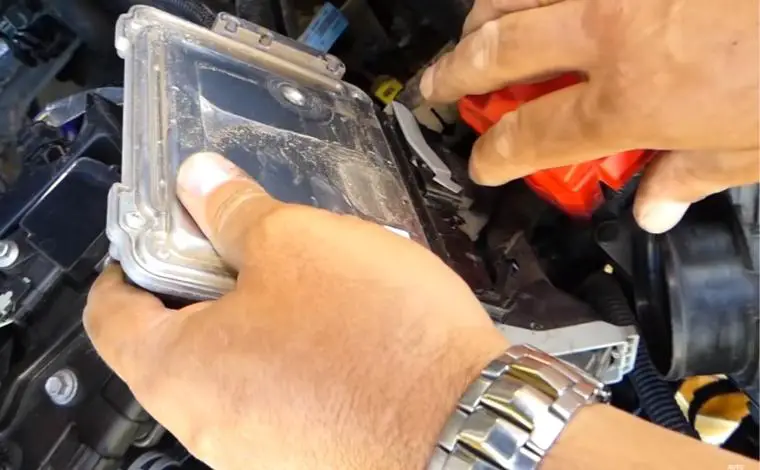
An immobilizer or security system issue can also block starting. If the security light is flashing or staying on, the system may prevent injector operation or fuel delivery. In that case, the fuel pump may not be the real issue.
The engine computer, relay command, sensor inputs, and security status all matter. If the computer is not allowing the engine to run, a new pump will not solve the problem. For a broader look at these patterns, see 8 reasons your car won’t start.
7. Spark, Injector Pulse, or Mechanical Engine Problem
A no-start diagnosis should never stop at fuel. An engine needs fuel, spark, compression, and correct timing. If any one of those is missing, the engine may crank without starting.
If the fuel pump is working and fuel pressure is in spec, check for spark. A bad ignition coil, ignition module, crank sensor, cam sensor, or wiring fault can create a no-start that feels like fuel starvation. See our guides on bad ignition coil symptoms and bad spark plugs.
Injector pulse also matters. The fuel rail may have pressure, but if the injectors are not being commanded to open, the engine still will not run. That points toward electrical control, sensor input, immobilizer, or ECU issues. Related symptoms are covered in 11 symptoms of a bad fuel injector.
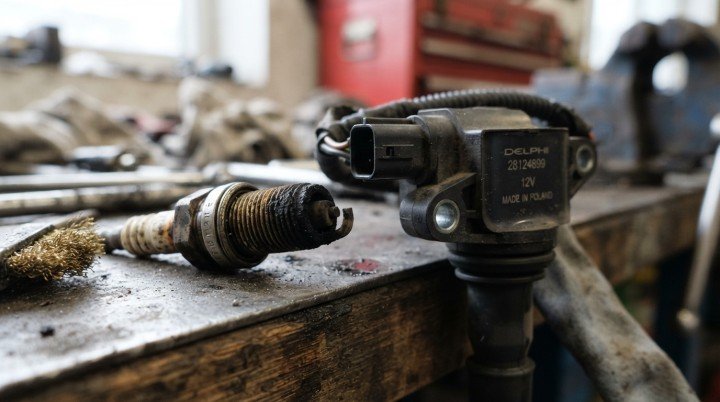
Mechanical problems can also mimic fuel pump failure. Low compression, a broken timing belt, jumped timing chain, or severe internal engine problem can cause a crank-no-start condition.
Starting fluid can sometimes be used as a diagnostic clue, but it should be used carefully because it is flammable and can be dangerous. If the engine briefly runs on starting fluid and fuel pressure is low, fuel delivery becomes more likely. But proper testing is still the safer path.
Signs You May Actually Need Fuel Pump Replacement
There are times when Fuel Pump Replacement really is the correct repair. If the pump receives proper power and ground but does not run, the pump may be dead. If fuel pressure is below specification and restrictions are ruled out, the pump may be weak.
A weak pump may show up under load. The engine may idle fine but lose power when accelerating, climbing hills, or driving at highway speed. Fuel pressure may drop when demand increases. This pattern is also discussed in our guide on car losing power when accelerating.
Other signs include long crank after sitting, repeated stalling, whining from the fuel tank, lean codes, or a car that starts briefly and then dies.
A pressure leak-down test can also help. If pressure drops too quickly after shutdown, the issue could be a pump check valve, injector leak, fuel pressure regulator, or pump module problem depending on the vehicle.
The strongest diagnosis usually comes from a combination of fuel pressure, fuel volume, pump voltage, ground, current draw, and scan data.
Common Symptoms of a Bad Fuel Pump
A failing fuel pump can cause several symptoms. The car may take longer to start than usual. It may crank but not start. It may sputter at higher speeds or hesitate when you press the gas.
You may notice power loss while accelerating, especially uphill or under load. The engine may stall while driving and restart after cooling down. Some pumps make a loud whining noise from the tank before failing completely.
A weak pump can also cause lean codes because the engine is not getting enough fuel. But lean codes can also come from vacuum leaks, MAF sensor issues, exhaust leaks, or other fuel delivery problems, so codes alone are not enough.
Symptoms point you in a direction. Tests confirm the repair.
Fuel Pump vs Fuel Filter vs Relay
A bad pump, clogged filter, and bad relay can all cause similar symptoms. The difference is what each part does.
The fuel pump creates pressure and flow. The fuel filter removes debris and can restrict flow if clogged. The relay sends electrical power to the pump.
If the pump does not run, electrical checks matter. If the pump runs but pressure is low, pressure and volume testing matter. If pressure is good but the engine still will not start, spark, injector pulse, and mechanical condition need to be checked.
This is why Fuel Pump Replacement should not be based on sound alone. A silent pump may have no power. A noisy pump may still produce pressure. A running pump may still be weak under load.
How Mechanics Confirm a Bad Fuel Pump
A mechanic usually starts by checking whether the pump primes when the key is turned on. Then they check fuses, relays, and scan tool data.
A fuel pressure gauge is one of the most important tools. The pressure reading must be compared with the vehicle’s specification. Too low, too high, or unstable pressure can all tell a story.
Power and ground at the pump are checked next. If voltage is correct and ground is good, but pressure is low or the pump does not run, the pump becomes the likely fault.
Some technicians also check current draw. A pump drawing too much or too little current can indicate internal wear, restriction, or electrical failure.
On vehicles with fuel pressure sensors, scan data can help. But a mechanical gauge is still useful when the reading needs confirmation.
Can You Drive With a Weak Fuel Pump?
Driving with a weak fuel pump is risky. A mild symptom may not stop the car immediately, but the pump can fail without much warning.
The biggest concern is stalling. Losing power in traffic, at an intersection, or on the highway can be dangerous. A weak pump can also cause hesitation while merging or climbing hills.
If the vehicle stalls repeatedly, struggles badly under load, or has very low fuel pressure, avoid driving it. Have it diagnosed before it leaves you stranded.
Fuel Pump Replacement Cost
Fuel Pump Replacement cost depends heavily on access. Some vehicles have an access panel under the rear seat or trunk. Others require lowering the fuel tank. Trucks may involve removing the bed or lowering the tank.
The pump may be sold as a complete module with the sending unit, strainer, pressure regulator, and level sensor. In other cases, the pump alone may be replaceable. The complete module usually costs more but can be more reliable depending on the design.
Labor can be high because fuel tank work takes time and requires safety precautions. Fuel vapors are dangerous, so this is not a repair to take lightly.
A quality pump matters. Cheap low-quality pumps may be noisy, fail early, or create pressure problems. It is also smart to replace the strainer, O-ring, and serviceable fuel filter where applicable.
After repair, the vehicle should be checked for fuel leaks and fuel odor before driving.
Mistakes to Avoid Before Replacing the Fuel Pump
The biggest mistake is replacing the pump without testing fuel pressure. The second is skipping fuse, relay, voltage, and ground checks.
Another mistake is assuming every crank-no-start problem is fuel-related. Spark, injector pulse, crank sensor signal, immobilizer status, and compression all matter.
Do not ignore fuel filter restrictions. Do not install a cheap pump in a hard-to-access tank if you do not want to repeat the repair. Do not run the tank very low all the time after installing a new pump.
And never ignore fuel smell after repair. If you smell gasoline, do not keep driving or park the car in a garage. Fuel leaks need immediate inspection.
FAQs About Fuel Pump Replacement
Does no fuel pump sound always mean the pump is bad?
No. A silent pump can be caused by a blown fuse, bad relay, wiring issue, poor ground, fuel pump control module fault, or ECU command issue. Some pumps are also hard to hear. See also reasons a car won’t start.
Can a bad relay act like a bad fuel pump?
Yes. If the relay does not send power to the pump, the pump will not run. That can create a no-start just like a failed pump.
How do I know if my fuel pump is weak?
A weak pump may show low fuel pressure, pressure drop under load, long crank, hesitation, stalling, or loss of power uphill. A pressure test is the best starting point. Related power-loss symptoms are covered here: car losing power when accelerating.
Can a clogged fuel filter mimic a bad fuel pump?
Yes. A clogged filter can reduce fuel flow and make the pump look weak. If the filter is serviceable, it should be checked before replacing the pump.
Can a bad crank sensor look like fuel pump failure?
Yes. If the engine computer does not see RPM while cranking, it may not command injector pulse or fuel control properly. That can create a crank-no-start condition.
Final Thoughts
Fuel Pump Replacement can be the right repair, but it should not be the first guess every time a car cranks and will not start. Fuel delivery problems need testing.
Before replacing the pump, check fuel level, fuel quality, fuse, relay, battery voltage, pump power, ground, fuel filter, fuel line restriction, fuel pump control module, crank sensor signal, immobilizer status, spark, injector pulse, and compression.
If fuel pressure is low and the pump has good power and ground, the fuel pump becomes a strong suspect. But if the issue is electrical, sensor-related, or mechanical, a new pump will not fix it.
The smartest repair is the one confirmed by testing. That saves money, avoids repeat work, and gets the car back on the road for the right reason.
A car that cranks but will not start can make the fuel pump look guilty right away. The battery seems fine, the starter turns the engine, but the engine never catches. Or maybe the car starts, then sputters under load, loses power uphill, or stalls while driving.
Kevin Nicholas is an automotive mechanic and editor of The Effective Guide. He writes about warning lights, car problems, and diagnostic tools, helping drivers understand what to check before replacing a part.