
Last Updated on October 28, 2026
Quick Answer: Before replacing your alternator, check the battery condition, battery terminals and ground connections, serpentine belt, alternator fuse, charging voltage, wiring, parasitic battery drain, and overall charging-system performance. A faulty alternator should be confirmed through testing rather than symptoms alone.
What Are the Signs You Might Need an Alternator Replacement?
Your alternator generates electrical power while the engine runs and helps keep the battery charged. When it stops working correctly, the car may continue operating temporarily on battery power. Eventually, the battery can become too discharged to support the vehicle’s electrical systems.
Several warning signs may point toward a charging problem:
- Battery warning light: A battery-shaped dashboard warning light comes on while the engine is running.
- Dim or flickering lights: Headlights or dashboard lights change brightness unexpectedly.
- Repeated battery problems: The battery keeps losing charge even after being recharged.
- Electrical problems: Power windows, climate controls, or other accessories behave unusually.
- Unusual noises: Whining, grinding, or rattling sounds come from the belt-driven accessory area.
- Engine stalling: The car loses power or shuts off as the electrical system voltage drops.
- Burning smell: An overheated belt, damaged wiring, or electrical component produces an unusual odor.
These symptoms deserve attention, but none proves the alternator is defective. For example, headlights can dim because of a poor ground connection, and a car that struggles to start may simply have a worn-out battery.
If you’re trying to recognize the warning signs, our guide to bad alternator symptoms explains how charging problems behave before startup, while driving, and after the battery loses power.
The important question isn’t whether the car has symptoms of a bad alternator. It’s whether testing confirms that the alternator is responsible.
8 Things to Check Before Alternator Replacement
Start with the simpler possibilities before moving to more advanced electrical testing. Some checks require nothing more than a visual inspection. Others are best performed with a multimeter or professional charging-system tester.
1. Test the Battery Before Blaming the Alternator
A weak battery is one of the first things to rule out when a car has starting or charging problems.
It’s easy to confuse the two components because they work together. The battery supplies the high electrical current needed to start the engine. Once the engine runs, the alternator provides power to the vehicle’s electrical systems and recharges the battery.
If the battery has deteriorated internally, it may struggle to hold a charge even when the alternator works normally.
Start by looking at the battery itself. Check for a swollen case, visible damage, leaking electrolyte, or excessive corrosion around the terminals. A damaged battery should be handled professionally.
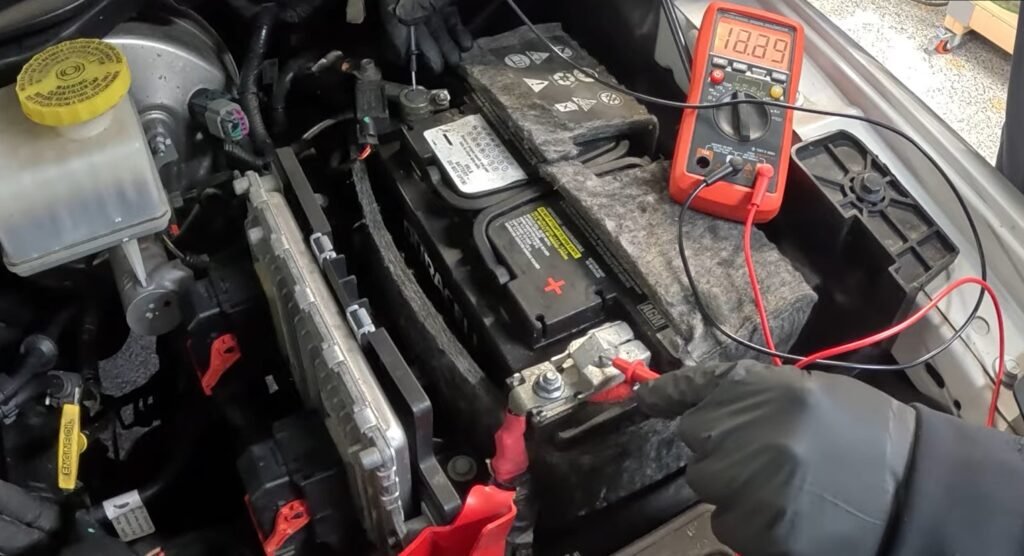
Next, measure its voltage with the engine off, ideally after the battery has rested without charging or heavy electrical loads.
- Around 12.6 volts: Generally indicates a fully charged conventional 12-volt lead-acid battery.
- Around 12.4 volts: Suggests the battery is partially discharged.
- Around 12.2 volts: Indicates a more significantly discharged battery.
- Below 12 volts: Suggests a heavily discharged battery or possible battery problem.
These readings describe approximate state of charge, not battery health. Temperature, battery chemistry, recent charging, and surface charge can affect the numbers.
A battery showing 12.6 volts can still fail when the starter demands several hundred amps. That’s why a proper load test or conductance test matters.
If your car has been struggling to start, compare the common symptoms of a weak car battery before assuming the alternator is responsible.
If the battery is discharged, recharge it with a suitable charger before testing its condition. Don’t assume that a low voltage reading means the battery must be replaced.
What to do: If the battery fails a proper health test, address that problem first. If it passes but repeatedly becomes discharged, continue checking the charging system.
2. Check Battery Terminals, Cables, and Ground Connections
Sometimes the alternator produces enough electricity, but that power doesn’t reach the battery efficiently.
The problem may be as simple as a loose battery terminal.
Battery connections are exposed to moisture, vibration, heat, and corrosion. Over time, resistance can increase at the terminals or inside a damaged cable.
Inspect both battery connections for corrosion, looseness, and damaged insulation. Also check the negative cable where it connects to the vehicle body or engine.
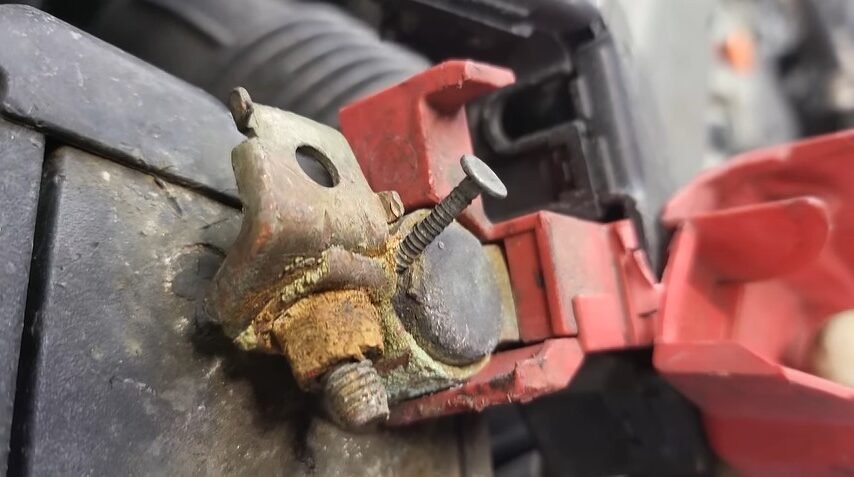
A corroded connection may have a white, green, or bluish buildup. However, a connection can also develop excessive resistance without obvious corrosion.
Ground straps are especially easy to overlook. These cables provide the electrical return path between the engine, chassis, and battery. A loose or damaged ground can interfere with charging, starting, and other electrical functions.
One useful diagnostic procedure is a voltage-drop test. Rather than simply measuring battery voltage, this test measures how much voltage is being lost across a cable or connection while electrical current is flowing.
Excessive voltage drop indicates resistance that shouldn’t be there.
If you’re cleaning battery terminals yourself, switch the vehicle off, follow the manufacturer’s battery-disconnection procedure, and use proper eye protection. Some vehicles require additional precautions for battery sensors and electronic systems.
What to do: Clean or repair faulty connections and retest the charging system before purchasing an alternator.
3. Inspect the Serpentine Belt, Tensioner, and Alternator Pulley
Your alternator needs mechanical power from the engine to generate electricity. On most conventional vehicles, that power comes through a drive belt connected to the crankshaft pulley.
If the belt slips, the alternator may not spin fast enough to maintain the required output.
A worn belt can also produce squealing noises, particularly during startup or when electrical demand increases.

With the engine turned off and all moving parts stopped, inspect the belt for:
- Cracks, fraying, or missing pieces of belt material
- Glazing or unusually shiny contact surfaces
- Oil or coolant contamination
- Misalignment or signs that the belt is walking off a pulley
- Excessive looseness or visible tensioner damage
Don’t overlook the automatic belt tensioner. Even a relatively new belt can slip if the tensioner isn’t maintaining proper tension.
Some alternators also use an overrunning pulley or decoupler. These pulleys help manage engine-speed fluctuations. When they fail, they can produce noise, unusual belt movement, or charging-related problems.
One important safety detail: On some vehicles, the serpentine belt also drives the water pump or hydraulic power steering pump. A broken belt can therefore create problems beyond battery charging, including overheating.
Never touch or attempt to adjust a belt while the engine is running.
What to do: Repair belt, tensioner, or pulley faults before deciding that the alternator assembly needs replacement. If the alternator’s own pulley is defective, the appropriate repair depends on whether that pulley is separately serviceable.
4. Check the Alternator Fuse and Fusible Link
Modern charging systems use fuses and other circuit protection devices to protect electrical components from excessive current.
Depending on the vehicle, the alternator’s output circuit may include a high-amperage fuse, fusible link, or protected connection inside a power distribution assembly.
If that connection opens, the alternator may be unable to charge the battery even if the alternator itself is working.
You might notice a battery warning light, low charging voltage, or a battery that becomes discharged while driving.
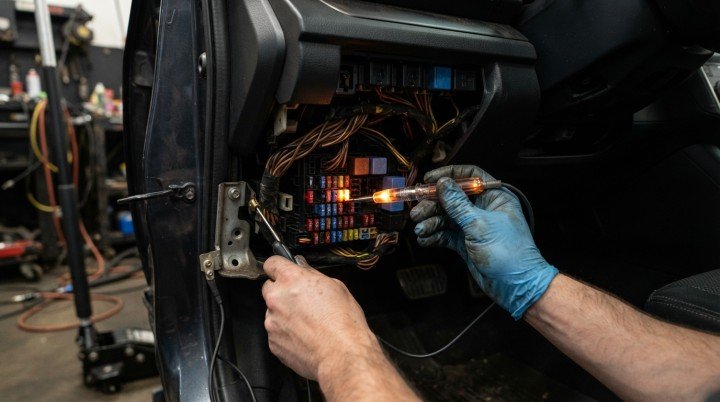
Check your owner’s manual or the vehicle’s service information to identify the relevant fuse and circuit location. Some charging-system fuses are located in the engine compartment rather than inside the cabin fuse panel.
A blown fuse should never be treated as an isolated problem without further investigation.
There may be a short circuit, damaged charging cable, incorrectly connected battery, or another electrical fault that caused the fuse to open.
High-amperage charging circuits can be dangerous to work on without the correct tools and procedures. Don’t bypass a fusible link, install a higher-rated fuse, or probe exposed alternator output terminals without understanding the risks.
What to do: Have the cause of an open charging-circuit fuse identified and corrected. If charging returns to normal afterward, an alternator replacement may not be necessary.
5. Measure Alternator Charging Voltage
Checking charging voltage is one of the most useful steps when diagnosing an alternator that may not be charging.
However, a single voltage reading doesn’t tell the whole story.
For a basic test, you’ll need a digital multimeter and access to the battery terminals or designated under-hood test points. If you’re unfamiliar with the process, start with our step-by-step car battery multimeter testing guide to understand how voltage measurements work.
Start with the engine off and note the battery voltage. Then start the engine and observe the voltage again.

On many conventional charging systems, a running voltage around 13.5 to 14.8 volts can be normal, depending on the manufacturer’s specifications, temperature, and electrical load.
If the voltage stays close to the battery’s engine-off reading while the engine is running, the charging system may not be supplying enough power.
But there’s an important exception.
Many newer vehicles use computer-controlled or smart-charging systems. These can intentionally vary charging voltage based on battery condition, temperature, electrical demand, and operating conditions.
Some may temporarily show a lower voltage even when the alternator is functioning correctly.
After the initial reading, observe how the system behaves when electrical loads increase. Headlights, the blower motor, and rear-window defroster place additional demand on the charging system.
On a conventional system, the alternator should generally maintain adequate voltage when those accessories are switched on. A major sustained voltage drop deserves investigation.
On smart-charging vehicles, compare the results with manufacturer specifications and scan-tool charging commands where applicable.
Also watch for unusually high charging voltage. Persistent overcharging can damage the battery and sensitive electronics.
What to do: If the readings are abnormal, inspect the wiring and charging controls before concluding that the alternator has failed.
6. Inspect Alternator Wiring and Electrical Connectors
An alternator doesn’t operate independently of the vehicle’s electrical system.
It connects to the battery through a high-current output cable and may communicate with the engine computer or another control module through additional wiring.
Depending on the vehicle, those smaller circuits may handle voltage sensing, field control, warning-light operation, or communication.
A problem in one of these circuits can cause poor charging or trigger a charging-system warning.
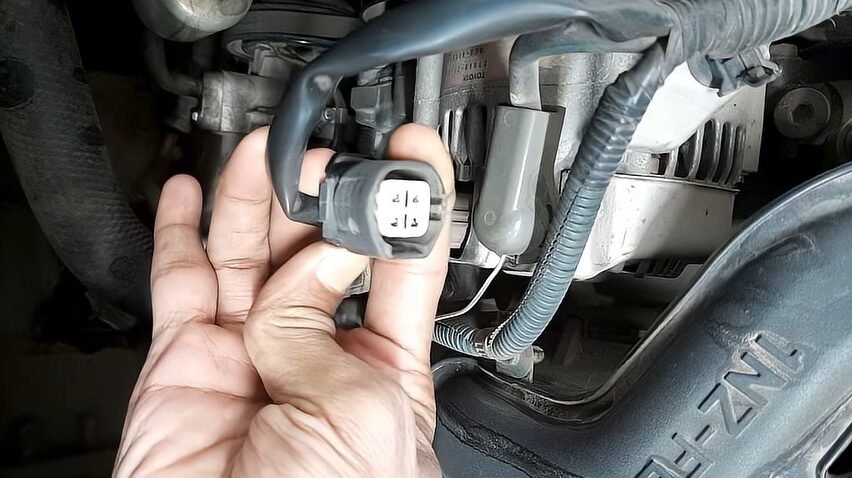
For example, a loose connector may create intermittent charging that appears only when driving over bumps. A damaged voltage-sensing circuit may cause incorrect charging behavior.
Common problems include:
- Corroded or loose alternator electrical plugs
- Broken wires near the connector
- Damaged insulation from engine heat
- Loose or overheated output cable connections
- Faulty battery monitoring sensors or charging-control circuits
Look for signs of overheating, melting, corrosion, or previous wiring repairs. Don’t pull connectors apart or disconnect charging cables while the engine is running.
Electrical testing becomes more complicated on vehicles where the alternator is controlled through LIN communication or other electronic control systems.
These vehicles may store diagnostic trouble codes related to generator performance, communication, or charging control. A compatible scan tool and service information can help determine whether the fault is inside or outside the alternator.
What to do: Repair damaged wiring and connections first. If the alternator still fails the appropriate tests, replacement becomes a stronger possibility.
7. Rule Out Parasitic Battery Drain
Here’s a situation that causes plenty of confusion: You charge the battery, drive the car normally, park it overnight, and find it dead the next morning.
The alternator is often blamed, but the real problem may occur while the car is parked.
A parasitic drain happens when an electrical component draws more battery power than it should after the vehicle is switched off and its electronic systems have entered their normal sleep states.
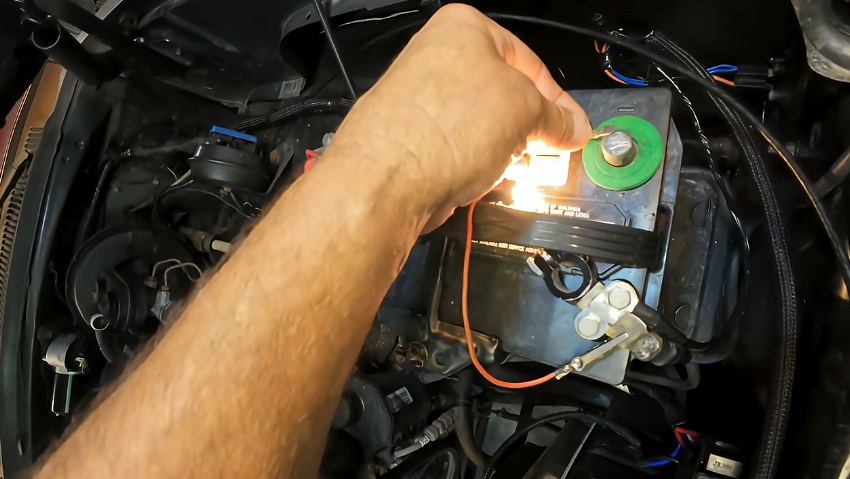
Possible causes include:
- A glovebox or trunk light that stays on
- An aftermarket alarm, stereo, or tracking device
- A control module that fails to enter sleep mode
- A faulty relay keeping a circuit active
- An accessory that continues drawing power after shutdown
Some battery drain is normal. Modern cars retain power for security systems, clocks, memory, and other electronic functions.
The question is whether the vehicle’s resting current draw exceeds its normal specifications.
A proper parasitic draw test requires allowing the vehicle’s electronic modules to enter sleep mode. Opening doors, disconnecting components, or attaching test equipment incorrectly can wake those modules and distort the result.
A technician may use a suitable current clamp or an appropriately protected electrical test setup to identify the circuit responsible.
Interestingly, a failed alternator diode can sometimes create a parasitic drain too. That means the alternator shouldn’t be ruled out automatically if an overnight battery drain is confirmed.
However, it still needs to be tested rather than replaced on suspicion.
What to do: If the vehicle charges normally while driving but repeatedly loses power while parked, investigate battery health and parasitic draw before authorizing replacement.
8. Confirm the Failure With a Complete Charging-System Test
After checking the battery, belt, fuses, and connections, the final step is to determine whether the alternator actually delivers the electrical output the vehicle requires.
This is where professional diagnostic equipment becomes especially useful.
A complete charging-system test may include several measurements.

Alternator output test: Measures whether the alternator can deliver sufficient current under the specified operating conditions. A voltage reading alone may look acceptable even when an alternator struggles under a heavy load.
Voltage-drop testing: Measures resistance-related voltage losses between the alternator and battery on both the positive and ground sides of the circuit.
Ripple testing: Checks the alternator’s rectified output for abnormal electrical ripple that may indicate a damaged diode or internal winding problem. An oscilloscope or suitable charging-system tester can provide more reliable information than a basic multimeter alone.
Voltage regulation testing: Determines whether the charging system is maintaining the appropriate voltage for the vehicle’s operating conditions.
Charging-control diagnostics: Checks relevant fault codes, command signals, battery sensors, and communication circuits on computer-controlled systems.
Ask the technician what failed and which test confirmed it.
A statement such as “the alternator isn’t charging” is a starting point, not always a complete diagnosis. The failure could be caused by the alternator itself or something preventing it from functioning correctly.
A bench test can also be useful, but it doesn’t always reproduce heat-related, intermittent, or vehicle-specific control problems.
If several electrical symptoms appear together and you aren’t sure where to begin, the car troubleshooting decision trees can help you organize warning lights, starting problems, and charging-related symptoms before visiting a repair shop.
What to do: Replace the alternator when the test results establish an internal or non-serviceable alternator fault and other likely causes have been eliminated.
Alternator Test Results: What Do the Voltage Readings Mean?
If you’re using a multimeter, understanding the numbers matters just as much as taking the measurement.
The table below provides general reference points for conventional 12-volt lead-acid systems.
| Voltage Reading | Possible Meaning | Next Step |
|---|---|---|
| Around 12.6V, engine off | Battery is approximately fully charged | Check battery health if problems continue |
| Around 12.2V, engine off | Battery is substantially discharged | Recharge and test the battery |
| 13.5–14.8V, engine running | Common normal range on conventional systems | Compare with vehicle specifications |
| Around 12V, engine running | Possible undercharging or intentional smart-charging behavior | Check load response and charging controls |
| Persistently above 15V | Possible overcharging, depending on conditions | Check temperature compensation and regulation |
| Excessive charging-cable voltage drop | Possible resistance in cables or connections | Inspect and repair the affected circuit |
These values aren’t universal pass-or-fail limits. AGM batteries, temperature-compensated regulators, hybrid vehicles, and modern smart-charging strategies can behave differently.
For example, a vehicle may briefly increase charging voltage in cold weather or intentionally reduce alternator load during certain driving conditions.
Always use the vehicle manufacturer’s specifications when diagnosing a specific charging complaint.
Alternator vs Battery: How to Tell Which One Is Bad
A battery and alternator problem can feel almost identical from the driver’s seat.
The battery may be unable to store or deliver sufficient power, while the alternator may be unable to replenish that power after the engine starts.
Use the following comparison as a starting point, not a final diagnosis.
| Symptom | Possible Battery Problem | Possible Alternator Problem |
|---|---|---|
| Slow engine cranking | Common | Possible if the battery isn’t being recharged |
| Battery dies overnight | Possible | Possible with a diode fault, but other drains are common |
| Battery light comes on while driving | Possible charging-system interaction | Common charging-system warning |
| Headlights dim while driving | Possible | Possible with insufficient output |
| Car starts after jump-starting | Possible | Possible; jump-starting doesn’t separate the faults |
| Charging output below specification | May contribute to abnormal test conditions | Possible, after external faults are ruled out |
Imagine a battery that’s several years old and no longer holds a charge well. You replace the alternator, but the vehicle still struggles to start after sitting for two days.
The new alternator can’t restore capacity that the battery has permanently lost.
Now consider the opposite situation. You replace a discharged battery, and the vehicle starts perfectly. A day later, the battery warning light appears because the alternator never recharged the new battery properly.
Both situations show why battery testing and charging-system testing belong together.
If the engine refuses to start, pay attention to whether it cranks slowly, makes a clicking noise, or doesn’t crank at all. Those differences can help narrow down the possible causes. Our guide explaining why a car won’t start even when the battery seems fine covers these situations in more detail.
When Does an Alternator Actually Need Replacement?
Not every alternator problem is repairable without replacing the complete assembly. Some failures happen inside the alternator, and installing a replacement unit may be the most practical solution.
Replacement is generally justified when testing confirms one of the following:
- Insufficient output: The alternator cannot deliver the required current under the manufacturer’s specified test conditions.
- Internal regulator failure: Charging voltage cannot be controlled properly and the regulator is integrated into the alternator.
- Damaged rectifier diodes: Internal electrical faults cause abnormal output or excessive ripple.
- Failed bearings: The alternator has confirmed internal mechanical damage.
- Internal electrical damage: Faulty windings or other non-serviceable components prevent normal operation.
- Severe physical damage: The housing, mounting points, or internal assembly has been damaged beyond practical repair.
In some vehicles, individual pulleys or other components can be replaced separately. In others, replacing the entire alternator is more economical.
If the vehicle has repeated alternator failures, the technician should also investigate the reason. Damaged wiring, excessive electrical demand, contamination from oil or coolant, or an unhealthy battery may contribute to premature failure.
Installing another alternator without correcting the underlying cause could lead to the same problem again.
How Much Does Alternator Replacement Cost in 2026?
Alternator replacement cost in the United States depends on the vehicle, engine layout, alternator type, labor rate, and parts selected.
According to RepairPal’s national estimate updated September 3, 2026, an alternator replacement generally costs between $809 and $1,088, including parts and labor.
| Cost Component | Estimated US Cost |
|---|---|
| Replacement alternator parts | $613–$800 |
| Labor | $196–$288 |
| Total estimated replacement | $809–$1,088 |
These are national estimates, not guaranteed shop prices. Taxes, diagnostic charges, location differences, and related repairs may increase the bill.
Some vehicles have alternators located near the top of the engine, where access is relatively simple. Others require removal of additional components, which can significantly increase labor time.
New OEM, Aftermarket, or Remanufactured Alternator?
The type of replacement alternator also influences the final price.
- New OEM alternator: Built to the vehicle manufacturer’s original requirements, typically with a higher purchase price.
- New aftermarket alternator: May offer a lower-cost alternative, but quality, output specifications, and warranty terms vary.
- Remanufactured alternator: A used alternator rebuilt and tested with replacement components as required. Quality depends on the remanufacturer and its testing standards.
Don’t choose based on price alone. The replacement must match the vehicle’s electrical system, mounting configuration, connectors, pulley design, and required output.
Some sellers also charge a refundable core deposit, which is returned when you bring back the old alternator under the supplier’s conditions.
For an older car, compare the total repair estimate with the vehicle’s condition and expected future maintenance. A good older car may still be worth repairing, especially when the rest of the vehicle is reliable.
Can You Drive With a Bad Alternator?
A vehicle with a failed alternator may continue driving for a short time if the battery still has enough stored energy.
However, there’s no reliable way to predict how long it will keep running.
The answer depends on battery condition, electrical load, vehicle electronics, temperature, and whether the alternator has stopped charging completely or only intermittently.
As battery voltage drops, electrical systems may begin malfunctioning. Eventually, the engine may stall or fail to restart.
Turning off unnecessary accessories can reduce electrical demand, but it doesn’t make continued driving safe or guarantee that you’ll reach your destination. Never switch off essential lights or safety equipment to save power.
If a battery warning light appears, find a safe place to stop and arrange diagnosis or roadside assistance. If the vehicle begins stalling, loses critical electrical functions, or overheats because of a belt problem, stop safely as soon as possible.
When charging failure is confirmed, towing is generally safer than attempting a long drive.
What Should You Ask a Mechanic Before Approving Alternator Replacement?
You don’t need to understand every electrical test to have a useful conversation with your mechanic.
Before agreeing to the repair, ask a few specific questions.
Five Questions Worth Asking
- Did the battery pass its health test? A bad battery could be part of the problem.
- Were the belt, fuses, terminals, and ground connections inspected? These can imitate charging failures.
- What test confirmed the alternator is faulty? Ask about voltage, output current, or other relevant diagnostic findings.
- What type of alternator will be installed? Find out whether it’s OEM, aftermarket, or remanufactured.
- What does the estimate include? Confirm labor, diagnostic charges, warranty, belt work, and possible additional costs.
A reputable shop should be able to explain the diagnosis in understandable terms. You don’t need a technical lecture, but you should know why replacing the alternator is expected to solve your problem.
If the repair is expensive and the diagnosis is uncertain, getting a second opinion may be worthwhile.
What Should Be Checked After Alternator Replacement?
Installing a new alternator isn’t the final step. The charging system should be tested again to confirm that the original problem has been resolved.
After replacement, check that:
- Charging output meets the vehicle manufacturer’s specifications.
- The battery warning light stays off during normal operation.
- Electrical connections are secure and properly installed.
- The belt is aligned and operates without abnormal noise.
- The battery has been charged and tested if it was previously discharged.
- Relevant diagnostic fault codes have been addressed.
If the new alternator still isn’t charging, don’t assume the replacement part is automatically defective.
A blown charging fuse, damaged output cable, poor ground, control-circuit problem, or incompatible replacement part may explain why charging hasn’t returned to normal.
On some modern vehicles, additional battery monitoring or charging-system service procedures may be required. Follow the instructions for the specific make and model.
Common Alternator Replacement Mistakes to Avoid
One of the biggest mistakes car owners make is approving alternator replacement based on a warning light or dead battery alone.
Here are a few more mistakes that can turn a straightforward repair into an expensive problem.
- Ignoring the battery: A weak or internally damaged battery can cause continued problems after alternator replacement.
- Skipping electrical connection checks: Corroded cables and poor grounds can prevent correct charging.
- Assuming one voltage reading proves failure: Smart-charging systems require vehicle-specific interpretation.
- Overlooking belt problems: A slipping belt or defective pulley can reduce charging performance.
- Buying the wrong alternator: Similar-looking units may have different outputs, connectors, or control requirements.
- Ignoring fluid leaks: Oil or coolant leaking onto an alternator can contaminate components and contribute to premature failure.
- Disconnecting the battery while the engine runs: This old testing method can create damaging voltage transients and should not be used.
Another common mistake is assuming the most expensive component must be responsible for the symptoms.
Electrical problems often require systematic testing rather than replacing parts until the warning light disappears.
Frequently Asked Questions About Alternator Replacement
1. Can a bad battery make an alternator seem faulty?
Yes. A weak or damaged battery can cause starting problems, low voltage, and unusual electrical behavior. A battery that cannot hold a charge can also make charging-system diagnosis more difficult. Testing the battery before the alternator helps avoid unnecessary replacement.
2. Can an alternator be bad even if the battery light is off?
Yes. Some alternator failures are intermittent, and not every charging problem immediately activates the dashboard warning light. Internal diode faults, low output under heavy electrical load, or certain control problems may require additional testing.
3. Will replacing the battery fix a bad alternator?
No. A new battery may allow the engine to start, but it cannot compensate indefinitely for an alternator that isn’t providing enough electrical power. If charging fails, the replacement battery can eventually become discharged too.
4. How long does an alternator usually last?
Many alternators operate for roughly 80,000 to 150,000 miles or longer, but there is no guaranteed lifespan. Heat, operating conditions, belt problems, fluid contamination, and electrical load can affect durability. Alternator age alone isn’t a reliable reason for replacement.
5. Can a bad alternator drain a battery overnight?
Yes. A defective alternator diode can sometimes allow current to flow through the alternator while the engine is off. However, a weak battery or another electrical component staying active can cause the same complaint. A parasitic draw test can help identify the source.
6. Is it worth replacing an alternator on an older car?
Often, yes. If the engine, transmission, and overall vehicle condition are good, replacing a confirmed faulty alternator may be more economical than replacing the vehicle. Compare the repair cost with the car’s value, reliability, and other upcoming maintenance needs.
Final Thoughts: Test Before You Replace
An alternator replacement can be the right repair when testing confirms that the alternator has failed. But a battery warning light, weak headlights, or repeated starting problems don’t automatically mean you need a new one.
Start with the battery, terminals, grounds, belt, fuses, and wiring. Then check the charging voltage and investigate parasitic drain when the symptoms point in that direction.
If those checks don’t reveal the cause, a complete charging-system test can help identify whether the alternator is truly responsible.
The goal isn’t to avoid replacing a bad alternator. It’s to avoid replacing a perfectly good one while the real problem remains unfixed.
Before paying for the repair, make sure you know which test confirmed the failure and what the replacement is expected to fix.

Kevin Nicholas is an automotive mechanic and editor of The Effective Guide. He writes about warning lights, car problems, and diagnostic tools, helping drivers understand what to check before replacing a part.