
A catalytic converter code can make the repair sound simple. The check engine light comes on, a scanner shows P0420 or P0430, and suddenly it feels like the catalytic converter must be replaced.
That is why replacing the converter without checking the root cause can turn into a costly loop. The new converter may work for a short time, but if the engine problem is still there, the same code can return. Worse, the new converter can fail again.
Before Catalytic Converter Replacement, check these 8 problems first.
What Does a Catalytic Converter Do?
The catalytic converter sits in the exhaust system. Its job is to reduce harmful emissions before exhaust leaves the tailpipe. Inside the converter is a honeycomb-style core coated with precious metals such as platinum, palladium, and rhodium. These metals help convert harmful exhaust gases into less harmful gases.
A healthy converter helps reduce hydrocarbons, carbon monoxide, and nitrogen oxides. It does not make the engine run; it cleans up what the engine produces. That detail matters because the converter depends on the engine running correctly.
If the engine sends too much fuel, oil, coolant, or unburned mixture into the exhaust, the converter can overheat, clog, melt, or become contaminated. So when a catalytic converter fails, the bigger question is not only “Is the converter bad?” It is also “What made it fail?”
Modern vehicles use oxygen sensors before and after the converter to monitor performance. The upstream sensor helps control air-fuel mixture. The downstream sensor watches converter efficiency. If the computer believes the converter is not cleaning the exhaust properly, it may set a P0420 or P0430 code.
Catalytic Converter Replacement: Check These 8 Problems First
A bad converter is possible, especially on a high-mileage vehicle. But before Catalytic Converter Replacement, these 8 issues should be checked so you do not replace an expensive part too early.
1. Exhaust Leak Near the Converter
An exhaust leak near the catalytic converter can confuse oxygen sensor readings. A leak before or around the converter can let outside air enter the exhaust stream. That extra oxygen can make sensor data look abnormal.
Common leak areas include the exhaust manifold, manifold gasket, flex pipe, flange, pipe joint, or cracked exhaust tubing. You may hear a ticking sound on cold start, smell exhaust near the vehicle, see black soot around a joint, or notice the exhaust sounds louder than normal.
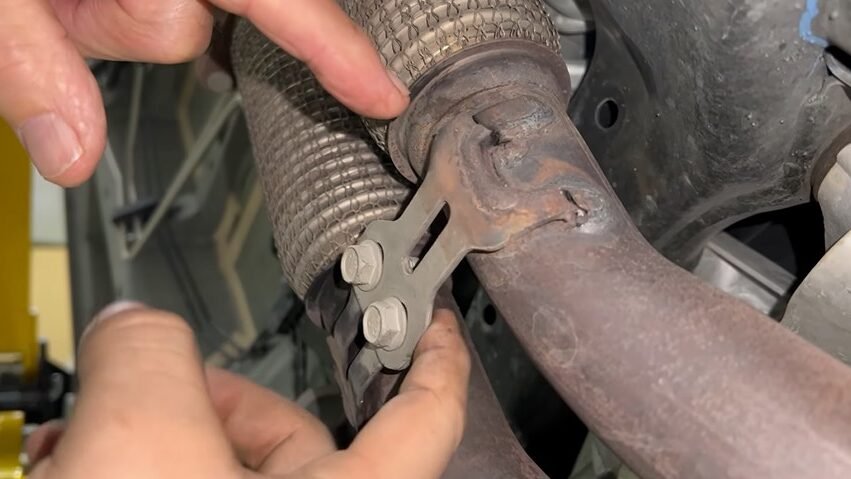
If a leak is causing false readings, a new converter may not fix the code. The vehicle may still think converter efficiency is low because the sensor data is being distorted.
Any exhaust leak near the converter or oxygen sensors should be repaired before condemning the converter.
2. Bad O2 Sensor or Air-Fuel Ratio Sensor
P0420 or P0430 codes do not automatically mean the catalytic converter is bad. The computer judges converter efficiency by comparing sensor activity before and after the converter. If one of those sensors is weak, slow, biased, or reading incorrectly, the converter can be blamed unfairly.
A bad downstream O2 sensor may report converter efficiency incorrectly. A bad upstream oxygen sensor or air-fuel ratio sensor can also create fuel control problems that make the converter work harder than it should.

This is why live data matters. A mechanic may compare upstream and downstream sensor patterns, check sensor response, inspect wiring, and review fuel trim numbers.
Replacing the converter without checking O2 sensor data can waste money, especially if the real issue is a sensor, wiring problem, or fuel mixture fault.
3. Engine Misfire
A misfire is one of the fastest ways to damage a catalytic converter. When a cylinder misfires, the air-fuel mixture does not burn properly. Unburned fuel can enter the exhaust and ignite inside the converter. That creates extreme heat.
Over time, a misfire can melt the converter core, break the honeycomb, or reduce converter efficiency. If the converter glows red, smells extremely hot, or loses power after misfire problems, damage may already be happening.
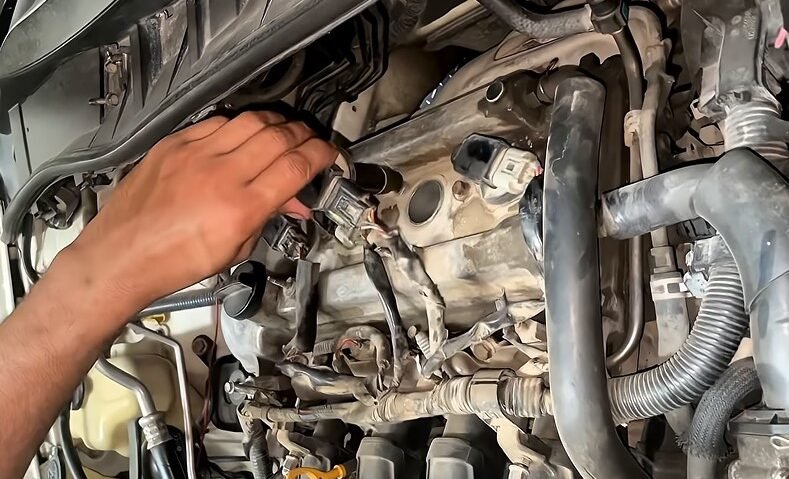
Common misfire causes include worn spark plugs, bad ignition coils, bad fuel injectors, vacuum leaks, compression problems, or wiring faults. Codes like P0300, P0301, P0302, and other P0300-series codes should be handled before converter replacement.
If you install a new converter while the engine is still misfiring, the new converter can fail too.
4. Engine Running Rich
A rich-running engine sends too much fuel into the exhaust. The catalytic converter then has to deal with extra unburned fuel, which can overheat it and shorten its life.
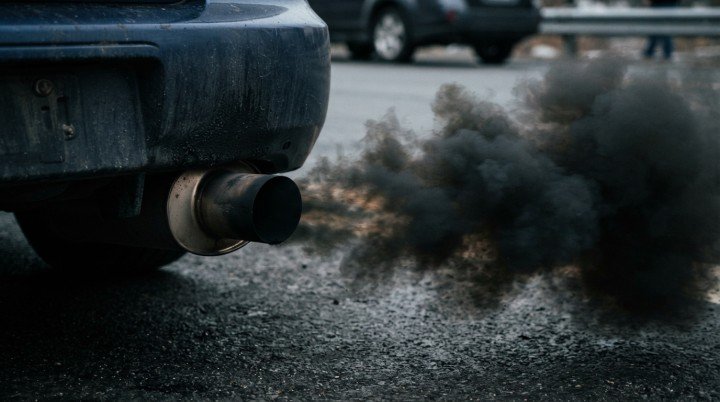
Signs of a rich condition can include black smoke, strong fuel smell, poor fuel economy, rough running, sooty spark plugs, and fuel trim numbers showing the computer is trying to remove fuel.
Possible causes include a leaking fuel injector, high fuel pressure, bad fuel pressure regulator, dirty or failing MAF sensor, stuck-open purge valve, bad coolant temperature sensor, or incorrect sensor data.
A rich condition must be fixed before Catalytic Converter Replacement. Otherwise, the new converter may be exposed to the same excessive heat and fuel load that damaged the old one.
5. Oil Burning in the Exhaust
Oil burning can contaminate the catalytic converter. When engine oil burns, it leaves ash and deposits that can coat the converter’s internal surface. This reduces the converter’s ability to clean exhaust gases.
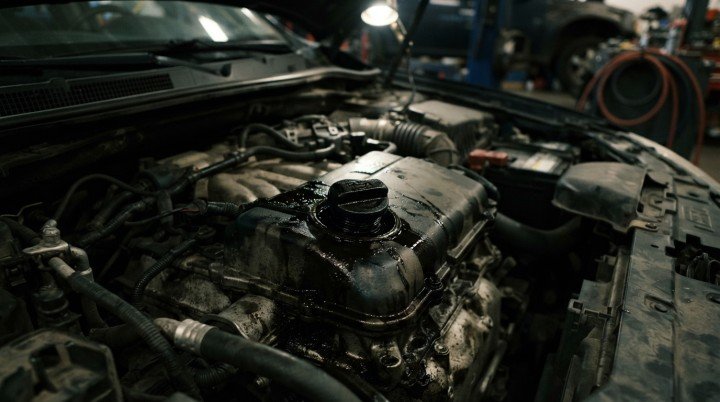
Signs of oil burning include blue smoke, low oil level between oil changes, oily spark plugs, oil smell from the exhaust, or heavy carbon buildup. On turbocharged engines, a leaking turbo seal can also send oil into the exhaust.
Common causes include worn piston rings, valve stem seal problems, a clogged or failed PCV system, turbocharger seal issues, or internal engine wear.
If the engine is burning oil badly, replacing the converter may only be a temporary fix. The oil problem needs to be diagnosed first, because oil ash can damage the new converter too.
6. Coolant Entering the Exhaust
Coolant can also ruin a catalytic converter. If coolant enters the combustion chamber because of a leaking head gasket, cracked cylinder head, or other internal engine problem, it can pass into the exhaust and contaminate the converter.
Warning signs include white smoke after warmup, coolant loss with no visible leak, sweet exhaust smell, overheating, bubbles in the coolant reservoir, or milky oil in severe cases.
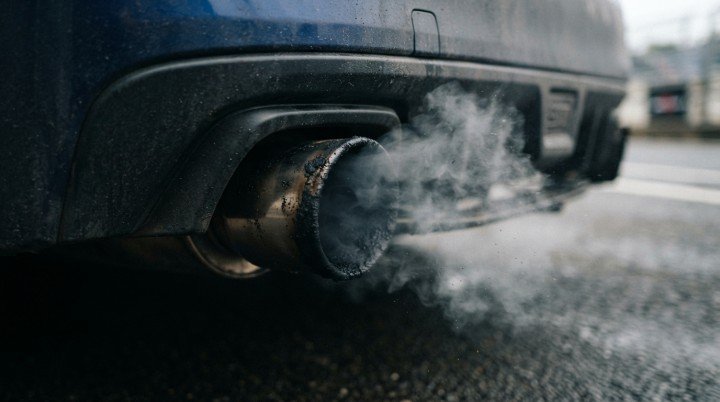
Coolant contamination can coat the converter’s internal honeycomb and reduce its efficiency. It can also create repeated converter codes even after replacement.
Before Catalytic Converter Replacement, check for coolant loss, overheating history, white exhaust smoke, and any signs of internal coolant leakage. If coolant is entering the exhaust, the engine problem must be fixed first.
7. Vacuum Leak, MAF Problem, or Fuel Trim Issue
The catalytic converter depends on the engine burning the correct air-fuel mixture. If the mixture is too lean or too rich, converter efficiency can suffer.
Vacuum leaks can create lean conditions. A dirty or failing MAF sensor can cause incorrect fuel calculations. A bad MAP sensor, intake leak, PCV leak, or fuel trim problem can also affect mixture control.
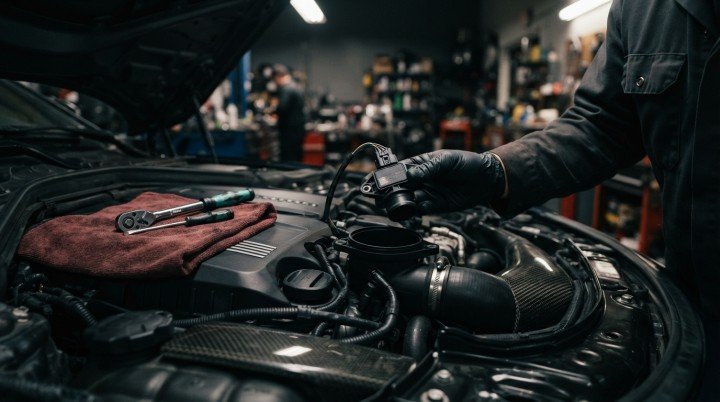
Lean codes like P0171 and P0174, or rich codes like P0172 and P0175, should not be ignored. These codes may be the real reason the converter code appeared.
A mechanic will often check fuel trims at idle, cruise, and under load. If fuel trims are abnormal, the air-fuel problem should be solved before replacing the converter.
8. Physical Damage, Clogging, or Theft
Sometimes the converter itself really is the problem. It can become physically damaged, clogged, melted, broken inside, or stolen.
A clogged catalytic converter can cause poor acceleration, low power, stalling, hard starting, or a no-start condition. The engine may feel like it cannot breathe. You may press the gas, but the vehicle struggles to build speed.
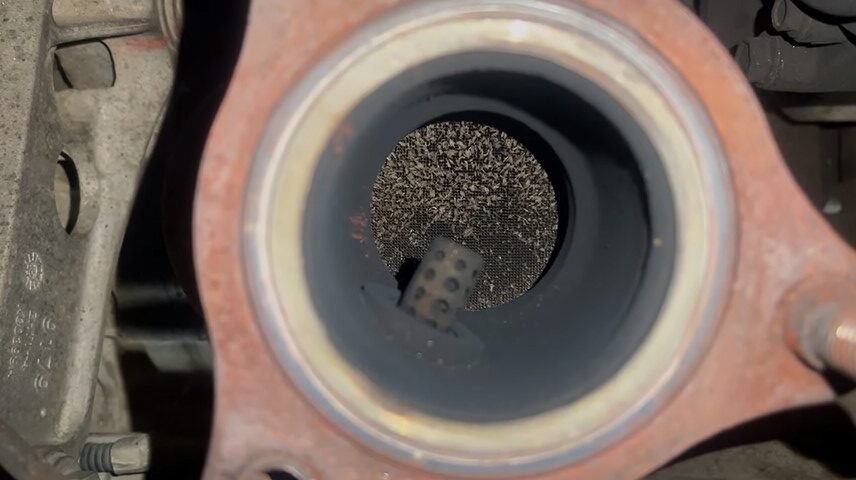
A broken internal honeycomb can create rattling from underneath the vehicle. A melted converter may cause extreme heat and severe power loss. A stolen converter is usually obvious because the exhaust becomes extremely loud and there may be a cut section under the vehicle.
Backpressure testing, temperature testing, and visual inspection can help confirm whether the converter is clogged, damaged, or missing. For more details on symptoms, see our guide on 10 symptoms of a bad catalytic converter.
Signs You May Actually Need Catalytic Converter Replacement
There are times when Catalytic Converter Replacement really is the correct repair. If P0420 or P0430 returns after leaks, sensor faults, misfires, fuel trim issues, and engine problems are checked, the converter may be worn out.
Other signs include failed emissions testing, poor acceleration from high exhaust backpressure, rattling inside the converter, sulfur or rotten egg smell, or a converter that is physically damaged or missing.
A rotten egg smell can point toward converter trouble, but it can also be linked to rich running or fuel mixture problems. It should be treated as a clue, not a final diagnosis.
A converter can also fail from age and mileage. Even with a well-maintained engine, the internal catalyst can lose efficiency over time.
The important point is confirmation. A catalytic converter is too expensive to replace based on one code and no testing.
P0420 and P0430: Do They Always Mean Bad Catalytic Converter?
No. P0420 means catalyst system efficiency below threshold on Bank 1. P0430 means catalyst system efficiency below threshold on Bank 2. These codes mean the computer believes the converter is not performing as expected.
But the reason still needs to be found. The converter may be bad, but the code can also involve exhaust leaks, oxygen sensor problems, misfires, rich or lean mixture, oil burning, coolant contamination, or previous engine issues.
If the vehicle runs well, has no other codes, has normal fuel trims, no exhaust leaks, and sensor data points toward low converter efficiency, then the converter becomes more likely. But if other codes are present, fix those first.
Replacing a converter while ignoring engine codes is one of the most common mistakes. For a broader view of why the light comes on, see 9 reasons your check engine light is on.
How Mechanics Confirm a Bad Catalytic Converter
A proper diagnosis usually starts with scanning all codes, not just the converter code. Misfire, fuel trim, oxygen sensor, MAF, coolant temperature, and fuel system codes can all change the diagnosis.
Next, live data is checked. On many vehicles, a healthy converter keeps downstream O2 sensor activity steadier than upstream activity. If downstream activity closely mirrors upstream activity, converter efficiency may be low. But sensor type and vehicle design matter, so this should be interpreted with proper scan data.
A mechanic may inspect for exhaust leaks, check fuel trims, review misfire history, and look for oil or coolant burning. If clogging is suspected, a backpressure test can show whether exhaust flow is restricted. A temperature test before and after the converter can also provide clues, but it should not be the only test used.
In some cases, a visual inspection may reveal a broken, melted, or missing converter. The goal is to confirm the failure and identify what caused it.
Can You Drive With a Bad Catalytic Converter?
It depends on the failure. If the only issue is a mild efficiency code and the vehicle drives normally, short-term driving may be possible. But the vehicle may fail emissions testing, use more fuel, or keep the check engine light on.
If the converter is clogged, driving is risky. A clogged converter creates backpressure that can reduce power, overheat exhaust parts, and make the engine run poorly. Severe restriction can even cause stalling or no-start problems.
If the check engine light is flashing, stop driving and diagnose the misfire. A flashing light usually means active misfire, and that can damage the catalytic converter quickly.
If you notice severe power loss, a glowing converter, strong sulfur smell, heavy smoke, or overheating, do not keep driving.
Catalytic Converter Replacement Cost
Catalytic Converter Replacement cost varies widely. The final price depends on the vehicle, number of converters, location of the converter, labor time, rust, and whether the part is bolt-on, welded, or built into the exhaust manifold.
OEM converters usually cost more than aftermarket converters. In some states, especially California and states that follow CARB rules, the replacement converter must be CARB-compliant. A federal converter may be cheaper, but it may not be legal or may not pass inspection in those areas.
Cheap converters can also create problems. Some may not have enough catalyst material to satisfy the vehicle’s computer, especially on sensitive vehicles. That can lead to repeated P0420 or P0430 codes.
Also check whether your vehicle has any emissions warranty coverage before paying out of pocket. Coverage depends on vehicle age, mileage, state rules, and the specific component.
Before paying for replacement, ask whether the converter meets your state’s emissions requirements and whether the root cause has been checked.
Mistakes to Avoid Before Replacement
The biggest mistake is replacing the converter only because of a P0420 or P0430 code. Those codes need diagnosis.
Another mistake is ignoring misfire codes. Misfires can destroy converters. Rich conditions can overheat them. Oil and coolant burning can contaminate them. If those issues are not fixed first, a new converter may fail again.
It is also a mistake to ignore O2 sensor data. A weak downstream sensor or damaged wiring can create a false converter problem.
Do not remove the catalytic converter or install illegal bypass parts. In many places, removing emissions equipment is illegal, and the vehicle may fail inspection.
Finally, do not install the wrong converter. The part must match the vehicle, emissions standard, engine, and state requirements. A cheap or incorrect converter can turn an expensive repair into a repeat repair.
FAQs About Catalytic Converter Replacement
Does P0420 always mean catalytic converter replacement?
No. P0420 means the computer sees low catalyst efficiency on Bank 1. The converter may be bad, but exhaust leaks, O2 sensor issues, misfires, fuel mixture problems, oil burning, or coolant contamination can also be involved. See the full P0420 guide for diagnosis steps.
Can a bad O2 sensor cause a catalytic converter code?
Yes. A bad or slow oxygen sensor can affect converter monitoring. The downstream O2 sensor is especially important for catalyst efficiency checks. Sensor data should be checked before replacing the converter. Learn more about bad O2 sensor symptoms.
Can a misfire damage a catalytic converter?
Yes. A misfire can send unburned fuel into the exhaust. That fuel can ignite inside the converter and create extreme heat. This can melt or damage the converter. Check the engine misfire symptoms guide for early warning signs.
How do I know if my catalytic converter is clogged?
Common signs include weak acceleration, loss of power, stalling, hard starting, or the engine feeling like it cannot breathe. A backpressure test is one of the best ways to confirm restriction. Full list of signs: 10 symptoms of a bad catalytic converter.
Can I drive with a bad catalytic converter?
Short-term driving may be possible with a mild efficiency code, but not with a clogged converter, flashing check engine light, severe power loss, or overheating. Those symptoms need urgent diagnosis.
Final Thoughts
Catalytic Converter Replacement can be necessary, but it should not be treated as the automatic first step every time P0420 or P0430 appears. The converter may be the failed part, but another problem may have damaged it or fooled the computer into blaming it.
Before replacement, check for exhaust leaks, O2 sensor problems, misfires, rich running, oil burning, coolant contamination, fuel trim issues, and physical damage. These checks can save money and prevent repeat failure.
A confirmed bad converter should be replaced with the correct part. But if the engine is still misfiring, burning oil, running rich, or leaking coolant into the exhaust, the new converter is being sent into the same problem that damaged the old one.
Kevin Nicholas is an automotive mechanic and editor of The Effective Guide. He writes about warning lights, car problems, and diagnostic tools, helping drivers understand what to check before replacing a part.