
Last Updated on October 28, 2026
Signs Your Car Battery May Need Replacing
Most battery problems become noticeable when you try to start the engine. That’s when the starter demands a large amount of electrical current.
Common warning signs include:
- Slow cranking: The engine turns more slowly than usual before starting.
- Repeated jump-starts: The car frequently needs outside power to start.
- Rapid clicking: The starter relay or solenoid clicks repeatedly as voltage drops.
- Dim dashboard lights: Interior lights become noticeably weaker during a starting attempt.
- Battery won’t hold a charge: The battery becomes discharged again despite proper charging.
- Visible damage: The case is swollen, cracked, or leaking.
These symptoms aren’t proof of battery failure. Corroded terminals, a charging problem, or a faulty starter can cause similar behavior.
For a closer look at how symptoms develop, see our guide to signs of a weak car battery.
Also, don’t confuse the battery-shaped dashboard warning light with a battery-health indicator. When that light appears while driving, it often points toward a charging-system problem.
6 Things to Check Before Car Battery Replacement
Start with the tests that don’t require buying anything. You may discover that your existing battery is still usable.
1. Is the Battery Bad, or Is It Simply Discharged?
Imagine leaving your headlights on overnight. The next morning, the car won’t start. Does that mean the battery is defective?
Not necessarily. It may have supplied electricity exactly as designed until most of its stored energy was gone.
A similar situation can happen when a car sits unused for several weeks or makes repeated short trips without enough time to replenish the energy used during starting.
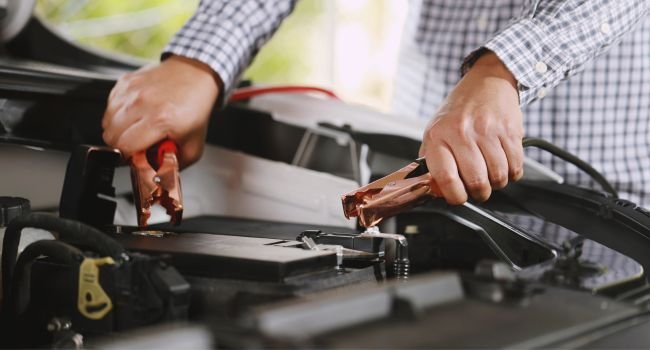
You can get an initial idea of the battery’s charge level with a digital multimeter.
- Turn off the engine and electrical accessories.
- Allow the battery to rest when practical.
- Set the multimeter to DC voltage.
- Place the red probe on the positive battery terminal and the black probe on the negative terminal.
- Read the voltage.
A rested, fully charged conventional 12-volt lead-acid battery generally reads around 12.6 to 12.8 volts. A reading around 12.2 volts suggests a substantially lower state of charge.
However, voltage doesn’t reveal how much useful starting capacity remains.
If the battery is simply discharged, recharge it with a compatible charger and then test its health. Don’t assume that a short drive after a jump-start will fully recharge a deeply discharged battery.
Your next move: Recharge a safely serviceable battery and retest. If it passes and maintains its charge, car battery replacement may be unnecessary.
2. Are the Battery Terminals and Cables Making Good Contact?
A battery can hold plenty of power but still struggle to start the car if electricity cannot travel through its connections efficiently.
Check the positive and negative terminals for looseness, corrosion, or damaged clamps. Corrosion often looks like white, blue, or greenish buildup.
Inspect the cables too. A damaged ground strap or corroded cable connection can restrict current enough to cause slow cranking or clicking.
Sometimes the problem is hidden inside a cable, even when its outer insulation looks normal.
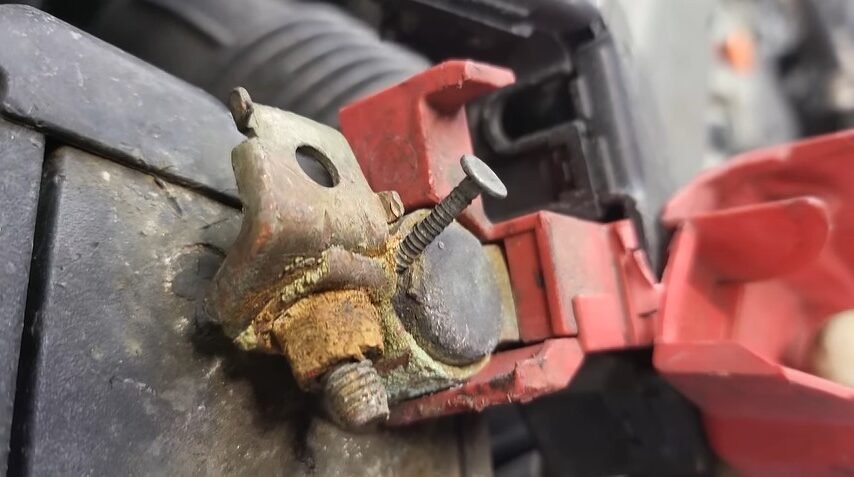
A technician can perform a voltage-drop test while the starting system is under load to identify excessive resistance.
If you’re cleaning terminals yourself, turn off the vehicle, wear eye protection, and follow the manufacturer’s battery-disconnection procedure. Never allow a metal tool to bridge the positive terminal and vehicle body.
Your next move: Repair loose, damaged, or corroded connections before replacing the battery. A new battery won’t correct a defective ground cable.
3. Is the Alternator Charging the Battery Properly?
The battery provides the electrical energy needed to start the engine. After startup, the alternator supplies electricity and restores energy to the battery on most conventional gasoline and diesel vehicles.
If the charging system stops working, even a new battery can become discharged.
With the engine running, many conventional charging systems operate somewhere around 13.5 to 14.8 volts. The exact range depends on the vehicle and operating conditions.
Modern smart-charging systems complicate things. They may intentionally raise or lower voltage according to temperature, battery condition, and electrical demand. A single reading outside the conventional range doesn’t automatically indicate failure.
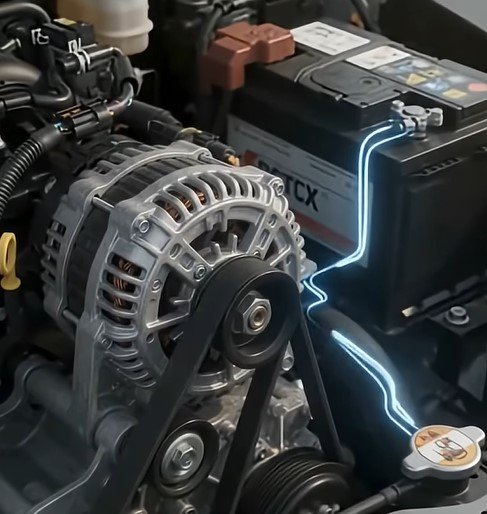
Possible charging-system faults include a slipping serpentine belt, damaged alternator wiring, blown charging fuse, faulty regulator, or failed alternator.
If the battery warning light appears while driving, especially with flickering headlights or unstable electronics, the charging system deserves immediate attention.
Our guide to bad alternator symptoms explains the warning signs that develop after the engine starts.
Your next move: Have the charging system tested. Replacing a good battery won’t fix an alternator that fails to recharge it.
4. Is Something Draining the Battery While the Car Is Parked?
Here’s another common situation: The battery tests good, the alternator charges normally, and the car starts easily after a drive. Yet after two days in the driveway, the battery is dead again.
That’s when you should consider a parasitic electrical drain.
Modern cars consume a small amount of electricity while parked. Security systems, memory functions, and electronic modules may remain active.
Problems arise when something continues drawing more electricity than it should.
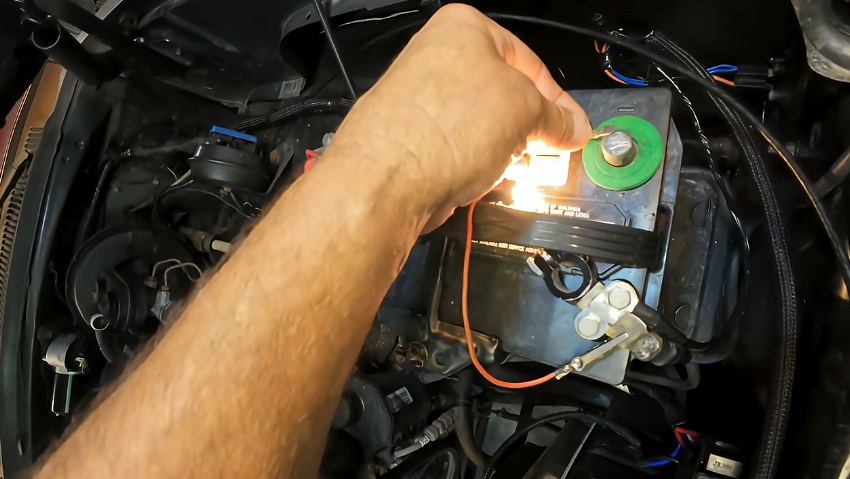
Possible causes include:
- A trunk or glovebox light that stays illuminated
- An aftermarket dashcam or alarm
- A relay that remains energized
- A control module that fails to enter sleep mode
- A faulty alternator diode allowing unwanted current flow
A proper parasitic draw test measures electrical current after the vehicle’s modules have entered their normal sleep states.
There’s no single acceptable current-draw number for every vehicle. Follow the manufacturer’s specifications, particularly on newer cars with complex electronics.
Your next move: If the battery passes its health test but repeatedly discharges while parked, identify the electrical drain before buying another battery.
5. Could the Starter or Starting Circuit Be the Real Problem?
Not every no-start condition comes from a weak battery.
The sound the vehicle makes during a starting attempt can provide a useful clue.

| What Happens | What to Investigate |
|---|---|
| Rapid clicking | Low battery charge, poor terminals, or excessive voltage drop |
| One solid click | Starter, solenoid, battery under load, or main cables |
| Complete silence | Starter control circuit, relay, interlock, connections, or battery |
| Normal cranking but no start | Fuel, ignition, security, sensor, or mechanical problems |
A defective starter may fail to crank the engine even when battery voltage and battery health are normal.
Likewise, a bad relay, damaged starter cable, or park/neutral safety switch can prevent starting.
The distinction between no crank and cranks but won’t start matters. If the engine turns normally but never fires, replacing the battery is unlikely to solve the underlying problem.
For more help identifying the cause, read 8 Reasons Your Car Won’t Start Even If the Battery Seems Fine.
Your next move: When the battery and connections test good, investigate the starter circuit or other no-start causes instead of guessing.
6. Has the Battery Actually Failed Its Health Test?
This is the check that should carry the most weight in a replacement decision.
Many conventional car batteries last around three to five years, although some fail sooner and others last longer. High temperatures, repeated deep discharges, vibration, and charging problems can shorten battery life.
Age matters, but age alone doesn’t prove failure.
A professional battery test can evaluate performance beyond a simple voltage reading.
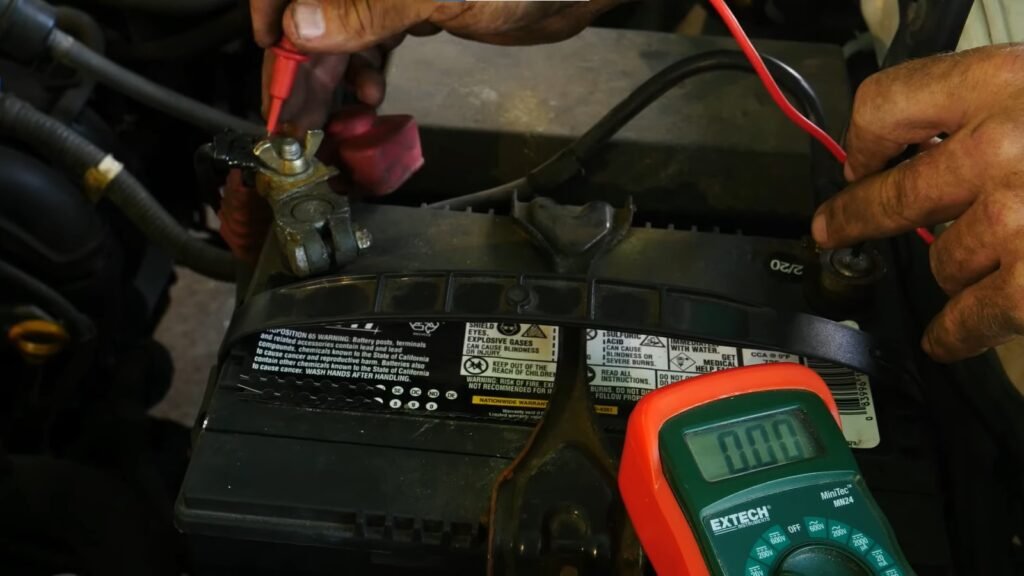
Load testing measures how well a battery maintains voltage while supplying a controlled electrical load.
Conductance testing evaluates electrical characteristics to estimate the battery’s available starting performance.
Cold cranking amps (CCA) describe a battery’s ability to deliver starting current under a specified cold-temperature test. Reduced available starting power may explain why an aging battery struggles, particularly during winter.
Testers may report results such as:
- Good: The battery meets the test criteria at that time.
- Recharge and retest: The battery is insufficiently charged for a dependable decision.
- Replace: The battery fails the appropriate performance criteria.
A battery that’s swollen, cracked, leaking, or suspected of being frozen should not be jump-started or recharged. Arrange qualified handling instead.
Your next move: Replace the battery when its condition or properly performed testing confirms that it is no longer safe or capable of reliable service.
Car Battery Test Results: Replace It or Keep It?
After completing the six checks, use the actual findings to decide what to repair.
| What You Found | Best Next Step |
|---|---|
| Battery discharged but passes health testing | Recharge and investigate why it became discharged |
| Battery fails testing after appropriate charging | Replace the battery |
| Loose or corroded cables | Repair connections and retest |
| Charging system fails specifications | Diagnose the alternator and charging circuit |
| Excessive electrical drain while parked | Locate and repair the drain |
| Battery good, engine won’t crank | Test starter and starting circuit |
| Battery swollen, cracked, or leaking | Arrange safe removal and replacement |
A borderline or inconclusive battery-test result deserves another properly performed test, not an automatic purchase.
Car Battery Voltage Chart: What Is Normal?
A multimeter is useful for measuring state of charge, but don’t treat voltage as a complete battery-health report.
| Rested Battery Voltage | Approximate State of Charge |
|---|---|
| 12.6–12.8V | Fully or nearly fully charged |
| 12.4V | Partially discharged |
| 12.2V | Significantly discharged |
| 12.0V | Heavily discharged |
| Below 12.0V | Very low charge or possible fault |
These are approximate figures for conventional 12-volt lead-acid batteries at ordinary temperatures. Battery chemistry, temperature, recent charging, and surface charge affect readings.
A battery can read 12.7 volts and still fail when the starter demands current. That’s why a load or conductance test matters.
Dead Battery vs Bad Battery: What’s the Difference?
Drivers often use “dead battery” to describe two very different problems.
A discharged battery has lost stored energy but may still be healthy. For example, leaving an interior light on overnight can discharge an otherwise good battery.
A failed battery has deteriorated or developed damage that prevents it from reliably storing or supplying the required power.
Both batteries may respond to a jump-start, so that test doesn’t separate them.
The difference usually becomes clearer after controlled charging and a battery-health test.
If a battery repeatedly loses charge but passes testing, don’t ignore the charging system or parasitic electrical drain.
When Is Car Battery Replacement Actually Necessary?
Replacing the battery makes sense when it fails a reliable health test after appropriate charging, has confirmed internal damage, or can no longer supply sufficient starting power.
Severe swelling, leaking electrolyte, or a cracked case also calls for replacement and careful handling.
Don’t wait for complete failure if testing already shows that an aging battery is unreliable. Being stranded on a freezing morning or in an unfamiliar parking lot may cost more than a planned replacement.
On the other hand, replacing a relatively new battery simply because it was discharged once may be wasteful.
The important question is whether the battery itself has failed—not merely whether it was empty when you tried to start the car.
How Much Does Car Battery Replacement Cost in 2026?
The cost of car battery replacement in the United States varies considerably with battery technology, vehicle requirements, and where you buy it.
A conventional flooded lead-acid battery can often be purchased for roughly $100–$225, while premium AGM batteries may cost approximately $230–$450 or more. These are broad retail ranges, not fixed prices for every vehicle.
RepairPal’s national battery replacement estimate, updated September 3, 2026, is $456–$493 for a shop repair, including approximately $61–$90 in labor. That national estimate reflects shop-supplied parts and differs from buying a battery directly at retail.
Before Comparing Battery PricesMake sure each quote covers the same battery type, correct group size, required starting capacity, installation, warranty, and any electronic registration. A cheaper quote isn’t necessarily a better deal if it excludes required work.
Some auto parts stores install eligible batteries without a separate labor charge when you purchase from them. Others may charge extra for difficult battery locations or programming.
Ask about a refundable core charge and recycling your old battery. Never discard a lead-acid battery with household garbage.
Where Can You Get a Car Battery Tested for Free?
You don’t necessarily need to pay a repair shop just to get an initial battery-health check.
AutoZone advertises free battery testing and charging at its US stores. It also offers alternator testing, subject to applicable service and vehicle restrictions.
Some other auto parts retailers and eligible roadside-assistance programs provide battery testing or installation services. Availability varies by location and vehicle.
Ask for the actual result: Did the battery fail, does it need charging, or did it pass?
If the test says “recharge and retest,” don’t treat that as a confirmed failure. And remember, a passing battery test doesn’t automatically rule out a bad alternator, loose cable, or parasitic drain.
How to Choose the Right Replacement Car Battery
If testing confirms that you need a new battery, don’t choose solely by price or appearance.
Check these specifications against your owner’s manual or manufacturer’s fitment information:
- Battery group size: Determines physical dimensions and mounting compatibility.
- Terminal position: Must match the vehicle’s cable layout.
- Cold cranking amps: Should meet the manufacturer’s minimum requirement.
- Reserve capacity: Indicates how long the battery can provide a specified electrical load under standardized conditions.
- Battery technology: Choose the specified flooded, enhanced flooded (EFB), or AGM design.
- Warranty: Check coverage length and replacement conditions.
Vehicles with automatic start-stop systems commonly require batteries designed for repeated cycling. Installing an incompatible conventional battery may shorten service life or cause system problems.
Some modern cars also require battery registration, coding, or battery monitoring system procedures after installation.
Hybrid and electric vehicles may have separate low-voltage batteries with different replacement procedures. Their high-voltage traction batteries are a separate system and should never be treated as an ordinary DIY 12-volt replacement.
Can You Replace a Car Battery Yourself?
On many older and simpler vehicles, battery replacement is a manageable DIY task. However, location, wiring, and electronic requirements can make it more complicated.
Always follow the vehicle manufacturer’s procedure.
For many conventional negative-ground vehicles, the negative cable is disconnected first, followed by the positive cable. During installation, the positive cable is connected first and the negative cable last.
Secure the new battery with the correct hold-down hardware. Never leave it loose in the tray.
Some batteries also require vent tubes, electronic registration, or special power-management procedures.
If the battery is under a seat, behind interior trim, or difficult to access—or you aren’t confident working around electrical connections—professional installation is the safer choice.
What Should You Check After Car Battery Replacement?
A successful car battery replacement should solve the original starting complaint, not simply make the car start once.
After installation, confirm that the battery is securely mounted, terminals are properly connected, and any required venting or registration procedure has been completed.
Check the charging system to make sure the new battery is receiving appropriate charging power.
Depending on the vehicle, you may also need to restore clock settings, window initialization, or other electronic functions.
If the replacement battery becomes discharged again, investigate the original cause rather than assuming you purchased another defective battery.
Common Car Battery Replacement Mistakes to Avoid
Most unnecessary battery purchases happen because someone assumes that a car failing to start automatically means the battery has failed.
- Replacing a discharged but otherwise healthy battery
- Ignoring a charging-system fault
- Overlooking corroded terminals or damaged grounds
- Buying an incorrect group size or battery technology
- Choosing insufficient cold cranking amps
- Assuming a successful jump-start confirms battery failure
- Skipping required battery registration or initialization
- Ignoring repeated overnight battery drain
Another mistake is attempting to jump-start or charge a visibly damaged battery. Swelling, leakage, cracking, or suspected freezing requires qualified assessment.
Frequently Asked Questions About Car Battery Replacement
1. How do I know if my car battery really needs replacing?
A battery that fails an appropriate health test after charging, cannot reliably deliver starting current, or has significant physical damage typically needs replacement. Age and starting symptoms alone aren’t enough to confirm failure.
2. Can a completely dead car battery be recharged?
Sometimes. A deeply discharged but otherwise healthy battery may recover with a compatible charger. Batteries with internal faults or physical damage may not recover safely. The battery should be tested after charging.
3. How long should a car battery last?
Many conventional automotive batteries last approximately three to five years. Extreme heat, short-trip driving, repeated deep discharge, and charging problems can reduce lifespan. Regular testing becomes especially useful as the battery ages.
4. Can a bad alternator damage a new battery?
Yes. Undercharging can leave the battery repeatedly discharged, while excessive charging voltage can damage it. Always check the charging system if battery problems continue.
5. Is car battery replacement difficult to do yourself?
It can be straightforward on vehicles with easily accessible batteries. However, unusual mounting locations, electronic battery monitoring, required registration, and safety considerations may make professional installation preferable.
6. Do I need to reset or register a new car battery?
Some modern vehicles require battery registration or programming to update their battery management systems. Others need only basic electronic settings restored. Follow the specific manufacturer’s requirements.
Final Thoughts: Don’t Buy a Battery Until You Know Why It Failed
A car that won’t start may need a new battery, but it may also need nothing more than a proper recharge or a repaired electrical connection.
Before paying for car battery replacement, check the charge level, connections, alternator, parasitic drain, starter, and battery health. Those six checks can help distinguish a battery that has simply lost power from one that’s no longer reliable.
If testing confirms battery failure, replace it with the correct type and address anything that contributed to its deterioration.
That way, you’re paying for the repair your car actually needs—not just the part that seems most suspicious.

Kevin Nicholas is an automotive mechanic and editor of The Effective Guide. He writes about warning lights, car problems, and diagnostic tools, helping drivers understand what to check before replacing a part.