
Last Updated on November 21, 2026
THE FIRST THING TO KNOWAn ABS code doesn’t always mean the sensor is defective. Before replacing one, check the stored ABS trouble codes, wiring, connectors, sensor mounting, tone ring or magnetic encoder, wheel bearing, electrical supply, and live wheel-speed data.
Replace the sensor when testing confirms its own electrical or signal failure. If the fault comes from the hub, encoder, or wiring, repair that component instead.
What Does an ABS Wheel Speed Sensor Do?
An anti-lock braking system (ABS) uses wheel-speed sensors to monitor how fast individual wheels rotate.
During hard braking, the ABS module compares wheel-speed information to detect a wheel that may be locking. It can then adjust brake pressure to help maintain steering control.
Traction control and electronic stability control also use wheel-speed information.
Depending on vehicle design, the sensor detects a toothed metal ring or a magnetic encoder. The encoder may be built into the wheel bearing seal.
Older passive sensors and newer active sensors work differently, so they require different electrical tests.
What Are the Signs You Might Need ABS Sensor Replacement?
A wheel-speed signal problem can affect several systems at once because they share information from the ABS module.
Common warning signs include:
- ABS light stays on: The system has detected a fault or disabled a function.
- Traction control warning: The system may no longer have reliable wheel-speed information.
- Stability control warning: Some vehicles disable stability assistance when an ABS-related fault occurs.
- Unexpected ABS activation: The brake pedal pulses just before the vehicle stops.
- Intermittent warnings: The light appears after rain, bumps, or steering movement.
- Speedometer or cruise-control issues: Possible on vehicles that depend on affected wheel-speed information.
- Stored ABS codes: A wheel-speed sensor circuit or performance fault is recorded.
An amber ABS light does not always mean conventional hydraulic braking has failed. However, anti-lock braking and related safety functions may be unavailable.
A red brake warning, unusual pedal feel, or reduced braking performance requires more urgent attention.
8 Things to Check Before ABS Sensor Replacement
Think of the ABS sensor as one part of a signal chain. The wheel rotates, a tone ring or encoder creates a changing magnetic pattern, the sensor detects it, and wiring carries that information to the ABS module.
A fault anywhere along that chain can look like a failed sensor.
1. Read the ABS Trouble Codes With the Right Scanner
A basic engine-code reader may not communicate with the ABS control module. You need a scanner that supports ABS diagnostics for your specific vehicle.
Record all stored codes, their descriptions, and any available subcodes or event information before clearing them.
For example, a left-front wheel-speed circuit code may indicate an open circuit, short circuit, or implausible signal. Those conditions require different checks.
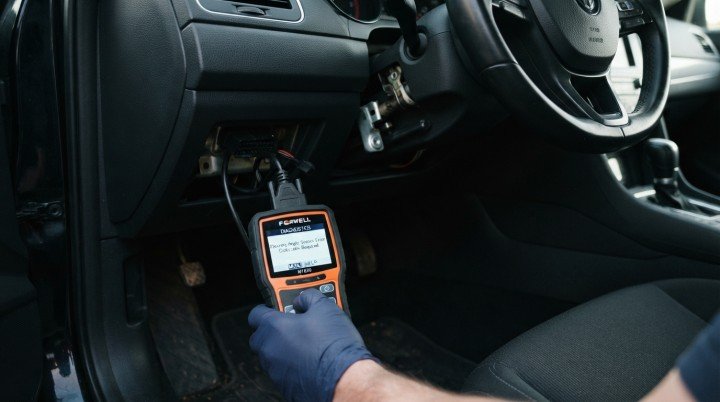
Codes can also identify ABS pump, communication, or module power problems that have nothing to do with an individual wheel sensor.
Our C1233 wheel-speed sensor code guide discusses a specific example of a missing left-front wheel-speed signal.
Start here: Identify the affected circuit and fault type before purchasing any parts.
2. Inspect the Sensor Wiring Around the Suspension
ABS sensor wiring lives in a difficult environment. It moves with the suspension, bends during steering, and faces water, salt, road debris, and vibration.
A wire may break internally even when its outer insulation still looks reasonable.
Inspect for damaged insulation, missing retaining clips, stretched wiring, or a harness rubbing against the tire, strut, or steering components.
Pay special attention if the warning appeared after brake work, suspension repairs, or wheel-bearing replacement.
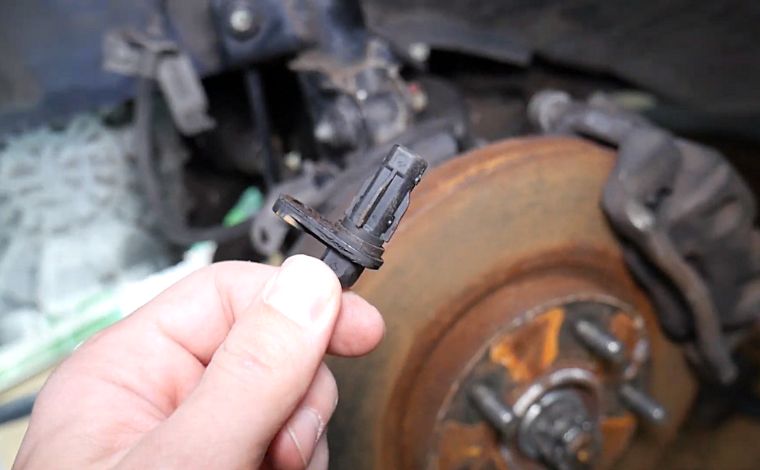
An intermittent fault that appears during turns or bumps may also point toward a damaged harness.
What it means: Repair confirmed wiring damage. A replacement sensor won’t help if its signal cannot reach the ABS module.
3. Check Electrical Connectors and Terminal Condition
Wheel-speed sensor connectors are exposed to moisture and road contamination. Corrosion or a loose terminal can interrupt an otherwise healthy sensor.
Look for damaged seals, broken locking tabs, bent pins, corrosion, or connectors that don’t seat securely.
Electrical testing can help reveal poor connections or excessive resistance in the harness. The correct method depends on the sensor and vehicle design.
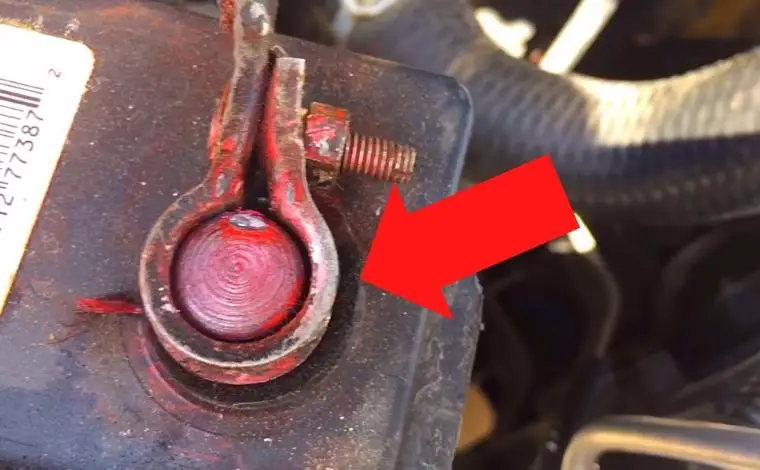
Don’t insert oversized test probes into connector terminals. They can spread the contacts and create a new intermittent problem.
What it means: Correct terminal, connector, or harness faults before replacing a functioning sensor.
4. Inspect Sensor Mounting, Rust, and Debris
A sensor may produce an inaccurate signal because it isn’t positioned correctly relative to the tone ring or encoder.
On certain designs, rust forms beneath the sensor’s mounting flange and gradually lifts the sensor away from the signal source.
This can weaken the signal, sometimes causing unwanted ABS activation during low-speed stops.
Metal particles collecting near some magnetic sensor tips can also interfere with operation.

Careful cleaning and correct seating may solve these problems if the sensor remains serviceable.
However, not every sensor has an adjustable air gap, and a badly corroded sensor can break during removal.
What it means: Check mounting condition before replacement. Use the manufacturer’s cleaning and installation procedures.
5. Check the Tone Ring or Magnetic Encoder
The ABS sensor needs a reliable rotating signal source.
Older systems may use exposed toothed reluctor rings mounted on a CV axle, hub, or other rotating component.
These rings can crack, corrode, develop missing teeth, or shift out of position.
Other vehicles use a magnetic encoder integrated into the wheel-bearing seal. It may not be visible without specialized inspection equipment.
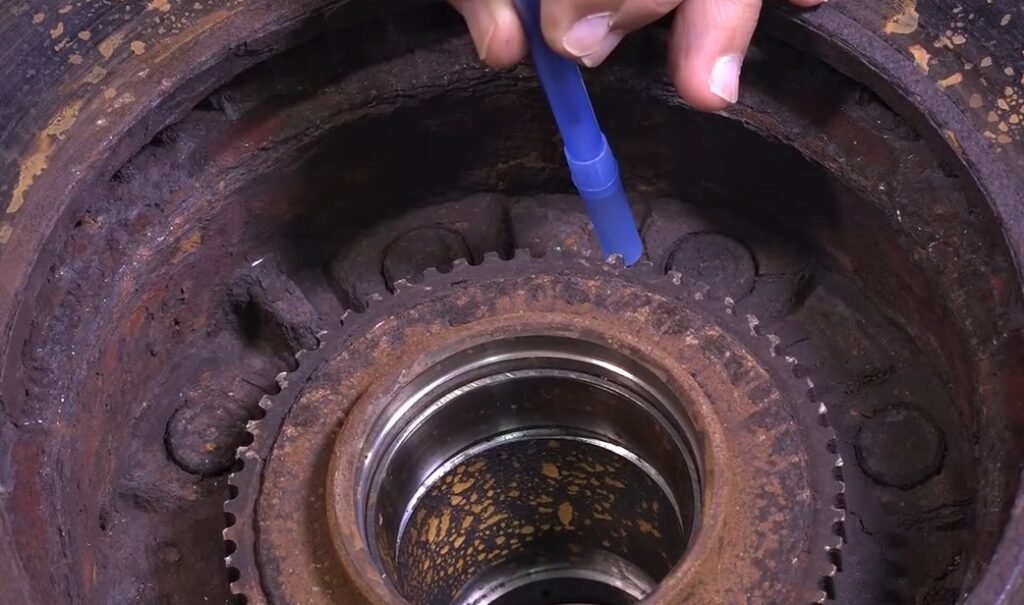
If the magnetic pattern becomes damaged, the sensor can report incorrect wheel speed even though its electronics are working.
This is especially important when the ABS light appears immediately after wheel-bearing replacement. Certain bearings have a specific installation orientation that places the encoder toward the sensor.
What it means: Repair or replace the damaged ring or bearing assembly rather than installing another sensor without evidence.
6. Inspect the Wheel Bearing and Hub
A worn wheel bearing can cause humming, growling, vibration, or excessive movement at the wheel.
On some vehicles, bearing play also affects the relationship between the sensor and its encoder, causing an intermittent or implausible wheel-speed reading.
The bearing may contain an integrated magnetic encoder, making a hub or bearing repair necessary even when the sensor is healthy.
A technician should inspect bearing condition and identify which components are separately serviceable.

Some vehicles allow replacement of the sensor alone. Others require replacing the hub or bearing assembly for certain encoder failures.
What it means: If bearing or integrated encoder failure is confirmed, the correct repair may be hub replacement—not ABS sensor replacement.
7. Verify Battery Voltage and ABS Module Power
ABS modules rely on a stable electrical supply.
A weak battery, charging-system fault, poor ground, blown fuse, or damaged module connection can trigger warning lights and communication problems.
This is especially worth checking when several unrelated dashboard warnings appear together or the vehicle recently experienced starting or charging trouble.
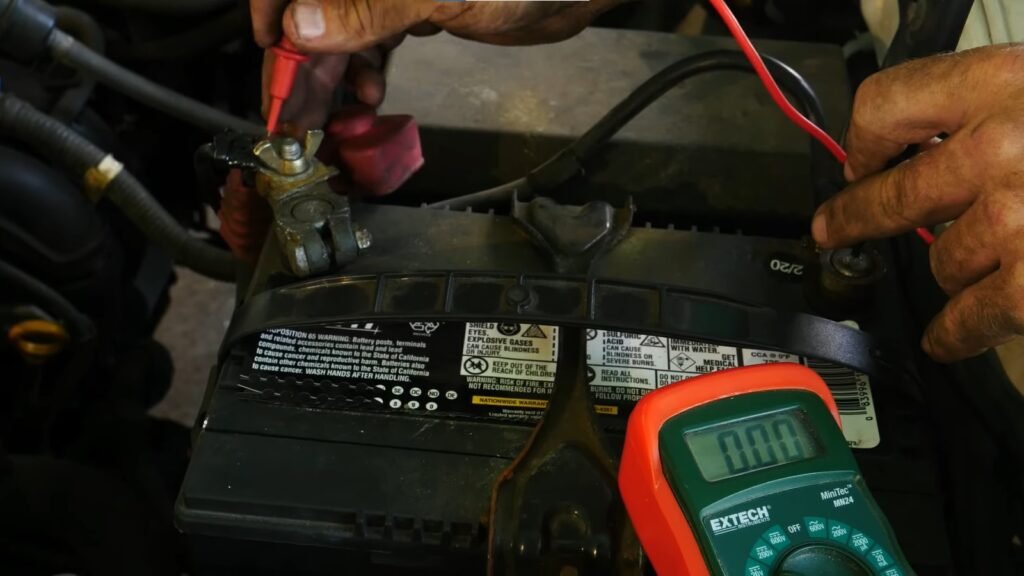
A technician can inspect stored low-voltage faults and verify the relevant power and ground circuits.
Battery condition can also be investigated using our weak car battery symptoms guide.
What it means: Fix confirmed electrical supply problems before replacing wheel-speed sensors.
8. Compare Live Wheel-Speed Data and Test the Sensor
This is often the most useful step for deciding whether ABS sensor replacement is actually necessary.
With an ABS-capable scanner, a technician can compare live readings from all four wheels under safe, controlled conditions.
On a straight, steady drive, the readings should generally be consistent. One wheel suddenly reporting zero, dropping out, or showing erratic speed can identify the problem area.
Normal wheel-speed differences can occur while turning, so every small mismatch isn’t a failure.

After identifying the affected wheel, the technician should inspect its wiring, encoder, bearing, and sensor output.
Passive sensors can generate an AC signal as the wheel rotates. Active sensors require electrical power and may transmit a digital or current-modulated signal.
A simple resistance test is not suitable for every active sensor. Manufacturer-specific signal testing or an oscilloscope may be required.
What it means: Replace the sensor when proper tests confirm that its own output is defective and other signal-chain components are sound.
What Does Your ABS Warning or Braking Symptom Suggest?
The timing of the warning can help determine what to investigate first.
| Symptom | Possible Cause |
|---|---|
| ABS and traction lights appear together | Shared wheel-speed signal or another related system fault |
| ABS activates just before stopping | Weak low-speed signal, mounting rust, or encoder problem |
| Warning appears after rain | Moisture entering a connector or damaged wiring |
| Warning begins after wheel-bearing work | Encoder orientation, damage, or sensor installation issue |
| One wheel reads zero while moving | Sensor, wiring, or encoder fault |
| Warning after suspension work | Stretched or incorrectly routed harness |
| Several ABS communication codes | Module power, ground, communication, or multiple faults |
These are diagnostic clues rather than confirmed causes.
How to Test an ABS Wheel Speed Sensor Correctly
The goal isn’t merely to find an abnormal wheel-speed reading. It’s to identify why that reading is abnormal.
Compare Wheel Speeds
Use an ABS-capable scanner to identify the wheel showing signal dropouts, unusual spikes, or readings that don’t match vehicle movement.
Road testing should be performed only when braking is safe and reliable. Tests involving lifted, rotating wheels should be left to properly equipped technicians.
Inspect the Full Signal Path
Check the sensor mounting, harness, connector, tone ring or magnetic encoder, and wheel bearing.
A damaged encoder can create a distorted sensor signal even when power and wiring are normal.
Match the Electrical Test to the Sensor Type
Passive sensors may be checked using manufacturer-specified resistance and AC signal measurements.
Active sensors require testing their supply and output according to the correct service procedure. Their internal resistance generally cannot be evaluated using ordinary passive-sensor resistance methods.
Oscilloscope testing can help distinguish a missing electrical signal from a repeating encoder-related defect.
ABS Sensor vs Wheel Bearing vs Tone Ring: Which Part Is Bad?
| Component | Typical Fault | Best Diagnostic Direction |
|---|---|---|
| Wheel-speed sensor | Internal signal failure | Sensor-specific output testing |
| Wiring or connector | Open, short, intermittent contact | Harness and electrical tests |
| Toothed tone ring | Cracks, corrosion, missing teeth | Physical and signal-pattern inspection |
| Magnetic encoder | Damaged magnetic pattern | Specialized encoder inspection |
| Wheel bearing or hub | Play, damage, integrated encoder fault | Bearing condition and signal analysis |
| ABS control module | Power, communication, or internal fault | Advanced module diagnosis |
Don’t confuse a damaged magnetic encoder with a defective sensor. Both can create the same warning lights but require different repairs.
What Do ABS Trouble Codes C0035, C0040, and Others Mean?
ABS fault codes often identify a particular wheel-speed circuit or another system component.
Definitions, subcodes, and circuit identification can vary by manufacturer. A C0035 code doesn’t automatically confirm an internally defective left-front sensor.
Vehicle-specific ABS trouble codes, such as C1232, also need interpretation using the appropriate service information.
Can Cleaning Fix an ABS Sensor Problem?
Sometimes. Rust beneath a sensor’s mounting surface or metallic debris near certain magnetic sensor tips may interfere with a normal signal.
Cleaning can help when contamination or mounting condition is the actual problem and the manufacturer permits servicing.
However, cleaning won’t fix an internally failed sensor, broken wire, cracked tone ring, or damaged magnetic encoder.
Sensor removal can also be difficult when corrosion has seized the sensor into the hub. Forcing it may damage an otherwise serviceable component.
Clean only where appropriate, reinstall correctly, and confirm that the wheel-speed reading has recovered.
When Does ABS Sensor Replacement Actually Make Sense?
ABS sensor replacement is appropriate when testing confirms the sensor itself is defective.
Examples include an internal electrical failure, physically damaged sensor, or an incorrect output signal after wiring, mounting, encoder, and power supply have been checked.
If the sensor isn’t separately serviceable, replacing the required hub assembly may be necessary.
Before approving the work, ask which test distinguishes the failed sensor from a damaged encoder or wiring problem.
How Much Does ABS Sensor Replacement Cost in 2026?
RepairPal’s US national estimate, updated September 3, 2026, puts average wheel-speed sensor replacement at approximately $234–$310.
| Cost Component | Estimated US Cost |
|---|---|
| Parts | $145–$179 |
| Labor | $89–$131 |
| Total | $234–$310 |
These estimates exclude taxes, location differences, diagnostic fees, and related repairs.
The final cost depends on the vehicle, sensor location, corrosion, labor access, and whether the sensor is separately replaceable.
A damaged magnetic encoder requiring wheel-bearing or hub replacement can increase the repair cost substantially.
Ask whether the quote includes an OEM or compatible aftermarket sensor, installation, diagnosis, and warranty.
Can You Drive With a Bad ABS Sensor?
With an amber ABS warning alone, conventional hydraulic brakes may still operate. However, ABS, traction control, and electronic stability assistance may be unavailable.
Without ABS, a wheel may lock during hard braking, especially on wet or slippery pavement. That can reduce your ability to steer while braking.
Unexpected ABS activation can also change braking feel or response near a stop.
When You Should Stop DrivingIf the red brake warning appears, the pedal feels unusually soft or sinks, braking performance is reduced, or the vehicle pulls or behaves unpredictably during braking, stop safely and arrange professional assistance or towing.
Even when ordinary braking feels normal, an ABS fault should be diagnosed promptly. Don’t assume the car is fully safe simply because it can still stop.
New ABS Sensor but the Warning Light Is Still On?
If the warning remains after installing a new wheel-speed sensor, don’t immediately purchase another one.
Inspect the tone ring or magnetic encoder, especially if the problem started after wheel-bearing replacement.
Check whether the sensor is seated correctly, the connector is secure, and the harness follows the specified routing.
An incorrect replacement part, damaged bearing, poor electrical connection, or unresolved ABS module fault may be responsible.
Some vehicles also require a manufacturer-specific verification or calibration procedure following related repairs.
The repair should be confirmed by rechecking ABS codes and all relevant wheel-speed signals—not just turning off the warning light.
Questions to Ask Before Approving ABS Sensor Replacement
- Which ABS trouble code was stored?
- Which wheel-speed signal behaved incorrectly?
- Were the sensor wiring and connectors tested?
- Was the tone ring or magnetic encoder inspected?
- Is the sensor separately replaceable or integrated into the hub?
- Does the estimate include diagnosis, installation, and warranty?
A useful repair recommendation should explain exactly which component failed and what evidence supports replacing it.
Common ABS Sensor Replacement Mistakes to Avoid
- Replacing a sensor based only on the ABS warning light.
- Using a scanner that cannot access the ABS module.
- Ignoring damaged wiring near the suspension.
- Failing to inspect the tone ring or magnetic encoder.
- Replacing a sensor when the wheel bearing or hub is defective.
- Using resistance tests on incompatible active sensors.
- Installing a sensor that doesn’t match the vehicle.
- Routing sensor wiring where it can rub or stretch.
- Clearing codes without verifying wheel-speed data.
- Ignoring unusual braking behavior or red brake warnings.
Frequently Asked Questions About ABS Sensor Replacement
1. How do I know if my ABS sensor really needs replacing?
Read the ABS codes, compare wheel-speed data, and test the suspected sensor. Replacement is justified when its output is defective and wiring, mounting, encoder, and hub problems have been excluded.
2. Can a bad wheel bearing turn on the ABS light?
Yes. Excessive bearing play or a damaged magnetic encoder inside the bearing can produce incorrect wheel-speed signals and trigger ABS warnings.
3. Can cleaning an ABS sensor fix the problem?
Sometimes. Removing approved surface contamination or correcting rust beneath a sensor mount may restore proper operation. Cleaning cannot repair failed electronics or a damaged encoder.
4. Will replacing an ABS sensor turn off the traction control light?
It can if the confirmed sensor fault caused both warnings. If the problem comes from wiring, an encoder, or another control-system component, the light may remain on.
5. Can I drive with the ABS light on?
Conventional braking may remain available, but ABS and stability assistance may be disabled. Have the fault checked promptly. Do not continue driving with abnormal braking, a red brake warning, or reduced stopping performance.
6. Does a new ABS sensor require programming?
Many direct-replacement wheel-speed sensors don’t require individual programming. However, some vehicles need fault clearing, calibration, or specific verification after related repairs. Follow manufacturer procedures.
Final Thoughts: Diagnose the Wheel-Speed Signal Before Buying Parts
ABS sensor replacement can restore normal ABS, traction control, and stability operation when the sensor itself has failed.
But a wheel-speed fault can also come from damaged wiring, corroded connectors, mounting rust, a cracked tone ring, a magnetic encoder, or a failing wheel bearing.
Read the ABS codes, compare the wheel-speed signals, and identify the exact failed component before approving the repair.
The goal is to restore a reliable wheel-speed signal—not simply replace the part named in the trouble-code description.

Kevin Nicholas is an automotive mechanic and editor of The Effective Guide. He writes about warning lights, car problems, and diagnostic tools, helping drivers understand what to check before replacing a part.