
Last Updated on November 21, 2026
Quick AnswerBefore replacing a MAF sensor, inspect the air filter and intake duct, check for vacuum leaks, examine sensor contamination, inspect wiring and connectors, review OBD2 codes and fuel trims, and verify sensor performance. Repairing an intake leak or electrical connection may solve the problem without replacing the sensor.
What Does a MAF Sensor Actually Do?
The mass airflow (MAF) sensor measures the mass of air entering the engine. The engine computer uses that information, along with other sensor readings, to calculate fuel delivery.
On most MAF-equipped vehicles, the sensor sits between the air filter housing and throttle body.
If its readings are inaccurate, the engine computer may calculate the wrong amount of fuel, causing rough running, hesitation, or poor fuel economy.
A MAF sensor measures airflow directly, while a MAP sensor measures intake manifold pressure. Some vehicles calculate engine airflow using a MAP-based system without a separate MAF sensor.
What Are the Signs You Might Need MAF Sensor Replacement?
A failing mass airflow sensor can affect the way your engine starts, idles, and accelerates.
Common symptoms include:
- Rough idle: The engine shakes or RPM fluctuates while stopped.
- Hesitation: Acceleration feels delayed or uneven.
- Poor fuel economy: The engine may use more fuel than normal.
- Stalling: The engine occasionally shuts off, especially at low speeds.
- Hard starting: Incorrect airflow information may affect fuel delivery during startup.
- Black exhaust smoke: Some rich-running conditions produce dark smoke.
- Check engine light: Codes such as P0100, P0101, P0102, P0103, or P0104 may appear.
None of these symptoms proves the sensor is defective. If your engine shakes at idle, our guide to common rough idle causes explains other problems that can create similar behavior.
6 Things to Check Before MAF Sensor Replacement
Start with the intake system before testing electronics. The MAF sensor can only report airflow correctly when the air entering the engine follows the intended path.
1. Inspect the Air Filter, Intake Duct, and Sensor Housing
A MAF sensor sits directly in the incoming air stream, so problems around the air filter and intake tube deserve attention first.
Open the air-filter housing and check whether the filter is dirty, damaged, or installed incorrectly.
Then examine the intake duct between the MAF sensor and throttle body. Rubber intake boots can develop cracks, especially around flexible sections.
Check for loose clamps, disconnected hoses, and an airbox cover that doesn’t seal properly.
Air entering downstream of the MAF may never be measured. The engine computer then receives incomplete airflow information and may calculate an incorrect fuel mixture.
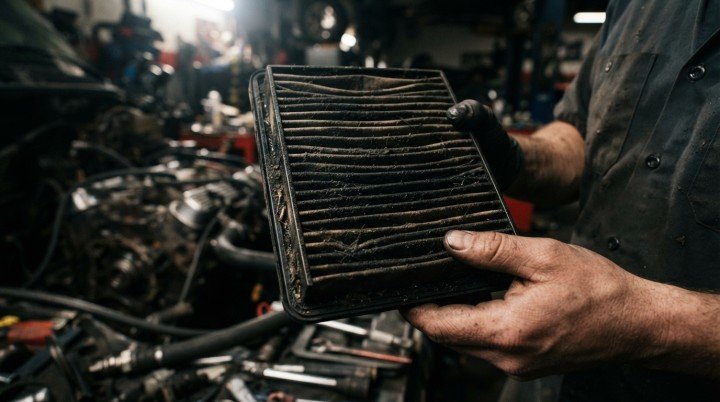
Aftermarket intake systems can also affect sensor readings if their design changes airflow patterns around the sensor.
Next step: Repair damaged ducts, secure loose connections, and install the air filter correctly before considering sensor replacement.
2. Look for Vacuum Leaks and Unmetered Air
A vacuum leak is one of the easiest problems to mistake for a faulty MAF sensor.
Imagine the sensor accurately measures the air passing through it, but additional air enters through a cracked hose after the sensor. The engine receives more air than the computer expects.
This can create a lean mixture, unstable idle, and positive fuel-trim readings.
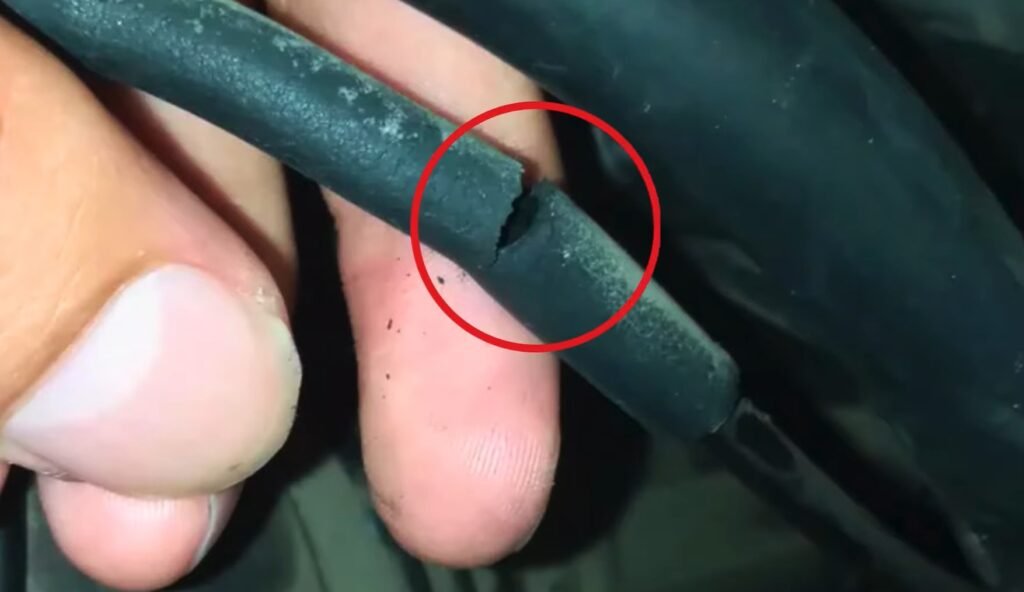
Common leak locations include:
- Cracked PCV hoses
- Intake manifold gaskets
- Disconnected vacuum lines
- Brake booster vacuum connections
- Damaged intake boots
- Leaking purge-system connections
A useful clue is fuel trim that becomes strongly positive at idle but moves closer to normal when engine speed and airflow increase.
However, that pattern is only a diagnostic clue. Fuel-pressure problems, purge-system faults, and other conditions can also influence fuel trims.
A professional smoke test can locate hidden intake leaks without guessing.
Avoid spraying flammable cleaners around a running engine to find leaks.
Next step: Repair confirmed vacuum leaks and reassess fuel trims before blaming the MAF sensor.
3. Inspect the MAF Sensor for Dirt or Oil Contamination
A contaminated MAF sensor may still produce a signal, but that signal can become inaccurate.
Dust, oil residue, and other deposits can interfere with certain sensing elements. Poor air-filter sealing or improperly maintained oiled filters may contribute to contamination.
With the engine off, inspect the sensor only as permitted by the manufacturer. Don’t touch the delicate sensing element with your fingers, brushes, or cleaning tools.
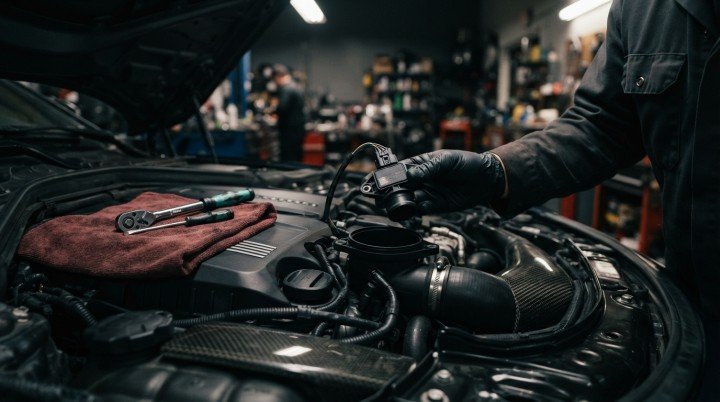
Some hot-wire and hot-film MAF sensors can be cleaned with a product specifically approved for that sensor design.
If cleaning is permitted, follow the cleaner and vehicle manufacturer’s instructions and let the sensor dry completely before reconnecting it.
Never use brake cleaner, carburetor cleaner, or compressed air as a substitute. They can damage sensitive components.
Not every MAF sensor should be cleaned. Some designs require different procedures, and manufacturers may recommend replacement rather than cleaning.
Even when cleaning is allowed, it may provide only temporary improvement. It won’t repair damaged electronics, broken elements, or internal circuit faults.
Next step: Clean only when approved, then retest. If the sensor is physically damaged or continues failing proper tests, replacement may be justified.
4. Check the MAF Wiring, Connector, Power, and Ground
A good sensor cannot report airflow reliably through damaged electrical connections.
The connector near the intake is exposed to engine vibration, heat, moisture, and movement during air-filter service.
Inspect for broken locking tabs, corrosion, loose terminals, damaged insulation, or wiring that has rubbed against another component.
Depending on the sensor design, the MAF may use an analog voltage, frequency-based signal, or digital communication.
Power-supply and signal specifications also differ between vehicles. Not every MAF sensor uses the same voltage or terminal arrangement.
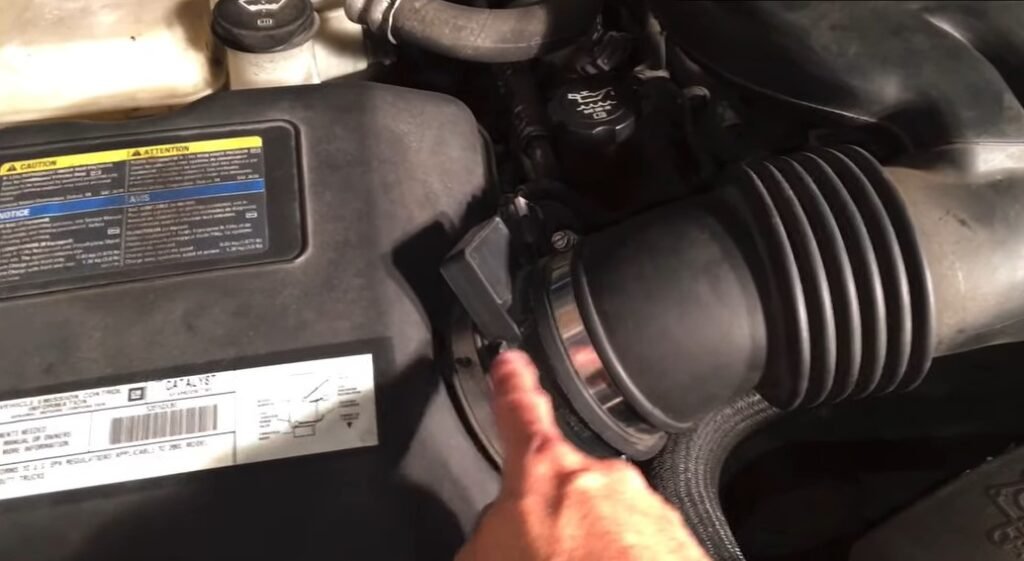
Codes such as P0102 or P0103 can result from wiring or circuit faults as well as sensor problems.
Electrical testing should follow the vehicle’s wiring diagram. Avoid probing unfamiliar terminals or applying external voltage to the sensor.
Next step: Repair defective wiring or connectors before purchasing a new MAF sensor.
5. Read OBD2 Codes, Freeze-Frame Data, and Fuel Trims
A scanner can tell you far more than whether code P0101 is stored.
Start by recording all trouble codes and freeze-frame information before clearing anything.
Freeze-frame data may show engine speed, calculated load, temperature, and other conditions present when the fault was detected.
Next, inspect short-term fuel trim (STFT) and long-term fuel trim (LTFT).
Positive fuel trim generally means the computer is adding fuel. Negative fuel trim means it’s reducing fuel.
For example, strongly positive trims at idle that improve at higher airflow can suggest an intake leak. Abnormal trims across several operating conditions may point toward MAF measurement errors, fuel delivery, or another engine-management issue.
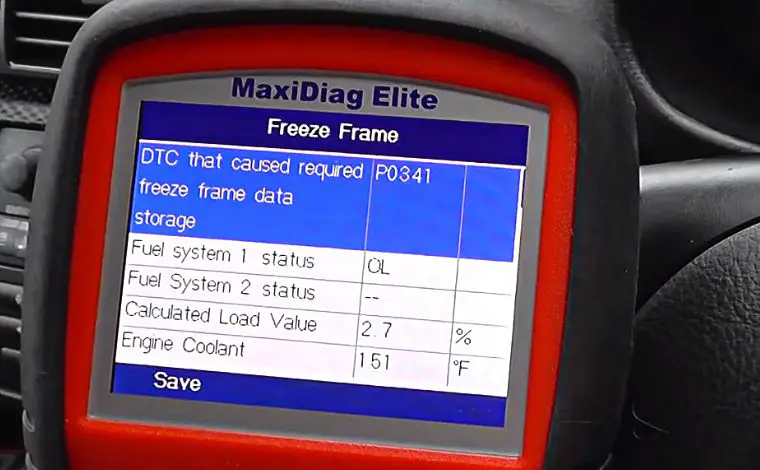
Also review airflow readings, commonly displayed in grams per second (g/s).
A MAF-related code doesn’t prove that the MAF is faulty. For instance, P0101 indicates a range or performance problem, which can result from airflow discrepancies elsewhere in the engine.
Next step: Use code combinations, fuel trims, and operating conditions to identify which system actually needs testing.
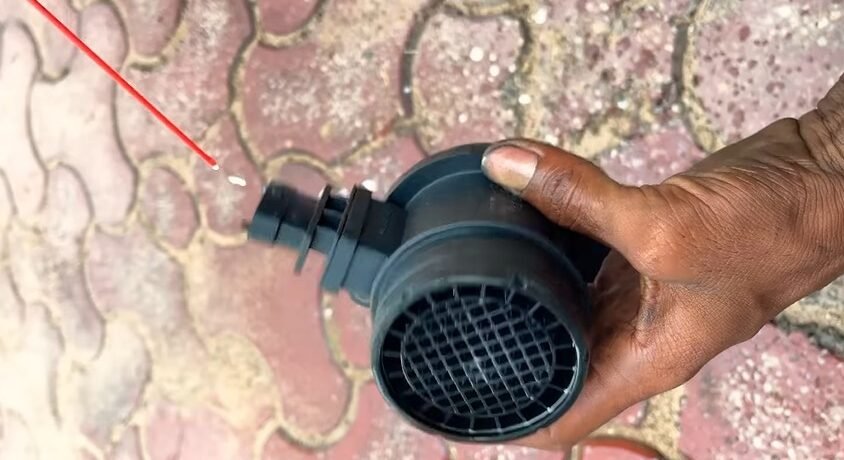
6. Verify the MAF Sensor’s Actual Performance
The strongest reason for MAF sensor replacement is a confirmed sensor failure—not an assumption based on symptoms.
A technician may compare the sensor’s reported airflow with expected engine airflow at idle and under controlled changes in load.
MAF readings should respond appropriately as the engine takes in more air. A signal that remains fixed, drops out unexpectedly, or behaves inconsistently may indicate a problem.
But there is no universal grams-per-second number that proves every MAF sensor is good or bad.
Normal airflow depends on engine displacement, RPM, load, temperature, altitude, and engine design.
Professional testing may include checking sensor supply voltage, ground integrity, and signal output using manufacturer-specific specifications.
Unplugging a MAF sensor isn’t a reliable replacement test. Some vehicles switch to substitute airflow calculations when the sensor is disconnected, temporarily changing engine behavior without proving the sensor is defective.
Next step: Replace the MAF sensor when its actual performance fails the specified tests after intake and electrical faults have been ruled out.
What Do MAF Sensor Trouble Codes Actually Mean?
These codes identify an area of the engine-management system that needs investigation. They don’t automatically identify the part to replace.
| OBD2 Code | General Meaning | Check First |
|---|---|---|
| P0100 | MAF circuit malfunction | Connector, wiring, and sensor circuit |
| P0101 | MAF range/performance | Air leaks, airflow plausibility, sensor condition |
| P0102 | MAF circuit low input | Signal, power supply, wiring |
| P0103 | MAF circuit high input | Signal circuit and sensor output |
| P0104 | MAF circuit intermittent | Connectors, wiring, intermittent signal loss |
Exact code definitions and diagnostic thresholds vary by manufacturer.
Related lean codes such as P0171 or P0174 may suggest unmetered air, fuel delivery problems, or incorrect sensor data. Their presence alone doesn’t confirm a failed MAF.
Dirty MAF Sensor vs Bad MAF Sensor: Clean, Repair, or Replace?
The right repair depends on what testing reveals.
| Finding | Best Next Action |
|---|---|
| Contamination on a serviceable sensor | Clean using the approved procedure and retest |
| Cracked intake boot or vacuum leak | Repair the air leak |
| Missing power or poor ground | Repair the electrical circuit |
| Damaged sensing element | Confirm damage and replace the sensor |
| Incorrect signal despite good wiring and intake | Confirm with manufacturer tests; replace if defective |
| P0101 returns after cleaning | Investigate further rather than automatically replacing |
A visually clean sensor can still fail electronically. Likewise, a dirty sensor may produce better readings after approved cleaning without needing replacement.
How to Read MAF Live Data Without Guessing
A common internet shortcut is estimating MAF airflow at idle from engine displacement. It can provide a rough reference for some gasoline engines, but it isn’t a universal specification.
Instead, look at how airflow changes with RPM and engine load. Compare readings with the vehicle manufacturer’s expectations and examine fuel trims at the same time.
Remember that fuel-trim corrections can also reflect fuel-pressure problems, leaking injectors, intake leaks, or exhaust sensor issues.
The useful question is whether the MAF reading makes sense alongside the engine’s actual operating conditions—not whether it matches a generic number found online.
When Does MAF Sensor Replacement Actually Make Sense?
MAF sensor replacement is reasonable when testing confirms that the sensor cannot measure airflow correctly.
That may include a failed internal circuit, physically damaged sensing element, or implausible output despite correct power, ground, wiring, and intake conditions.
Replacement may also be appropriate when contamination cannot be corrected safely and the sensor fails its specified tests.
Before approving the work, ask which measurement or diagnostic procedure confirmed the sensor’s failure.
A trouble code alone isn’t sufficient evidence.
How Much Does MAF Sensor Replacement Cost in 2026?
MAF sensor replacement cost in the United States depends on the vehicle, sensor design, replacement brand, and shop labor rates.
According to RepairPal’s national estimate updated September 3, 2026, the average replacement costs approximately $274–$381, including parts and labor.
| Cost Component | Estimated US Cost |
|---|---|
| Replacement sensor | $223–$306 |
| Labor | $51–$75 |
| Total estimate | $274–$381 |
These estimates exclude taxes, location differences, diagnostic charges, and other necessary repairs.
Some vehicles allow replacement of the sensor insert, while others use a complete housing assembly. OEM and aftermarket prices can differ considerably.
A correct diagnosis matters because replacing an expensive sensor won’t solve a cracked intake hose or damaged connector.
Can You Drive With a Bad MAF Sensor?
A minor MAF problem may cause hesitation, poor fuel economy, or rough idle while the vehicle remains drivable.
However, repeated stalling, severe power loss, or unpredictable throttle response can make driving unsafe.
Incorrect fuel delivery can also contribute to misfires or an excessively rich mixture. Continued operation under some of these conditions may damage the catalytic converter.
If the check engine light flashes, the engine shakes severely, or the vehicle repeatedly stalls, stop safely and arrange diagnosis rather than continuing to drive.
A steady check engine light without severe symptoms still deserves timely inspection.
How to Choose the Right Replacement MAF Sensor
If diagnosis confirms failure, match the replacement to your vehicle’s year, make, model, engine, and applicable OEM part number.
Don’t assume that sensors with similar connectors provide identical airflow calibration.
Choose an OEM or reputable aftermarket part with verified fitment and warranty coverage.
Also confirm whether the vehicle requires a sensor-only replacement or complete housing assembly.
Some vehicles require manufacturer-specified diagnostic clearing, adaptation, or relearn procedures after installation.
New MAF Sensor Still Showing P0101? Here’s What to Check
A new sensor doesn’t guarantee that the original problem has been fixed.
If P0101 returns after replacement, inspect the intake duct and air-filter housing for leaks or incorrect assembly.
Then check sensor wiring, connector fit, and whether the replacement part has the correct calibration.
Other engine problems—including fuel delivery faults, PCV issues, and mechanical airflow restrictions—can also make MAF readings appear implausible.
Don’t buy another sensor without finding out why the first replacement failed to resolve the fault.
Questions to Ask Before Approving MAF Sensor Replacement
You don’t need to understand every scan-tool reading, but you should know what supports the mechanic’s recommendation.
Ask These Five Questions
- Were intake and vacuum leaks checked?
- Was contamination considered, and is cleaning appropriate?
- Did the sensor’s power, ground, and signal circuits pass testing?
- What did MAF live data and fuel trims show?
- Which test confirmed the sensor itself is defective?
After replacement, the shop should verify intake sealing, correct live-data behavior, resolved codes, and normal engine operation under the conditions that originally caused the complaint.
Common MAF Sensor Replacement Mistakes to Avoid
- Replacing the sensor solely because of P0101: Intake leaks and other airflow problems can trigger the code.
- Ignoring vacuum leaks: Unmetered air can create misleading fuel-trim readings.
- Using the wrong cleaner: Harsh solvents may damage sensitive elements.
- Touching the sensor element: Physical contact can permanently damage it.
- Assuming every MAF is cleanable: Sensor designs and manufacturer procedures differ.
- Misreading live data: Generic airflow figures are not universal pass/fail limits.
- Buying incompatible parts: Incorrect calibration can cause continuing drivability problems.
- Skipping final testing: Always confirm that the original symptoms and fault conditions are resolved.
Frequently Asked Questions About MAF Sensor Replacement
1. How do I know if my MAF sensor actually needs replacing?
Confirm that the intake system and electrical connections are sound, then test sensor output against vehicle-specific specifications. A code or rough idle alone doesn’t prove failure.
2. Is cleaning a MAF sensor better than replacing it?
Cleaning may help certain contaminated sensors when the manufacturer permits it. It won’t repair electronic damage, and improper cleaning may damage the sensor.
3. Can a vacuum leak trigger a P0101 code?
Yes. Unmetered air entering after the MAF can make measured airflow inconsistent with engine operating conditions and trigger performance-related faults.
4. Can a bad MAF sensor cause rough idle without a check engine light?
Yes. Some inaccurate readings may affect engine operation before a fault code is stored. However, ignition, fuel, and vacuum problems can produce the same symptom.
5. How long does a MAF sensor usually last?
There’s no fixed replacement interval for most MAF sensors. Many last for years, sometimes the life of the vehicle. Contamination, moisture, electrical faults, and physical damage can shorten their lifespan.
6. Do I need to reset the ECU after replacing a MAF sensor?
Requirements vary. Some vehicles relearn automatically, while others require a specified adaptation or diagnostic procedure. Follow manufacturer instructions rather than disconnecting the battery unnecessarily.
Final Thoughts: Diagnose the Airflow Problem Before Replacing Parts
MAF sensor replacement can solve rough idle, hesitation, and airflow-related trouble codes when the sensor itself has failed.
But before buying one, check the intake duct, vacuum hoses, contamination, wiring, trouble codes, and live sensor readings.
Those checks can reveal whether you need to repair an air leak, clean a serviceable sensor, fix an electrical connection, or replace the sensor.
The goal is simple: identify the failed component before paying for a part that may not fix the problem.

Kevin Nicholas is an automotive mechanic and editor of The Effective Guide. He writes about warning lights, car problems, and diagnostic tools, helping drivers understand what to check before replacing a part.