
You’re driving home when the temperature gauge starts climbing. A few minutes later, a red warning appears on the dashboard. You’re only five miles from home, and the engine still seems to run normally.
Should you keep going?
It’s tempting to believe an overheating car can handle a few more miles. Unfortunately, excessive engine heat can turn a relatively simple cooling-system problem into a major repair.
A leaking hose might be inexpensive to fix. Continue driving without enough coolant, however, and you could end up with a warped cylinder head, damaged head gasket, or even a seized engine.
Here’s what happens when you ignore overheating, what to do immediately, and how to avoid replacing parts that aren’t actually defective.
Can You Keep Driving an Overheating Car?
No. You should not continue driving a car that is genuinely overheating. Pull over as soon as you can do so safely and shut off the engine. Continued operation can cause serious internal damage, sometimes within minutes under severe conditions.
Never remove a hot radiator cap or pressurized coolant-reservoir cap. If the cause of overheating remains unknown, arrange towing rather than attempting to drive home.
The fact that your engine still runs doesn’t mean it’s safe. A temperature warning can appear before you notice obvious power loss, smoke, or unusual noises.
If you’re on a highway without a safe shoulder, reduce engine load and reach the nearest safe stopping location. Don’t continue to your destination simply because it’s close.
What Happens If You Keep Driving an Overheating Car? 7 Possible Consequences
An engine depends on coolant circulation, airflow, and lubrication to maintain a controlled operating temperature. When that balance fails, damage can spread beyond the original cooling-system problem.
1. Engine Components Expand Beyond Normal Limits
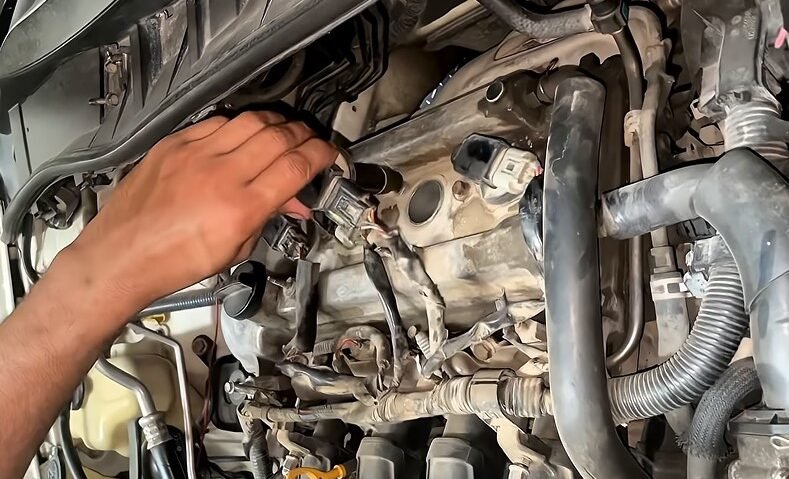
Engine parts expand as they heat up. They’re designed to operate within specific temperature ranges, but excessive heat can change the clearances between moving components.
That increases friction and mechanical stress. Severe overheating can also interfere with normal lubrication.
2. Cylinder Heads Can Warp
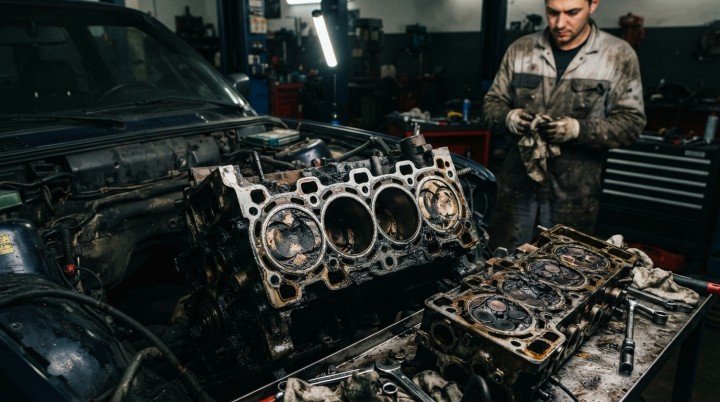
Many modern engines use aluminum cylinder heads. Excessive or uneven heating can distort their sealing surfaces.
A warped head may no longer seal properly against the engine block, potentially causing compression loss, coolant leakage, or other problems.
Repair may require cylinder-head removal, inspection, and machining or replacement.
3. The Head Gasket May Fail
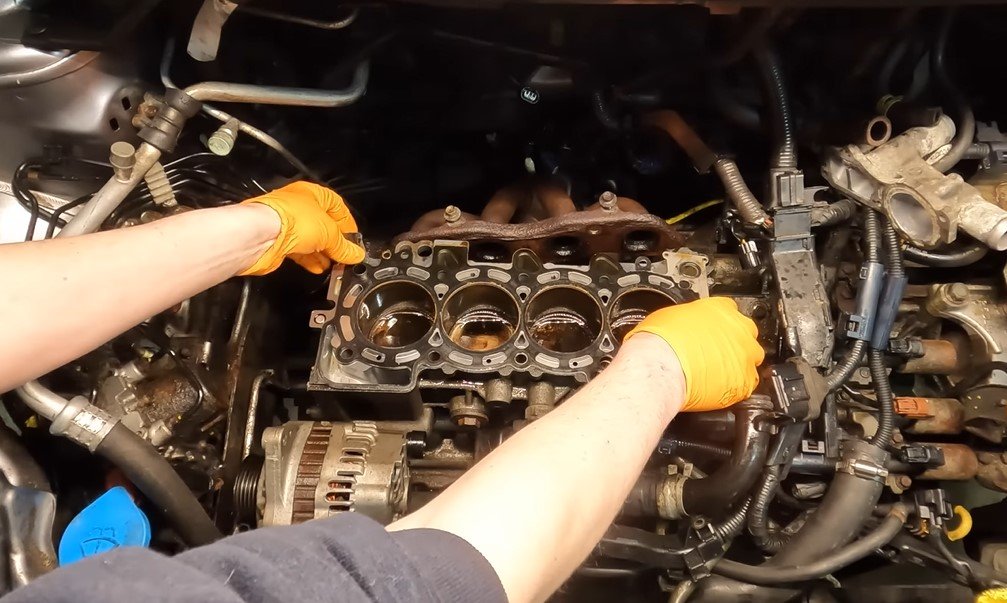
The head gasket seals combustion chambers and separates oil and coolant passages.
Severe overheating can damage the gasket or distort the surfaces it seals.
Possible symptoms include unexplained coolant loss, persistent white exhaust smoke, rough running, or combustion gases entering the cooling system.
Not every overheating incident causes head gasket failure, but repeated severe overheating increases concern.
4. Engine Oil May Lose Its Protective Performance
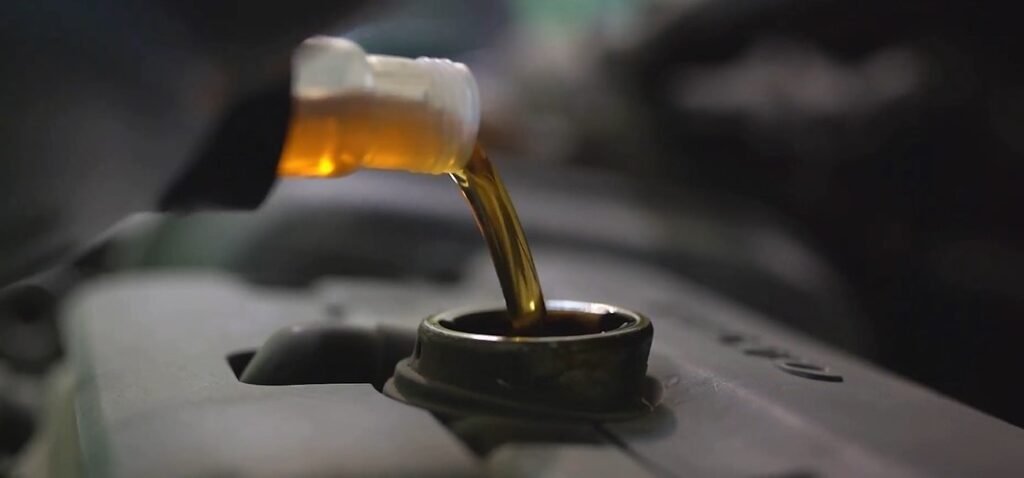
Extreme temperatures can reduce oil’s ability to maintain a protective film between moving components.
That can accelerate wear on bearings, pistons, and other internal parts.
If a gasket or another internal seal fails, coolant may also contaminate the oil and further compromise lubrication.
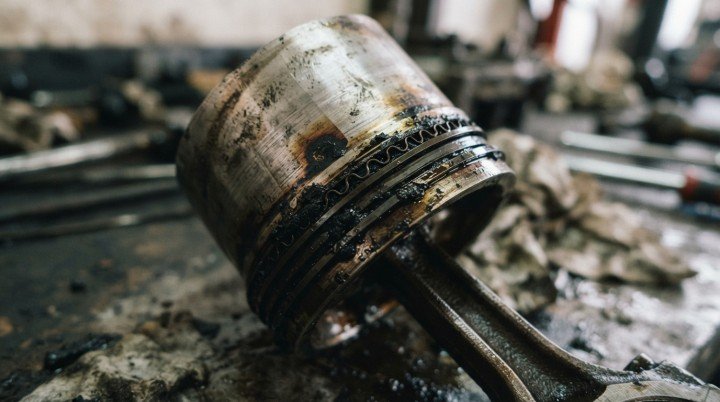
5. Pistons and Cylinders Can Suffer Damage
As engine temperatures rise beyond design limits, piston expansion and lubrication problems can increase friction against cylinder walls.
In severe cases, this can cause scoring, piston damage, or seizure.
These failures may require extensive engine repairs or replacement.
6. Cooling System Components May Fail
Excessive heat and pressure can worsen existing weaknesses in hoses, plastic radiator tanks, seals, and other cooling-system components.
However, a leaking hose or radiator may have caused the overheating in the first place. Diagnosis should establish which failure came first.
7. The Engine May Stall or Stop Working
Some vehicles reduce power or shut down certain functions to protect the engine. Others may continue running until mechanical damage becomes severe.
In extreme cases, the engine can seize and stop turning altogether.
That’s why an overheating warning should never be treated as a suggestion to finish the trip quickly.
How Quickly Can an Overheating Car Damage the Engine?
Severe overheating can cause damage within minutes, but there is no universal safe timeframe.
The risk depends on coolant level, engine load, operating temperature, engine design, and the original failure.
An engine with a small cooling-efficiency problem behaves differently from one that has suddenly lost most of its coolant.
Dashboard gauges also don’t measure every hot spot inside the engine. Some display a simplified temperature range rather than every small change.
So the answer to “Can I drive another five miles?” isn’t a mileage estimate. It’s to stop safely before more heat builds up.
What to Do Immediately When Your Car Starts Overheating
- Turn off the A/C. Reduce unnecessary engine load while finding a safe place to stop.
- Use the heater only as a temporary measure. Setting cabin heat to maximum may remove some engine heat while you reach safety, but it may not help if coolant is very low.
- Pull over safely. Avoid stopping in an active traffic lane if a safer location is reachable.
- Shut off the engine. Follow any specific emergency instructions displayed by your vehicle.
- Keep clear of steam and hot components. Electric cooling fans can start unexpectedly.
- Allow the system to cool completely. Never open a hot pressurized coolant cap.
- Inspect only when safe. Look for visible leaks or an abnormal coolant level after full cooldown.
- Arrange towing if the cause is unresolved. Don’t restart repeatedly to see whether the problem returns.
Turning on the heater isn’t a repair. It is only a possible short-term measure while moving to a safe stopping point.
What If the Temperature Gauge Is Rising but There’s No Steam?
Steam isn’t required for an engine to overheat.
Your vehicle may detect an unsafe coolant temperature before any visible boiling occurs. Some cooling-system failures also produce little external leakage.
A faulty temperature sensor or gauge can create misleading readings, but you shouldn’t assume an unusual reading is harmless.
If the gauge approaches the red zone or an overheating warning appears, stop safely and investigate.
Our car troubleshooting guide can help organize the symptoms after the vehicle is safely stopped.
8 Common Reasons Your Car Is Overheating
Most overheating problems involve coolant loss, restricted circulation, insufficient airflow, or a failure to maintain cooling-system pressure.
- Low coolant or a leak: Too little coolant remains to carry heat away. See the warning signs of low coolant.
- Thermostat stuck closed: Coolant cannot circulate normally through the radiator. Learn how to recognize bad thermostat symptoms.
- Cooling fan failure: The radiator may not receive enough airflow at low speeds or while idling.
- Water pump failure: A damaged impeller, bearing, drive belt, or electric pump can reduce coolant circulation. Review the signs of a failing water pump.
- Restricted or damaged radiator: Heat cannot escape efficiently through the cooling system.
- Faulty pressure cap: The system may lose pressure and allow coolant to boil or escape earlier than intended.
- Trapped air: Air pockets after cooling-system service can interrupt circulation and cause erratic temperature readings.
- Head gasket or combustion leak: Combustion gases entering the coolant can create abnormal pressure and overheating.
For a more detailed breakdown, read our guide to the causes of engine overheating.
Overheating in Traffic vs. on the Highway: What Does It Mean?
When overheating occurs can help narrow the problem, although it doesn’t confirm which part has failed.
| Driving Situation | Possible Causes | Why It Matters |
|---|---|---|
| Overheats at idle or in traffic | Cooling fan, fan control, restricted airflow | Little natural airflow reaches the radiator. |
| Overheats at highway speed | Low coolant, radiator restriction, poor circulation | Sustained engine load produces substantial heat. |
| Overheats with A/C running | Fan problem, marginal cooling capacity | The A/C condenser adds heat ahead of the radiator. |
| Temperature rises and falls | Air pocket, thermostat, circulation or sensor issue | Cooling or temperature measurement may be inconsistent. |
| Overheats after coolant service | Trapped air, incorrect fill, new leak | The problem began after the system was opened. |
| Heater blows cold while gauge is hot | Low coolant, air pocket, circulation problem | Hot coolant may not be reaching the heater core. |
A rising gauge combined with a heater that suddenly blows cold deserves particular attention. It can indicate inadequate coolant circulation or a severely depleted system.
Can You Drive After the Engine Cools Down?
Cooling down doesn’t repair a failed water pump, leaking hose, stuck thermostat, or damaged radiator.
An overheating car may appear normal after sitting for an hour, only to overheat again shortly after restarting.
If coolant has escaped, the engine may have very little protection against another temperature spike.
Even a normal-looking gauge after restart doesn’t prove the problem has been resolved.
If the vehicle definitely overheated and the cause is unknown, towing is generally safer than another test drive.
Important: If the temperature gauge suddenly drops toward cold while the engine is clearly overheating, don’t assume the problem fixed itself. Severe coolant loss or air around the temperature sensor can produce misleading readings.
Can You Add Water to an Overheating Car?
Never open a hot radiator or pressurized coolant reservoir to add water.
Once the engine and cooling system are completely cool, follow the manufacturer’s instructions for checking or refilling coolant.
In some conventional cooling systems, plain water may be permitted as a temporary emergency measure when the correct coolant isn’t available. It isn’t a suitable permanent replacement because it lacks the required corrosion, freezing, and other protection.
Never pour cold water into an extremely hot engine or cooling system.
Hybrid and electric vehicles may have separate cooling circuits and special procedures. Follow the owner’s manual rather than improvising.
6 Signs Your Engine May Already Be Damaged From Overheating
- Persistent coolant loss: The level keeps dropping without an obvious explanation.
- White exhaust smoke: Thick, persistent vapor after warm-up may indicate coolant entering the combustion chamber.
- Milky or contaminated oil: Coolant may have entered the lubrication system.
- Rough idle or misfires: Compression or combustion problems may have developed.
- Abnormal cooling-system pressure: Repeated bubbling or excessive pressure may suggest combustion-gas leakage.
- Unusual noises or repeated overheating: Internal wear or an unresolved cooling failure may be present.
These symptoms don’t prove the engine is damaged. A mechanic may need compression, leak-down, cooling-system pressure, or combustion-gas testing to confirm the cause.
What Should a Mechanic Check Before Replacing Cooling System Parts?
Replacing a thermostat simply because the engine overheated can waste money if the real problem is a fan, leak, or water pump.
A proper diagnosis should consider:
- Coolant level, condition, and correct mixture.
- Cooling-system pressure and visible leaks.
- Radiator fan operation and electrical controls.
- Thermostat function and coolant circulation.
- Water pump, belt, and radiator condition.
- Pressure-cap operation.
- Stored trouble codes and live coolant-temperature data.
- Combustion-gas testing when an internal leak is suspected.
The goal is to identify why the engine overheated—not just replace the component that seems most likely.
How Much Does It Cost to Repair an Overheating Car?
The repair bill depends on what failed and whether continued driving caused secondary damage.
| Repair Category | Typical Work Involved | Cost Consideration |
|---|---|---|
| Minor coolant leak | Hose, clamp, seal, or connection | Often less involved |
| Thermostat | Thermostat or housing replacement | Access varies by engine |
| Cooling fan | Motor, relay, wiring, or assembly | Electrical diagnosis matters |
| Radiator | Radiator, coolant, and labor | Vehicle design affects labor |
| Water pump | Pump, seals, and sometimes drive components | Timing-belt-driven pumps may involve more labor |
| Head gasket | Major engine disassembly and inspection | Substantial labor and testing |
| Engine replacement | Repair or replacement of severely damaged engine | Potentially very expensive |
A small leak can become a major engine repair if overheating continues. That’s why stopping early often matters more than trying to reach the nearest shop under your own power.
Can an Overheating Car Fix Itself?
No. A temporary return to normal temperature doesn’t mean the underlying problem disappeared.
The cooling fan may start working again, traffic may clear, or reduced engine load may allow the temperature to fall.
Intermittent thermostat, fan, or circulation problems can return without warning.
If your car overheats more than once, investigate the cause instead of waiting for a permanent failure.
How to Prevent Your Car From Overheating Again
Check Coolant When ColdMonitor the reservoir level and investigate repeated losses instead of constantly topping it off.
Watch for Early CluesSweet smells, dried coolant residue, weak cabin heat, and unusual gauge movement deserve attention.
Follow the Service ScheduleUse manufacturer-approved coolant and follow the correct replacement interval and filling procedure.
Fix the Actual CauseConfirm fan, thermostat, pump, radiator, and pressure-system operation before replacing parts.
Preventive maintenance can’t eliminate every cooling-system failure, but it can help catch leaks and deteriorating components before they leave you stranded.
Frequently Asked Questions
Can I drive 5 miles with an overheating car?
There is no guaranteed safe distance. Severe overheating can damage an engine quickly. Stop as soon as safely possible rather than attempting to drive five more miles.
Should I turn off the engine immediately when it overheats?
Once you’ve reached a safe stopping location, shut off the engine when overheating is confirmed, unless your vehicle’s specific emergency instructions direct otherwise.
Does turning on the heater help an overheating car?
It may remove some heat while you reach a safe place to stop. It won’t fix a failed cooling system and may be ineffective when coolant is very low.
Can overheating permanently damage an engine?
Yes. Severe overheating can warp cylinder heads, damage head gaskets, score cylinders, or cause engine seizure.
Why does my car overheat when the coolant is full?
Possible causes include a stuck thermostat, failed cooling fan, poor water-pump circulation, radiator restriction, trapped air, or an internal engine problem.
Can low engine oil cause overheating?
Severely low oil can increase friction and engine heat. However, most overheating complaints involve cooling-system or operating problems that still require diagnosis.
Is it safe to add water to an overheating car?
Never open a hot pressurized system. After complete cooldown, water may be a temporary emergency option in some vehicles if the manufacturer permits it. Restore the correct coolant mixture promptly.
Will my car restart after overheating?
It may, but restarting doesn’t prove the engine is undamaged or safe to drive. If the overheating was severe or its cause remains unknown, arrange inspection and towing.
Final Verdict: Don’t Gamble With an Overheating Engine
An overheating car can still run while dangerous heat damages internal components. Continuing to drive may turn a manageable coolant leak or fan problem into an expensive engine repair.
Pull over safely, shut off the engine, and allow the system to cool completely. Never open a hot pressurized cap.
Most importantly, don’t confuse cooling down with being repaired. Identify the cause before driving again, and arrange towing when overheating is confirmed but unresolved.

Kevin Nicholas is an automotive mechanic and editor of The Effective Guide. He writes about warning lights, car problems, and diagnostic tools, helping drivers understand what to check before replacing a part.