
Last Updated on October 7, 2026
A car can be low on coolant without leaving a dramatic puddle or sending the temperature gauge straight into the red. The first clues are often quieter: intermittent cabin heat, a sweet smell after driving, or a reservoir that keeps dropping. Coolant carries heat away from the engine, protects internal passages, and helps the heater work, so air entering a depleted system can cause temperatures to change quickly.
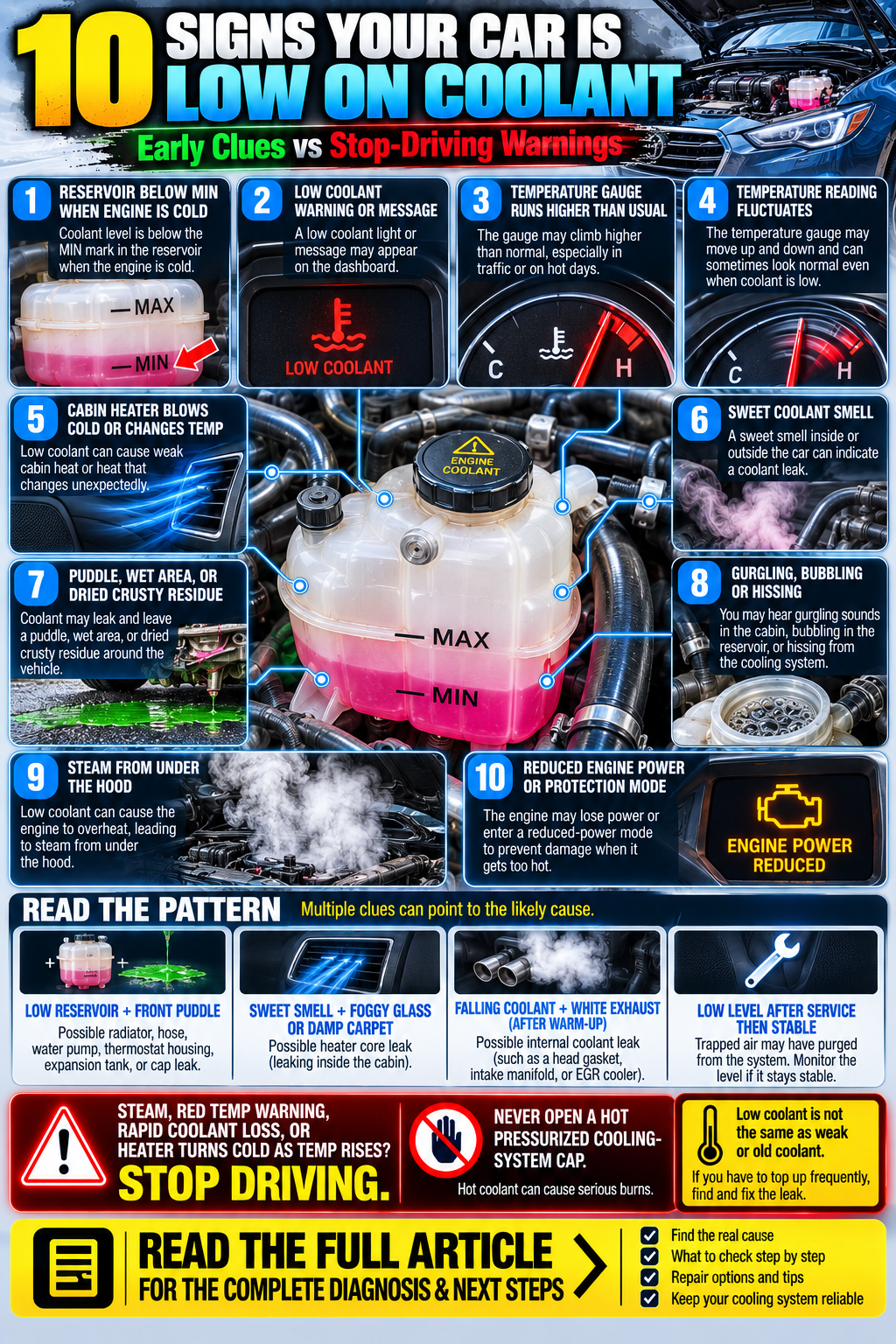
The most common low coolant symptoms include a reservoir below the MIN mark, a coolant warning message, a higher or fluctuating temperature gauge, weak cabin heat, a sweet odor, visible residue or puddles, gurgling sounds, steam, and reduced engine power during an overheating event. Some are early warnings; others mean you should stop driving immediately.
Low Coolant Level Is Not the Same as Weak Coolant
Two cooling-system problems are often confused.
A low level means the system does not contain the required amount of fluid, perhaps because of a leak, an incorrect fill, or trapped air after service.
Weak coolant describes a mixture with too much water, the wrong concentration, or degraded additives. The reservoir may look full but offer inadequate freeze, boil, or corrosion protection. Concentration can be tested, while the correct service interval comes from the owner’s manual—not a universal mileage rule.
Both conditions can cause trouble, but topping up will not correct a weak mixture, and replacing old fluid will not repair a leak.
Low Coolant Symptoms: 10 Signs to Watch For
1. The Reservoir Is Below the MIN Mark
The clearest early sign is a level below the COLD or MIN mark with the engine completely cold and the car on level ground. One small drop after cooling-system work may be trapped air leaving the system. Continued loss usually means coolant is escaping.
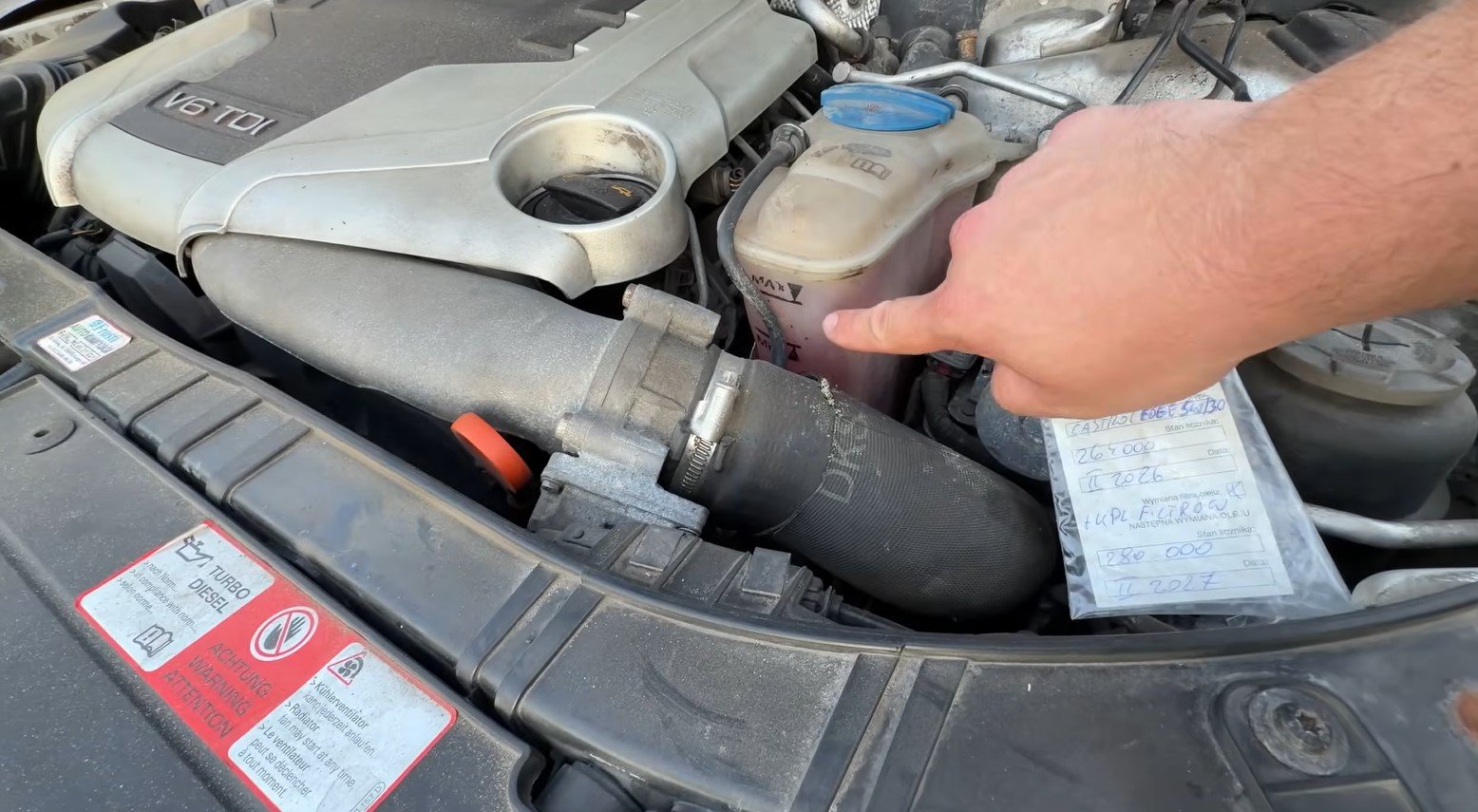
Do not judge the level while the engine is hot because coolant expands. Some vehicles use a pressurized expansion tank; others use an overflow bottle. Follow the owner’s manual.
2. A Low Coolant Warning Appears
Some vehicles display a dedicated “Check Coolant Level” message. Others monitor only temperature and may provide no warning until the engine is already too hot.
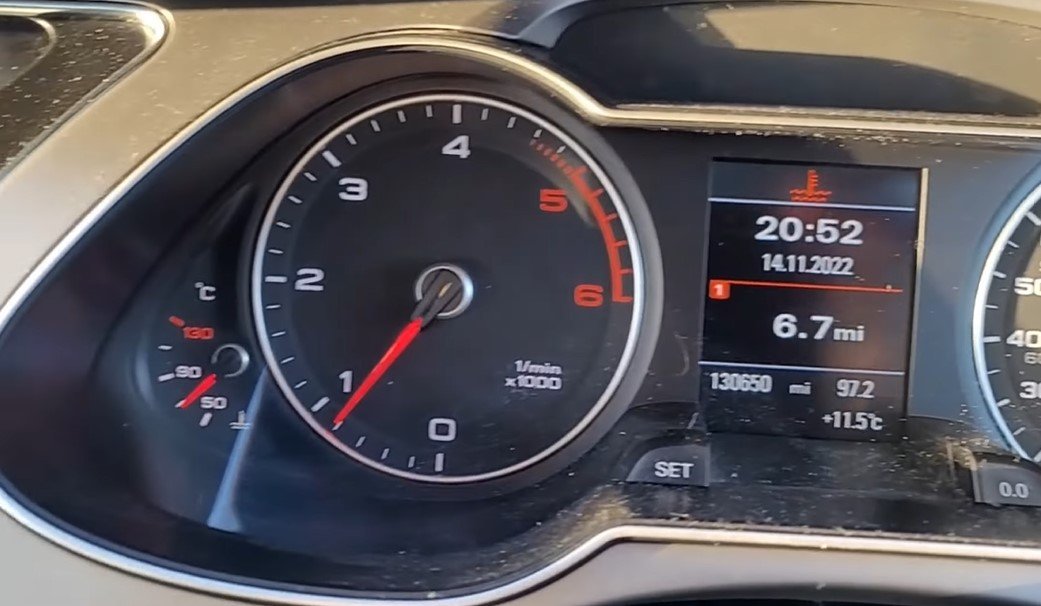
If the cold level is correct, do not add fluid automatically. A stuck float, contaminated sensor, connector, or wiring fault may be responsible.
3. The Temperature Gauge Runs Higher Than Usual
An engine that normally stays near the same gauge position but begins running hotter may not have enough coolant to carry heat to the radiator. The change may first appear in traffic, during a long climb, while towing, or on a hot day.
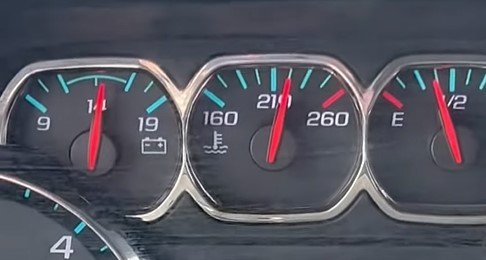
A rising gauge is one of the low coolant symptoms that should never become a “watch it for a few days” problem. Move to a safe location and shut the engine down if it continues to rise. Driving into the red can turn a small leak into cylinder-head or head-gasket damage.
4. The Temperature Reading Fluctuates—or Looks Misleadingly Normal
Air pockets passing the temperature sensor can make the reading climb and fall. In a severely depleted system, the sensor may no longer remain immersed in liquid and can show a delayed, erratic, or deceptively low reading while engine metal overheats.
That is why a normal-looking gauge does not cancel out steam, coolant loss, unusual engine noise, or a heater that suddenly turns cold.
5. The Cabin Heater Blows Cold or Changes Temperature
The heater core uses engine coolant to warm the cabin. If the system is low or contains air, the heater may blow cold at idle, warm only when the engine is revved, or alternate between hot and cold.
This is among the more useful early low coolant symptoms, especially when it appears together with gurgling behind the dashboard. If the heater suddenly becomes cold while the temperature gauge rises, pull over. That combination can mean coolant is no longer circulating properly.
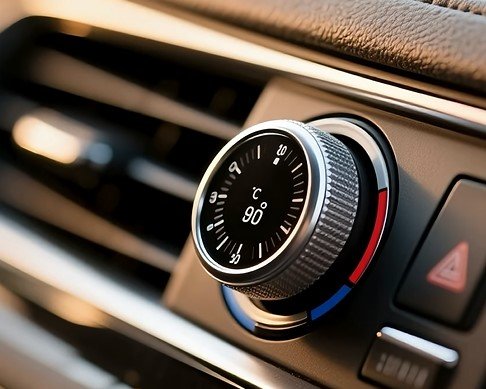
Air conditioning that stops cooling is less specific. Some vehicles disable the A/C compressor to reduce engine load during overheating, but warm A/C by itself is not reliable evidence of low coolant.
6. You Notice a Sweet Smell
Antifreeze has a distinctive sweet chemical odor. A smell under the hood after parking may come from coolant reaching a hot engine part and evaporating before it can form a puddle.
A sweet smell inside the cabin deserves special attention. When accompanied by greasy windshield film, persistent fogging, or damp carpet near the dashboard, it can point to a leaking heater core. Avoid prolonged exposure to the vapor and have the leak inspected.
7. There Is a Puddle, Wet Area, or Dried Residue
Coolant comes in many colors. Look beneath the vehicle and around the radiator, hose connections, thermostat housing, tank, and water pump. A slow leak may leave only a chalky or crusty deposit.
Color can help identify a spill, but it does not prove that two coolants are compatible. Different formulas can share a color, and similar formulas can use different colors. Choose replacement coolant by the specification in the owner’s manual or service information—not by color alone.
8. You Hear Gurgling, Bubbling, or Hissing
Gurgling behind the dashboard often indicates air moving through the heater core. Bubbling in the reservoir may occur when trapped air is purging, coolant is boiling, or combustion gas is entering the cooling system. A hiss after shutdown can indicate pressure escaping through a small hose, tank, radiator, or cap leak.
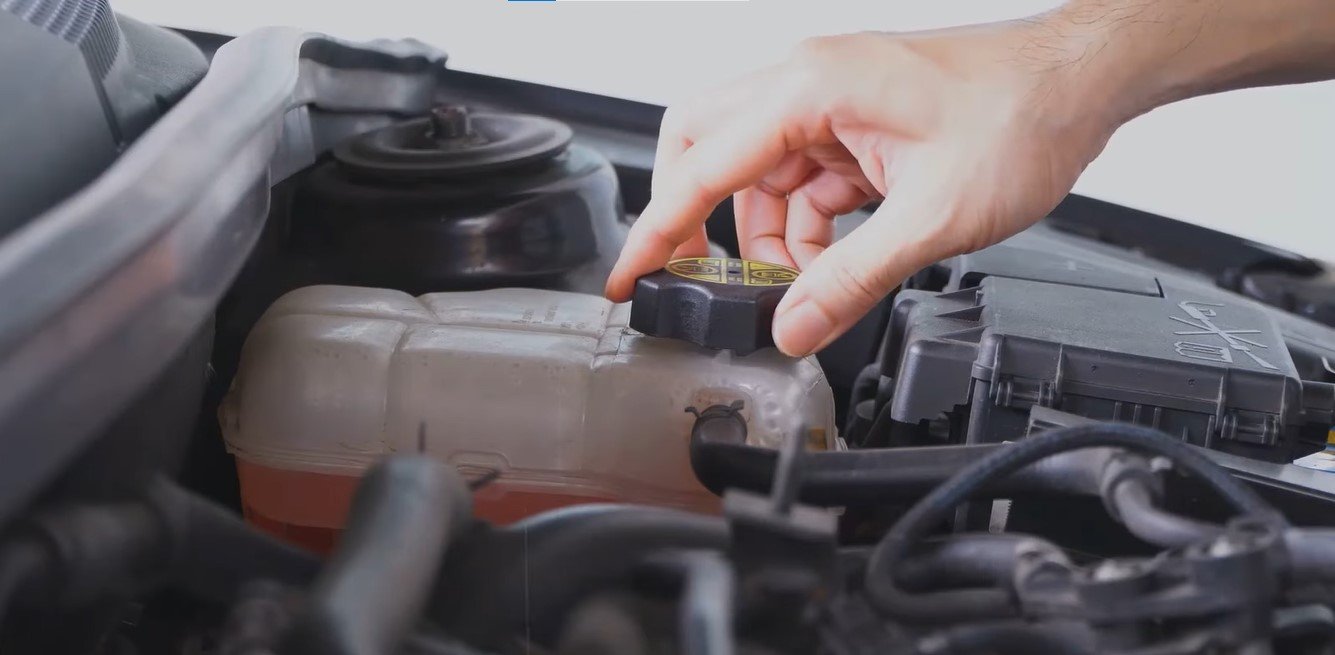
Never lean over the reservoir and remove its cap to investigate while the system is hot. Pressurized coolant can erupt and cause severe burns.
9. Steam Comes From Under the Hood
Steam means coolant may be boiling or spraying onto hot components. It is an emergency symptom, even if the dashboard gauge has not reached the red zone.
Pull over safely, switch off the engine, and keep clear of the hot cooling system. Do not open a radiator or pressurized reservoir cap. If the system is empty, leaking rapidly, or has overheated, arrange a tow rather than topping it up and continuing the trip.
10. Engine Power Drops or Protection Mode Activates
Modern vehicles may reduce engine power, disable the A/C, or display a stop-engine warning when temperature becomes unsafe. These are late-stage consequences rather than early low coolant symptoms, and responses vary by model.
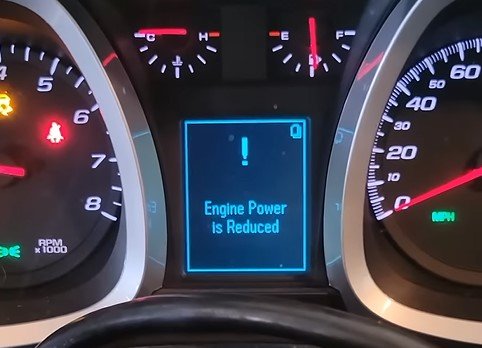
Continuing to drive can warp the cylinder head, damage the head gasket, harm the water pump, or seize the engine. A brief period of overheating can be enough to cause expensive damage.
What the Pattern of Symptoms Can Tell You
One clue rarely identifies the failed part, but combinations can narrow the search.
| What you notice | What it may suggest |
|---|---|
| Low reservoir and a puddle near the front | Radiator, hose, water pump, housing, tank, or cap leak |
| Sweet cabin smell, foggy glass, or damp carpet | Heater-core leak |
| Falling level with persistent white exhaust after warm-up | Possible internal coolant leak |
| Bubbles, misfire, overheating, and coolant loss | Possible combustion leak or head-gasket problem |
| Low level after recent service, then stable | Incomplete fill or trapped air being purged |
| Warning message with correct cold level | Level sensor, connector, or wiring issue |
| Overheating mostly at idle with a full system | Radiator-fan problem may be more likely |
| Rapid overheating with little cabin heat | Severe coolant loss or circulation failure |
White vapor on a cold start can be condensation. Concern increases when thick white exhaust continues after warm-up, smells sweet, and accompanies unexplained coolant loss. Those signs justify testing but do not prove head-gasket failure.
Why Coolant Gets Low—even When You Cannot See a Leak
A sealed cooling system should not need frequent top-ups. Repeated or substantial loss requires investigation, even when other low coolant symptoms have not appeared.
External leak points include hoses, clamps, the radiator, expansion tank, thermostat housing, pressure cap, heater core, core plugs, and water-pump seal. Some leak only when hot and pressurized, then evaporate on the engine or collect on an underbody shield.
Internal loss may involve a failed head gasket, cracked cylinder head, intake-manifold gasket, EGR cooler, transmission cooler, or internally mounted water pump, depending on design. Clues include persistent white exhaust, misfires, reservoir bubbles, milky oil contamination, rising oil level, or oil in the coolant. Clean-looking oil does not rule out an internal leak.
After a repair, trapped air may move into the reservoir over several heat cycles. The level may fall once and stabilize. Continued loss still requires leak testing.
How to Check the Coolant Level Safely
With the engine completely cold, park on level ground and compare the reservoir level with the cold MIN and MAX marks. Consult the manual if the tank, cap, or marks are unclear.
While the hood is open, inspect the tank, radiator area, hose connections, thermostat housing, and visible portion of the water pump. Look for wetness, stains, swollen hoses, or crusty deposits. Check the fluid for oil, heavy rust, sludge, or mixed layers without opening a hot system.
Some overflow bottles do not reliably show the radiator’s level. Removing a radiator cap is vehicle-specific; do it only when the engine is stone cold and the manufacturer’s procedure requires it.
If the level is low, add the exact coolant specification required by the vehicle. Use premixed coolant as supplied, or dilute concentrate in the stated ratio—usually with distilled water. Do not overfill. Clean spills immediately because antifreeze is toxic and its taste can attract pets.
Can You Drive With Low Coolant?
There is no universally safe distance. The decision depends on how low the level is, why it dropped, and whether overheating has begun.
Do not continue driving if you see steam, a red temperature warning, a rapidly rising gauge, an empty reservoir with other warning signs, a fast leak, reduced-power mode, or a heater that turns cold as engine temperature climbs. Shut the engine off safely and arrange a tow.
If the cold level is only slightly below MIN, no active leak is visible, and temperature has stayed normal, add the correct coolant according to the manual. Recheck it after a full heat cycle. If it drops again, arrange an inspection.
Water may be useful only as a short-term emergency measure when the manufacturer permits it and the correct coolant is unavailable. Plain water has a lower boiling margin, can freeze, and does not provide the full corrosion and water-pump protection of the correct mixture. Restore the proper concentration as soon as possible.
How a Mechanic Finds the Source
Because many low coolant symptoms overlap with thermostat, fan, sensor, and water-pump problems, diagnosis should confirm the fault before parts are replaced.
A technician may pressure-test the system, test the cap, and use UV dye for intermittent seepage. Scan data can reveal implausible temperature readings or fan-control problems.
If no external leak appears, a combustion-gas or block test can help detect exhaust gas entering the coolant. Depending on the symptoms, the technician may also inspect spark plugs, cylinders, engine oil, exhaust, heater core, transmission fluid, and hidden areas around the water pump.
What Happens If Low Coolant Is Ignored?
As coolant escapes, air pockets interrupt circulation and create hot spots. The cylinder head can warp, the head gasket can fail, and overheated oil may stop protecting bearings and cylinders. Inadequate liquid can also damage a water-pump seal or bearing.
This is why the early low coolant symptoms are worth acting on even when the car still drives normally. Finding a loose clamp or small tank crack early is far cheaper than repairing an engine after repeated overheating.
Frequently Asked Questions
What Is Usually the First Sign of Low Coolant?
Among the earliest low coolant symptoms, a reservoir below the cold MIN mark is the most direct. A sweet smell, intermittent heater output, dried residue, or a gradually dropping level may appear before overheating.
Can Coolant Be Low Without a Visible Leak?
Yes. A leak may occur only under heat and pressure, evaporate on the engine, remain hidden by an undertray, enter the cabin through the heater core, or pass internally into the engine. Trapped air after service can also cause one level drop.
Why Is the Coolant Low if the Engine Does Not Overheat?
The system may still contain enough fluid for normal driving conditions, or the leak may be recent and small. That does not make it harmless. The remaining safety margin can disappear during traffic, hot weather, or a long climb.
Will Low Coolant Turn On the Check-Engine Light?
Not always. A dedicated low-level or temperature warning is more likely. The check-engine light may appear if overheating or an internal leak causes misfires, abnormal temperature data, or another monitored fault.
Can I Mix Coolants That Are the Same Color?
Not safely based on color alone. Match the manufacturer’s required specification. If the existing fluid cannot be identified, professional flushing and refilling may be safer than mixing unknown formulas.
How Often Should Coolant Need Topping Up?
A sealed system in good condition should not need regular topping up. If the cold level repeatedly falls, look for a leak or another fault instead of treating the loss as normal evaporation.
The Bottom Line
Low coolant does not identify one failed part, but it does tell you the cooling system needs attention. Check the level only when the engine is cold, use the specified fluid, and monitor whether the loss returns. Sweet odors, stains, or weak heater output call for prompt inspection. Steam, a rising temperature warning, or sudden loss of cabin heat means stop driving.
Recognizing low coolant symptoms early gives you the chance to repair a hose, cap, tank, or seal before overheating turns the problem into major engine damage.
Kevin Nicholas is an automotive mechanic and editor of The Effective Guide. He writes about warning lights, car problems, and diagnostic tools, helping drivers understand what to check before replacing a part.