
Last Updated on October 7, 2026
A failing engine thermostat can create two completely opposite problems. It can stay open and keep the engine too cold, or it can stay closed and trap heat inside the engine. One failure may quietly reduce cabin heat and fuel economy for weeks. The other can send the temperature gauge toward the red zone in a matter of minutes.
That contrast is why thermostat trouble is often misunderstood. Drivers tend to associate it only with overheating, even though some of the earliest warnings appear while the engine is running colder than normal. A slow warm-up, weak heater, falling temperature on the highway, or a P0128 code may arrive well before steam appears under the hood.
The most useful bad thermostat symptoms are not isolated clues. They form one of three temperature patterns: the engine stays too cold, becomes too hot, or repeatedly swings between the two. Recognizing which pattern you have is the first step toward avoiding an unnecessary thermostat replacement—or serious overheating damage.
Quick answer: A thermostat stuck open usually causes slow warm-up, a low temperature-gauge reading, weak cabin heat, reduced fuel economy, and possibly code P0128. A thermostat stuck closed can cause a rapid temperature rise and overheating. If the gauge is moving unpredictably, the thermostat may be sticking, but low coolant, trapped air, a bad temperature sensor, or poor coolant circulation can create the same behavior.
Bad Thermostat Symptoms: First Identify the Failure Direction
The thermostat is a temperature-controlled valve between the engine and radiator. When the engine is cold, the valve restricts flow through the radiator so the engine can warm up efficiently. As the coolant reaches the thermostat’s rated opening temperature, the valve begins to open and sends more coolant through the radiator.
A conventional mechanical thermostat does not send information to the dashboard gauge. The engine-coolant-temperature sensor does that. The thermostat controls coolant flow; the sensor reports temperature. That distinction becomes important when deciding whether the engine is actually too hot or cold, or the gauge is simply receiving incorrect information.
| Failure pattern | What the driver is more likely to notice |
|---|---|
| Stuck open or opening too early | Slow warm-up, gauge staying low, temperature dropping at highway speed, weak heat, worse fuel economy, P0128 |
| Stuck closed | Rapid temperature rise, hot warning light, overheating, boiling coolant, steam |
| Sticking intermittently | Repeated or unpredictable temperature changes |
| Housing or seal failure | Coolant residue, a sweet smell, low coolant, or a visible leak near the thermostat housing |
The eight bad thermostat symptoms below are arranged from quieter cold-running clues to the more urgent signs of restricted coolant flow.
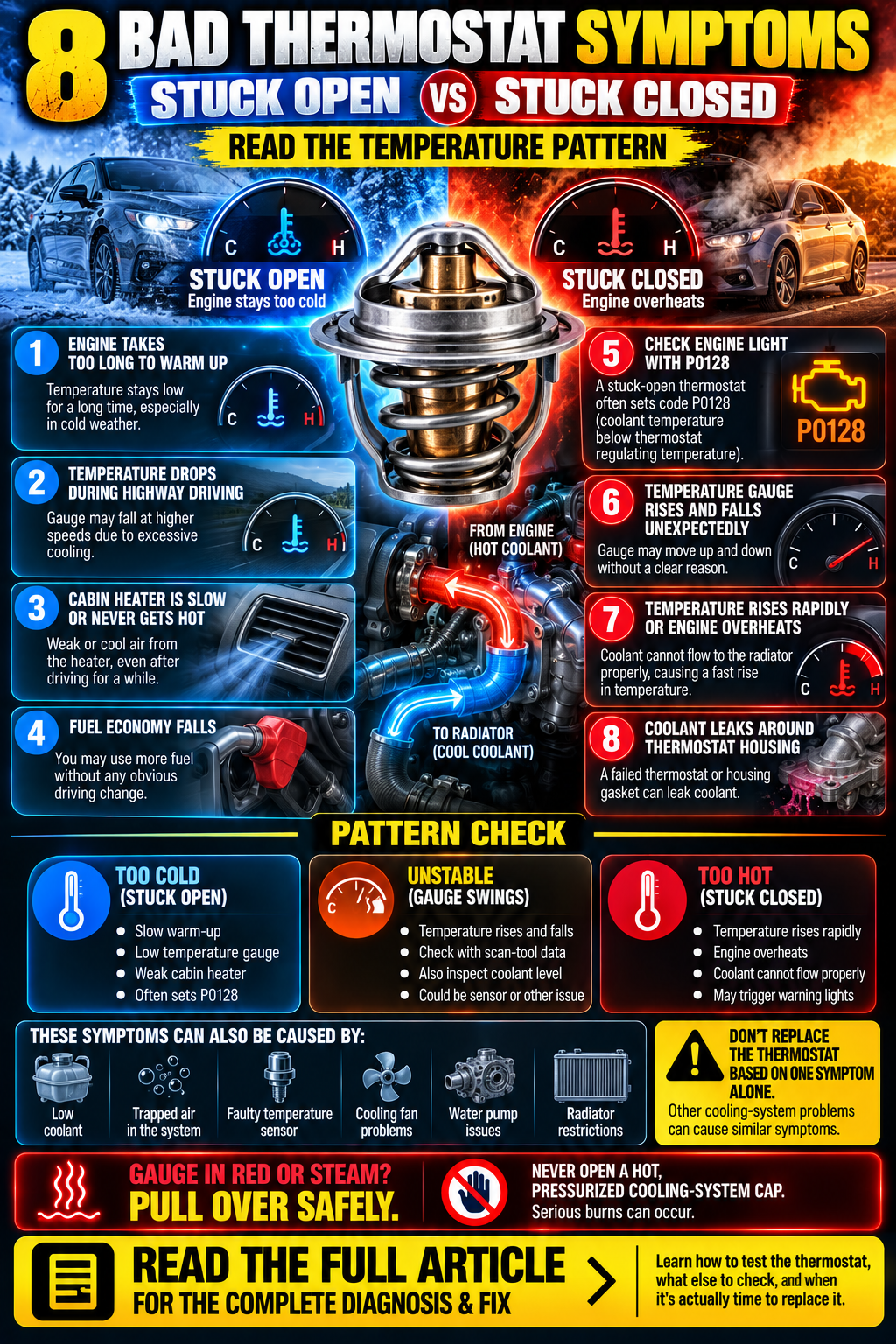
1. The Engine Takes Too Long to Warm Up
One of the earliest signs of a thermostat stuck open is an engine that warms much more slowly than it used to. The temperature gauge may rise slightly from cold but never reach its normal position, even after a reasonable drive.
When the thermostat stays open, coolant is sent through the radiator before the engine needs full cooling. Heat is carried away continuously, making it difficult for the engine to reach its designed operating temperature. The effect is usually more noticeable in cold weather, on light-throttle drives, or in vehicles with an efficient cooling system.
Do not judge the thermostat from one short trip. Warm-up time changes with outside temperature, engine size, traffic, cabin-heater use, and driving load. The better question is whether the car now takes considerably longer to warm up under conditions that used to produce a normal gauge reading.
A scan tool can make the pattern clearer. Instead of relying only on a dashboard gauge—which is often intentionally damped and may not show small changes—a technician can watch the actual coolant-temperature reading from a completely cold start.
2. The Temperature Drops During Highway Driving
This is a particularly useful stuck-open clue that many drivers miss. The engine may eventually reach a normal-looking temperature while idling or moving through slow traffic. Once the car enters the highway, however, the gauge begins to fall.
Higher road speed pushes more air through the radiator. If the thermostat cannot close enough to regulate coolant flow, the engine may be overcooled. The effect is often strongest on a cold day, during a long downhill section, or while the engine is under light load. Cabin heat may weaken at the same time.
A small gauge movement does not automatically indicate failure. Some vehicles show natural temperature variation, while others keep the needle fixed near the middle across a broad range. What matters is a repeatable change from the vehicle’s established behavior.
An engine that runs cool only at highway speed can also have inaccurate sensor data, an incorrect replacement thermostat, or a cooling fan that is operating when it should not. The highway-drop pattern points toward an overcooling problem, but it does not identify the thermostat by itself.
3. The Cabin Heater Is Slow or Never Gets Properly Hot
The passenger-compartment heater uses heat from the engine coolant. If a stuck-open thermostat prevents the engine from reaching normal temperature, air from the vents may stay lukewarm, take much longer to become hot, or cool down during highway driving.
This is most noticeable in winter. The blower may work normally, airflow may be strong, and the temperature control may respond—but the air never becomes as warm as it once did.
Weak cabin heat is not proof of thermostat failure. Low coolant can prevent hot coolant from reaching the heater core. Trapped air, a restricted heater core, a malfunctioning heater-control valve, or a blend-door problem can produce similar results. If the temperature gauge reaches its usual operating position and remains steady while the cabin stays cold, the heater system deserves more attention than the thermostat.
The stronger stuck-open pattern is weak heat combined with slow engine warm-up, a low gauge reading, or a temperature that falls at higher road speed.
4. Fuel Economy Falls Without an Obvious Change in Driving
Engines are calibrated to operate efficiently within a particular temperature range. When the engine remains colder than intended, the computer may keep temperature-related warm-up strategies active longer. Combustion efficiency can suffer, emissions can increase, and fuel economy may decline.
The loss may be gradual rather than dramatic. A driver might notice fewer miles from a tank, a lower average-MPG display, or more frequent fuel stops even though the route and driving style have not changed.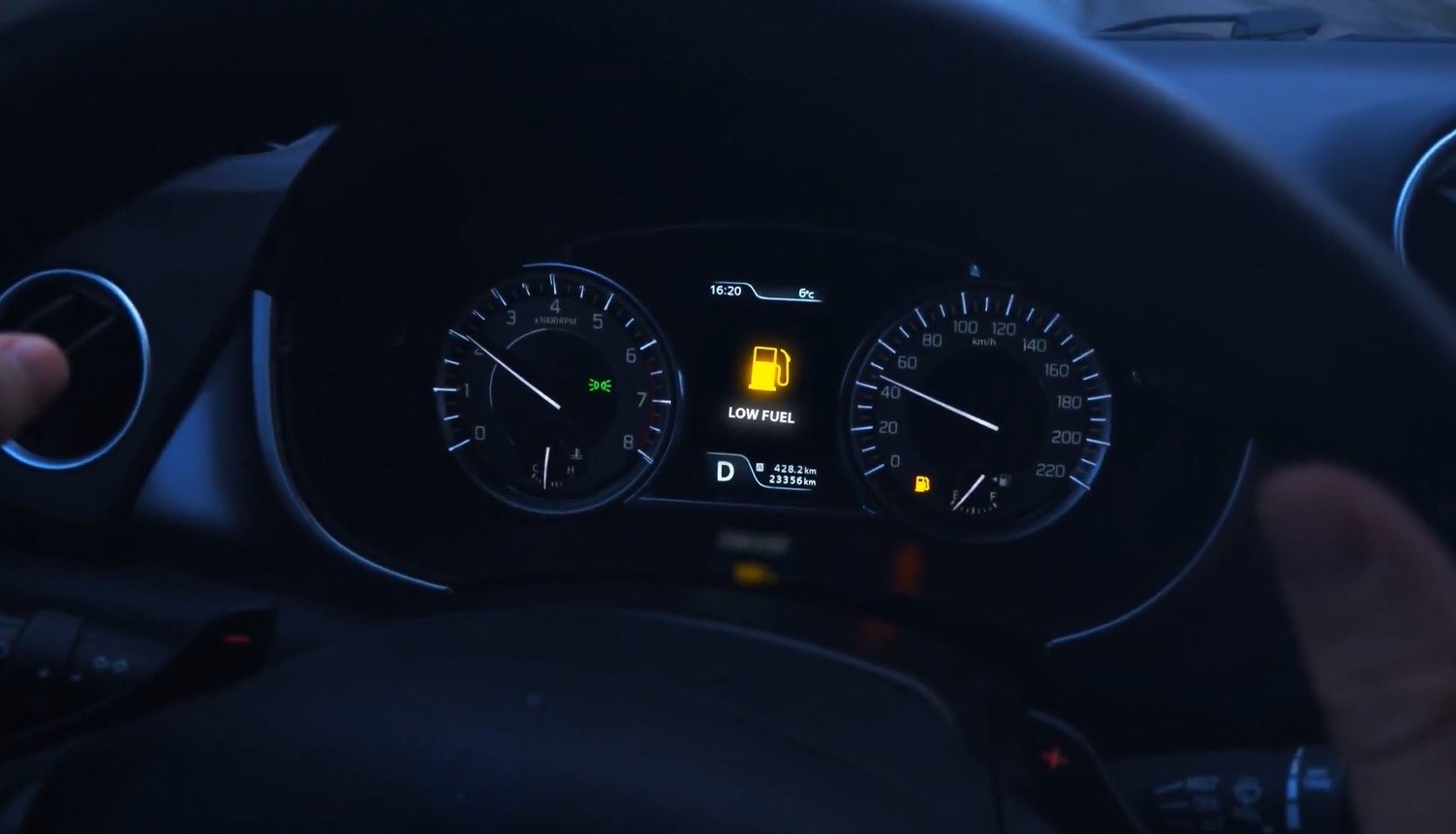
Fuel economy alone is a weak thermostat test. Cold weather, short trips, low tire pressure, traffic, oxygen-sensor problems, dragging brakes, and many other factors affect consumption. It becomes more relevant when it appears alongside a low coolant-temperature reading, slow warm-up, weak heater, or P0128 code.
Diesel vehicles can have additional cold-running consequences. If the engine struggles to reach its intended operating temperature, combustion and aftertreatment behavior may be affected. The exact symptoms depend on the engine and emissions system, so vehicle-specific diagnosis matters.
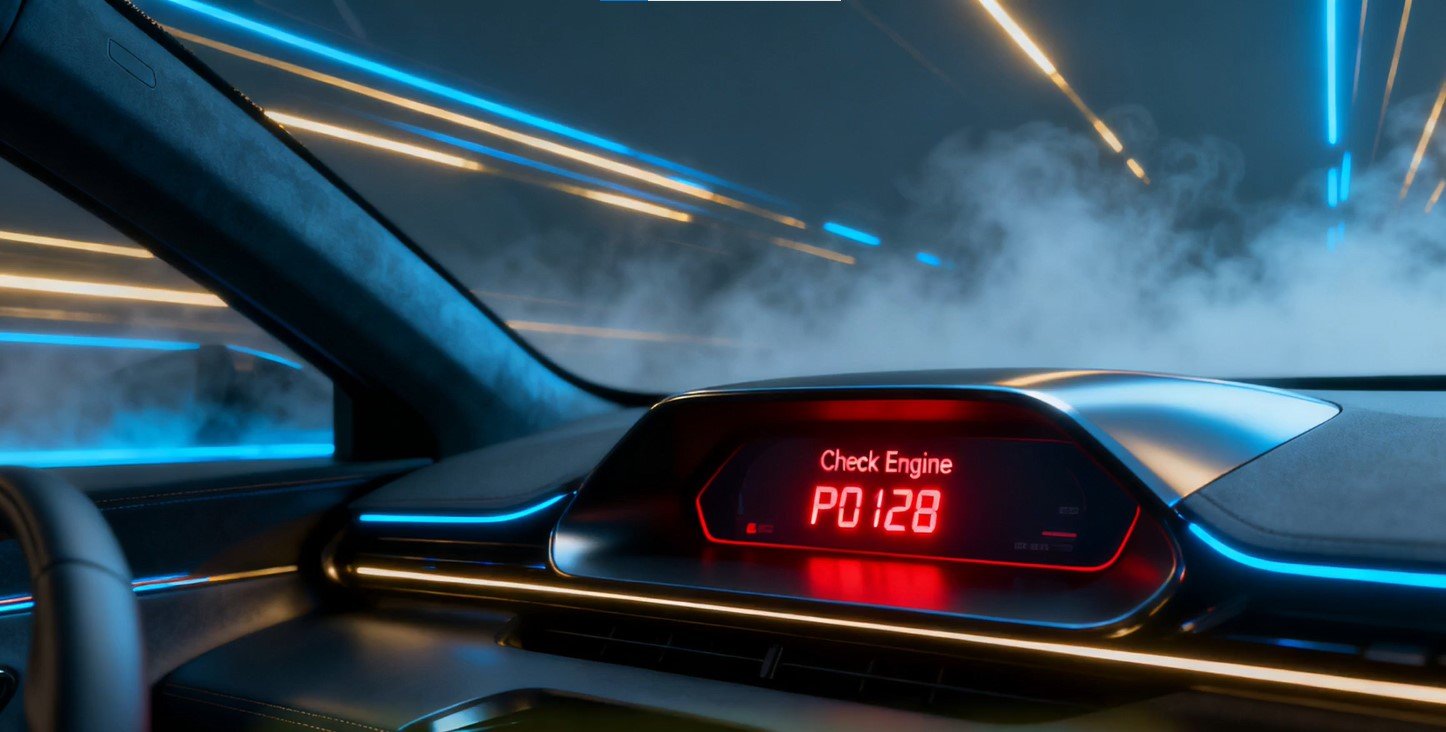
5. The Check Engine Light Comes On With P0128
Code P0128 means the engine coolant temperature is below the thermostat’s expected regulating temperature. In practical terms, the computer has determined that the engine took too long to warm up or failed to reach the expected temperature under the conditions it monitored.
A thermostat stuck open or opening too early is a common cause. Drivers may also notice a low gauge reading, reduced heater output, or lower fuel economy. Importantly, P0128 is generally a cold-running code—not an overheating code.
The code does not prove that the thermostat is bad. Low coolant, a biased engine-coolant-temperature sensor, damaged wiring, extreme ambient conditions, an incorrect thermostat, or abnormal cooling-fan operation can affect the warm-up calculation.
Some vehicles may store P0125, which indicates insufficient coolant temperature for closed-loop fuel control. Vehicles with electronically controlled thermostat heaters can also set circuit-related codes such as P0597, P0598, or P0599. Those codes require electrical diagnosis; replacing a mechanical thermostat without checking the circuit may not solve the problem.
The best use of P0128 is as a starting point. Compare coolant temperature with outside or intake-air temperature before a cold start, then watch how steadily the temperature rises during warm-up.
6. The Temperature Gauge Rises and Falls Unexpectedly
A healthy cooling system should settle into a controlled operating range. If the gauge repeatedly climbs, drops, and climbs again during otherwise similar driving, the thermostat may be sticking instead of opening smoothly.
Pay attention to whether the cabin-heater temperature changes at the same time. If both the gauge and heater output change together, the coolant temperature or circulation may truly be unstable. If the dashboard gauge jumps but scan-tool temperature remains steady, a sensor, connector, wiring, or instrument issue becomes more likely.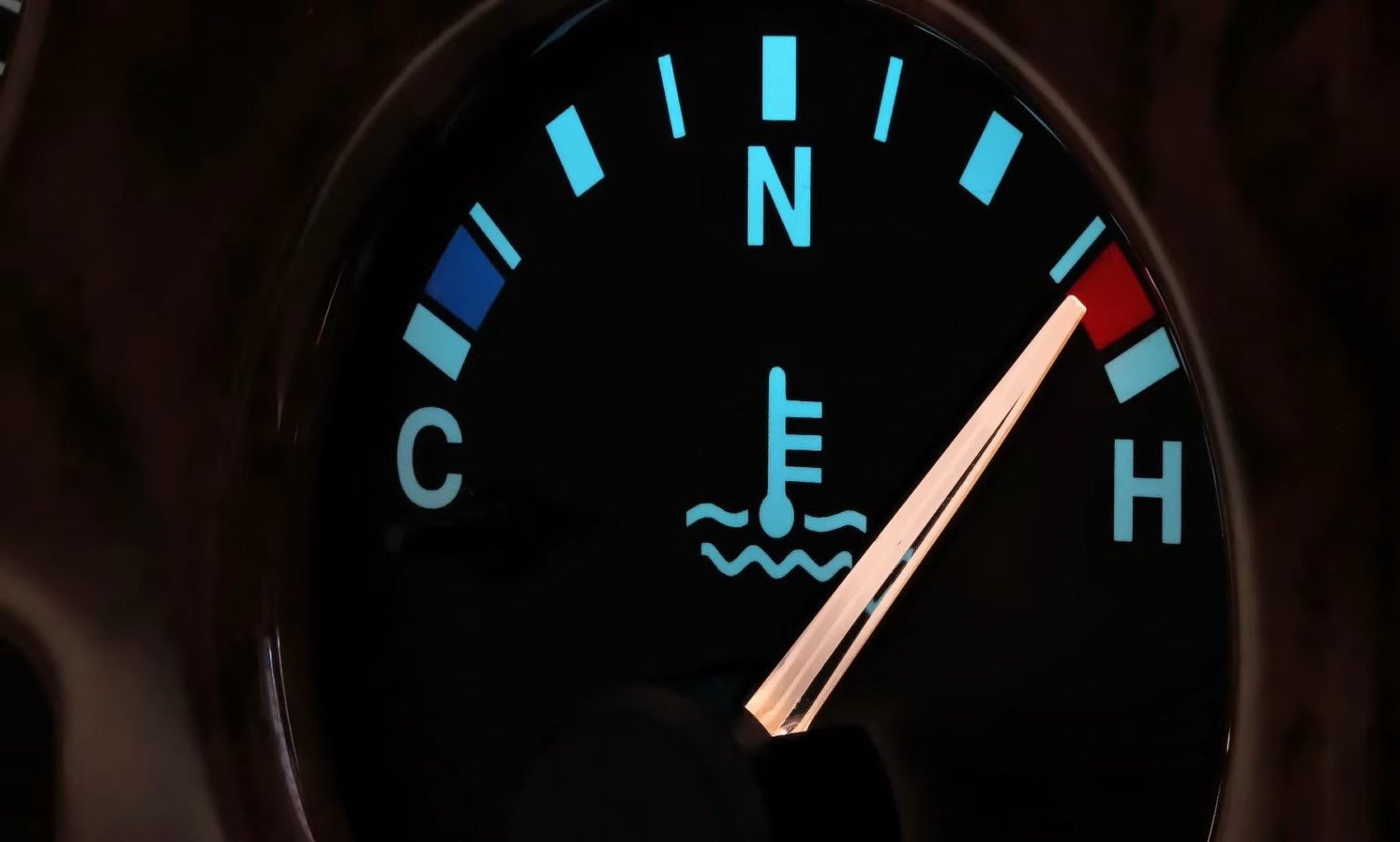
Fluctuation is one of the least specific bad thermostat symptoms. Low coolant can expose the temperature sensor to air or steam. Air trapped after cooling-system service can interrupt circulation. A worn water-pump impeller, combustion gases entering the cooling system, or a restricted passage can also make temperature unstable.
Repeated swings toward hot should not be treated as a harmless gauge problem until the actual coolant temperature has been checked. If the reading approaches the warning zone, stop driving and allow the engine to cool.
7. The Temperature Rises Rapidly or the Engine Overheats
A thermostat stuck closed prevents the main flow of hot coolant from reaching the radiator. Heat then builds in the engine faster than the cooling system can remove it. The temperature gauge may climb quickly, a warning light may appear, or the display may report an overheating message.
As the condition worsens, coolant may boil, bubble in the reservoir, or be pushed out of the system. Steam or a strong sweet smell can appear under the hood. These are advanced cooling-system warnings, not proof that the thermostat is the only failed part.
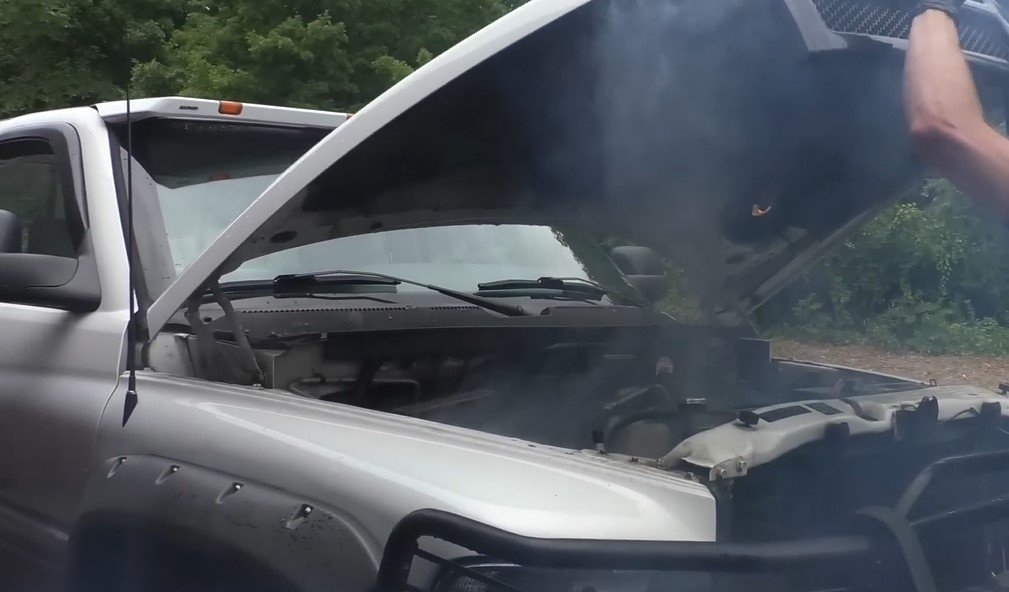
Low coolant, an inoperative cooling fan, a damaged water pump, a blocked radiator, a collapsed hose, or a head-gasket problem can all cause overheating. The circumstances provide useful clues. Overheating mainly in slow traffic may point toward airflow or fan trouble. Overheating at road speed or soon after a cold start raises different concerns, including restricted circulation.
Do not rely on the cabin heater to identify a closed thermostat. Heater-circuit layouts vary, and low coolant or air pockets can change heater behavior. More importantly, do not continue driving to “see what happens.” Pull over safely, shut the engine off, and arrange assistance if the temperature is in the red, steam is present, or coolant is being expelled.
Never open a radiator or pressurized coolant cap while the system is hot. Escaping steam and coolant can cause severe burns.
8. Coolant Leaks Around the Thermostat Housing
The thermostat valve itself is not normally the part leaking coolant. The leak usually comes from its gasket, O-ring, housing, flange, or a nearby hose connection. Many modern vehicles use plastic integrated thermostat housings that can crack, warp, or become brittle after years of heat cycles.
Possible clues include wet coolant around the housing, chalky or colored residue, a sweet odor, a slowly falling reservoir level, or a puddle under that area of the engine.
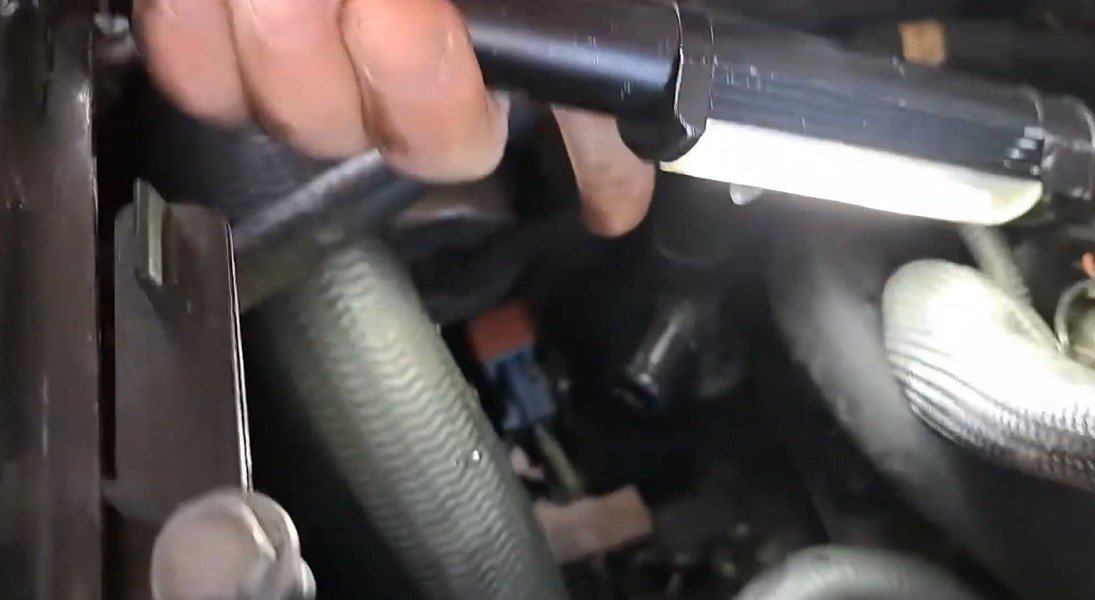
A housing leak does not necessarily mean the thermostat’s internal valve has failed. However, coolant loss can introduce air, disrupt circulation, weaken heater performance, and eventually cause overheating. That makes the leak important even when the temperature gauge still appears normal.
Always inspect coolant level with the engine completely cold and follow the vehicle manufacturer’s procedure. If the reservoir is repeatedly low, find the leak rather than continually topping it off.
A Fast Way to Read the Pattern
Because bad thermostat symptoms can point in opposite directions, start with the direction of the temperature problem instead of treating every clue equally.
If the engine stays too cold
Look for a group of clues:
- Warm-up takes noticeably longer than before
- The gauge remains below its usual position
- Temperature falls during highway cruising
- Cabin heat is weak
- Fuel economy has declined
- P0128 or a related low-temperature code is stored
This pattern makes a stuck-open or early-opening thermostat more likely, but coolant level and sensor accuracy still need to be checked.
If the engine becomes too hot
Treat the situation as urgent rather than assuming the thermostat is the answer. A stuck-closed thermostat is possible, but so are low coolant, fan failure, poor water-pump circulation, radiator restriction, and combustion leakage.
If the reading moves unpredictably
Compare the dashboard gauge with scan-tool data and cabin-heater output. That helps separate a real circulation problem from a false sensor or gauge reading.
Thermostat Failure or Another Cooling-System Problem?
Many bad thermostat symptoms overlap with other cooling-system faults. Replacing the thermostat simply because it is inexpensive can delay the correct repair.
| What you observe | Thermostat explanation | Other causes to check |
|---|---|---|
| Slow warm-up and low gauge reading | Thermostat stuck open | Biased temperature sensor, low coolant, incorrect thermostat |
| Gauge drops on the highway | Thermostat cannot regulate overcooling | Sensor error, fan operating continuously, extreme cold |
| Weak cabin heat | Engine is running too cool | Low coolant, trapped air, heater-core restriction, blend door |
| P0128 | Engine warms too slowly | Low coolant, sensor or wiring fault, wrong thermostat, fan-control issue |
| Rapid overheating | Thermostat stuck closed | Water pump, low coolant, fan, radiator, hose, head gasket |
| Gauge and heater both fluctuate | Thermostat or coolant flow is unstable | Air pocket, low coolant, water pump, combustion gas |
| Gauge jumps but scan temperature is steady | Thermostat is less likely | Sensor circuit, gauge, instrument cluster |
| Leak near thermostat | Housing or seal has failed | Nearby hose, coolant flange, water outlet |
Safe Checks That Can Narrow the Cause
Begin with a truly cold engine
Before startup, scan-tool coolant temperature should be reasonably close to ambient temperature or the intake-air-temperature reading. A large, implausible difference can expose a biased sensor before the thermostat is blamed.
Start the engine and watch the temperature rise. A healthy warm-up curve is generally steady. A vehicle-specific service procedure is better than a universal “ten-minute test,” because outside temperature, engine design, heater use, and driving load all affect warm-up time.
Inspect coolant level and visible leaks
With the engine fully cold, check the reservoir and any accessible fill point according to the owner’s manual. Look around the thermostat housing, hose connections, radiator, reservoir, and water-pump area for wetness or dried residue.
Low coolant must be addressed before thermostat behavior can be judged reliably. A cooling system that cannot remain full has another problem even if the thermostat is also faulty.
Compare actual temperatures without touching hot parts
Some guides suggest feeling radiator hoses by hand. That is imprecise and can expose the person to hot components, moving belts, an electric fan that starts unexpectedly, or scalding coolant.
A technician can use an infrared thermometer, thermal camera, scan data, or temperature probes to compare the thermostat housing and radiator side of the system. If the engine is genuinely hot while the radiator side remains much cooler, circulation may be restricted. A closed thermostat is one possibility; a water-pump or blockage problem is another.
Pressure-test the cooling system
A pressure test can reveal housing, gasket, hose, radiator, and water-pump leaks that are difficult to see when the system is cold and unpressurized. It also prevents a visible leak from being incorrectly blamed on the thermostat valve.
Test a removed thermostat at its rated temperature
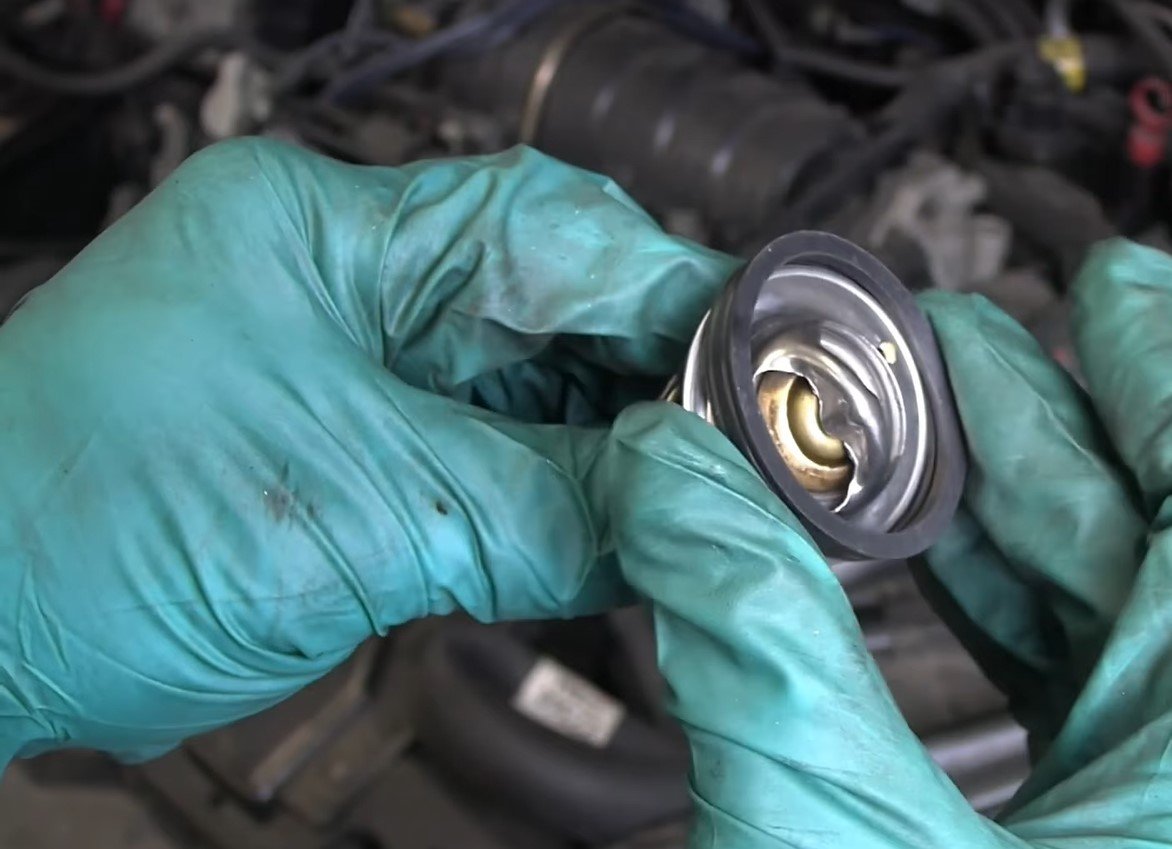
Once removed, a conventional thermostat can be checked in controlled heated water while temperature is measured. It should begin opening near its specified rating and move smoothly. A thermostat found open while completely cold, one that does not open at its rating, or one that moves incompletely is defective.
This is not a useful roadside procedure, and removing the thermostat already requires draining coolant and resealing the housing. On an integrated or electronically controlled assembly, vehicle-specific test procedures may be more appropriate.
Can You Drive With a Bad Thermostat?
The urgency behind bad thermostat symptoms depends on whether the engine is running too cold or too hot.
A thermostat stuck open is usually less immediately dangerous than one stuck closed. If the coolant level is correct, the temperature remains below normal rather than rising, there is no leak or steam, and the vehicle otherwise behaves normally, a short necessary drive may be possible. The repair should still be scheduled. Prolonged cold running can hurt fuel economy, emissions, heater performance, and engine operating efficiency.
Stop driving and arrange a tow when:
- The gauge enters or approaches the red zone
- A temperature warning light or overheating message appears
- Steam is coming from under the hood
- Coolant is boiling or being pushed out
- A leak is rapidly lowering the coolant level
- Temperature repeatedly swings into the hot range
- The engine loses power, knocks, or runs abnormally while hot
Turning the heater on may remove a small amount of heat in some emergencies, but it is not a repair and should not be used to justify continued driving with an overheating engine.
What a Complete Diagnosis Should Check
A good thermostat diagnosis looks at the entire cooling system rather than replacing the cheapest suspect first. A technician may check:
- Cold-start coolant-temperature plausibility
- Warm-up rate and live scan data
- Stored engine and thermostat-control codes
- Coolant level, condition, and correct mixture
- Cooling-system pressure and visible leaks
- Thermostat housing temperature before and after opening
- Radiator-fan command and actual operation
- Water-pump circulation and condition
- Radiator and hose restrictions
- Signs of trapped air or combustion gases
- Heater performance and heater-core flow
- The thermostat’s correct temperature rating and part number
This approach is especially important on vehicles with electronically controlled thermostats, multiple cooling circuits, active grille shutters, or complex thermal-management modules.
Why Thermostats and Housings Fail
Thermostats live through thousands of heating and cooling cycles. The wax element, return spring, guide, seal, or housing can eventually deteriorate. Contaminated coolant, corrosion, incompatible coolant mixtures, debris, previous overheating, or improper installation may accelerate failure.
Installation can create a repeat problem. The wrong opening temperature, reversed orientation, damaged sealing surface, reused O-ring, excessive sealant, or trapped air may produce symptoms soon after replacement. On some vehicles, the thermostat and housing are sold as one calibrated assembly and should not be treated as separate universal parts.
There is no single replacement interval that applies to every vehicle. Service history and symptoms matter more than replacing a working thermostat at an arbitrary mileage unless the manufacturer specifies otherwise.
Before Installing a New Thermostat
Confirm the basics:
- The part matches the exact engine and cooling-system option
- The opening-temperature rating is correct
- The thermostat is installed in the correct direction
- The housing is not cracked or warped
- A new gasket or O-ring is used where required
- Fasteners are tightened to specification
- The correct coolant is installed
- The system is filled and bled using the vehicle-specific procedure
- Leaks and normal operating temperature are verified afterward
Air left in the system can cause poor heat and temperature fluctuation after an otherwise correct repair. That post-repair behavior should not immediately be blamed on the new thermostat.
Frequently Asked Questions
What are the earliest bad thermostat symptoms?
The earliest signs of a thermostat stuck open are often slow warm-up, a gauge that remains below its normal position, temperature falling at highway speed, weak cabin heat, reduced fuel economy, or code P0128.
Can a bad thermostat cause overheating?
Yes. A thermostat stuck closed can block the main coolant path to the radiator and cause rapid overheating. Low coolant, water-pump failure, radiator restriction, cooling-fan failure, and head-gasket problems can cause the same result.
Can a bad thermostat make the engine run too cold?
Yes. A thermostat stuck open or opening too early can prevent the engine from reaching or maintaining its intended operating temperature, especially in cold weather or at highway speed.
Does P0128 always mean the thermostat is bad?
No. A stuck-open thermostat is common, but low coolant, an inaccurate coolant-temperature sensor, wiring trouble, an incorrect thermostat, or abnormal fan operation can also affect the warm-up calculation.
Can a thermostat fail without turning on the Check Engine Light?
Yes. The vehicle may not monitor the fault closely enough, the problem may be intermittent, or the failure may not yet meet the conditions required to store a code.
Can a bad thermostat cause no cabin heat?
A stuck-open thermostat can weaken heat by keeping the engine too cool. Complete loss of heat can also come from low coolant, trapped air, a clogged heater core, a heater-control valve, or a blend-door problem.
How can you tell a thermostat problem from a bad temperature sensor?
A thermostat changes the engine’s actual coolant temperature. A bad sensor can report the wrong temperature even while the engine is operating normally. Comparing cold-start sensor data with ambient temperature, then checking the warm-up curve and physical temperatures, helps separate the two.
Kevin Nicholas is an automotive mechanic and editor of The Effective Guide. He writes about warning lights, car problems, and diagnostic tools, helping drivers understand what to check before replacing a part.