
Your check engine light comes on, and an OBD2 scanner points to an oxygen sensor problem. But the car starts normally, accelerates without trouble, and doesn’t make any unusual noises.
So, is replacing the sensor really urgent?
Ignoring a bad O2 sensor can lead to higher fuel consumption, increased exhaust emissions, and poor engine performance. In certain situations, incorrect fuel control can also contribute to catalytic converter damage.
However, not every oxygen sensor fault creates the same risk. A failed upstream sensor can affect fuel control more directly than a downstream sensor used mainly for catalytic converter monitoring.
There’s another important detail: an oxygen sensor trouble code doesn’t automatically mean the sensor itself has failed.
Quick Answer: A confirmed bad O2 sensor should be repaired rather than ignored indefinitely. Your car may continue driving normally for a while, but fuel economy and emissions can suffer. If the engine runs excessively rich, secondary damage is possible. Diagnose the actual fault first, especially if the only evidence is a trouble code.
What Does a Bad O2 Sensor Actually Do?
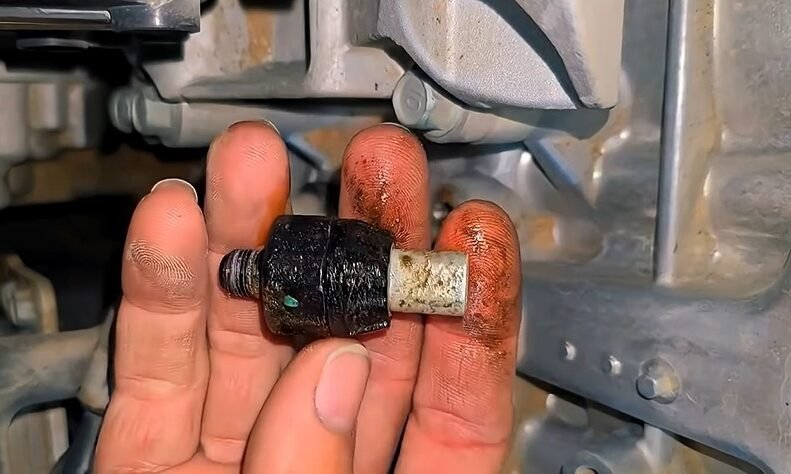
An oxygen sensor measures oxygen in the exhaust and sends information to the engine computer.
On many gasoline engines, the upstream sensor helps the computer adjust the air-fuel mixture. If its readings become inaccurate, fuel corrections may be less effective.
The downstream sensor is typically located after the catalytic converter. Its primary role is monitoring converter performance, although some modern vehicles also use downstream feedback for fuel-control adjustments.
A sensor may fail because of aging, contamination, wiring damage, or a heater circuit problem.
The effect depends on which sensor fails and whether it sends incorrect information, responds too slowly, or stops operating entirely.
What Happens If You Ignore a Bad O2 Sensor? 6 Possible Consequences
1. Your Car May Burn More Gas
If the engine computer receives inaccurate oxygen feedback, it may make incorrect fuel adjustments or rely on a fallback strategy.
This can reduce fuel economy, particularly when an upstream sensor affects normal fuel control.
However, a failed sensor doesn’t always cause a noticeable drop in MPG.
2. Engine Performance May Get Worse
Some oxygen sensor faults contribute to rough idle, hesitation, or inconsistent throttle response.
These symptoms are more likely when fuel control is affected. A downstream monitoring sensor fault may cause little or no noticeable change in performance.
3. Exhaust Emissions Can Increase
Incorrect fuel control can increase certain exhaust pollutants and make it harder for the catalytic converter to operate efficiently.
Even if the car drives normally, an emissions-related fault may still require repair.
4. The Catalytic Converter May Be Damaged
Prolonged excessively rich operation can send additional fuel into the exhaust, potentially overheating or damaging the catalytic converter.
This isn’t an inevitable result of every bad oxygen sensor. Misfires, leaking injectors, and other fuel-control problems may pose a greater immediate threat.
5. You May Fail an Emissions Inspection
In states that require OBD-based emissions inspections, an illuminated check engine light or incomplete readiness monitors can prevent a vehicle from passing.
Inspection requirements vary by state, county, vehicle age, and fuel type.
6. Other Engine Problems May Go Unnoticed
When the check engine light remains on for months, it’s easier to overlook a new fault that activates the same warning light.
A fresh scan can reveal additional trouble codes, but ignoring the original issue makes troubleshooting more complicated.
Most ImmediatePossible fuel-economy loss and emissions-related warnings.
Depends on the FaultRough running, hesitation, or incorrect fuel control.
Potential Long-Term RiskCatalytic converter damage if harmful engine conditions persist.
What Happens After Driving With a Bad O2 Sensor for Days, Weeks, or Months?
After a Few Days
A vehicle with a mild oxygen sensor fault may continue driving normally. You might notice only a steady check engine light or slightly worse fuel economy.
After Several Weeks
If fuel control is affected, continued driving may increase fuel costs and emissions. Rough running or hesitation may also become more noticeable.
After Several Months
Long-term operation with an unresolved rich-running condition can increase the risk of catalytic converter damage.
However, there is no reliable countdown to failure. A downstream heater circuit fault and a severe upstream fuel-control problem can have very different consequences.
The longer you delay diagnosis, the longer you risk operating with an unknown emissions or engine-control problem.
Can You Drive With a Bad O2 Sensor?
Many vehicles remain drivable with an oxygen sensor fault, particularly when the engine runs smoothly and the check engine light is steady.
That doesn’t mean every situation is safe to ignore.
| Vehicle Condition | Recommended Action |
|---|---|
| Steady check engine light, normal driving | Arrange diagnosis promptly. |
| Mild fuel-economy decline | Avoid unnecessary delay in repair. |
| Rough idle or noticeable hesitation | Have the engine inspected soon. |
| Flashing check engine light or severe shaking | Stop safely and avoid further driving. |
| Strong raw-fuel smell, smoke, or overheating | Stop safely and seek assistance. |
A flashing check engine light often indicates a potentially catalyst-damaging misfire. It should never be dismissed as a minor oxygen sensor issue.
Is a Bad Upstream or Downstream O2 Sensor More Serious?
Sensor location matters because upstream and downstream sensors usually perform different jobs.
| Feature | Upstream O2 Sensor | Downstream O2 Sensor |
|---|---|---|
| Location | Before catalytic converter | After catalytic converter |
| Primary function | Fuel-mixture feedback | Catalyst monitoring |
| Fuel-economy impact | More likely | Usually less direct |
| Performance symptoms | More likely | Often minimal |
| Main concern | Incorrect fuel control | Emissions monitoring faults |
These are general differences. Some modern engine-management systems use downstream sensors for additional fuel-trim corrections.
Neither sensor should be replaced based on location alone. Testing must confirm which sensor or circuit has failed.
Can a Bad O2 Sensor Damage Your Catalytic Converter or Engine?
A faulty upstream oxygen sensor can contribute to incorrect fuel control. If the engine runs excessively rich for an extended period, unburned fuel may overheat the catalytic converter.
However, a bad O2 sensor doesn’t automatically destroy the converter or cause major engine damage.
Misfires, leaking fuel injectors, exhaust leaks, and other problems can also affect sensor readings and converter operation.
A failed downstream sensor used mainly for monitoring generally doesn’t create the same direct fueling risk.
If a mechanic suspects converter damage, the underlying cause should be identified before replacement. Otherwise, the new converter may experience the same harmful conditions.
7 Signs Your O2 Sensor Problem Is Getting Worse
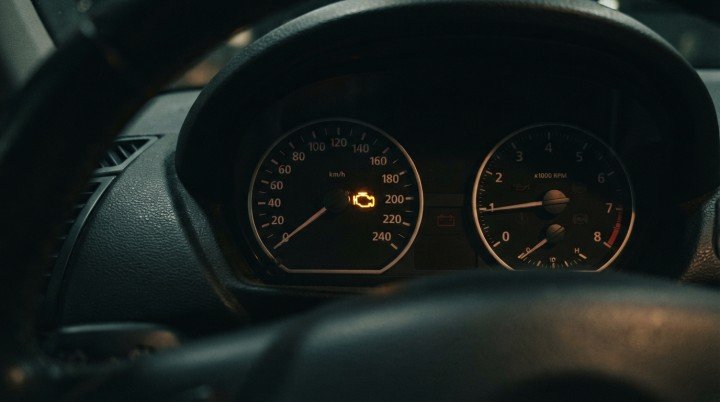
1. Check Engine Light Stays On
Oxygen sensor circuit, heater, or response faults can trigger the check engine light.
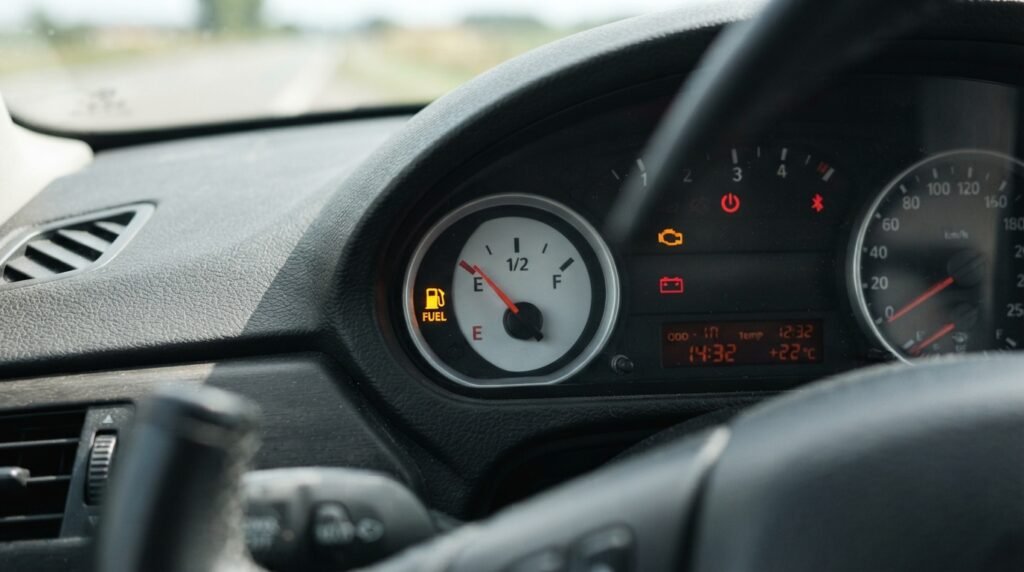
2. Fuel Economy Drops
Incorrect fuel corrections may cause the engine to consume more gasoline than usual.
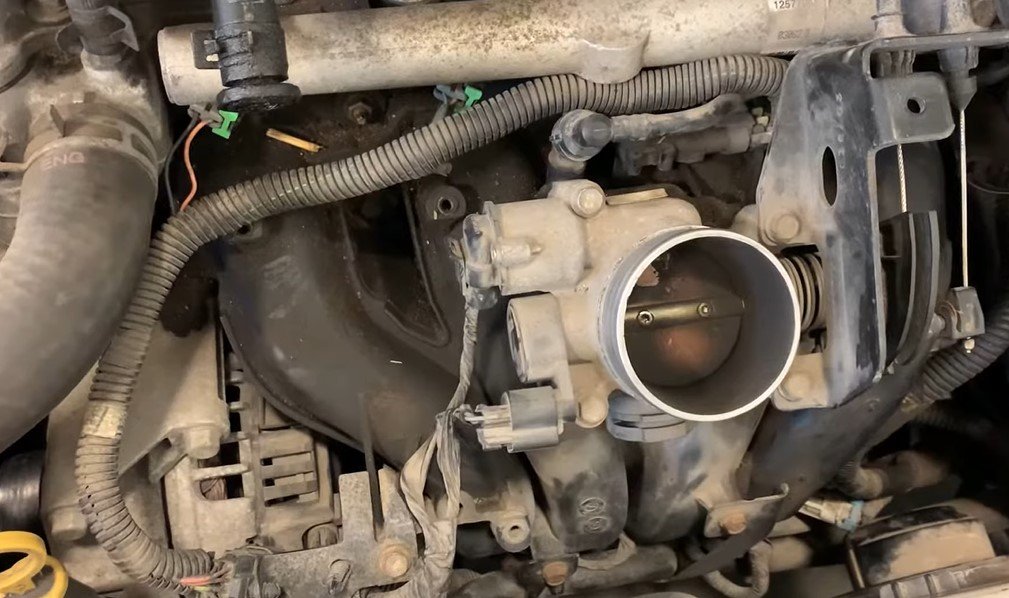
3. Rough or Unstable Idle
Fuel-mixture problems can contribute to uneven idling, although many other faults cause similar symptoms.
4. Hesitation During Acceleration
Some vehicles respond poorly when fuel control is inaccurate.

5. Strong Exhaust Odor
An unusually rich-running engine may produce a stronger exhaust smell. Raw-fuel odors require prompt investigation.

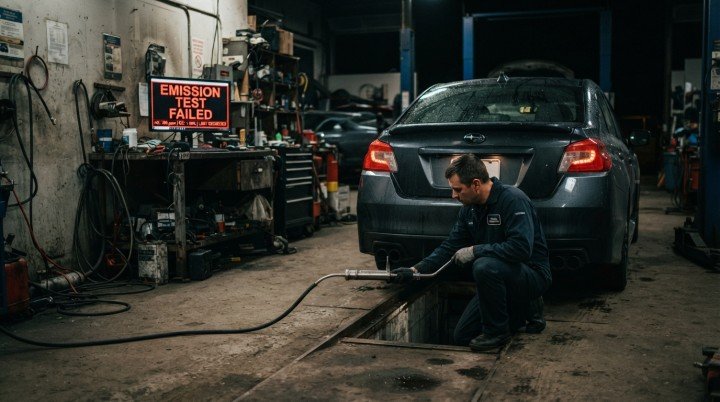
6. Failed Emissions Inspection
Stored emissions faults or incomplete readiness monitors may prevent inspection approval.
7. Unusual Fuel Trim or Sensor Readings
A scan tool may reveal abnormal fuel corrections or sensor behavior, but readings must be interpreted in context.
None of these symptoms proves the oxygen sensor itself is defective.
How to Tell a Bad O2 Sensor From Another Engine Problem
An oxygen sensor reports what it detects in the exhaust. Sometimes it’s correctly reporting a problem elsewhere.
Vacuum or Intake Leak
Unmetered air can cause lean fuel-trim readings even when the oxygen sensor works correctly.
Exhaust Leak
An exhaust leak near or ahead of the sensor may introduce outside oxygen and distort its readings.
Leaking Fuel Injector
An injector delivering excessive fuel can create rich exhaust conditions that the sensor detects.
Misfire or Ignition Problem
Misfires can send additional oxygen and unburned fuel into the exhaust, complicating sensor readings and potentially stressing the converter.
Wiring or Heater Circuit Fault
Damaged connectors, broken wires, missing heater power, or poor grounds can produce oxygen sensor circuit codes.
Catalytic Converter Problem
A catalyst efficiency code doesn’t automatically mean the downstream oxygen sensor is defective.
This distinction matters because replacing a functioning sensor won’t repair an intake leak, misfire, or damaged catalytic converter.
Which O2 Sensor Codes Should You Take Seriously?
Diagnostic trouble codes help identify the system requiring testing. They don’t always identify the exact failed component.
| Code | General Meaning |
|---|---|
| P0130 | O2 sensor circuit malfunction, Bank 1 Sensor 1 |
| P0133 | O2 sensor slow response, Bank 1 Sensor 1 |
| P0135 | O2 sensor heater circuit malfunction, Bank 1 Sensor 1 |
| P0141 | O2 sensor heater circuit malfunction, Bank 1 Sensor 2 |
| P0171 / P0174 | Fuel system too lean, Bank 1 / Bank 2 |
| P0420 / P0430 | Catalyst efficiency below threshold, Bank 1 / Bank 2 |
P0171 and P0174 are fuel-mixture codes, not automatic oxygen sensor replacement instructions.
Likewise, P0420 and P0430 require diagnosis of the catalytic converter, exhaust system, fuel control, and related sensor signals.
Always use the vehicle-specific diagnostic procedure before buying parts.
How Do Mechanics Confirm an O2 Sensor Is Actually Bad?
A technician should check the sensor and the conditions affecting its readings.
- Read stored and pending codes. Freeze-frame data can show when the fault occurred.
- Review fuel trims and live data. This helps identify whether the engine is compensating for rich or lean conditions.
- Inspect for intake and exhaust leaks. These can cause misleading oxygen readings.
- Test the heater circuit and wiring. Verify power, ground, resistance, or control operation as specified by the manufacturer.
- Evaluate sensor response. Compare live data with the correct specifications and test procedure.
Modern wideband air-fuel sensors behave differently from traditional narrowband oxygen sensors. Their signals should not be judged using the same simple voltage-switching expectations.
What If You Replace the O2 Sensor but the Check Engine Light Returns?
If the same trouble code returns after replacement, the original diagnosis may have missed another problem.
Possible causes include damaged wiring, an exhaust leak, an incorrect replacement sensor, or an unresolved fuel-control fault.
In some cases, the vehicle may also need a complete drive cycle before emissions readiness monitors finish their checks.
Don’t purchase another sensor immediately. Confirm the code, inspect the relevant circuit, and determine why the fault returned.
How Much Does It Cost to Replace a Bad O2 Sensor in 2026?
Oxygen sensor replacement is usually less expensive than catalytic converter repair, but costs vary considerably by vehicle and sensor type.
| Expense | Estimated US Cost |
|---|---|
| Replacement sensor | $40–$300+ |
| Labor | $60–$200+ |
| Typical professional replacement | $150–$600+ |
| Diagnostic testing | Often billed separately |
These are broad planning estimates, not guaranteed repair quotes.
Wideband sensors, difficult access, rusted threads, and vehicle-specific parts can increase costs.
Proper diagnosis is especially important when the sensor isn’t the actual cause of the trouble code.
Should You Replace Both O2 Sensors or Just the Bad One?
In most cases, you don’t need to replace every oxygen sensor simply because one has failed.
A four-cylinder engine may have multiple sensors, while V6 and V8 engines can have separate sensors for each exhaust bank.
Bank 1 Sensor 1 generally identifies the upstream sensor on the bank containing cylinder number one. Bank 1 Sensor 2 generally identifies a downstream sensor on that bank.
Confirm the exact location using vehicle-specific information before ordering a replacement.
Can You Clean an O2 Sensor Instead of Replacing It?
Cleaning usually won’t restore an oxygen sensor that has worn out internally or lost its ability to respond correctly.
Scrubbing or applying unsuitable chemicals can damage the sensitive sensing element.
If oil burning, coolant contamination, or excessive fuel deposits caused the failure, that underlying problem should be repaired as well.
Otherwise, a new sensor may become contaminated again.
Frequently Asked Questions
Can I drive 100 miles with a bad O2 sensor?
Some vehicles can travel that distance without obvious problems, but no mileage is guaranteed safe. The risk depends on the sensor fault and whether the engine is running excessively rich, misfiring, or showing other serious symptoms.
Can a bad O2 sensor cause poor gas mileage?
Yes. Incorrect oxygen feedback may affect fuel adjustments, especially when an upstream sensor is involved. However, not every sensor fault causes noticeable fuel-economy loss.
Will a bad O2 sensor damage my engine?
Not necessarily. A failed sensor doesn’t automatically cause engine damage. However, prolonged incorrect fuel control or an underlying misfire can create additional problems that require repair.
Can I ignore a bad downstream O2 sensor?
A downstream sensor fault may have little effect on everyday driving, but it can interfere with emissions monitoring and inspection readiness. It should still be diagnosed and repaired.
Can a bad O2 sensor cause a misfire?
Incorrect fuel control can contribute to poor combustion in some situations. However, ignition faults, injectors, compression problems, and intake leaks are also common causes of misfires.
Will replacing an O2 sensor turn off the check engine light?
If the sensor was the confirmed cause and the repair is successful, the fault should no longer be detected. The light may turn off after successful drive cycles or require appropriate code clearing. Readiness monitors may still need time to complete.
Can a bad O2 sensor cause a car to stall?
Severe fuel-control problems may contribute to stalling, but a bad oxygen sensor isn’t the only possible cause. Fuel pressure, ignition, throttle control, and other faults should also be checked.
How do I know which O2 sensor needs replacing?
Use the trouble code, bank and sensor designation, vehicle-specific diagrams, and diagnostic test results. Don’t assume the sensor named in a code is automatically defective.
Final Verdict: Is Ignoring a Bad O2 Sensor Worth the Risk?
A confirmed bad O2 sensor isn’t always an immediate breakdown risk, but ignoring it can lead to wasted fuel, increased emissions, and potentially expensive secondary problems.
The most important distinction is whether the sensor is actually defective or correctly reporting another engine problem.
If your car drives normally with a steady check engine light, arrange diagnosis soon. If the light flashes, the engine shakes severely, or you smell raw fuel, stop safely and seek assistance.
Repair the confirmed cause rather than guessing. That’s the best way to avoid unnecessary sensor replacements and protect the catalytic converter.

Kevin Nicholas is an automotive mechanic and editor of The Effective Guide. He writes about warning lights, car problems, and diagnostic tools, helping drivers understand what to check before replacing a part.