
A coolant leak does not always begin with steam pouring from under the hood. More often, it starts with something easy to dismiss: a faint smell after parking, a chalky mark near a hose, or a reservoir that needs another small top-off.
That is what makes a slow leak dangerous. The car may drive normally until a hot day, a long climb, or a traffic jam pushes the reduced cooling system beyond its limit.
Some coolant leak symptoms point to an external drip. Others suggest coolant is entering the cabin, engine oil, or combustion chamber. Recognizing the difference can keep a minor hose or cap problem from becoming major engine damage.
One rule comes before every inspection: never remove a radiator cap or pressurized coolant reservoir cap while the engine is hot. Hot coolant can spray out without warning and cause severe burns.
Why a Small Coolant Leak Matters
The cooling system is a sealed, pressurized circuit. Coolant carries engine heat to the radiator while protecting the system against freezing, boiling, and corrosion.
When fluid escapes, air can interrupt circulation, reduce cabin heat, and create hot spots. A small seep can also become a rapid loss when a cracked hose, plastic fitting, or weakened radiator tank gives way under pressure.
Coolant level does move between the HOT and COLD marks as temperature changes. What is not normal is a cold level that keeps falling from one check to the next.
Coolant Leak Symptoms: 7 Warning Signs You Shouldn’t Ignore
No single clue identifies every leak. Look for a pattern, especially when two or more of these coolant leak symptoms appear together.
1. Colored Puddles, Wet Spots, or Crusty Residue
A fresh puddle is the easiest clue to recognize. Coolant may appear green, orange, yellow, pink, red, blue, or purple and often feels slick.
Do not identify coolant by color alone. Different coolant chemistries can share the same color, and two fluids of different colors may be compatible—or completely incompatible. The owner’s manual, not the dye, tells you which specification the vehicle requires.
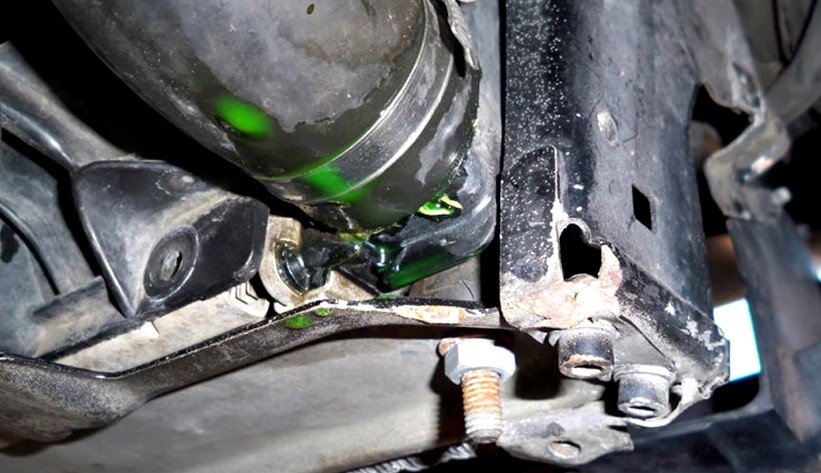
The stain’s location is only a starting point. Airflow and splash shields can carry fluid away from its source. Look above the ground too: slow seepage often leaves crust around a hose connection, radiator seam, thermostat housing, cap, or water pump.
Clear, odorless water after air-conditioner use is usually condensation. Dark fluid is more likely engine oil; red oily fluid may be transmission fluid. Never taste an unknown fluid.
2. A Sweet or Chemical Smell After Driving
Your nose may detect a leak first. Coolant on a hot engine or exhaust component can evaporate, producing a sweet or sharp chemical smell without leaving a puddle.
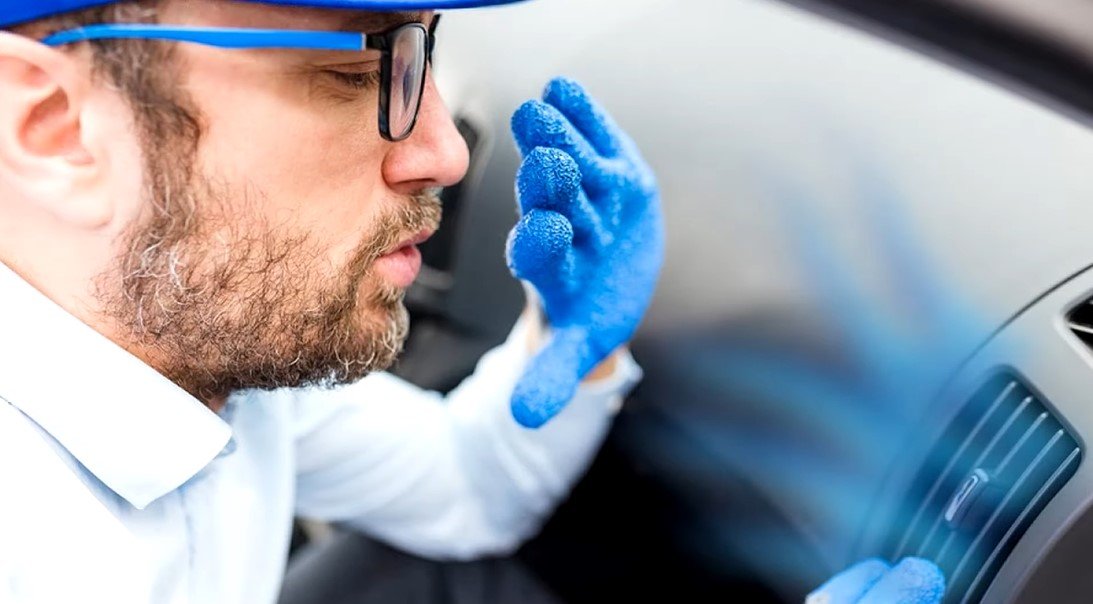
A smell strongest near the grille or under the hood points toward an engine-bay leak. A persistent cabin odor raises suspicion of a heater core or a heater-hose connection near the firewall. Smell alone is not proof, but it matters when the level is also falling.
3. The Coolant Level Keeps Dropping
Repeated fluid loss is one of the earliest coolant leak symptoms, even when the car has never overheated. In a healthy sealed system, coolant should not need frequent topping up.
Check on level ground after the engine has cooled completely, using the COLD or MIN/MAX marks in the owner’s manual. A dated photo can reveal a slow change.
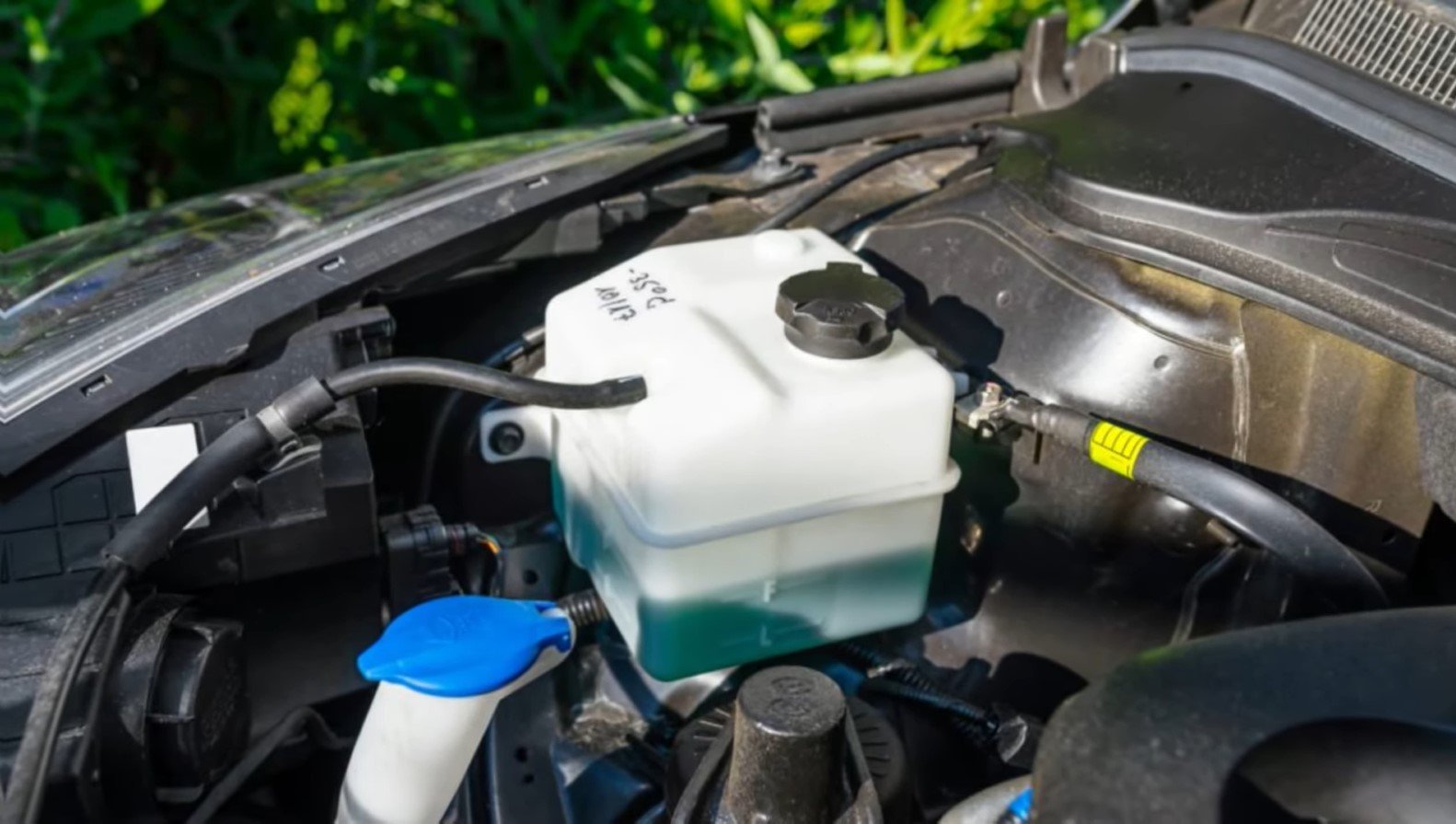
Cooling-system layouts vary. Some vehicles use a pressurized reservoir as the fill point; others have a separate radiator cap and overflow bottle. Follow the procedure for your vehicle.
Adding coolant may restore the level temporarily, but it does not repair the source. If the level falls again, the system needs to be tested.
4. The Temperature Gauge Rises, Fluctuates, or Triggers a Warning
The gauge may run high, climb in traffic or on hills, or fluctuate. A low-coolant message or red temperature warning can follow.
Overheating does not prove a leak. A stuck thermostat, failed fan, restricted radiator, bad water pump, or sensor fault can look similar. A rising gauge plus low coolant, odor, or residue makes leakage more likely.
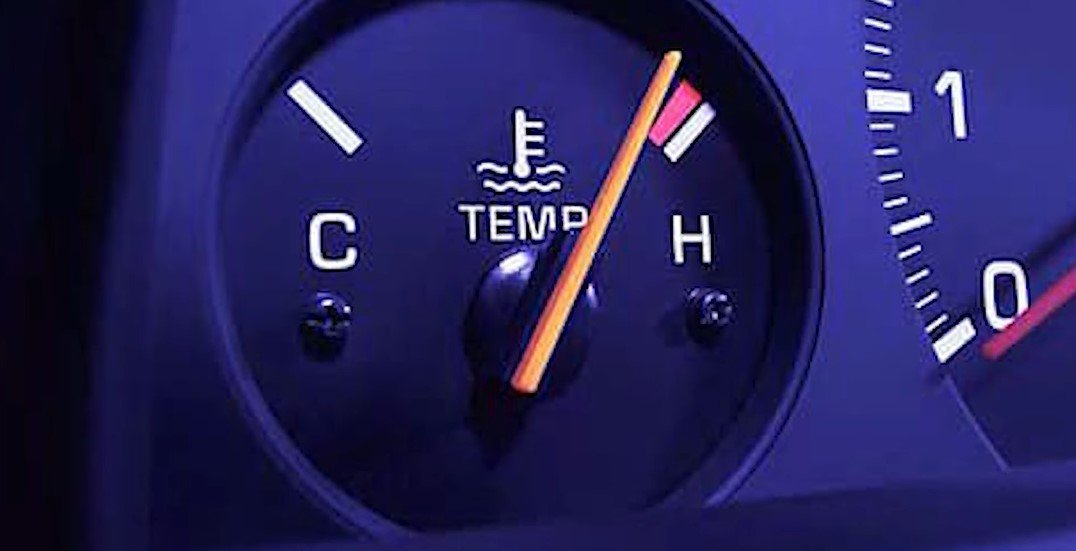
Do not treat the gauge as permission to continue. After major fluid loss, the sensor may no longer be surrounded by coolant, making the reading misleading. Red-zone temperature, a stop warning, or steam means pull over and switch off the engine.
5. Steam, Mist, or Hissing From Under the Hood
Steam can form when coolant hits a hot component or a depleted system boils. Mist near a hose, radiator seam, or cap suggests a pressurized leak; hissing after shutdown may be escaping vapor.
Turn off the engine safely and let it cool. Do not lean over the leak, reach near a belt, or loosen the cap. Electric fans can start unexpectedly on some vehicles even after shutdown.
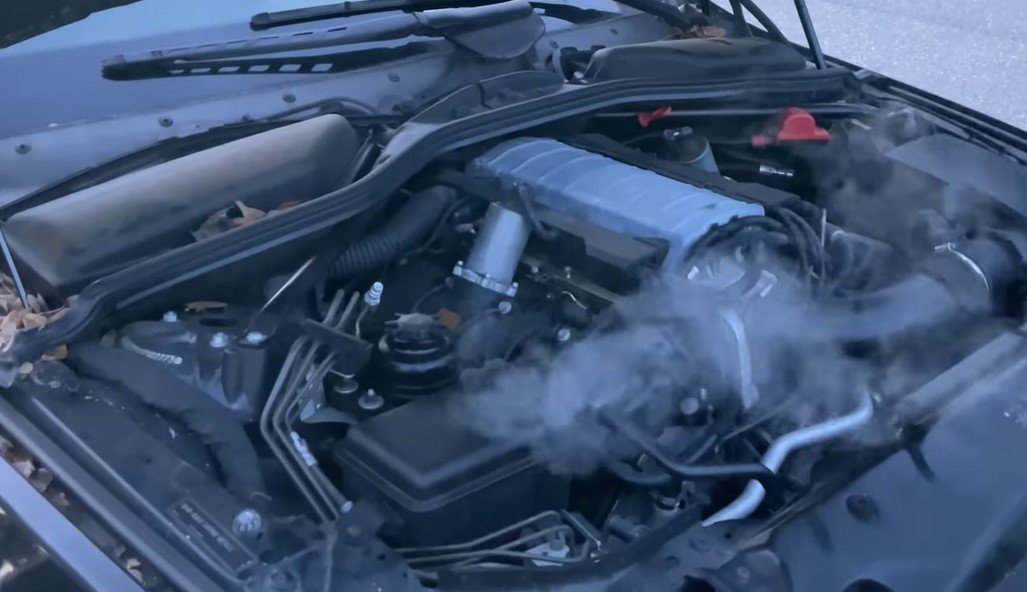
Heavy steam, rapid fluid loss, or coolant pouring onto the ground calls for a tow—not another top-off and another attempt to drive.
6. The Heater Blows Cold or the Windows Keep Fogging
The heater uses hot coolant flowing through a heater core. Low fluid or trapped air can make the vents blow cold or cause heat to come and go as the car turns or accelerates.
This may also come from a blend-door, heater-control, or thermostat fault. It matters more when the coolant level falls or engine temperature rises.
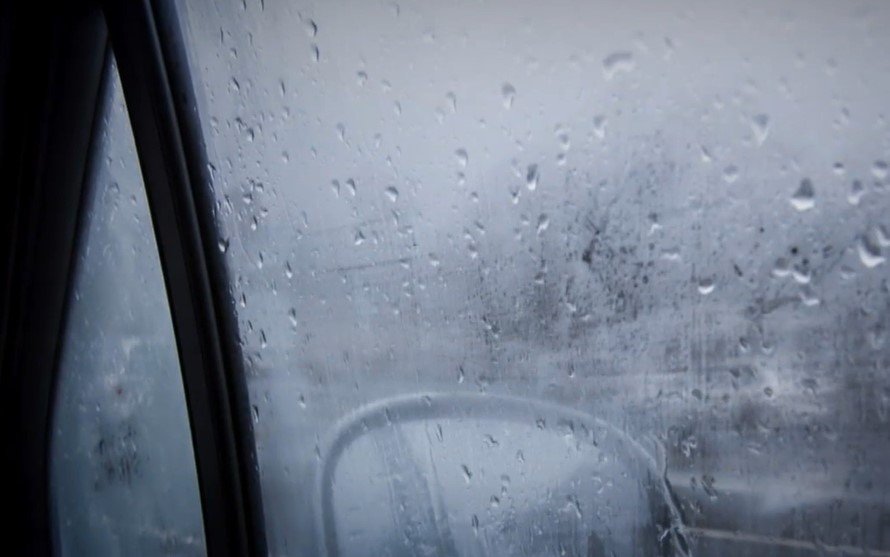
A heater-core leak can leave a sweet cabin smell, greasy windshield film, stubborn fogging, or damp passenger-side carpet. Coolant may stay beneath the carpet or drain from the HVAC case, leaving no engine-bay puddle.
7. Persistent White Exhaust, Rough Starts, or Milky Oil
The most serious coolant leak symptoms occur when fluid escapes internally. A failed head gasket, cracked cylinder head, or intake-manifold gasket on certain engines can admit coolant to a cylinder or the oiling system.
Persistent thick white exhaust after warm-up, particularly with coolant loss, can mean coolant is burning. A small internal leak may also cause a rough cold start or brief misfire.
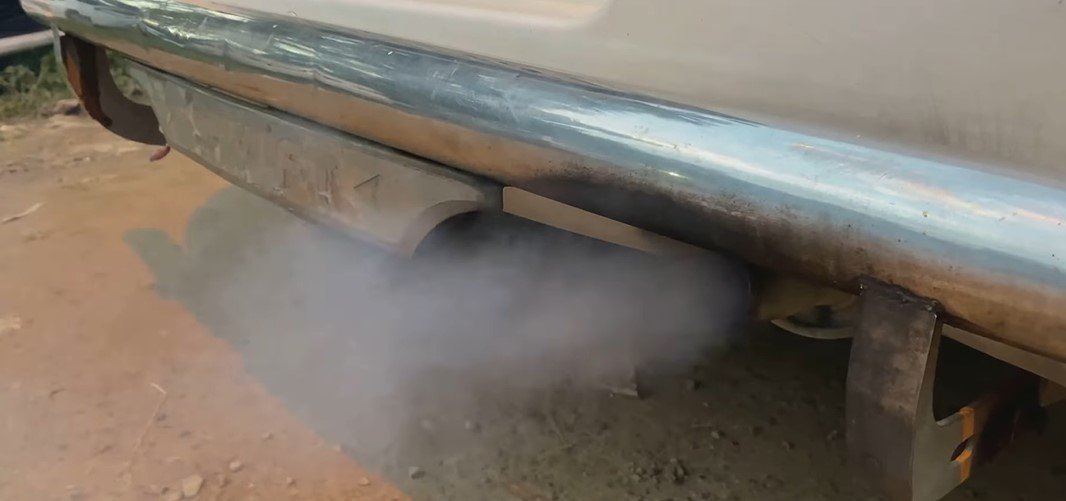
Cold-start white vapor is often normal condensation. The concerning version continues after warm-up and appears with other clues.
Coolant in engine oil can make the dipstick look tan, creamy, or frothy. Beige residue only under the oil cap may be short-trip condensation, but milky dipstick oil, a rising oil level, overheating, or coolant loss requires immediate attention. Do not run the engine to “see if it clears.”
A Quick Symptom-to-Source Guide
These patterns can narrow the search, but they do not replace testing.
| What you notice | Possible source | What to do |
|---|---|---|
| Puddle near the front of the car | Radiator, hose, reservoir, water pump | Inspect before the next long drive |
| Sweet smell but no puddle | Hot-only seep, cap, small hose leak | Arrange a pressure test |
| Cabin odor, greasy glass, wet carpet | Heater core or heater hose | Repair promptly and avoid breathing vapor |
| Cold heater with a rising gauge | Low coolant or trapped air | Stop the engine |
| Steam and rapid coolant loss | Split hose, radiator, cap, pump, housing | Tow the vehicle |
| Persistent white exhaust and low coolant | Internal engine leak | Do not drive; test professionally |
Where Coolant Can Go When There Is No Puddle
“No puddle” does not mean “no leak.” A hot, pressurized system may release a spray that evaporates, collects on an undertray, or blows backward. A weak cap can also vent coolant without leaving an obvious parking spot.
There are three useful ways to think about a disappearing coolant problem:
- External leak: Radiator, hoses, clamps, reservoir, pressure cap, thermostat housing, water pump, pipes, or gaskets.
- Cabin leak: Heater core or the hoses and fittings that supply it.
- Internal leak: Head gasket, cylinder head, intake-manifold gasket on applicable engines, oil cooler, EGR cooler, or another coolant-fed component.
These paths narrow the search. A water-pump leak may leave a trail from its weep hole, while a combustion leak can pressurize the reservoir or consume coolant without an external trace.
How to Check for a Coolant Leak Safely
Wait until the engine is completely cold and park on a level surface. Wear gloves, keep children and pets away, and clean up spills immediately; antifreeze is toxic if swallowed.
Note the cold reservoir level. With the engine off, inspect the tank, cap area, radiator seams, hose connections, thermostat housing, and water-pump area for wetness, crust, cracks, or spray marks. Keep hands away from belts and fans.
Place cardboard under the engine overnight to catch a slow drip. If the smell is inside, check the passenger carpet. Judge tailpipe vapor only after warm-up, avoid breathing exhaust, and never run the car in an enclosed garage.
If a top-up is appropriate, use the specification and mixture in the owner’s manual. Never choose antifreeze by color, mix an unknown product, or pour cold water into an overheated engine. Plain water is an emergency measure only; it lacks lasting freeze, boil, corrosion, and lubrication protection.
How a Mechanic Confirms Coolant Leak Symptoms
A cold cooling-system pressure test can expose escaping fluid. The cap should be tested separately because a weak pressure or vacuum valve can cause coolant loss.
UV dye may reveal an intermittent external leak. For suspected internal leakage, a block test checks for combustion gases in the cooling system. Oil and spark-plug inspection, compression or leak-down testing, and a borescope can narrow it further.
These tests matter because similar coolant leak symptoms can come from very different failures. Replacing the thermostat will not fix a leaking water pump, and replacing a cap will not solve combustion pressure entering the cooling system.
Can You Drive With a Coolant Leak?
There is no universal safe distance, and coolant leak symptoms cannot predict how quickly a seep will worsen. A slow seep can become rapid loss the next time the system reaches full pressure. Repair it before normal driving continues.
Tow the car if temperature rises, steam appears, coolant pours out, the heater turns cold while the gauge climbs, white exhaust accompanies rough running, or the oil looks contaminated. Continuing can warp the cylinder head, ruin bearings, or seize the engine.
A minor cold-engine seep with a stable level and normal temperature may not be causing overheating yet. It is still unpredictable. Arrange an inspection instead of relying on repeated top-offs or a promised number of miles.
What Determines Coolant Leak Repair Cost?
The visible amount of coolant does not predict the bill. A loose clamp, failed cap, accessible hose, or small reservoir may be relatively straightforward. A radiator, thermostat housing, water pump, or buried coolant pipe usually requires more parts and labor. Heater-core replacement can be labor-intensive because much of the dashboard may need to come apart.
Internal leaks sit at the expensive end. A head-gasket repair involves substantial engine disassembly, and prior overheating may add machine work or cylinder-head replacement. That is why an accurate test is more useful than an online average: the source, vehicle design, labor access, coolant contamination, and secondary damage determine the real cost.
Should You Use a Coolant Stop-Leak Product?
Stop-leak is not a proper substitute for finding and repairing a failed part. Some formulas may temporarily slow a small seep, but they can also restrict narrow passages in a radiator or heater core and complicate later repairs. Compatibility also varies by vehicle and coolant type.
Treat it as an emergency last resort only when the vehicle manufacturer permits it and professional repair is not immediately possible. It should not be the routine answer to recurring coolant leak symptoms.
What Happens If You Ignore the Leak?
The first consequence may be weak cabin heat or an occasional warning. As the level drops, air pockets and hot spots develop. The engine may then overheat, distort the cylinder head, damage seals and gaskets, contaminate the oil, or lose lubrication at critical bearings. A repair that began as a hose, cap, or plastic housing can end with major engine work.
Prevention is much less dramatic: use the specified coolant, follow its service interval, inspect hoses and connections during routine maintenance, and investigate repeat coolant loss early. After any repair, the system must be filled and bled according to the manufacturer’s procedure; trapped air can imitate a continuing fault.
Frequently Asked Questions
Where Is the Most Common Place for Coolant to Leak?
Hoses and their connections are common, but there is no single location for every vehicle. Radiator end tanks, reservoirs, pressure caps, thermostat housings, water-pump seals, heater cores, and engine gaskets are also frequent sources. Follow the residue and test the system instead of guessing from puddle location alone.
Why Is Coolant Leaking if the Engine Is Not Overheating?
A small leak may not have lowered the level enough to affect temperature yet. The radiator and fans may still remove sufficient heat during light driving. That early window is the best time to repair the problem—before higher load or a larger leak overwhelms the system.
Can Coolant Disappear Without a Visible Leak?
Yes. It may evaporate on a hot component, leak only under pressure, collect in an undertray or cabin, or escape internally into a cylinder, the oil, or another coolant-fed system.
Is White Exhaust Always Caused by Coolant?
No. Thin vapor that disappears after a cold start is usually water condensation. Persistent thick white exhaust after warm-up, combined with coolant loss, a sweet chemical odor, rough running, or cooling-system pressure, is more concerning.
Can I Add a Different Coolant if the Color Matches?
Not safely based on color alone. Match the manufacturer’s required specification and mixture. Mixing incompatible chemistries can reduce corrosion protection or create deposits even when the colors look similar.
Can a Car Leak Coolant Without Showing a Warning Light?
Yes. Many slow leaks begin before the sensor detects a low level or excessive temperature. Smell, residue, a falling cold level, weak heater output, or unexplained fogging may appear first.
The Bottom Line
The most useful coolant leak symptoms are not always the most dramatic. A recurring low level, dried residue, an odor after parking, or a heater that suddenly loses warmth may give you time to act before the gauge rises.
Check only when the engine is cold, use the correct coolant, and do not confuse topping up with repairing the leak. If there is steam, overheating, rapid fluid loss, persistent white exhaust, or contaminated oil, shut the engine down and have the car towed. Catching the source early can be the difference between replacing a hose and repairing an engine.
Kevin Nicholas is an automotive mechanic and editor of The Effective Guide. He writes about warning lights, car problems, and diagnostic tools, helping drivers understand what to check before replacing a part.