
Last Updated on November 23, 2026
THE SHORT ANSWER
Before paying for overheating repair, check coolant level, external leaks, trapped air, thermostat operation, cooling fans, radiator restrictions, water pump circulation, cooling-system pressure, and possible internal engine leaks or incorrect temperature readings.
The right repair depends on what testing confirms—not simply how high the temperature gauge climbs.
What Should You Do Immediately When Your Car Overheats?
If the temperature gauge enters the danger zone, a serious overheating warning appears, or steam comes from under the hood, pull over as soon as it’s safe.
Switch off the air conditioning and shut down the engine. Do not continue driving with a severe overheating warning.
Allow the engine to cool completely before inspecting the coolant level. Never remove the radiator cap or pressurized reservoir cap while the system is hot. Escaping coolant and steam can cause serious burns.
Turning on the cabin heater may temporarily remove some engine heat, but it doesn’t make continued driving safe when serious overheating is occurring.
If the cause is unknown, coolant is leaking heavily, or the engine overheated severely, arranging a tow is generally safer than attempting to reach a repair shop.
What Does Your Overheating Pattern Suggest?
Before spending money, think about when the temperature rises. The pattern often tells a mechanic which part of the cooling system deserves attention first.
| When It Overheats | What to Investigate First |
|---|---|
| Only in traffic or at idle | Cooling fan operation and radiator airflow |
| At highway speeds | Coolant level, circulation, radiator restrictions |
| While climbing hills | Cooling capacity, water pump performance, engine condition |
| After coolant or radiator service | Trapped air and incorrect coolant level |
| Very soon after a cold start | Temperature sensor accuracy or a severe circulation problem |
| Temperature rises and falls | Air pockets, thermostat, coolant level, sensor |
| Coolant keeps disappearing | External leaks or internal engine leakage |
| Mainly when the AC is running | Cooling fans, condenser airflow, cooling-system capacity |
These patterns are diagnostic clues, not proof that a particular component has failed. The next step is checking the system rather than ordering parts.
9 Things to Check Before Paying for Overheating Repair
1. Check the Coolant Level and Condition
Low coolant is one of the simplest problems to find, but it can also indicate a more serious leak.
When the engine is completely cold, check the reservoir against its marked level and follow your owner’s manual for any additional inspection.
Without enough coolant, the system cannot transfer heat as intended. Low coolant may also create air pockets and inconsistent temperature readings.
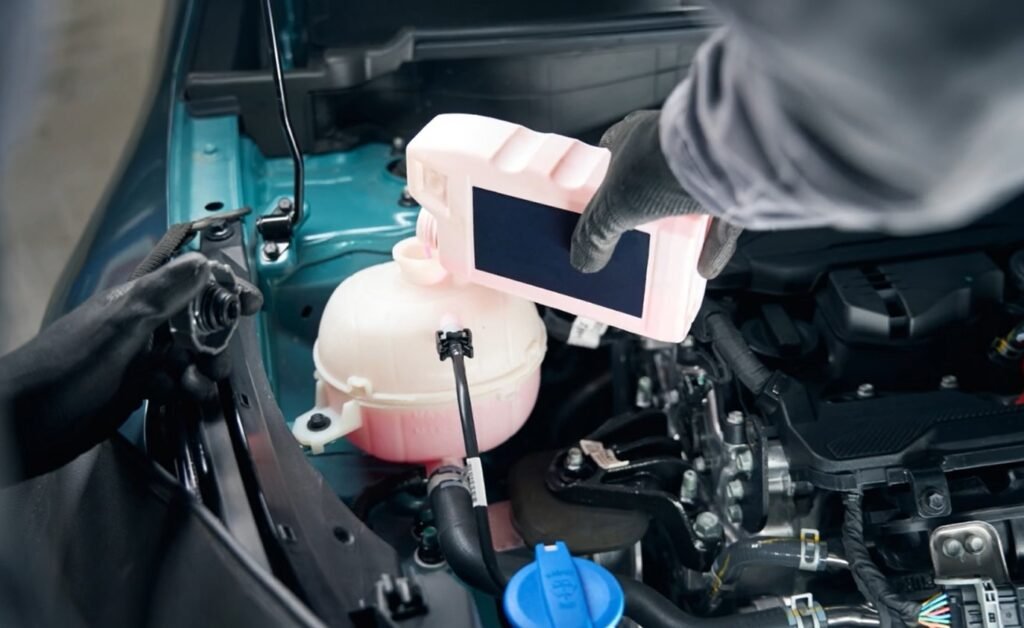
Look for heavy rust, sludge, or contamination. These can indicate neglected maintenance or a problem affecting coolant passages.
Use coolant that meets your vehicle’s specification. Two coolants with similar colors aren’t necessarily compatible.
Repair decision: Correct the coolant level and find out why it was low. Repeatedly adding coolant without fixing the cause isn’t a lasting repair.
2. Find External Cooling-System Leaks
A small coolant leak can become a serious overheating problem once the system loses enough fluid.
Common leak locations include radiator hoses, clamps, plastic fittings, the coolant reservoir, radiator tanks, thermostat housing, heater hoses, and water pump seals.
Remember that coolant can run down the engine before reaching the ground. A puddle beneath the water pump doesn’t automatically mean the pump is leaking.
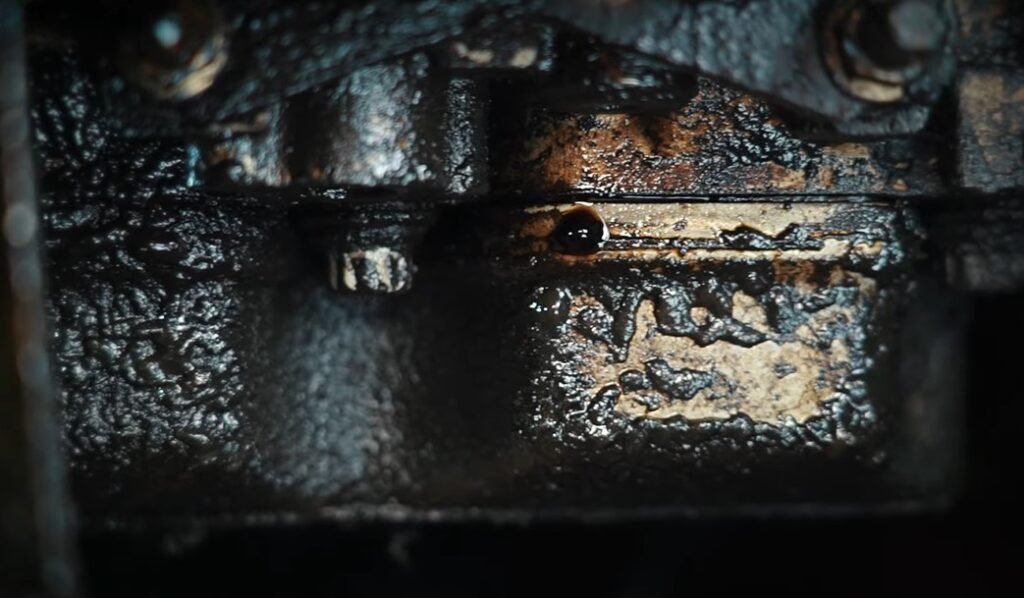
Some leaks appear only when the cooling system is hot and pressurized.
A mechanic can perform a cooling-system pressure test to investigate leaks that aren’t obvious during a cold visual inspection. UV dye can also help locate difficult leaks.
Repair decision: Replace the component actually leaking. Don’t approve a radiator or water pump replacement just because coolant appears nearby.
3. Rule Out Air Trapped in the Cooling System
Did the overheating start immediately after a thermostat, radiator, hose, or coolant replacement?
Air trapped inside the cooling system may interfere with circulation and create localized hot spots.
Common clues include a cabin heater that alternates between hot and cold, unusual temperature fluctuations, or overheating shortly after cooling-system service.
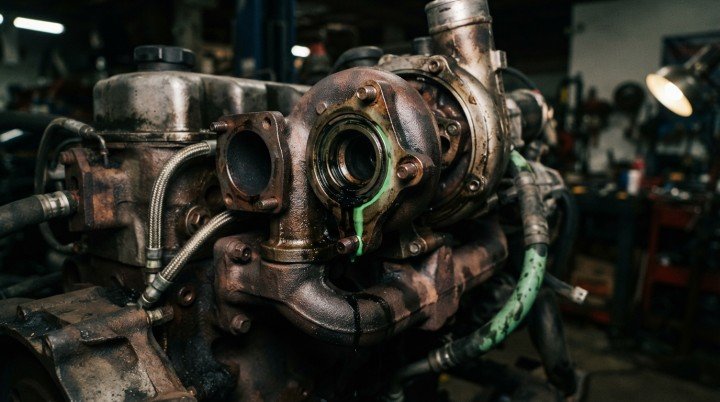
Some vehicles require a special bleeding procedure or vacuum-fill equipment. Others have electronically controlled pumps that must run through a specific bleeding routine.
Simply filling the reservoir isn’t enough to guarantee that all trapped air has been removed.
Repair decision: Have the system filled and bled correctly, then verify stable engine temperature before buying another cooling component.
4. Verify Thermostat Operation
The thermostat regulates coolant flow through the radiator. If it sticks closed or doesn’t open far enough, the engine can overheat.
A thermostat stuck open usually causes a different symptom: slow engine warm-up. It may also contribute to diagnostic code P0128.
That’s why a P0128 code doesn’t automatically explain a serious overheating complaint.
A technician can monitor engine coolant temperature with an OBD2 scanner and evaluate thermostat opening behavior using vehicle-specific specifications.
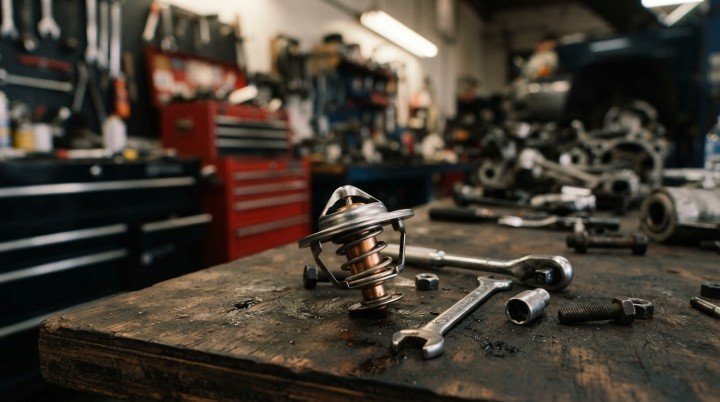
A cold radiator hose alone isn’t reliable proof that the thermostat is stuck closed. Low coolant and poor circulation can affect hose temperature too.
Repair decision: Replace the thermostat when its opening or closing behavior is confirmed defective, not simply because the engine runs hot.
5. Test the Cooling Fan and Its Controls
If the engine runs hotter in stopped traffic but cools down at highway speed, radiator airflow is worth investigating.
At low speeds, electric cooling fans help move air through the radiator. A failed motor, relay, fuse, module, or damaged wiring can reduce cooling when the vehicle isn’t moving.
Some vehicles use mechanical fans with a clutch that can lose effectiveness.
Fan operation depends on coolant temperature, air-conditioning demand, and computer commands. A fan that doesn’t run immediately after startup isn’t necessarily broken.
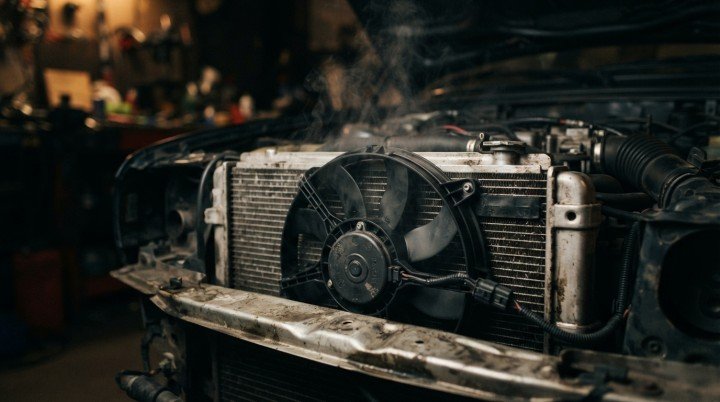
Mechanics can compare requested fan operation with the actual response and test the related circuits.
Repair decision: Repair a confirmed fan or control problem before spending money on a working thermostat or radiator.
Safety: Electric fans can start unexpectedly, including after engine shutdown. Keep hands and tools away from the blades.
6. Inspect the Radiator, Condenser, and Hoses
A radiator must release the heat carried by engine coolant. When airflow or internal flow is restricted, cooling performance drops.
Check for leaves, dirt, and debris around the radiator and air-conditioning condenser. Damaged fins can also restrict airflow.
Inside the radiator, corrosion and deposits may reduce coolant flow. Hoses can deteriorate or collapse under certain operating conditions.
Overheating on the highway or during long uphill climbs may indicate inadequate cooling capacity, although other failures can create the same symptoms.
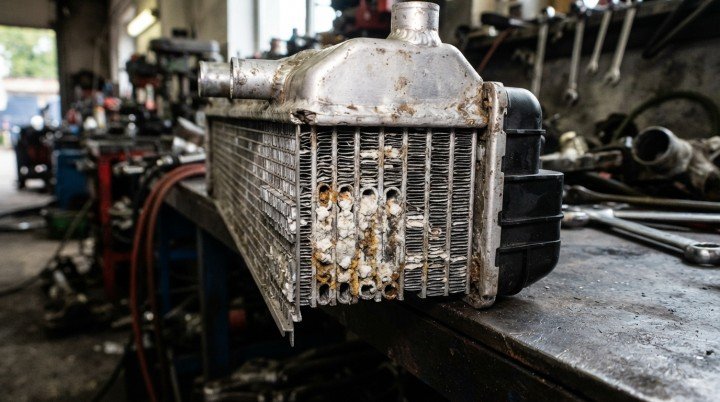
A technician may use temperature measurements, airflow inspection, and professional cooling-system tests to investigate radiator performance.
Repair decision: Clean a confirmed external obstruction or repair the affected hose. Replace the radiator when testing identifies a leak, significant internal restriction, or damage that cannot be repaired appropriately.
7. Confirm Water Pump and Coolant Circulation
The water pump moves coolant through the engine and cooling system.
A mechanical pump may fail because of bearing damage, a leaking shaft seal, or a damaged impeller. Some pumps lose circulation internally without leaking onto the ground.
Electric water pumps can develop motor, electronic, or control-circuit problems.
On belt-driven systems, the drive belt, tensioner, and pulley condition also matter.
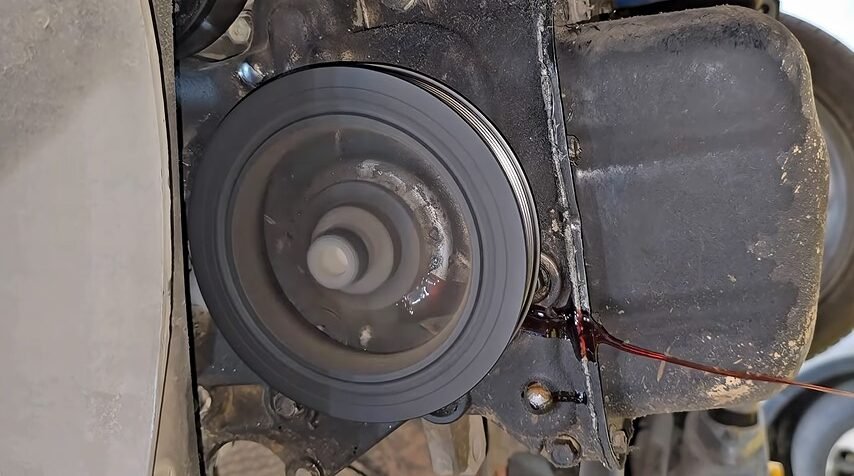
A mechanic should verify pump operation rather than relying solely on the temperature gauge or visible coolant movement in the reservoir.
Some electric-pump systems store diagnostic codes that help identify a circuit or performance fault, but those codes don’t always prove the pump motor itself has failed.
Repair decision: Water pump replacement makes sense when leakage, mechanical failure, inadequate pumping, or an internal electrical fault is confirmed.
8. Check the Radiator or Coolant Reservoir Pressure Cap
The cooling system operates under pressure, which helps prevent coolant from boiling at normal operating temperatures.
A defective radiator cap or pressurized reservoir cap may allow the system to lose pressure too early.
Possible symptoms include coolant escaping into the overflow area, unexpected coolant loss, or overheating despite otherwise normal cooling components.
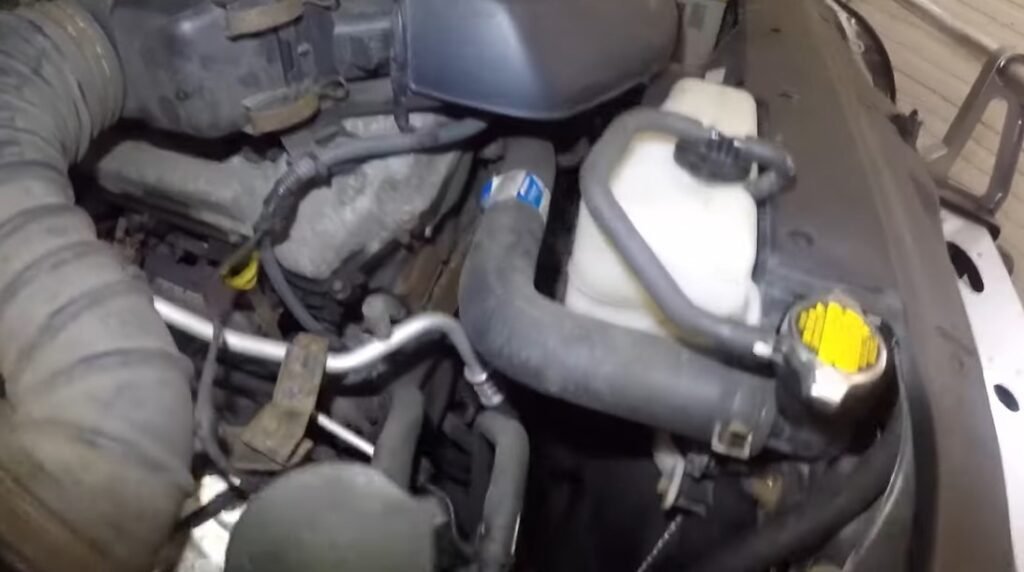
The cap must match the manufacturer’s required pressure specification. Installing a higher-pressure cap isn’t a safe shortcut.
A technician can test the cap separately and check whether the cooling system holds pressure.
Repair decision: Replace a confirmed defective cap instead of approving an expensive radiator or pump repair without evidence.
9. Investigate Internal Engine Leaks and Incorrect Temperature Readings
If coolant repeatedly disappears without an external leak, an internal engine problem may be responsible.
A damaged head gasket can allow combustion gases into the cooling system or coolant into an engine cylinder.
Possible signs include unusual cooling-system pressure, repeated coolant loss, overheating, or persistent white exhaust vapor after the engine has warmed.
None of these symptoms alone proves the head gasket has failed.
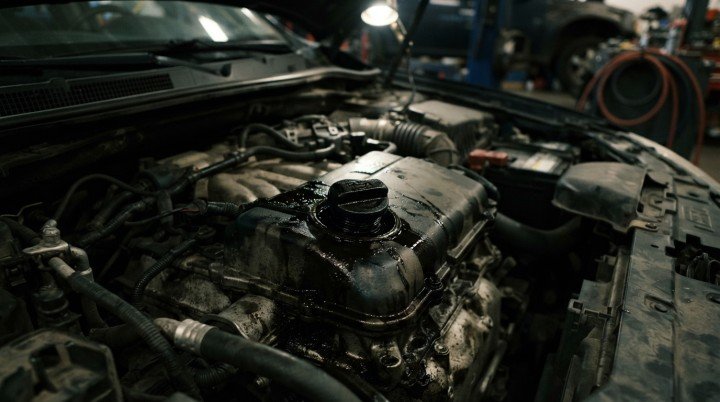
Depending on the complaint, a shop may perform combustion-gas testing, pressure testing, compression testing, or a cylinder leak-down test.
There is another possibility: the engine might not actually be overheating.
A faulty engine coolant temperature sensor, damaged wiring, or dashboard gauge problem may produce inaccurate readings.
Repair decision: Confirm internal engine damage or incorrect temperature information through appropriate testing before approving major repairs.
Is Your Engine Really Overheating or Is the Gauge Wrong?
A temperature gauge doesn’t measure every hot spot inside the engine. On many vehicles, it displays information based on coolant temperature data supplied by the engine computer or a related sensor.
A technician can compare a fully cold engine’s coolant temperature reading with approximate ambient temperature. During warm-up, scan-tool data can be monitored for implausible changes.
Additional temperature measurements may help identify a sensor or gauge problem.
However, steam, coolant loss, abnormal engine noises, or an active severe overheating warning must be treated seriously. Don’t dismiss those symptoms as a bad sensor without evidence.
How Does a Mechanic Diagnose an Overheating Engine?
When a shop recommends an expensive overheating repair, ask what testing supports the diagnosis.
01
Cold-System InspectionCheck coolant level, condition, hoses, visible leaks, belt condition, and signs of previous overheating.
02
Cooling-System Pressure TestInvestigate external leakage, pressure loss, and cap operation where appropriate.
03
Temperature and Circulation TestingMonitor coolant temperature and evaluate fans, thermostat behavior, radiator performance, and water pump operation.
04
Internal Engine TestingInvestigate combustion-gas leakage, compression, or cylinder sealing if symptoms indicate possible internal damage.
Not every car needs every test. The technician should select tests based on the symptoms and explain what the results mean.
What Do Engine Overheating Trouble Codes Mean?
A diagnostic trouble code can help identify a problem area, but it doesn’t automatically tell you which part needs replacement.
| Code | General Meaning |
|---|---|
| P0217 | Engine coolant overtemperature condition |
| P0128 | Coolant below expected thermostat regulating temperature |
| P0115–P0119 | Engine coolant temperature sensor circuit faults |
| P0480–P0483 | Cooling fan control-related faults on applicable vehicles |
| P2600–P2603 | Coolant pump control circuit faults on applicable vehicles |
Code descriptions and troubleshooting procedures can vary by manufacturer. Also, serious overheating can occur without a check engine light.
What Overheating Repair Is Actually Necessary?
The right repair should match a confirmed diagnosis. That may be a simple service or a major component replacement.
| Confirmed Fault | Appropriate Repair |
|---|---|
| Leaking hose or fitting | Repair the damaged connection |
| Trapped air | Refill and bleed the system correctly |
| Defective pressure cap | Install the correct replacement cap |
| Faulty thermostat | Replace the thermostat or required housing assembly |
| Cooling fan failure | Repair the motor, control circuit, or fan assembly |
| Radiator restriction or leak | Clean, repair, or replace as warranted |
| Failed water pump | Replace the defective pump or required assembly |
| Confirmed head gasket damage | Evaluate engine condition and repair options |
Paying for diagnostic work can be worthwhile if it prevents replacing several good components.
How Much Does Overheating Repair Cost in 2026?
Overheating repair costs vary widely because the cause could be a leaking hose or a major engine problem.
RepairPal’s September 3, 2026 US national estimates provide useful examples:
| Repair | Estimated US Cost |
|---|---|
| Thermostat replacement | $616–$716 |
| Water pump replacement | $891–$1,135 |
| Radiator replacement | $1,368–$1,550 |
These are national estimates, not guaranteed prices for your vehicle. They exclude taxes, location differences, and related repairs. Model-specific estimates can be substantially lower or higher.
Minor hose and pressure-cap repairs have separate pricing. Head gasket work can be considerably more expensive, depending on the engine and extent of the damage.
Ask whether the quote includes diagnostic fees, coolant, seals, system bleeding, labor, verification testing, and warranty.
Also check whether a manufacturer warranty extension or service campaign applies to the vehicle.
Can You Drive After Your Engine Overheats?
An engine returning to a normal temperature after cooling down doesn’t mean the underlying problem has disappeared.
If the thermostat remains closed, a fan isn’t working, or coolant is escaping, the engine may overheat again within minutes.
Repeated or severe overheating can damage cylinder heads, head gaskets, and other engine components.
If the cause hasn’t been identified, coolant loss is significant, or the engine experienced a severe overheating event, towing is the safer option.
Follow manufacturer guidance for any specific warning messages or emergency operating modes.
Car Still Overheating After a Repair?
If the engine still overheats after replacing a component, don’t immediately buy the same part again.
Air trapped after coolant service is one possibility. An unresolved leak, incorrect coolant level, or failed pressure cap may also remain.
Check for a thermostat installed incorrectly, an electric water pump control problem, nonfunctional cooling fans, or radiator restrictions.
In some cases, internal engine damage existed before the first repair and wasn’t diagnosed.
The next step should be another targeted inspection that explains why the original repair failed to resolve the complaint.
Questions to Ask Before Approving an Overheating Repair
- What specifically caused the engine to overheat?
- Was the cooling system pressure-tested?
- Were the thermostat, cooling fans, radiator, and water pump checked?
- What were the actual coolant temperature readings?
- Is there evidence of internal engine damage?
- Does the estimate include coolant, bleeding, final testing, and warranty?
For a major repair, ask the shop to show you the test results or explain the evidence. A clear diagnosis is more useful than being told a particular part “usually causes overheating.”
Common Overheating Repair Mistakes to Avoid
- Continuing to drive with an active overheating warning.
- Opening a hot radiator or pressurized coolant cap.
- Replacing the thermostat without checking other causes.
- Assuming coolant near the water pump means the pump is leaking.
- Ignoring air pockets after coolant service.
- Replacing a radiator without confirming its failure.
- Overlooking fan-control or electrical faults.
- Using coolant that doesn’t meet the vehicle specification.
- Adding stop-leak chemicals that may restrict cooling passages.
- Approving head gasket replacement without supporting tests.
Frequently Asked Questions About Overheating Repair
1. What is the most common reason a car overheats?
Low coolant, coolant leaks, cooling fan problems, thermostat faults, and radiator issues are common causes. The most likely problem depends on the vehicle and when overheating occurs.
2. Can a car overheat without leaking coolant?
Yes. A stuck thermostat, failed cooling fan, restricted radiator, or water pump circulation problem may cause overheating without an obvious external leak.
3. Why does my car overheat at idle but cool down while driving?
Insufficient radiator airflow is one possibility. At higher speeds, moving air helps cool the radiator. A fan or related control problem deserves attention, although other cooling faults are possible.
4. Can a bad thermostat cause overheating without a check engine light?
Yes. A thermostat that remains closed may cause serious overheating without immediately setting a diagnostic trouble code.
5. How much does it cost to fix an overheating engine?
Costs range from relatively minor coolant-system repairs to expensive component or internal engine work. A proper diagnosis is needed before a meaningful estimate can be provided.
6. Can overheating once damage a head gasket?
Yes. One severe overheating event can cause damage, although not every incident does. Persistent coolant loss, abnormal pressure, or recurring overheating may justify further engine testing.
Final Thoughts: Confirm the Overheating Problem Before Paying
An overheating engine needs prompt attention, but an expensive repair should follow a confirmed diagnosis.
Before spending money, check coolant level, leaks, trapped air, thermostat operation, fans, radiator performance, water pump circulation, pressure loss, and possible internal engine or sensor problems.
The best overheating repair is the one that fixes the actual failure and prevents the engine from running hot again—not the repair based on the first suspected part.

Kevin Nicholas is an automotive mechanic and editor of The Effective Guide. He writes about warning lights, car problems, and diagnostic tools, helping drivers understand what to check before replacing a part.