
THE DRIVING ANSWERA steady check engine light with normal engine performance may allow cautious driving while you arrange prompt diagnosis. Avoid unnecessary trips or heavy engine loads until you know the cause.
If the light flashes, the engine shakes severely, power drops significantly, or an overheating or oil-pressure warning appears, stop safely and seek assistance. A steady warning is not a guarantee that driving is safe.
What Does the Check Engine Light Mean?
The check engine light, also called the Malfunction Indicator Lamp (MIL), comes on when the vehicle’s computer detects certain engine, powertrain, or emissions-related problems.
It may involve ignition, fuel delivery, airflow, exhaust components, sensors, or electrical controls.
The light normally illuminates briefly during startup as part of a system check. A warning that stays on or begins flashing while driving needs attention.
The computer usually stores diagnostic trouble codes that help identify the affected system. However, those codes don’t necessarily identify the part that needs replacing.
Steady vs Flashing Check Engine Light: What’s the Difference?
Before checking anything under the hood, identify how the warning behaves.
ENGINE
STEADY LIGHT
Investigate Promptly
A fault has been detected, but it may not immediately affect how the engine runs.
Check symptoms and arrange diagnosis.
ENGINE
FLASHING LIGHT
Treat as Urgent
Often signals a severe misfire that could rapidly damage the catalytic converter.
Reduce engine load, stop safely, and obtain assistance.
Warning behavior can vary by manufacturer. A flashing MIL commonly indicates a potentially catalyst-damaging misfire, but you should always follow the vehicle’s specific warning instructions.
Also remember that a steady light can accompany a serious problem when there is overheating, strong fuel odor, unusual engine noise, or major power loss.
Can You Drive With the Check Engine Light On?
The safest decision depends on the complete situation.
| What You Notice | Recommended Action |
|---|---|
| Steady light, car runs normally | Cautious travel may be possible; arrange prompt diagnosis |
| Steady light with rough idle or hesitation | Avoid unnecessary driving; investigate promptly |
| Flashing light, especially with shaking | Stop safely and arrange immediate assistance |
| Major or unpredictable power loss | Do not continue normal driving; consider towing |
| High engine temperature or steam | Stop safely and shut off the engine |
| Red oil-pressure warning | Stop safely, shut off the engine, and seek help |
| Smoke, strong fuel smell, or repeated stalling | Stop safely; arrange professional inspection |
Even if your car feels normal, a persistent check engine light deserves diagnosis. Waiting until the engine begins running poorly can make some repairs more expensive.
7 Situations That Tell You Whether It’s Safe to Drive
1. Check Engine Light On but the Car Runs Normally
If the warning stays on steadily but the engine idles smoothly, accelerates normally, and shows no other warnings, the problem may not be an immediate emergency.
Examples include some emissions-system faults, an EVAP leak, or a sensor-monitoring issue.
But the car feeling normal doesn’t prove the problem is minor. A failing emissions component can trigger a warning long before you notice a performance change.
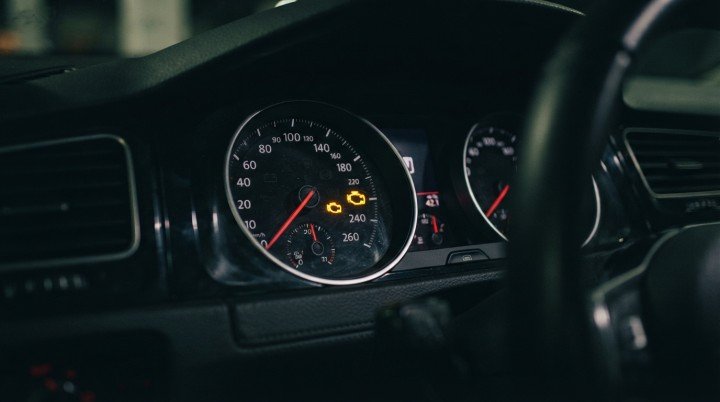
Driving decision: Cautious driving may be reasonable to obtain service. Avoid unnecessary long trips or heavy loads and have the fault diagnosed promptly.
2. Flashing Check Engine Light and Engine Shaking
A flashing light accompanied by rough running is one of the clearest reasons to stop.
The engine may be misfiring because a cylinder isn’t burning its fuel correctly. Possible causes include worn spark plugs, failing ignition coils, injector faults, or mechanical problems.
Unburned fuel can enter the exhaust and overheat the catalytic converter. Continued driving may turn a manageable ignition repair into an expensive exhaust-system repair.
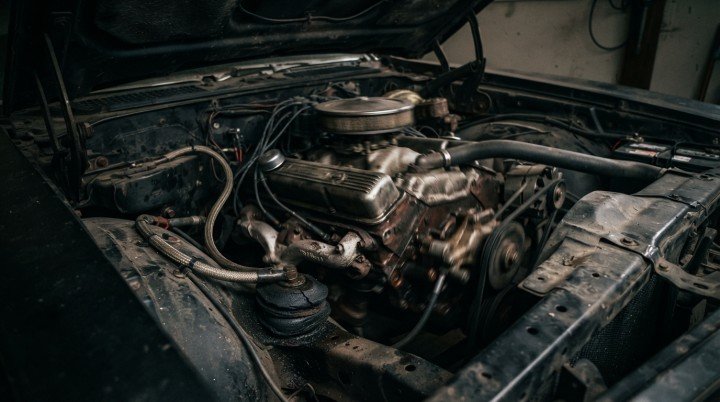
Our engine misfire symptoms guide explains how different misfire patterns help narrow the diagnosis.
Driving decision: Reduce engine load and pull over safely. If the warning continues flashing or the engine runs roughly, arrange towing rather than continuing the trip.
3. Check Engine Light With Reduced Engine Power
Some vehicles enter a reduced-power mode when the computer detects a problem that could affect safe or reliable operation.
Possible causes include electronic throttle-control faults, fuel-delivery problems, sensor failures, or engine-control issues.
You might notice weak acceleration, limited engine speed, or difficulty maintaining speed uphill.
Sudden power loss can be especially dangerous when merging onto a highway or crossing an intersection.

Driving decision: If acceleration is significantly reduced or unpredictable, stop in a safe location and arrange assistance. Do not assume reduced-power mode makes continued driving safe.
4. Check Engine Light With Engine Overheating
When the check engine light appears alongside a high-temperature warning, the overheating problem becomes the immediate priority.
Low coolant, a stuck thermostat, failed cooling fan, radiator restriction, or water pump problem may be involved.
Continued overheating can damage cylinder heads, head gaskets, and internal engine components.
Our guide to engine overheating causes explains the warning patterns and cooling-system failures in more detail.
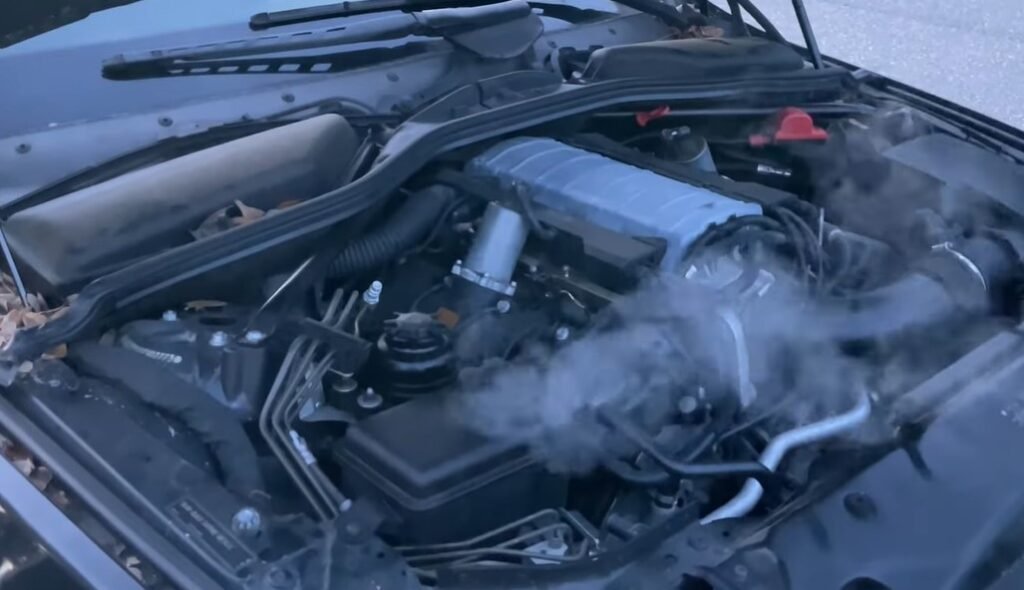
Driving decision: Pull over safely and shut off the engine. Never open the radiator or pressurized coolant cap while hot. Arrange towing when the cause is unknown or overheating is severe.
5. Check Engine Light With a Red Oil-Pressure Warning
A red oil-pressure warning is much more urgent than an ordinary emissions-related check engine light.
Oil pressure is necessary to deliver lubrication to important engine components.
A low oil level can sometimes contribute to inadequate pressure, but oil-pump faults, internal engine wear, and other problems may also be responsible.
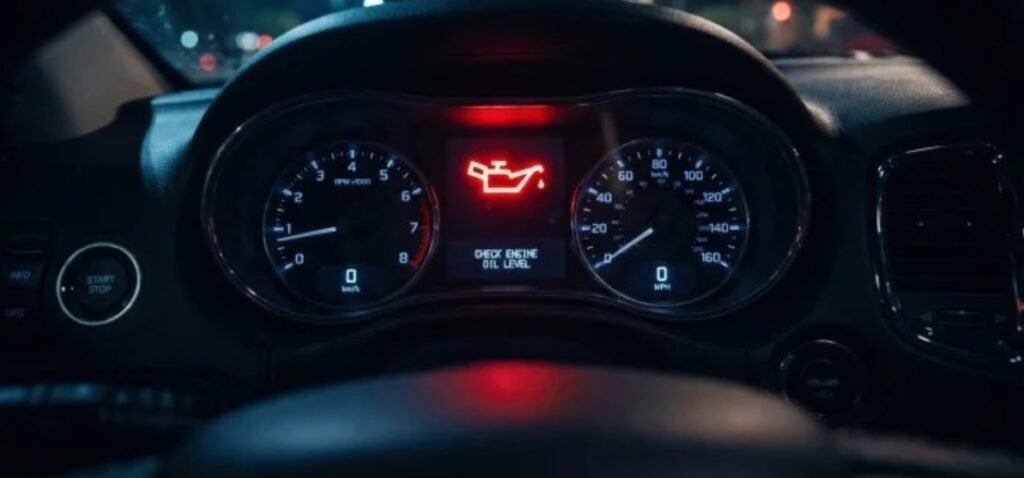
Continuing to operate an engine without adequate oil pressure can cause severe damage very quickly.
Driving decision: Stop safely, shut off the engine, and obtain professional assistance. Do not attempt to drive to a shop simply to see whether the warning goes away.
6. Check Engine Light After Refueling
If the light comes on shortly after visiting a gas station, check the fuel-filler system when you’re safely parked.
A loose, missing, or damaged gas cap can allow the evaporative emissions system to detect a leak.
Some vehicles use capless fuel fillers, which can develop sealing problems without a traditional removable cap.
Tightening the cap correctly may solve a cap-related fault, but the warning may remain until the vehicle completes the appropriate monitoring cycles.
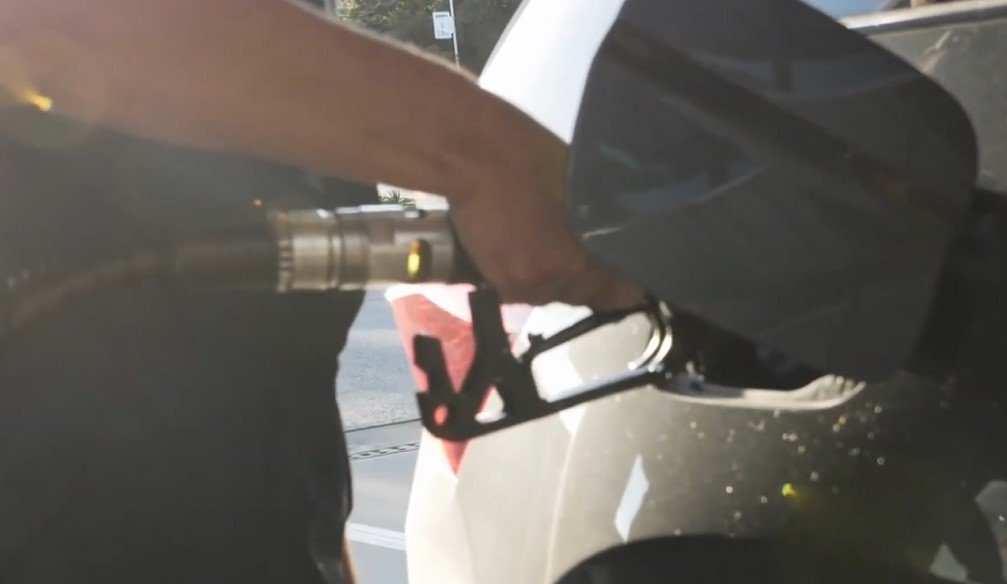
Driving decision: Check the filler system according to the owner’s manual. If the warning persists, retrieve the fault codes. A strong raw-fuel smell or visible fuel leakage requires more urgent attention.
7. Check Engine Light After Battery Replacement or Recent Repairs
Sometimes the warning appears shortly after maintenance.
A connector may have been left loose, a vacuum hose disconnected, or a sensor disturbed during the repair.
Low-voltage events and electrical connection problems can also contribute to stored fault codes.
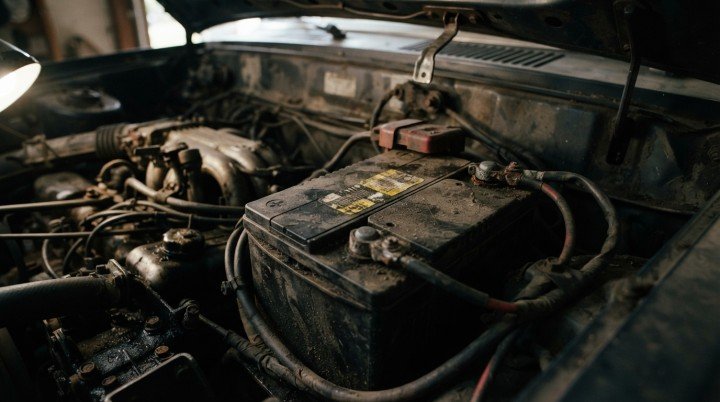
However, timing alone doesn’t prove the recent repair caused the warning.
Driving decision: First evaluate whether the vehicle has urgent symptoms. Then retrieve the codes and inspect relevant recent work before buying another part.
When Should You Stop Driving Immediately?
Do Not Keep Driving With These Warning Signs
- Flashing check engine light with severe shaking or misfiring.
- Red engine oil-pressure warning.
- Severe overheating or steam from the engine compartment.
- Smoke, strong burning smell, or evidence of a fuel leak.
- Significant or unpredictable power loss.
- Repeated stalling or severe engine knocking.
Pull over where it is safe, shut down the engine when appropriate, and arrange roadside assistance. The warning light doesn’t have to flash for the situation to be serious.
How Long Can You Drive With the Check Engine Light On?
There is no universally safe mileage or number of days.
A minor emissions fault may not immediately affect driving, while a severe misfire or engine overheating can cause damage quickly.
Don’t rely on a claim that you can safely drive another 50, 100, or 500 miles with the check engine light on.
If the light is steady and the car behaves normally, arrange diagnosis promptly. If performance changes or other warnings appear, reassess immediately rather than finishing the planned trip.
Why Is My Check Engine Light On? 9 Common Causes
Several unrelated problems can illuminate the same dashboard warning.
| Possible Cause | Common Clue |
|---|---|
| Loose gas cap or EVAP leak | Light appears after refueling |
| Spark plug or ignition coil | Misfire, shaking, rough idle |
| Oxygen or air-fuel sensor | Fuel-control or sensor-related codes |
| Catalytic converter efficiency | P0420 or P0430 |
| MAF or MAP sensor fault | Hesitation, airflow-related codes |
| Vacuum or intake leak | Lean codes, unstable idle |
| Fuel injector or pressure fault | Misfire, poor acceleration |
| Thermostat or coolant sensor | Temperature-related trouble codes |
| Throttle-body or electronic-control problem | Reduced-power message |
These are diagnostic possibilities, not replacement recommendations.
For example, injector problems can resemble ignition or intake faults. Our fuel injector symptoms guide explains how the clues overlap.
What Should You Check First When the Check Engine Light Comes On?
Before spending money on parts, collect a few useful details.
01Check the warning behavior. Is the light steady or flashing? Did it appear during acceleration, idle, or startup?
02Look for other warnings. Pay attention to oil pressure, coolant temperature, charging faults, and reduced-power messages.
03Notice how the car behaves. Shaking, stalling, hesitation, abnormal noise, smoke, or fuel odor can change the driving decision.
04Check the fuel cap when relevant. If the warning followed refueling, inspect the filler system while safely parked.
05Retrieve OBD2 trouble codes. Record stored and pending codes, relevant permanent codes, and freeze-frame information when available.
A basic OBD2 scanner can help identify the affected system. But reading a code is not the same as confirming which part failed.
Common Check Engine Light Codes and What They Suggest
| Code | Diagnostic Direction |
|---|---|
| P0300 | Random or multiple-cylinder misfire |
| P0301–P0308 | Cylinder-specific misfire |
| P0171 / P0174 | System too lean |
| P0420 / P0430 | Catalyst efficiency below threshold |
| P0455 / P0456 | EVAP leak-related faults |
| P0101 | Mass airflow sensor range/performance |
| P0128 | Coolant below expected thermostat regulating temperature |
A P0420 code doesn’t automatically prove the catalytic converter needs replacement. Likewise, a P0302 code identifies a misfiring cylinder, not necessarily a faulty ignition coil.
Proper diagnosis should connect the code with actual symptoms and test results.
Can the Check Engine Light Turn Off by Itself?
Yes. Some intermittent faults stop occurring, allowing the computer to turn off the light after successful monitoring cycles.
A loose gas cap that has been tightened correctly is one example.
However, the vehicle may retain stored or permanent diagnostic information even after the light disappears.
Clearing codes or disconnecting the battery isn’t a reliable repair. It may erase useful diagnostic evidence and reset emissions readiness monitors.
If the warning returns, the underlying problem still needs investigation.
What Happens if You Ignore the Check Engine Light?
The consequences depend on the original fault.
A minor emissions problem may primarily affect inspection compliance. A misfire may overheat the catalytic converter. A fuel-control fault may reduce fuel economy or create additional engine problems.
Some faults become more expensive if left unresolved, while others may remain intermittent.
Keeping the check engine light on continuously also makes it harder to notice when a new problem appears.
Where emissions inspections apply, an illuminated MIL or incomplete readiness monitors may prevent the vehicle from passing.
How Much Does It Cost to Fix a Check Engine Light in 2026?
There isn’t one standard repair price because the check engine light can indicate dozens of different problems.
CarMD’s 2026 Vehicle Health Index, published in April 2026 using US repair data from calendar year 2025, reported an average check-engine-related repair cost of $554.
The following figures are historical national repair averages from that dataset, not guaranteed 2026 estimates for your vehicle.
| Repair Category | Average US Cost |
|---|---|
| EVAP purge control valve | $172 |
| Ignition coil | $256 |
| Oxygen sensor | $287 |
| Spark plugs | $299 |
| Mass airflow sensor | $346 |
| Ignition coil and spark plugs | $480 |
| Fuel injector(s) | $572 |
| Catalytic converter | $1,511 |
Costs depend on the vehicle, location, labor access, parts quality, and related repairs.
A free parts-store code reading can be helpful, but professional diagnosis may still be needed. Ask for an estimate that separates diagnostic labor, confirmed repairs, and post-repair verification.
What Should You Ask Before Approving a Check Engine Light Repair?
- Which stored, pending, and permanent trouble codes were found?
- What did the freeze-frame data show?
- What test confirmed the failed component?
- Were wiring, intake leaks, and related fuel problems checked?
- Could leaving the fault unresolved damage other components?
- Does the estimate include repair verification and warranty?
Before replacing an expensive component, the shop should be able to explain why that part—not merely the system named in the trouble code—is responsible.
Common Mistakes When the Check Engine Light Comes On
- Continuing to drive with a flashing light and severe misfire.
- Assuming a steady light is always harmless.
- Ignoring overheating or red oil-pressure warnings.
- Replacing parts based only on trouble-code descriptions.
- Clearing codes before recording useful data.
- Replacing a catalytic converter without checking misfires or fuel problems.
- Ignoring a strong fuel smell or visible leak.
- Assuming a gas cap explains every warning after refueling.
- Driving unnecessarily to complete readiness monitors while a serious fault remains.
Frequently Asked Questions About the Check Engine Light On
1. Can I drive with the check engine light on if my car runs fine?
Possibly. A steady light with normal performance and no other warning signs may permit cautious travel while arranging diagnosis. That doesn’t guarantee the fault is harmless.
2. Is a flashing check engine light always serious?
It should be treated as urgent. On many vehicles, flashing indicates a severe misfire that can damage the catalytic converter. Follow manufacturer instructions and stop safely.
3. Can a loose gas cap cause the check engine light to come on?
Yes. A loose or damaged cap can trigger an EVAP leak warning. Some vehicles use capless fuel fillers instead.
4. How long can I drive with a steady check engine light?
There is no universal safe distance. A minor emissions fault differs greatly from an engine problem that is beginning to affect performance.
5. Will the check engine light turn off after a repair?
Often, yes. Some warnings clear after successful monitoring cycles; others require proper code clearing and verification. The original fault must still be fixed.
6. Can a check engine light cause an emissions inspection failure?
Yes. In states requiring OBD-based emissions inspections, an illuminated malfunction indicator or incomplete readiness monitors may prevent a passing result.
Final Thoughts: Know When the Check Engine Light Means Stop
Having the check engine light on doesn’t always mean you need an immediate tow. A steady warning with normal engine behavior may allow cautious travel while arranging diagnosis.
But a flashing light, severe misfire, overheating, low oil pressure, smoke, or major power loss changes the situation.
Pay attention to the warning behavior and the engine’s symptoms, retrieve the fault codes, and confirm the cause before approving parts.
The right decision isn’t based only on whether the car still starts. It’s based on whether continuing to drive could put you or the engine at risk.

Kevin Nicholas is an automotive mechanic and editor of The Effective Guide. He writes about warning lights, car problems, and diagnostic tools, helping drivers understand what to check before replacing a part.