
CAN YOU KEEP DRIVING?If only the amber ABS light is on and braking feels normal, conventional brakes may still work. However, anti-lock braking and possibly traction or stability assistance may be disabled. Follow your owner’s manual and arrange prompt diagnosis.
If the red BRAKE warning also appears, the pedal feels abnormal, stopping performance drops, or you notice a brake fluid leak, stop safely and arrange professional assistance or towing.
What Does the ABS Light On Your Dashboard Mean?
ABS stands for Anti-lock Braking System. It helps prevent wheels from locking during hard braking by adjusting brake pressure when necessary.
That allows a driver to maintain more steering control during certain emergency stops.
ABS doesn’t guarantee a shorter stopping distance on every road surface. Its important benefit is helping maintain control when a wheel is about to lock.
The ABS light normally appears briefly when the vehicle starts as part of a system check.
If it stays illuminated or appears while driving, the system has detected a problem. Depending on the vehicle and fault, anti-lock braking and related functions may be unavailable.
Can You Drive With the ABS Light On?
Start by looking at the complete warning situation, not just the yellow ABS symbol.
| What You Notice | What You Should Do |
|---|---|
| Amber ABS light only, normal braking | Check the owner’s manual and arrange prompt diagnosis. Cautious travel may be possible. |
| ABS and traction control warnings | Additional electronic assistance may be unavailable. Diagnose promptly. |
| ABS and red BRAKE light together | Stop safely. A more serious braking-system fault may be present. |
| Soft, sinking, or unusually hard brake pedal | Do not continue normal driving. Seek professional assistance. |
| Longer stopping distance, pulling, or unpredictable braking | Stop safely and arrange inspection or towing. |
| Visible brake fluid leak | Do not drive. Arrange towing. |
A normal-feeling brake pedal isn’t proof that ABS is working. During everyday braking, the anti-lock system may not need to activate at all.
That difference becomes important when braking hard or driving on a slippery road.
6 Risks of Driving With the ABS Light On
1. Your Wheels May Lock During Emergency Braking
During normal braking, your vehicle may feel almost unchanged with ABS disabled.
But when you press the brake pedal hard, one or more wheels may lock instead of continuing to rotate.
When a tire slides rather than rolls, steering control can become limited. You may turn the steering wheel but find that the vehicle doesn’t respond as expected.
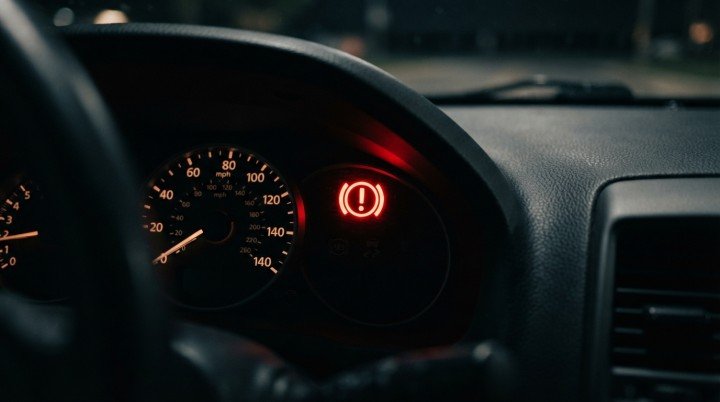
ABS helps manage brake pressure to reduce that risk.
Without it, avoiding an obstacle during emergency braking can become more difficult.
What to do: Leave extra stopping space and avoid unnecessary driving until the fault is diagnosed. Never deliberately perform panic stops on public roads to test whether ABS works.
2. You Have Less Protection on Wet or Slippery Roads
Rain, snow, ice, and loose gravel reduce tire grip.
When grip is limited, a wheel can lock more easily during hard braking. If ABS is unavailable, maintaining steering control can be more challenging.
That doesn’t mean ABS prevents every skid. It cannot eliminate hydroplaning or compensate for worn tires and excessive speed.

Still, losing anti-lock assistance removes an important layer of protection during difficult road conditions.
What to do: Reduce speed, increase following distance, and avoid abrupt braking or steering. Consider postponing a trip if weather or road conditions are hazardous.
3. Traction Control and Stability Control May Stop Working
ABS doesn’t operate completely independently of other vehicle safety systems.
Many vehicles share wheel-speed information between ABS, traction control, and electronic stability control.
If a wheel-speed sensor or related circuit fails, multiple warning lights may appear together.
Traction control may no longer intervene normally when a driven wheel slips. Stability control assistance may also become unavailable during certain maneuvers.
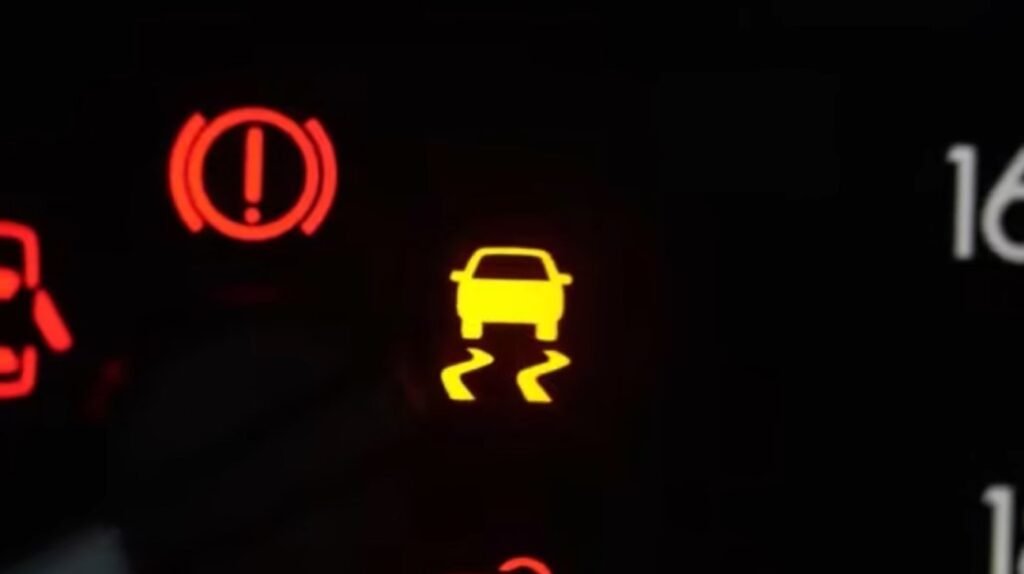
The exact functions affected depend on the vehicle and stored fault.
What to do: Treat several related warnings as evidence that more than one safety function may be affected—not automatic proof that several parts have failed.
4. Faulty Wheel-Speed Signals Can Cause Unexpected Braking
Some ABS problems do more than disable the system.
A weak or inconsistent wheel-speed signal can make the control module interpret one wheel as slowing abnormally.
On certain vehicles, that may cause unwanted ABS activation during low-speed braking.
You might feel unexpected brake pedal pulsing just before a complete stop.

Sensor mounting rust, damaged tone rings, magnetic encoder problems, or wheel-bearing faults can contribute to incorrect readings.
What to do: If braking becomes unpredictable or the vehicle behaves unusually while stopping, discontinue driving and have the system inspected.
5. A More Serious Brake Problem Could Be Overlooked
The biggest mistake is assuming every brake-related warning is only an ABS sensor problem.
If the amber ABS light appears alongside a red BRAKE warning, the issue may involve conventional hydraulic braking or electronic brake-force distribution.

Low brake fluid, hydraulic leaks, or other brake-control faults may be responsible.
A soft or sinking pedal, meaningful reduction in braking performance, or visible fluid leakage indicates a more serious situation.
What to do: Stop safely and arrange assistance. Don’t assume the vehicle is safe just because it stopped normally earlier.
6. Important Safety Assistance May Remain Disabled
Ignoring the ABS warning for weeks or months can leave the system unable to provide its intended protection.
Related traction or stability functions may also remain limited.
Another problem is that once warning lights are constantly illuminated, it becomes harder to recognize a new fault.
Depending on your state, an unresolved ABS or brake warning may also affect vehicle inspection requirements.
What to do: Schedule diagnosis promptly instead of waiting for ordinary braking to feel different.
ABS Light On vs ABS and Red Brake Light On
These warning combinations should not be treated the same way.
Amber ABS Light Only
Conventional braking may remain functional while anti-lock assistance is disabled.
Action: Consult the owner’s manual and arrange prompt diagnosis.
!
ABS + Red BRAKE Warning
A more serious hydraulic braking or brake-force distribution problem may be present.
Action: Stop safely and obtain professional assistance.
The red brake warning can also illuminate when the parking brake is applied.
If it remains on after the parking brake is fully released, don’t assume it’s harmless. Follow the specific instructions in your owner’s manual.
Why Is My ABS Light On? 8 Common Causes
The ABS warning light identifies a system problem, not necessarily the failed component.
- Faulty wheel-speed sensor: A sensor stops reporting reliable wheel rotation data.
- Damaged sensor wiring: Road debris, suspension movement, corrosion, or previous repairs damage the harness.
- Broken tone ring or magnetic encoder: The sensor receives an incorrect signal from the rotating wheel assembly.
- Wheel bearing or hub failure: Excessive bearing movement or an integrated encoder problem affects wheel-speed readings.
- Low battery or charging voltage: An electrical supply problem affects ABS module operation.
- Blown fuse or bad connection: The ABS module loses a required power or ground circuit.
- ABS pump or hydraulic control fault: A control component or hydraulic unit develops a problem.
- ABS module or communication failure: The control unit or its vehicle-network connection is malfunctioning.
One wheel-speed circuit fault can come from several different components. For example, our C1233 wheel-speed sensor troubleshooting guide explains how sensor, wiring, and hub issues can overlap.
Don’t replace the ABS control module or wheel-speed sensors simply because the warning light is illuminated.
What Should You Check First When the ABS Light Comes On?
You don’t need to dismantle the braking system to make a sensible first assessment.
01Read the dashboard. Check whether the red BRAKE, traction control, stability control, or battery warning is illuminated too.
02Assess braking behavior. If the pedal is soft, sinking, unusually hard, or braking has become unpredictable, stop safely.
03Look for obvious problems. When parked safely, check for visible brake fluid leaks or other clear signs of trouble. Don’t crawl beneath an unsupported vehicle.
04Read ABS codes. Use an ABS-capable diagnostic scanner. A basic engine-only code reader may not access the ABS module.
05Confirm the failed component. Inspect the affected sensor circuit, wiring, encoder, bearing, or module according to the actual fault.
Manufacturer-specific codes matter. Our C1234 code guide illustrates why the same code number can identify different problems on different vehicles.
What Happens to Your Brakes When ABS Stops Working?
On many vehicles, ordinary hydraulic braking remains available during an isolated ABS fault.
That means pressing the brake pedal can still apply the brakes during a normal stop.
What may be missing is the system’s ability to rapidly modulate brake pressure when a wheel begins locking.
Without that assistance, maintaining steering control during emergency braking may become more difficult.
The effect on stopping distance varies with road surface, tires, vehicle design, and conditions. ABS should not be described as guaranteeing shorter stops in every situation.
Can You Drive in Rain or Snow With the ABS Light On?
Driving with ABS unavailable is more concerning when road traction is poor.
Wet pavement, snow, and ice increase the chance that a tire will lose grip during hard braking.
If travel is unavoidable and the vehicle’s conventional brakes are confirmed to be working normally, reduce speed and leave substantially more room between vehicles.
Avoid aggressive acceleration, sudden steering changes, and unnecessary hard braking.
If road conditions are especially poor, postponing the trip is often the better choice.
Never continue driving if you notice unusual brake response, even if the ABS light is the only warning visible.
How Long Can You Drive With the ABS Light On?
There is no universally safe number of miles or days.
An isolated amber ABS warning with unchanged conventional braking is different from a red brake warning or actual loss of stopping performance.
On some vehicles, a cautious trip to obtain service may be possible. On others, the owner’s manual may require a different response.
Don’t assume you can safely drive another 100 or 500 miles simply because the brakes feel normal.
Have the vehicle diagnosed promptly and take any worsening symptoms seriously.
How Does a Mechanic Diagnose an ABS Warning Light?
A proper ABS diagnosis begins with the stored codes and actual operating data.
The technician uses an ABS-capable scanner to identify the affected circuit and monitor individual wheel-speed readings.
If one wheel reports an unexpected speed or drops out, the sensor, wiring, connector, tone ring, encoder, and wheel bearing may need inspection.
If the fault points to the ABS module, its power supply, grounds, communication, inputs, and outputs should be checked before replacement.
That distinction can prevent an expensive misdiagnosis.
For an example of a wheel-speed signal fault, see our C1226 diagnostic guide.
How Much Does It Cost to Fix an ABS Light in 2026?
Repair costs depend on which component actually failed.
RepairPal’s US national estimates, updated September 3, 2026, include:
| Repair | Estimated US Cost |
|---|---|
| Wheel-speed sensor replacement | $234–$310 |
| ABS control module replacement | $1,181–$1,278 |
These estimates exclude taxes, location differences, and related repairs. Vehicle-specific costs may be substantially higher or lower.
Wiring repairs, wheel-bearing replacement, fuses, hydraulic repairs, and ABS pump work have different costs.
A full estimate should identify diagnostic charges, parts, labor, required programming or calibration, brake-system bleeding when applicable, and warranty coverage.
Before paying for an expensive module or hydraulic assembly, ask whether any applicable manufacturer recall, service campaign, or warranty coverage has been checked.
Will the ABS Light Turn Off After the Repair?
Sometimes the warning clears automatically once the system completes a successful check.
Other vehicles require stored codes to be cleared with an appropriate scanner. Certain repairs may also require calibration or programming.
Disconnecting the battery is not a reliable fix for an ABS malfunction.
The important step is confirming that the actual fault has been corrected and the warning doesn’t return.
After repairs, a technician should verify the relevant sensor signals, stored codes, and system operation according to the vehicle’s service procedure.
Questions to Ask Before Approving an ABS Repair
- Is this only an ABS malfunction, or is conventional braking affected?
- Which ABS trouble code was stored?
- Were the individual wheel-speed signals checked?
- Were the sensor wiring, encoder, and wheel bearing inspected?
- What test confirmed the sensor, hydraulic unit, or control module failed?
- Does the quote include diagnosis, programming, bleeding, and warranty?
A good repair recommendation should explain why the proposed part is responsible—not simply identify the nearest component to the fault code.
Common ABS Warning Light Mistakes to Avoid
- Ignoring the ABS light because normal stops still feel fine.
- Assuming an ABS and red BRAKE warning combination is a minor sensor issue.
- Driving normally on icy or wet roads without anti-lock protection.
- Replacing a wheel-speed sensor without checking its wiring or encoder.
- Using an engine-only scanner and assuming no ABS codes exist.
- Replacing an ABS module without checking its power and grounds.
- Clearing fault codes without addressing the cause.
- Trying to test ABS by performing emergency stops in public traffic.
- Ignoring wheel-bearing noise or unexpected braking behavior.
Frequently Asked Questions About the ABS Light On
1. Can I drive with the ABS light on if my brakes still work?
Conventional braking may remain available when only the amber ABS light is illuminated. However, anti-lock protection may be disabled. Follow your owner’s manual, drive cautiously only when appropriate, and arrange prompt diagnosis.
2. Will my brakes fail if the ABS light stays on?
Not necessarily. An isolated ABS fault doesn’t automatically mean hydraulic brake failure. But a red brake warning, abnormal pedal feel, or reduced braking performance requires immediate attention.
3. Why are my ABS and traction control lights on together?
These systems often share wheel-speed sensors and control information. One fault can trigger both warnings without meaning that two separate parts have failed.
4. Is it dangerous to drive in rain with the ABS light on?
It can be riskier because wheel-lock prevention may be unavailable during hard braking. Reduce speed, leave extra stopping distance, and avoid unnecessary travel in poor conditions.
5. Can a weak battery cause the ABS light to come on?
Yes. Low voltage or charging-system faults can disrupt electronic control modules. The battery, alternator, power supply, and grounds may need testing.
6. Will the ABS light go off by itself?
Some temporary faults may clear after normal system operation, but a recurring warning needs diagnosis. Clearing the light without repairing the problem doesn’t restore reliable ABS operation.
Final Thoughts: Know When the ABS Light Means Stop Driving
Having the ABS light on doesn’t always mean your car has lost its regular brakes. In many cases, conventional braking still works while anti-lock assistance is unavailable.
But normal braking during an easy stop isn’t proof that the vehicle will behave safely in an emergency.
If only the amber ABS warning appears, follow your owner’s manual and arrange prompt diagnosis. If the red BRAKE light appears, the pedal feels abnormal, or stopping performance changes, stop safely and obtain assistance.
The goal is to identify the failed component, restore the affected safety functions, and avoid guessing at expensive repairs.

Kevin Nicholas is an automotive mechanic and editor of The Effective Guide. He writes about warning lights, car problems, and diagnostic tools, helping drivers understand what to check before replacing a part.