
Last Updated on October 7, 2026
A faint metallic rattle while climbing a hill is not the same problem as a deep hammering sound at idle. Drivers call both noises “engine knock,” but one may come from abnormal combustion while the other can mean a worn bearing is allowing metal parts to strike under load.
That difference determines whether the next step is checking the fuel receipt or shutting the engine off immediately. The major engine knocking causes fall into three groups: combustion problems, loss of lubrication, and mechanical wear. Identifying when the sound occurs—and what other warning lights appear with it—is more useful than guessing from the word “knock” alone.
Start With the Sound, Not a Replacement Part
Listen without deliberately revving or loading an engine that may already be damaged.
| What the noise is like | When it is strongest | What it may indicate |
|---|---|---|
| Light metallic ping or marble-like rattle | Acceleration, uphill driving, or towing | Combustion knock |
| Deep rhythmic hammering | Idle and acceleration; follows engine speed | Rod or main-bearing wear |
| Hollow slap | Cold start, sometimes quieter when warm | Piston-to-cylinder clearance |
| Fast tick from the upper engine | Cold start or idle | Lifter, rocker, injector, or exhaust leak |
| Rattle for a few seconds after startup | Most noticeable after sitting | Timing-chain tensioner or oil-pressure delay |
| Knock with an oil-pressure warning | Any operating condition | Lubrication failure or bearing damage |
Combustion knock is usually a light ping under load. Mechanical knock tends to be deeper, more rhythmic, and less affected by fuel grade. Because these engine knocking causes require different responses, neither sound should be diagnosed by name alone.
Detonation, Pre-Ignition, and LSPI Are Different
In normal gasoline-engine combustion, the spark plug starts a controlled flame that travels through the compressed air-fuel mixture. Detonation occurs when part of the unburned mixture auto-ignites after the spark has started the normal burn. The resulting pressure waves create the familiar pinging sound.
Pre-ignition begins before the spark fires. A glowing deposit, overheated spark plug, or another hot spot ignites the mixture too soon. Pre-ignition and detonation can occur together, but they are not interchangeable terms.
Low-speed pre-ignition, or LSPI, is a particular concern in some turbocharged direct-injection gasoline engines operating at low RPM and high load. Manufacturer-approved oil, correct fuel, proper calibration, and avoiding inappropriate high-load operation can matter on affected engines.
Engine Knocking Causes: 7 Problems to Check
1. Low-Octane, Incorrect, or Contaminated Fuel
Octane measures gasoline’s resistance to abnormal combustion. Using fuel below the minimum grade specified by the manufacturer can allow the unburned end-gas in the cylinder to auto-ignite under heat and pressure. The result is often a light ping during hard acceleration, towing, or climbing a hill.
The timing of the symptom provides a clue. If knocking began immediately after refueling, verify the grade on the receipt and confirm the required AKI or RON rating in the owner’s manual. AKI is commonly displayed in the United States, while many other countries use RON, so the printed numbers are not directly interchangeable.
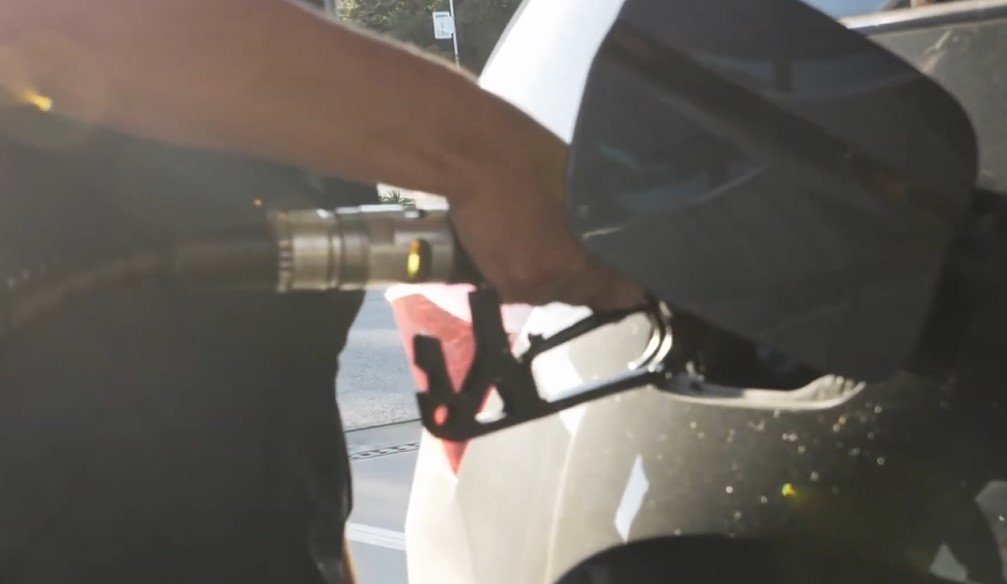
Stale or contaminated gasoline can also affect combustion. Use the correct fuel before reaching for an octane booster. Premium gasoline may reduce combustion knock in an engine that requires it, but it will do nothing for a worn rod bearing.
2. Carbon Deposits and Combustion-Chamber Hot Spots
Deposits on the piston crown or combustion chamber can retain heat, create hot spots, and reduce available chamber volume. That raises the tendency toward detonation or pre-ignition, especially under load.
Oil consumption, excessive blow-by, poor combustion, and certain operating patterns may contribute to deposits. Direct-injection engines can also develop intake-valve deposits, although those do not automatically produce knock.
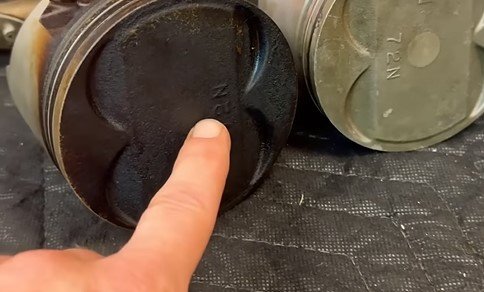
Do not assume every high-mileage engine needs chemical cleaning. Aggressive products or incorrect procedures can loosen material, affect sensors, or create other problems. Confirm that the sound is combustion-related before choosing a cleaning method.
3. A Lean Mixture, Overheating, or Excessive Cylinder Temperature
A lean condition means the engine receives too much air or too little fuel for the operating condition. It can raise combustion temperature and increase the chance of knock. Possible causes include an intake leak, restricted injector, weak fuel pump, low fuel pressure, incorrect MAF or MAP data, or an oxygen-sensor-related control problem.
Cooling-system faults, excessive intake-air temperature, incorrect boost control, and an EGR problem on engines that use it may also increase cylinder temperature. Turbocharged engines are particularly sensitive to excessive boost and hot intake charge.
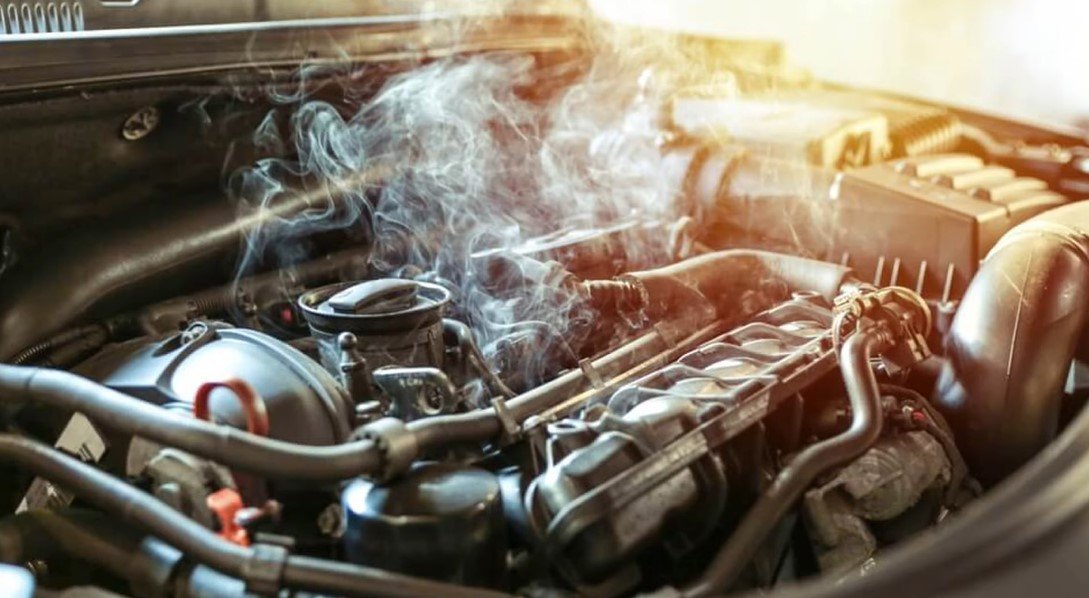
Knocking accompanied by a rising coolant temperature is not a situation for fuel experiments. Reduce load, pull over safely, and shut the engine off before overheating causes additional damage.
4. Ignition Timing, Spark Plug, or Knock-Control Problems
If ignition timing is too far advanced, cylinder pressure can rise too early. An incorrect aftermarket tune, distributor adjustment on an older vehicle, cam/crank timing problem, or faulty sensor input may contribute.
Spark plugs require a more careful explanation. The wrong heat range, excessive deposits, incorrect gap, or a loose plug can contribute to abnormal combustion or create a knock-like sound. Ordinary plug wear more often causes a misfire than true detonation, so replacing plugs should not be the automatic response to every engine noise.
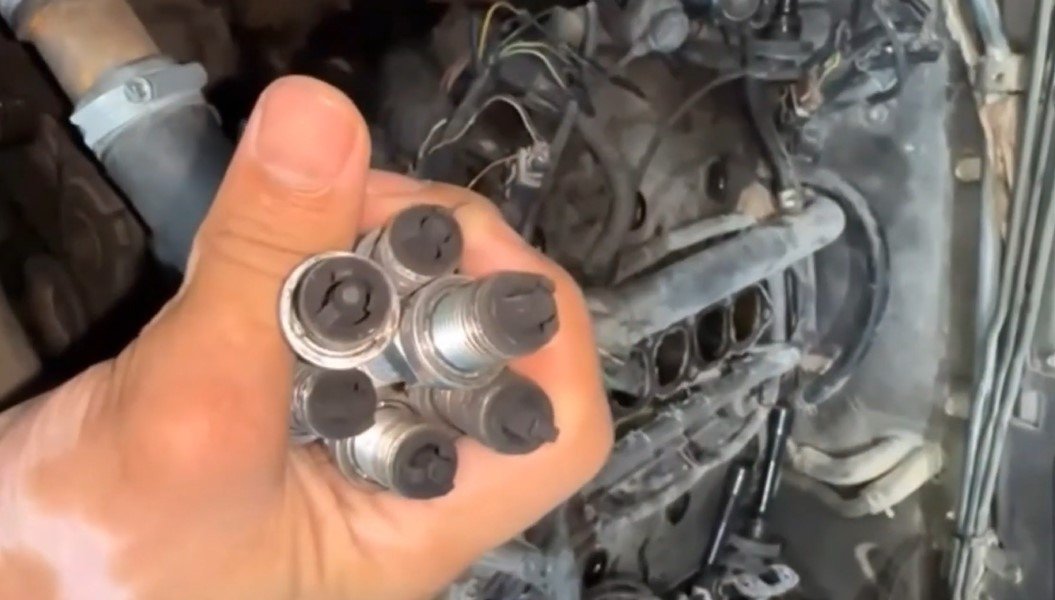
A knock sensor detects characteristic vibration so the engine computer can retard timing when necessary. A failed sensor or damaged wiring may reduce that protection, but a knock-sensor code does not prove the engine is actually knocking. Codes such as P0325 generally identify a sensor-circuit fault that still requires testing.
5. Low Oil Level or Low Oil Pressure
Oil separates heavily loaded moving surfaces. When the level is low or pressure cannot maintain that protective film, bearings, camshafts, lifters, and timing components can become noisy and wear rapidly.
Oil level and oil pressure are not the same. A full dipstick does not guarantee adequate pressure. A worn pump, clogged pickup screen, excessive bearing clearance, incorrect viscosity, fuel-diluted oil, or faulty pressure-control component can reduce pressure even when the sump contains enough oil.
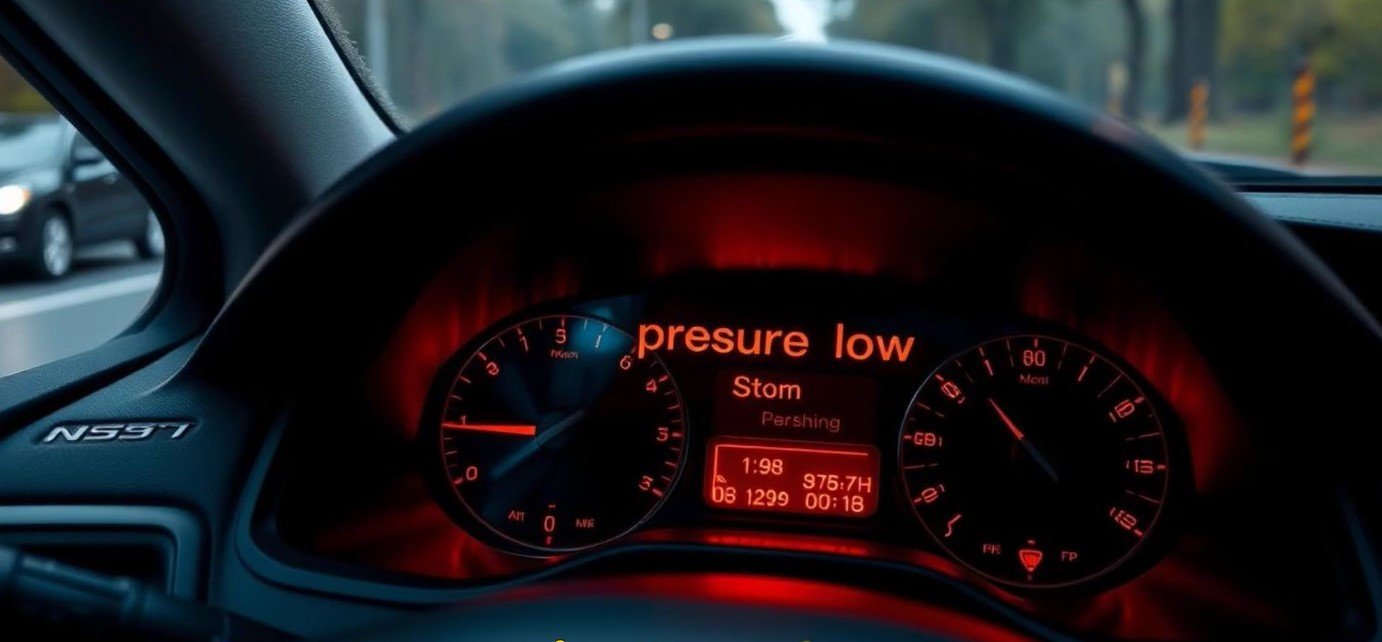
Among the most dangerous engine knocking causes, lubrication loss may progress from ticking to deep bearing knock without much warning. If the oil-pressure light appears with the noise, shut the engine off as soon as it is safe. Adding oil may correct a low level, but it cannot reverse damage or repair a pressure fault.
6. Worn Connecting-Rod or Main Bearings
Engine bearings maintain a precise oil-filled clearance between the crankshaft journals and the connecting rods or engine block. As the bearing material wears, clearance increases and the oil film becomes harder to maintain.
Rod knock is typically a deep metallic sound that follows engine speed and often becomes more pronounced with load. The connecting rods are not knocking into one another; excessive clearance allows impact between the rod-bearing area and crankshaft journal.
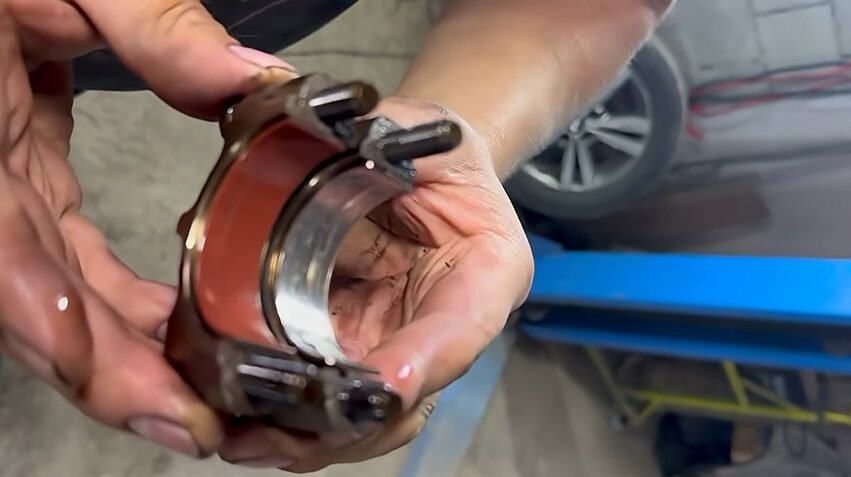
Main-bearing wear may create a deeper rumble or knock and often accompanies low oil pressure. Continued operation can score the crankshaft, spin a bearing, break a connecting rod, or seize the engine. Premium fuel, thicker oil, and additives do not rebuild damaged bearing surfaces.
7. Piston, Wrist-Pin, Valvetrain, or Timing-Component Wear
Piston slap is a hollow knocking sound caused by excessive piston-to-cylinder clearance. It is often strongest on a cold start and may become quieter as the piston warms and expands. A disappearing sound does not prove that the condition is harmless; severity and engine design matter.
A worn wrist pin can produce a lighter double knock. Collapsed hydraulic lifters, worn rocker arms, excessive valve clearance, camshaft wear, or delayed oil delivery may create tapping from the top of the engine. A loose timing chain or weak hydraulic tensioner may rattle briefly after startup or continue as RPM changes.
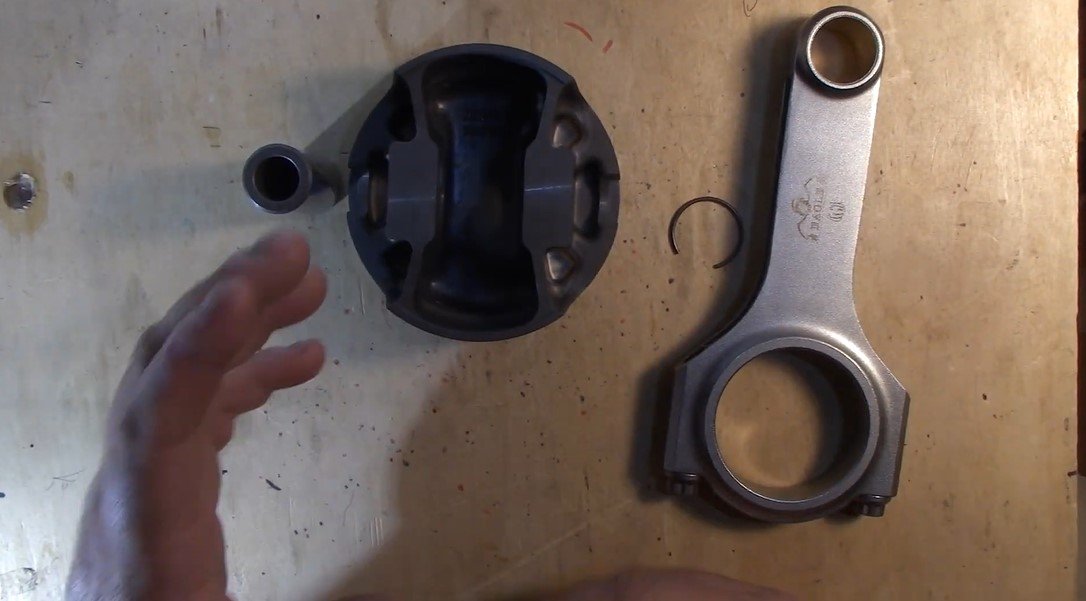
These noises are frequently placed under the broad label of engine knocking causes, but their repairs differ completely. Locating the sound and checking oil pressure are more valuable than trying to silence all of them with the same additive.
When the Knock Happens Is a Diagnostic Clue
The likely engine knocking causes change with temperature, engine load, and operating speed.
Only on a Cold Start
Piston slap, lifter drain-down, a timing-chain tensioner losing pressure, incorrect oil viscosity, or an exhaust-manifold leak may be involved. Record how long the noise lasts and whether it disappears fully.
Only Under Acceleration
Low-octane fuel, detonation, excessive timing advance, a lean mixture, high boost, or elevated intake temperature becomes more likely. A worn bearing can also become louder as engine load rises, so sound depth matters.
At Hot Idle
Oil becomes thinner when hot. Low hot-idle pressure may expose bearing clearance, lifter problems, or timing-component wear that was quieter when cold.
During Deceleration
Wrist-pin or bearing clearance can change character when engine load reverses. A cracked flexplate, loose torque-converter hardware, engine mount, or drivetrain component can also sound like an internal knock.
Sounds That Can Be Mistaken for Engine Knock
Before blaming internal engine knocking causes, remember that direct-injection injectors and high-pressure fuel pumps often tick. Some diesel clatter is normal. Other false suspects include an exhaust leak, loose spark plug, belt tensioner, idler bearing, A/C compressor, water-pump bearing, cracked flexplate, heat shield, catalytic-converter rattle, and engine mount.
The accessory drive sits close to the engine, so location can be deceptive. A technician may isolate those components using vehicle-specific procedures. Removing a belt and running an engine is not a universal DIY test because some belts drive the water pump and some engine layouts create additional hazards.
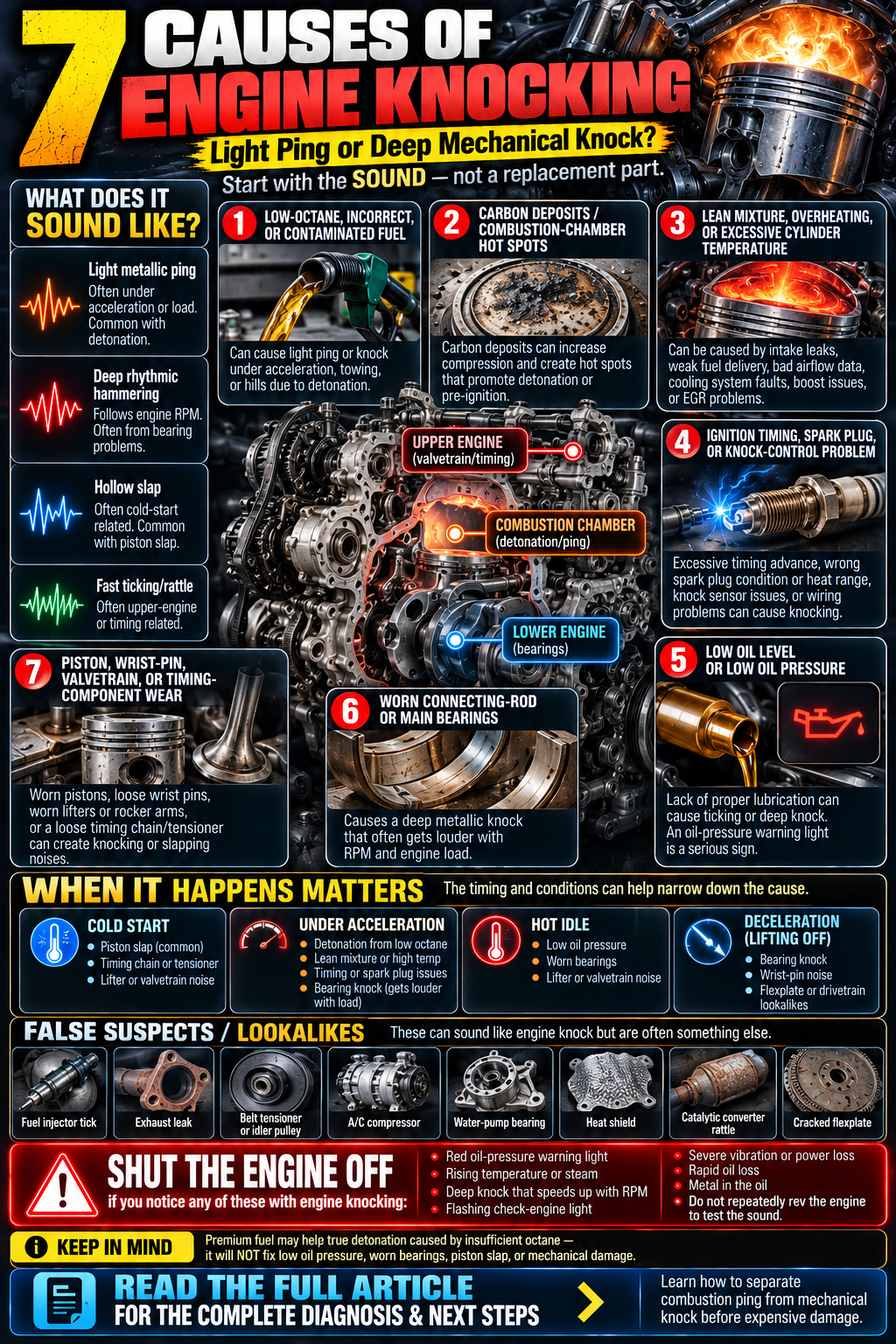
When to Shut the Engine Off
Stop driving and arrange professional assistance when the knock appears with any of the following:
- A red oil-pressure warning
- Oil below the safe dipstick range
- A deep knock that becomes faster or louder with RPM
- Rising temperature or steam
- A flashing check-engine light
- Severe misfiring, vibration, or sudden power loss
- Smoke or evidence of rapid oil loss
- Metal particles in the oil
- A sudden loud mechanical impact followed by continued knocking
Do not repeatedly rev the engine to “test” the sound. That increases load precisely when lubrication or internal clearance may already be unsafe.
Light pinging with no warning lights may not require an immediate tow, but there is no guaranteed safe mileage. Reduce engine load, avoid hard acceleration, confirm the fuel grade, and arrange diagnosis promptly.
How Mechanics Narrow Down Engine Knocking Causes
A useful diagnosis combines the sound pattern with measurements. A technician may begin by locating whether the noise comes from the upper engine, lower crankcase, combustion chambers, accessory drive, exhaust, or transmission area. Frequency, temperature, load, and RPM changes all provide clues.
A scan tool can reveal misfire counts, fuel trims, ignition timing, knock retard, coolant temperature, intake-air temperature, boost pressure, and cam/crank correlation. Trouble codes help direct testing, but they do not name a failed part by themselves.
Fuel pressure, injector balance, intake smoke testing, and sensor-data comparison can expose a lean condition. When lubrication is suspected, a mechanical oil-pressure gauge can verify actual pressure at hot idle and higher RPM against the manufacturer’s specification.
Internal checks may include inspecting the oil and filter for metal, compression testing, cylinder leak-down testing, borescope inspection, oil-pan removal, and bearing-clearance measurement. This structured process separates minor combustion ping from internal wear before money is spent on unrelated parts.
Will Premium Fuel Stop the Knock?
Higher-octane fuel can help when the engine requires it or when the noise is genuine detonation caused by insufficient octane. It does not contain more useful energy simply because the number is higher, and an engine designed for regular fuel may gain no benefit.
Premium fuel will not correct low oil pressure, a damaged bearing, piston slap, an exhaust leak, or a loose flexplate. If the noise remains after the correct fuel is used, further diagnosis is necessary.
Can an Oil Change Fix Engine Knocking?
Correcting a low level or replacing incorrect, contaminated, or badly degraded oil may quiet a lifter or hydraulic tensioner. It may also restore protection before permanent damage occurs.
An oil change cannot restore bearing material, repair a scored crankshaft, or correct excessive piston clearance. Extra-thick oil may temporarily soften a noise while reducing cold-start flow or interfering with variable-valve-timing systems. Use the manufacturer-approved viscosity instead of treating oil thickness as a mechanical repair.
Gasoline and Diesel Knock Are Not Identical
In a gasoline engine, “knock” usually refers to detonation or a separate mechanical noise. Diesel engines naturally produce more combustion clatter because fuel is injected into highly compressed hot air. A familiar, even diesel sound may be normal.
A new or suddenly louder diesel knock still deserves attention. Injector faults, incorrect injection timing, poor fuel, abnormal compression, or mechanical wear can change the sound. Compare it with the vehicle’s normal behavior rather than assuming all diesel knocking is acceptable.
Frequently Asked Questions
What Is the Most Common Cause of Engine Knocking?
The most common engine knocking causes depend on the sound. Light pinging commonly involves fuel octane, heat, deposits, mixture, or timing. A deep rhythmic knock more strongly suggests lubrication loss or bearing wear.
Can Low Oil Cause Engine Knock?
Yes. Low oil can reduce lubrication and pressure, leading to lifter, timing-component, or bearing noise. If topping up restores the correct level, the reason for the loss still needs to be found.
Does Rod Knock Get Faster With RPM?
Typically, its frequency increases as engine speed rises, although loudness may change with load. Because other noises also follow RPM, oil-pressure and internal checks are needed for confirmation.
Can a Bad Knock Sensor Cause Engine Knocking?
It may prevent the ECU from detecting knock and retarding timing correctly, but the sensor usually is not the original combustion problem. Test its wiring and circuit before replacement.
Can Engine Knocking Disappear on Its Own?
A noise may change with temperature, load, fuel quality, or oil pressure, but disappearance does not prove the cause has healed. Mechanical wear does not reverse itself.
Do Not Treat Every Knock With the Same Fix
The critical distinction is between a light combustion ping and a deep mechanical knock. Correct fuel may solve one. The other may require immediate bearing or internal-engine repair.
Use the circumstances surrounding the noise to guide the next step: fuel recently added, cold versus hot operation, load, oil pressure, temperature, and warning lights. Finding the real engine knocking causes early can prevent damaged pistons, a ruined crankshaft, a broken connecting rod, or complete engine replacement.
Kevin Nicholas is an automotive mechanic and editor of The Effective Guide. He writes about warning lights, car problems, and diagnostic tools, helping drivers understand what to check before replacing a part.