
Seeing coolant mixed with oil is one of those car problems you should never brush off. Engine oil and coolant have two very different jobs. Oil lubricates moving metal parts inside the engine, while coolant controls engine temperature by carrying heat away. When these two fluids mix, the oil can lose its ability to protect the engine, and the cooling system can also stop working properly.
Sometimes the first clue is milky oil on the dipstick. Other times you may notice a thick, creamy sludge under the oil cap, white exhaust smoke, overheating, coolant loss, or an oil level that seems higher than normal. Whatever the sign, coolant mixed with oil usually means there is a failed seal, gasket, cooler, or damaged engine component allowing the two fluids to meet.
The important thing is knowing how serious it is and what to check first. A little moisture under the oil cap in cold weather can sometimes be simple condensation. But real coolant in the engine oil is different. It can destroy bearings, damage internal parts, and turn a repairable issue into a full engine replacement if you keep driving.
What Does Coolant Mixed With Oil Mean?
Coolant mixed with oil means engine coolant has entered the lubrication system, or engine oil has entered the cooling system. In most cases, people notice the problem when the engine oil turns milky brown, tan, gray, or creamy. This happens because water-based coolant blends with oil and creates an emulsion.
Clean engine oil should look amber, brown, or dark brown depending on its age. It should feel slippery and oily. Coolant-contaminated oil often looks like chocolate milk, coffee cream, or thick sludge. If you pull the dipstick and see this kind of mixture, the engine should not be driven until the cause is found.
Coolant mixed with oil is dangerous because oil needs to form a protective film between metal parts. Coolant breaks down that protection. Bearings, camshafts, lifters, piston rings, and timing components can suffer quickly when lubrication is weakened. Even if the engine still starts and sounds normal, internal wear may already be happening.
It is also important to understand that oil in coolant and coolant in oil are related but not always identical problems. Oil floating in the coolant reservoir may point toward an oil cooler failure, head gasket issue, or transmission cooler problem in some vehicles. Milky oil on the dipstick usually means coolant has entered the crankcase, which is often more urgent.
Common Signs of Coolant Mixed With Oil
The most obvious sign of coolant mixed with oil is milky oil on the dipstick. If the oil looks creamy, foamy, or light brown instead of normal dark oil, coolant contamination is very likely.
Another common sign is sludge under the oil filler cap. This can be tricky because a small amount of creamy buildup under the cap may happen from condensation, especially in cold weather or if the car is only driven on short trips. However, if the dipstick also looks milky, the oil level is rising, or the coolant level is dropping, do not treat it as normal moisture.
You may also notice the engine overheating. If coolant is leaking into the oil, the cooling system may lose coolant and fail to control engine temperature. Overheating can then make the original problem worse by warping the cylinder head or damaging the head gasket further.
Persistent white smoke from the exhaust after the engine warms up is another warning sign. A little white vapor during cold starts can be normal, but thick white smoke with a sweet smell may mean coolant is entering the combustion chamber.
Other symptoms can include rough idle, misfires, low coolant with no visible external leak, oil that looks unusually full, a sweet smell from the exhaust, poor heater performance, and low oil pressure. If you see more than one of these symptoms together, the problem should be inspected immediately.
6 Serious Causes of Coolant Mixed With Oil
There are several possible reasons for coolant mixed with oil, but six causes are more common and more serious than the rest.
1. Blown Head Gasket
A blown head gasket is one of the most common causes. The head gasket seals the space between the engine block and cylinder head. It keeps oil passages, coolant passages, and combustion chambers separated.
When the head gasket fails, coolant can leak into the oil passages, oil can leak into the coolant, or coolant can enter the cylinders and burn through the exhaust. The exact symptoms depend on where the gasket fails.
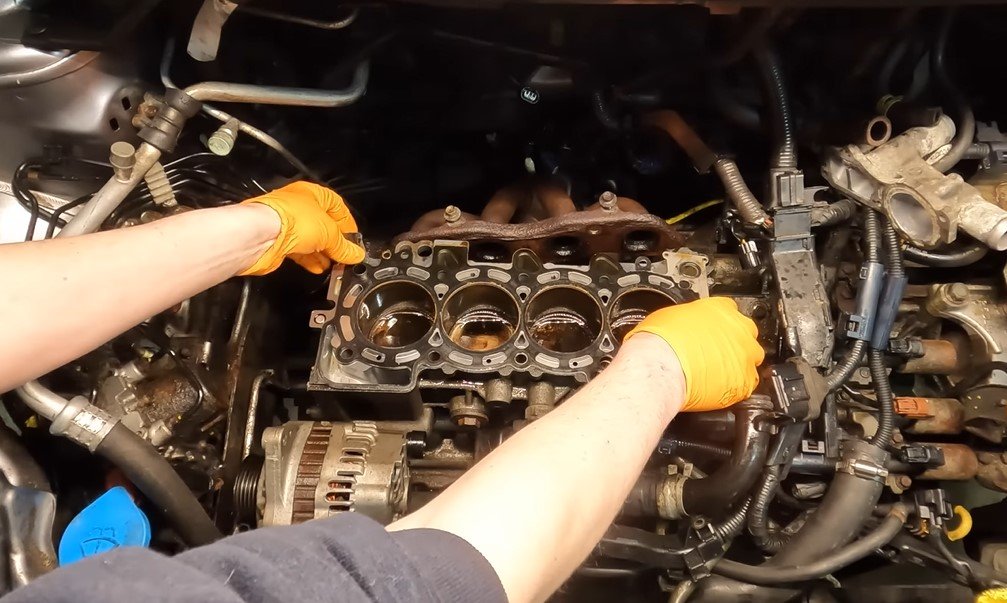
Common signs of a blown head gasket include overheating, coolant loss, milky oil, white exhaust smoke, bubbles in the coolant reservoir, rough running, and loss of compression. Sometimes the engine may still run fairly well at first, which causes drivers to keep using the car. That is risky because coolant in the oil can damage bearings quickly.
Head gasket failure is often caused by overheating, age, poor maintenance, or a previous cooling system problem that was ignored. If your car overheated recently and now has coolant mixed with oil, the head gasket should be one of the first things checked.
2. Cracked Cylinder Head
A cracked cylinder head can also let coolant and oil mix. The cylinder head contains coolant passages and oil passages close to each other. If the head cracks, coolant may leak into the oil system or into the combustion chamber.
Cracked heads often happen after severe overheating. Aluminum cylinder heads are especially vulnerable because they can warp or crack when exposed to extreme heat. A crack may be small enough that symptoms appear slowly, or large enough to cause immediate coolant loss and engine trouble.
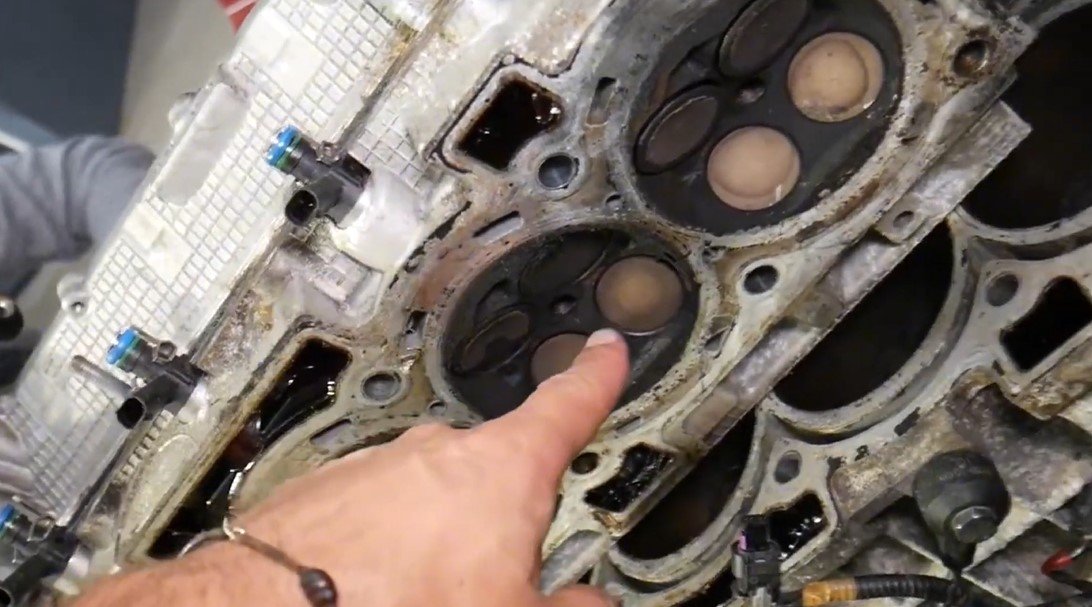
Symptoms can look very similar to a blown head gasket: overheating, milky oil, coolant loss, white smoke, rough idle, and misfires. Because the symptoms overlap, a proper diagnosis is important before replacing parts.
A mechanic may use a cooling system pressure test, combustion leak test, compression test, or leak-down test to narrow it down. In some cases, the cylinder head must be removed and inspected by a machine shop.
3. Cracked Engine Block
A cracked engine block is less common than a head gasket failure, but it is one of the most serious causes of coolant mixed with oil. The engine block holds the cylinders, crankshaft, oil passages, and coolant jackets. If the block cracks between an oil passage and a coolant passage, the fluids can mix.
This can happen from severe overheating, freezing coolant, casting defects, or major internal stress. If plain water is used instead of proper coolant in freezing weather, it can expand as it freezes and crack the block.
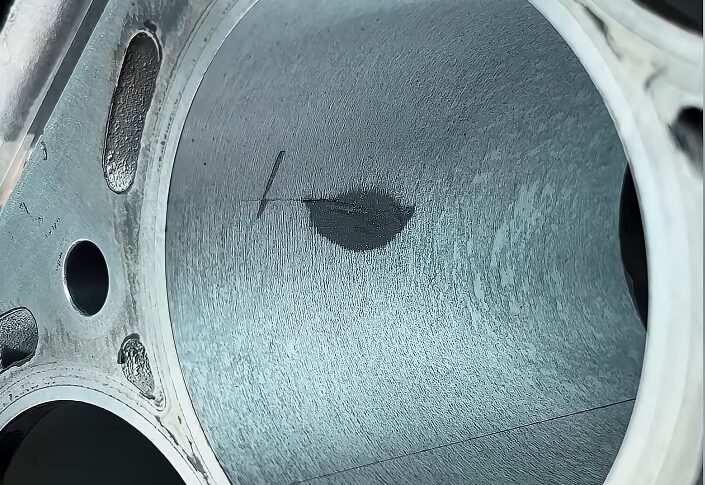
A cracked block can cause milky oil, coolant loss, overheating, external coolant leaks, white smoke, and poor engine performance. Sometimes the engine may also knock or lose oil pressure if bearing damage has started.
Repairing a cracked block is expensive and not always practical. Depending on the vehicle, engine condition, and crack location, the solution may be engine replacement, short block replacement, or a specialized repair. This is why it is important to stop driving as soon as coolant mixed with oil is confirmed.
4. Failed Oil Cooler or Heat Exchanger
Many vehicles use an oil cooler or heat exchanger to control oil temperature. In some designs, engine oil and coolant pass through separate channels inside the same cooler. If the internal barrier fails, oil and coolant can mix.
A failed oil cooler often causes oil to appear in the coolant reservoir because engine oil pressure is usually higher than cooling system pressure while the engine is running. But depending on the design and pressure conditions, coolant can also contaminate the oil.
This cause is easy to overlook because the engine itself may be fine. Replacing a head gasket when the real problem is an oil cooler can waste a lot of money. That is why diagnosis matters.
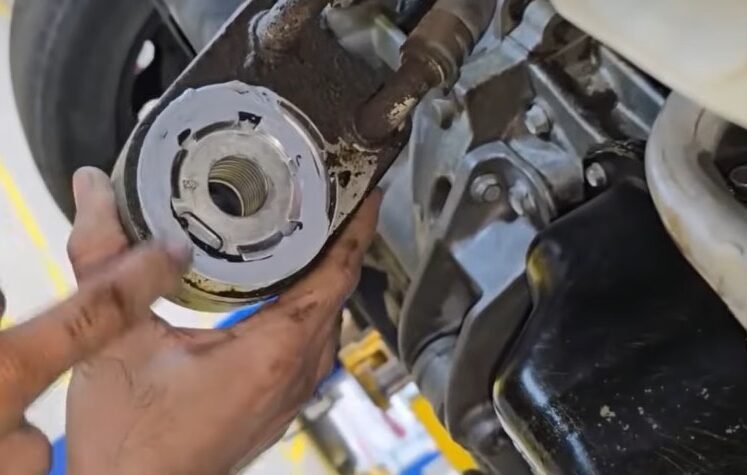
Signs of a failed oil cooler can include oily film in the coolant reservoir, brown sludge in the radiator, milky oil, overheating, and coolant hoses that feel swollen or oily. Some engines are known for oil cooler gasket or cooler housing failures, so checking model-specific service information can help.
If the oil cooler fails, the cooler or gasket must be replaced, and both the oil system and cooling system need to be flushed properly. Simply changing the oil once may not remove all contamination.
5. Intake Manifold Gasket Failure
On some engines, the intake manifold carries coolant through or near the manifold area. If the intake manifold gasket fails, coolant may leak into the engine and eventually reach the oil.
This issue is more common on certain V-type engines and older vehicles, but it can happen in different designs. The leak may be external, internal, or both. An internal leak is more dangerous because it may not leave a visible puddle under the car.
Symptoms may include coolant loss, rough idle, misfires, milky oil, sweet smell from the engine bay, overheating, and poor performance. In some cases, the engine may run poorly on startup because coolant has entered one or more intake ports.
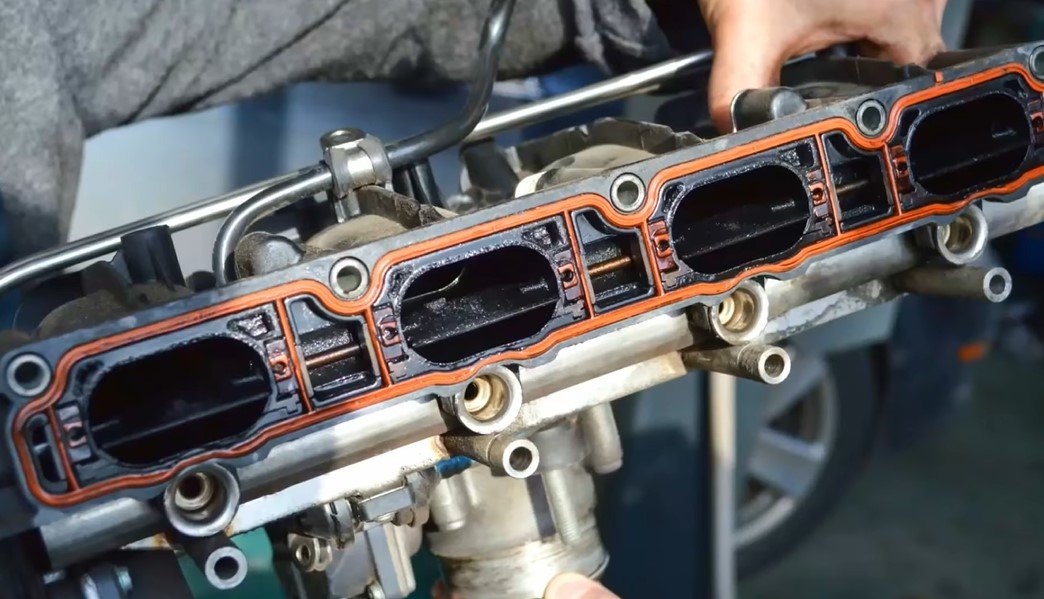
Compared with a cracked block, an intake manifold gasket is usually less expensive to repair. However, it should still be handled quickly because coolant mixed with oil can damage the engine no matter where the coolant came from.
6. Timing Cover Gasket or Water Pump Passage Leak
Some engines route coolant through the timing cover or near the front cover area. If the timing cover gasket, front cover seal, or a related coolant passage fails, coolant can leak into the crankcase and mix with the oil.
This cause is engine-specific, meaning it depends heavily on the vehicle design. It is not the first thing to suspect on every car, but on certain engines it is a known failure point.
Signs may include coolant loss, milky oil, leaks near the front of the engine, timing chain noise, overheating, or oil contamination that returns even after an oil change. If coolant reaches the timing chain or timing components, wear can happen quickly.
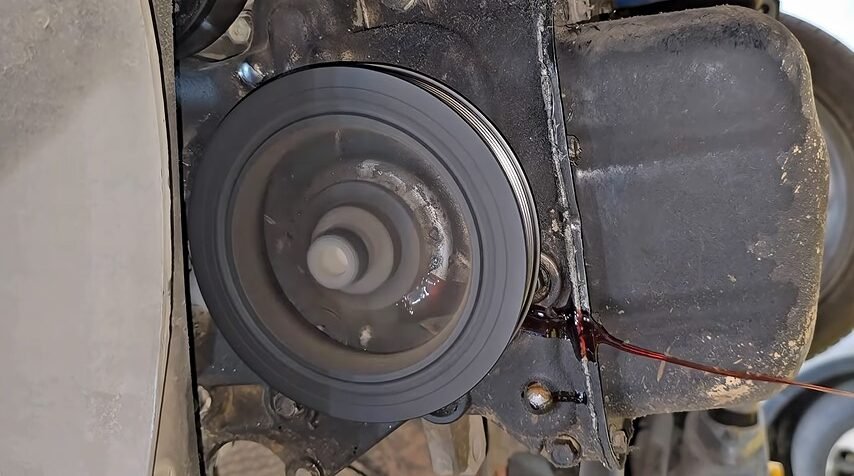
Repair may involve removing several front engine components, which can make labor costs higher than expected. Still, fixing the actual leak is the only proper solution. Changing the oil without stopping the coolant leak will only delay the damage.
Is It Coolant Mixed With Oil or Just Condensation?
This is one of the most important distinctions. Not every creamy mark under the oil cap means a major engine failure.
Short trips, cold weather, and long periods of idling can cause moisture to collect inside the engine. If the engine does not get hot enough for long enough, that moisture may create a light creamy residue under the oil cap. This is usually condensation, not a serious coolant leak.
However, condensation usually does not make the dipstick oil look milky. It also should not cause coolant loss, overheating, white smoke, or rising oil level. If those symptoms are present, assume the issue is more serious.
A simple way to think about it is this: a little residue under the cap may be moisture, but milky oil on the dipstick is a major warning sign. If you are unsure, do not guess. Have the oil and cooling system inspected.
Can You Drive With Coolant Mixed With Oil?
You should not keep driving if coolant mixed with oil is confirmed. Even a short drive can cause damage if the oil is badly contaminated. The engine depends on oil pressure and oil film strength to protect internal parts. Coolant reduces both.
If the dipstick shows milky oil, the oil level is rising, the engine is overheating, or the oil pressure warning light comes on, shut the engine off and tow the vehicle. Driving in that condition can damage rod bearings, main bearings, camshaft journals, turbochargers, timing components, and piston rings. For a broader safety checklist, see this guide on whether it is safe to drive with a warning or symptom.
The only exception is when you see a small amount of creamy residue under the oil cap with normal dipstick oil, normal coolant level, and no overheating. Even then, monitor it closely and take the vehicle on a longer drive to fully warm up the engine. If the residue keeps returning or other symptoms appear, inspect it properly.
What Should You Check First?
Start with the dipstick. Pull it out, wipe it clean, reinsert it, then check the oil color and level. If the oil looks like chocolate milk or the level is higher than expected, coolant contamination is likely.
Next, check the coolant reservoir when the engine is cold. Look for oily film, brown sludge, or a thick layer floating on top. Never open a hot radiator cap or coolant tank cap, because pressurized coolant can cause serious burns.
Look for external leaks around the head gasket area, intake manifold, oil cooler, radiator, water pump, hoses, and timing cover. Also check the exhaust after the engine warms up. Persistent thick white smoke can point toward coolant burning in the cylinders.
If basic checks suggest coolant mixed with oil, the next step is proper testing. A cooling system pressure test can show whether pressure drops. A combustion leak test can detect exhaust gases in the coolant. A compression test or leak-down test can help identify cylinder sealing problems. In some cases, oil analysis may confirm coolant contamination.
How Is Coolant Mixed With Oil Fixed?
The fix depends entirely on the cause. There is no single repair that works for every case.
If the head gasket is blown, the cylinder head usually needs to come off. The head should be checked for warping or cracks before a new gasket is installed. If the head is warped, it may need machining.
If the oil cooler failed, the cooler or cooler gasket must be replaced. Then the cooling system and oil system need cleaning. This may require multiple oil changes after a short run time to remove leftover contamination.
If the intake manifold gasket is leaking, replacing the gasket may solve the problem. If the timing cover gasket is leaking internally, the front engine cover may need to be removed and resealed.
If the cylinder head or engine block is cracked, the repair can be more expensive. A cracked head may be repairable or replaceable. A cracked block often leads to engine replacement, depending on the vehicle value and damage level.
After any repair, contaminated oil must be drained, the filter replaced, and fresh oil added. The cooling system should also be flushed if oil entered the coolant. Skipping cleanup can leave sludge behind and cause future overheating or lubrication issues.
What Happens If You Ignore It?
Ignoring coolant mixed with oil can destroy an engine. At first, the car may only show mild symptoms. But as the oil loses lubrication quality, metal parts start wearing faster. Bearings can overheat, surfaces can score, and oil passages can clog with sludge.
Coolant contamination can also create corrosion inside the engine. Water and additives in coolant are not designed to sit inside oil passages. Over time, this can damage internal surfaces and create deposits.
The cooling system can suffer too. Oil in coolant can clog the radiator, heater core, and small coolant passages. Hoses may soften, and the thermostat may stop working correctly. This can lead to more overheating, which makes head gasket and cylinder head problems worse.
In the worst case, the engine seizes or develops a loud knock. At that point, repair costs can jump from a gasket or cooler replacement to a full engine rebuild or replacement.
How Much Does It Cost to Repair?
The cost depends on the cause, vehicle type, engine design, and labor rate. An oil cooler gasket may be relatively affordable compared with internal engine repairs. An intake manifold gasket can also be manageable on some vehicles, though labor varies.
A head gasket repair is usually more expensive because it requires major disassembly. The final price can rise if the cylinder head needs machining, bolts need replacement, or other damaged parts are found.
A cracked cylinder head or cracked engine block is usually the most expensive outcome. In many cases, replacing the engine may make more sense than repairing the damaged block.
The key is to diagnose before assuming. Coolant mixed with oil does not always mean the engine is ruined, but it always deserves immediate attention.
How to Prevent Coolant and Oil From Mixing
You cannot prevent every failure, but you can reduce the risk. Keep the cooling system in good condition. Replace old coolant at the recommended interval, fix leaks early, and never ignore overheating.
Use the correct coolant type for your vehicle. Mixing incompatible coolants can create sludge and cooling system problems. Also avoid using plain water long-term, especially in freezing climates.
Watch your temperature gauge. If the engine starts overheating, pull over safely and shut it off. Many head gasket and cylinder head failures happen because a smaller cooling issue was ignored for too long.
Regular oil changes also help. Fresh oil protects internal components better and makes it easier to spot unusual contamination. If you check your dipstick regularly, you are more likely to catch coolant mixed with oil before major damage happens.
FAQs About Coolant Mixed With Oil
What does coolant mixed with oil look like?
It often looks milky, creamy, tan, gray, or light brown. Many people describe it as chocolate milk or coffee cream. It may appear on the dipstick, under the oil cap, or during an oil change.
Can a bad head gasket cause coolant mixed with oil?
Yes. A blown head gasket is one of the most common causes. It can allow coolant to enter oil passages, oil to enter the cooling system, or coolant to enter the combustion chamber.
Can I fix coolant mixed with oil by changing the oil?
No, not if there is an active leak. An oil change may remove contaminated oil temporarily, but the coolant will mix again unless the failed gasket, cooler, head, block, or seal is repaired.
Is coolant mixed with oil always a blown head gasket?
No. It can also be caused by a failed oil cooler, cracked cylinder head, cracked engine block, intake manifold gasket failure, or timing cover gasket leak. Diagnosis is needed before replacing parts.
Is milky oil cap always bad?
Not always. A small amount of creamy residue under the oil cap can be condensation from short trips or cold weather. But milky oil on the dipstick, coolant loss, overheating, or white smoke points to a more serious problem.
How fast can coolant in oil damage an engine?
Damage can happen quickly, especially if the oil is heavily contaminated or the engine is driven while overheating. If you confirm coolant mixed with oil, stop driving and inspect the cause.
Final Thoughts
Coolant mixed with oil is not a small maintenance issue. It is a warning that two systems inside the engine are no longer sealed from each other. The cause may be a blown head gasket, failed oil cooler, cracked head, cracked block, intake manifold gasket, or timing cover leak.
The safest move is to stop driving if the dipstick oil is milky, the coolant level is dropping, the oil level is rising, or the engine is overheating. A quick diagnosis can save the engine from serious damage.
The good news is that coolant mixed with oil does not always mean the engine is finished. If you catch it early and repair the real cause, many engines can be saved. But if you ignore it, the repair can become much more expensive very quickly.
Kevin Nicholas is an automotive mechanic and editor of The Effective Guide. He writes about warning lights, car problems, and diagnostic tools, helping drivers understand what to check before replacing a part.