
A bad intake manifold gasket can fool a lot of drivers because it does not always look like one clear problem. Sometimes it feels like a vacuum leak. Sometimes it looks like a misfire. On some engines, it can even act like a cooling system or head gasket problem.
That is why Bad Intake Manifold Gasket Symptoms are easy to miss at first. The engine may idle rough, lose power, use more fuel, trigger a check engine light, leak coolant, or overheat. If the gasket fails near a coolant passage, the problem can become more serious quickly.
The intake manifold gasket sits between the intake manifold and the cylinder head. Its job is to seal the intake path so the engine only receives the air the computer expects. On some engines, the gasket also seals coolant passages. When that seal fails, unmetered air, coolant, or both can end up where they do not belong.
The key is not to guess. Bad Intake Manifold Gasket Symptoms can mimic spark plug problems, ignition coil failure, oxygen sensor codes, a dirty MAF sensor, a cracked vacuum hose, or a blown head gasket. Proper testing saves money and prevents a small leak from turning into a bigger engine repair.
What Does an Intake Manifold Gasket Do?
The intake manifold delivers air to the engine cylinders. In most modern fuel-injected engines, air enters through the throttle body, passes through the intake manifold, and reaches each cylinder through intake runners. The fuel is added by injectors near the intake ports or directly inside the cylinders.
The intake manifold gasket seals the connection between the manifold and the cylinder head. That seal matters because the engine computer measures incoming air and adjusts fuel delivery based on that measurement. If extra air sneaks in through a failed gasket, the engine can run lean, meaning it has too much air and not enough fuel.
Some engines also route coolant through or near the intake manifold. In those designs, the gasket may seal both air passages and coolant passages. If it fails near a coolant passage, coolant may leak externally, enter an intake port, or contaminate the oil in severe cases.
That is why Bad Intake Manifold Gasket Symptoms can include both drivability problems and cooling system problems.
Bad Intake Manifold Gasket Symptoms: 8 Warning Signs
A failing intake manifold gasket does not always create every symptom at once. An air leak may cause rough idle and lean codes. A coolant leak may cause overheating, white smoke, or low coolant. A larger failure may cause several signs together.
Here are the 8 Bad Intake Manifold Gasket Symptoms you should watch for.
1. Rough Idle
Rough idle is one of the most common signs of a bad intake manifold gasket. The engine may shake, vibrate, surge, or feel uneven when the car is stopped. The RPM needle may move up and down instead of staying steady.
This happens because a leaking gasket can let unmetered air enter the engine. The engine computer tries to correct the air-fuel mixture, but at idle the leak can have a stronger effect because airflow is low.
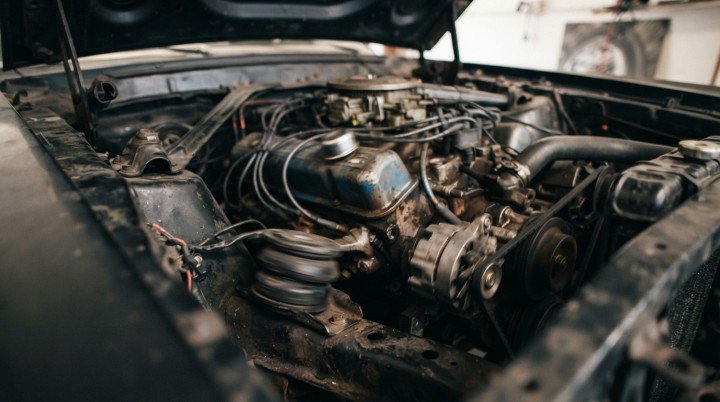
A small leak may only show up at idle. Once you press the gas, the symptom may feel less obvious. That is why many drivers notice it most at stoplights, in park, or right after a cold start.
Rough idle can also come from worn spark plugs, bad ignition coils, dirty throttle body, vacuum hose leaks, fuel injector issues, or a PCV problem. But if rough idle comes with lean codes, hissing noise, coolant loss, or overheating, the intake manifold gasket should be checked.
2. Engine Misfire
An engine misfire happens when one or more cylinders do not burn the air-fuel mixture properly. With a bad intake manifold gasket, this often happens because the affected cylinder receives extra air and runs lean.
You may feel shaking, hesitation, jerking, or weak acceleration. Sometimes the misfire is most noticeable at idle. Other times it appears when accelerating, climbing a hill, or driving under load.
Common trouble codes include P0300 for random misfire and P0301 through P0308 for cylinder-specific misfires. If the gasket leak is near one intake runner, the misfire may stay on one cylinder. If the leak affects a larger area, the misfire may feel random.
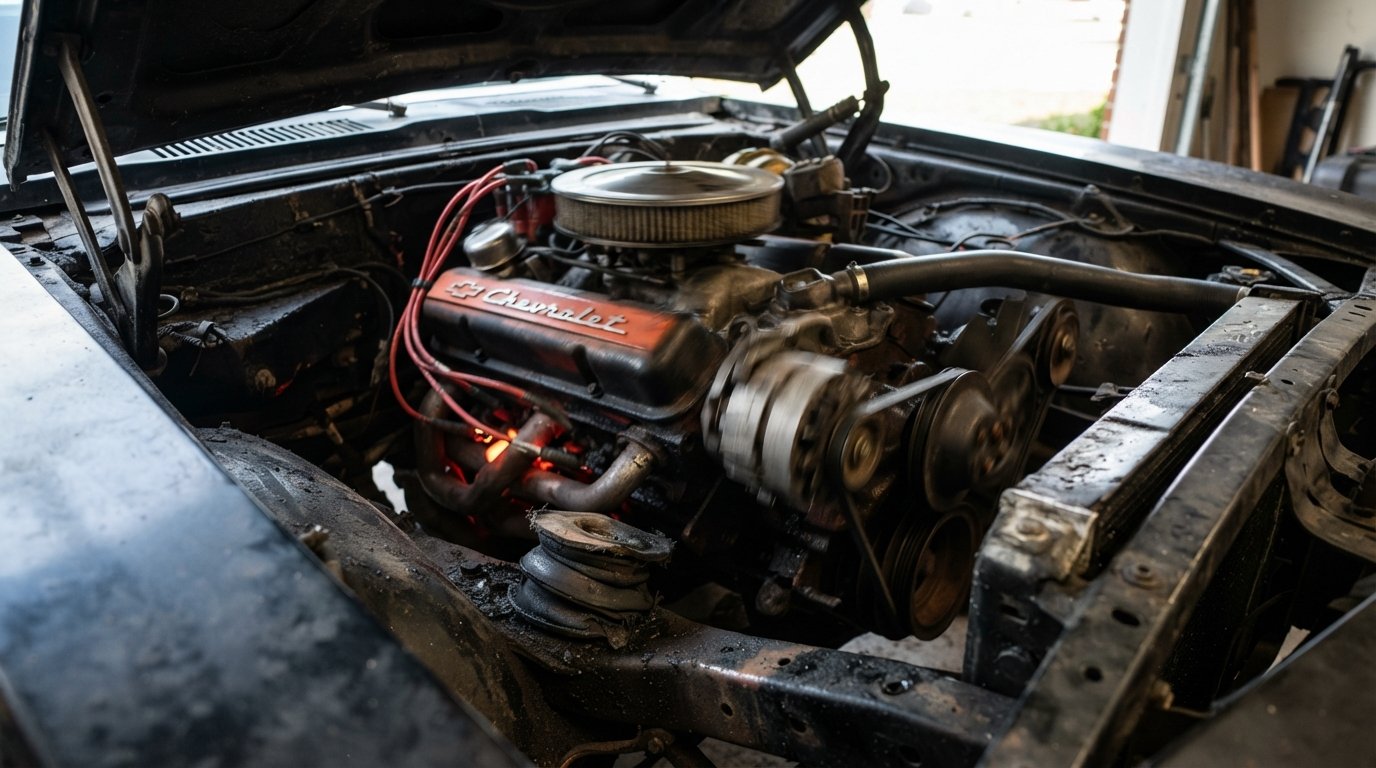
Coolant can also cause a misfire if the gasket fails near a coolant passage. If coolant enters an intake port, it can interfere with combustion in that cylinder. In that case, you may also notice white exhaust smoke, coolant loss, or a sweet smell.
A misfire should not be ignored because it can damage the catalytic converter if it continues long enough.
3. Check Engine Light
The check engine light is another common sign. The engine computer may detect a lean condition, misfire, or abnormal fuel trim readings.
Common codes linked with Bad Intake Manifold Gasket Symptoms include P0171, P0174, P0300, P0301, P0302, P0303, and other cylinder misfire codes.
But the code alone does not confirm the intake manifold gasket. A lean code can also come from a cracked intake boot, vacuum hose leak, dirty mass airflow sensor, weak fuel pump, exhaust leak, or PCV system issue.

Fuel trim data is often more helpful than the code itself. If fuel trims are high at idle but improve when RPM increases, a vacuum leak or intake gasket leak becomes more likely.
If the check engine light is flashing, that usually means an active misfire that could harm the catalytic converter. In that situation, stop driving hard and diagnose it quickly.
4. Hissing or Whistling Sound
A leaking intake manifold gasket can create a hissing or whistling sound from the top or side of the engine. This sound comes from air being pulled through a gap while the engine is running.
The sound may be faint at first. You may only hear it with the hood open. It may also change when the RPM changes.
This symptom points toward an air leak, but it does not always prove the gasket is bad. A cracked vacuum hose, loose PCV hose, brake booster hose leak, throttle body gasket leak, or intake boot crack can sound similar.

A smoke test is one of the best ways to confirm the source. Smoke is pushed into the intake system, and the leak becomes visible where smoke escapes.
5. Poor Acceleration or Loss of Power
A bad intake manifold gasket can make the engine feel weak, lazy, or hesitant. When you press the gas, the car may stumble before it responds. It may also feel underpowered when merging, climbing hills, or accelerating from a stop.
This happens because the engine is no longer getting a balanced air-fuel mixture. The computer can make corrections, but if the leak is too large or affects certain cylinders more than others, the engine will not perform normally.

Poor acceleration can come from many other problems, including a dirty MAF sensor, clogged air filter, weak fuel pump, failing catalytic converter, dirty throttle body, or transmission issue. But when poor acceleration appears with rough idle, lean codes, misfire codes, or a hissing sound, the intake gasket should be inspected.
This is why Bad Intake Manifold Gasket Symptoms should be judged together, not one at a time.
6. Coolant Leak Around the Intake Manifold
On some engines, the intake manifold gasket also seals coolant passages. If the gasket fails in that area, coolant can leak externally around the intake manifold.
You may see coolant collecting near the manifold, dripping down the engine, or forming a puddle under the vehicle. You may also smell a sweet odor from the engine bay. Coolant color can be green, orange, pink, yellow, blue, or another color depending on the vehicle.
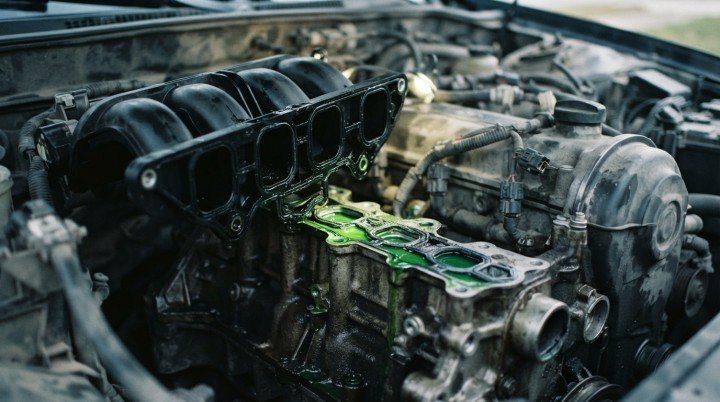
A coolant leak may start small. You might only notice that the coolant reservoir keeps getting low. Over time, the leak can get worse and lead to overheating.
Internal coolant leaks are more serious because they may not leave a visible puddle. Coolant can enter an intake runner or combustion chamber. In some cases, coolant can contaminate the engine oil.
If coolant keeps disappearing and there is no obvious leak from the radiator, hoses, water pump, heater core, or reservoir, the intake manifold gasket area should be checked.
7. Engine Overheating
Overheating can happen if the intake manifold gasket leaks coolant. Once the cooling system loses enough coolant, it cannot control engine temperature properly.
The temperature gauge may climb, the warning light may come on, or steam may come from the engine bay. The heater may also blow cold air if air pockets form inside the cooling system.
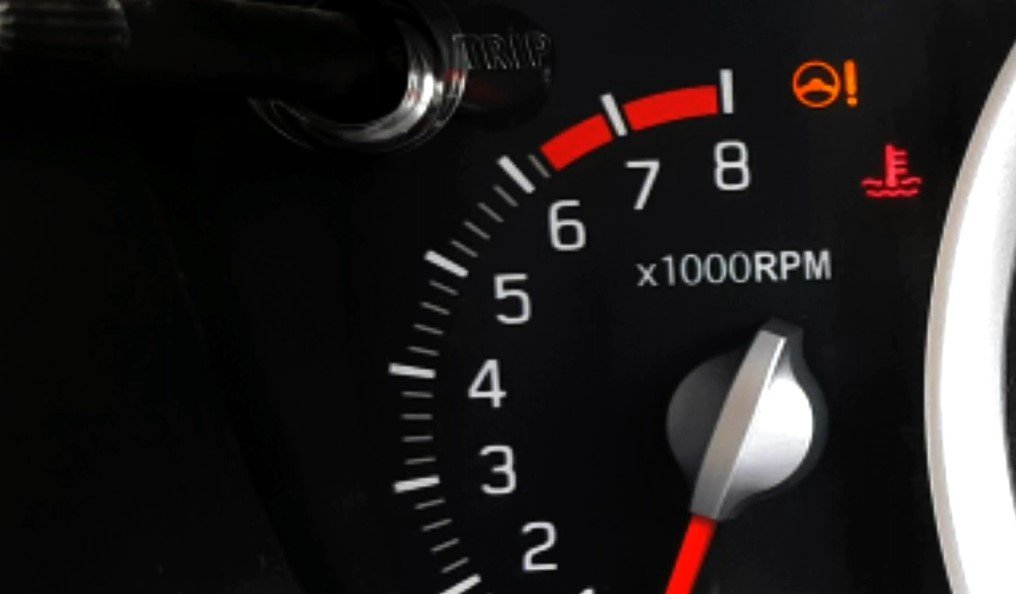
Overheating is one of the most serious Bad Intake Manifold Gasket Symptoms because it can create more damage. Severe overheating can warp the cylinder head, damage the head gasket, crack plastic cooling parts, or harm internal engine components.
If your engine overheats, do not keep driving just to reach home. Pull over safely, shut the engine off, and let it cool. Never open a hot radiator cap or coolant reservoir cap because pressurized coolant can cause burns.
8. White Smoke or Milky Oil
White smoke from the exhaust can happen when coolant enters an intake runner or combustion chamber. If the smoke is thick, continues after the engine warms up, and has a sweet smell, coolant may be burning inside the engine.
A little white vapor during a cold start can be normal, especially in cold weather. The warning sign is persistent white smoke after warmup, especially with coolant loss.
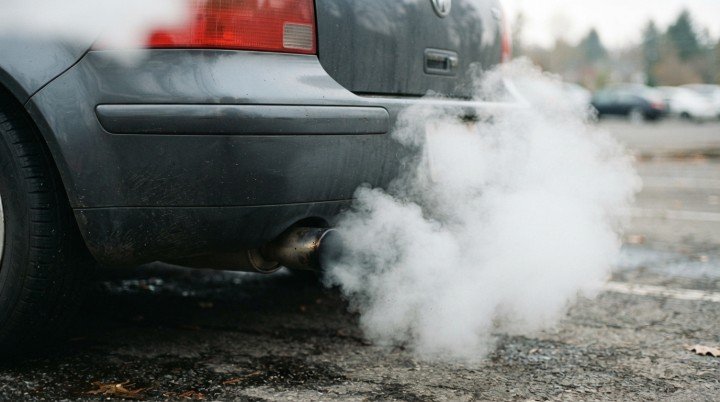
Milky oil is even more serious. If coolant mixes with engine oil, the oil may look tan, creamy, or like chocolate milk. You may see it on the dipstick, under the oil cap, or during an oil change.
Milky oil can happen from a bad intake manifold gasket on some engines, but it can also be caused by a blown head gasket, cracked cylinder head, cracked block, or failed oil cooler. Either way, do not keep driving if the dipstick oil looks milky. Coolant-contaminated oil cannot protect bearings and moving parts properly.
Bad Intake Manifold Gasket vs Vacuum Hose Leak
A bad intake manifold gasket and a vacuum hose leak can feel almost the same. Both can cause rough idle, lean codes, high fuel trims, hissing noise, and weak acceleration.
The difference is the leak location. A vacuum hose leak comes from a cracked, loose, or disconnected hose. Common areas include the PCV hose, brake booster hose, EVAP lines, or small vacuum lines near the throttle body.
An intake manifold gasket leak comes from the sealing surface between the intake manifold and the engine. It may affect one cylinder, one bank, or the entire manifold area.
A smoke test is the cleanest way to separate them. Smoke escaping from a hose points toward a hose issue. Smoke escaping from the intake manifold gasket area points toward a gasket leak.
Bad Intake Manifold Gasket vs Head Gasket
A bad intake manifold gasket can sometimes look like a blown head gasket. Both can cause coolant loss, overheating, white smoke, rough running, and milky oil.
The difference is where the seal fails. A head gasket seals the cylinder head to the engine block. When it fails, combustion pressure, coolant, and oil can mix in several ways. You may see bubbles in the coolant reservoir, coolant pushed out of the overflow, compression loss, repeated overheating, or combustion gases in the cooling system.
An intake manifold gasket leak is usually centered around the intake manifold area. It may cause vacuum leaks, lean codes, coolant stains near the intake, or coolant entering an intake runner.
Because the symptoms overlap, guessing is risky. A cooling system pressure test, combustion leak test, compression test, leak-down test, and smoke test can help confirm the real problem.
What Causes an Intake Manifold Gasket to Fail?
Heat cycles are a major cause. The engine heats up and cools down thousands of times over its life. That constant expansion and contraction can harden, shrink, flatten, or crack the gasket.
Overheating can speed up the failure. If the engine overheated before, the gasket may lose its seal or the intake manifold surface may warp slightly.
Plastic intake manifolds can also warp or crack. If the manifold itself is damaged, a new gasket may not seal for long.
Improper installation can cause early failure too. Dirty sealing surfaces, uneven bolt tightening, wrong torque specs, or reused damaged hardware can all create leaks.
Old coolant and corrosion can damage gasket surfaces around coolant passages. That is why cooling system maintenance matters.
How Mechanics Diagnose It
Diagnosis usually starts with a visual inspection. A mechanic looks for coolant stains, wet areas, cracked hoses, loose clamps, and leaks around the intake manifold.
Next comes an OBD2 scan. Codes and live data help show whether the engine is running lean or misfiring. Fuel trim numbers are especially useful.
A smoke test is often the best test for air leaks. Smoke is introduced into the intake system, and the technician watches for smoke escaping around the gasket area.
For coolant leaks, a cooling system pressure test can show whether the system loses pressure. If pressure drops and coolant appears near the intake manifold, the source becomes clearer.
Some technicians use a careful spray test around the gasket area while the engine idles. If RPM changes, it may point toward a vacuum leak. This test should be done carefully because some sprays are flammable around hot engine parts.
If a head gasket is suspected, compression testing, leak-down testing, or a combustion gas test may be needed.
Can You Drive With a Bad Intake Manifold Gasket?
It depends on the type of leak. If the problem is a small air leak and the engine is not overheating or misfiring badly, the car may still drive for a short time. But it should be repaired soon because a lean-running engine can misfire, run hot, and damage the catalytic converter.
If the gasket is leaking coolant, the risk is higher. Low coolant can cause overheating without much warning.
If there is milky oil, heavy white smoke, a flashing check engine light, or a rising temperature gauge, stop driving and have the vehicle inspected or towed. For a broader safety check, this guide on whether it is safe to drive with a warning or symptom can help you decide how cautious to be.
The simple rule is this: air leak symptoms need prompt repair, but coolant leak symptoms need urgent attention.
Repair Cost and Replacement Overview
The gasket itself is usually not the most expensive part. Labor is often the bigger cost because the intake manifold may need to be removed, and access depends on the engine design.
During replacement, the intake manifold is removed, the old gasket is taken off, and the sealing surfaces are cleaned. Then the new gasket is installed, and the bolts are tightened in the correct pattern and torque specification.
If coolant leaked into the oil, the oil and filter should be changed. If oil or sludge entered the cooling system, the cooling system may need flushing. If the intake manifold is warped or cracked, the manifold may need replacement too.
A proper repair matters. If the sealing surface is not cleaned correctly or the bolts are not tightened properly, the new gasket can leak again.
What Happens If You Ignore It?
Ignoring Bad Intake Manifold Gasket Symptoms can turn a smaller repair into a much bigger one. A vacuum leak can make the engine run lean, which can cause misfires, hesitation, higher combustion temperatures, and poor fuel economy.
Misfires can damage the catalytic converter over time. Coolant leaks can cause overheating. Overheating can damage the head gasket, cylinder head, or other cooling system parts.
Coolant in the oil is especially dangerous because it weakens lubrication. Bearings, camshafts, lifters, timing parts, and other internal components need clean oil to survive.
What starts as a rough idle or small coolant loss can become a major engine repair if it is ignored long enough.
What to Check Before Replacing Parts
Before replacing spark plugs, ignition coils, oxygen sensors, MAF sensors, or fuel injectors, check for leaks. Many intake gasket problems are misdiagnosed because the codes only show lean mixture or misfire.
Check coolant level and look for stains around the intake manifold. Listen for hissing. Inspect vacuum hoses. Review fuel trim data. Use a smoke test if possible.
If the engine has lean codes and rough idle, do not automatically blame the oxygen sensor. Often, the oxygen sensor is only reporting the lean condition, not causing it.
FAQs About Bad Intake Manifold Gasket Symptoms
What are the first signs of a bad intake manifold gasket?
The first signs are often rough idle, hissing noise, check engine light, lean codes, misfires, poor acceleration, or low coolant. The exact symptom depends on whether the gasket is leaking air, coolant, or both.
Can a bad intake manifold gasket cause rough idle?
Yes. A leaking gasket can let unmetered air enter the engine, creating an unstable air-fuel mixture. This often causes rough idle, surging RPM, or shaking at stoplights.
Can a bad intake manifold gasket cause overheating?
Yes. If the gasket leaks coolant, the cooling system can lose enough coolant to overheat the engine. Overheating should be treated seriously because it can cause more engine damage.
Can a bad intake manifold gasket cause white smoke?
Yes, if coolant leaks into an intake runner or combustion chamber. Thick white smoke after the engine warms up can mean coolant is being burned.
Is a bad intake manifold gasket the same as a head gasket?
No. They are different gaskets in different locations. However, symptoms can overlap, especially coolant loss, overheating, white smoke, and milky oil. Testing is needed to confirm the cause.
Final Thoughts
Bad Intake Manifold Gasket Symptoms can start with something simple, like rough idle or a check engine light, but they can lead to serious problems if ignored. The most common signs include rough idle, misfires, lean codes, hissing noise, poor acceleration, coolant leaks, overheating, white smoke, and milky oil.
The important part is proper diagnosis. A bad intake manifold gasket can look like a vacuum leak, sensor issue, ignition problem, or blown head gasket. Smoke testing, pressure testing, fuel trim checks, and compression-related tests can prevent wrong repairs.
If the issue is only a small air leak, fix it before it causes more drivability problems. If coolant is leaking, the engine is overheating, or the oil looks milky, treat it as urgent. Catching the problem early can save the engine and keep a gasket repair from becoming a much more expensive job.
Kevin Nicholas is an automotive mechanic and editor of The Effective Guide. He writes about warning lights, car problems, and diagnostic tools, helping drivers understand what to check before replacing a part.