
A healthy battery cannot do much if its power must travel through a damaged cable or poor connection. The car may click, crank slowly, lose its dashboard lights, or act dead even though the battery is charged.
That overlap makes bad battery cable symptoms easy to misread. Drivers often replace the battery, starter, or alternator before discovering resistance in the cable path. Symptoms provide clues; inspecting and testing the complete circuit confirms the fault.
One warning deserves immediate attention: if a cable or terminal is hot, sparking, melting, or producing a burning smell, shut the vehicle off and do not keep attempting to start it.
What Battery Cables Actually Do
Battery cables are the high-current links between the 12-volt battery and the vehicle. One positive branch feeds the starter, while another may feed the main power distribution and charging circuits. Depending on the design, the assembly may include a junction, mega fuse, fusible link, or battery safety terminal.
The negative cable completes the circuit through the body, engine, and ground straps. A loose connection anywhere along this return route can behave like a damaged cable.
This distinction matters. A corroded battery post, a loose terminal clamp, an internally damaged cable, and a broken engine ground strap are related problems, but they are not the same repair.
Bad Battery Cable Symptoms: 8 Warning Signs
No single symptom proves cable failure. Several clues together—especially with a battery that tests good—make the cable path suspicious.
1. Slow Cranking, Clicking, or an Intermittent No-Start
The starter requires far more current than lights or a radio. A resistive cable may run small accessories but fail when the starter engages.
You may hear one click, rapid clicking, or an engine turning unusually slowly. The vehicle may start normally on the next attempt. Cold weather can expose the problem because cranking demand rises while battery output falls.

These are common bad battery cable symptoms, but they also occur with a discharged battery, failing starter, or poor starter connection. Test before replacing parts.
2. The Car Suddenly Has No Electrical Power
The dome light, dashboard, radio, and power locks may all be dead. Sometimes the lights work until the key reaches START, then everything goes dark.
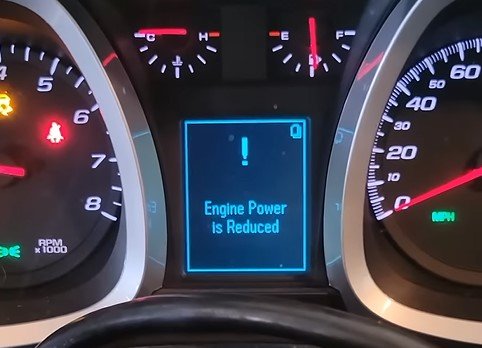
Starter demand may be exposing a nearly open connection at a battery post, terminal crimp, ground, or main feed.
3. Headlights and Interior Lights Dim or Flicker
A weak connection can make headlights, dashboard lighting, and interior lamps flicker while cranking, idling, crossing rough pavement, or operating a heavy load.
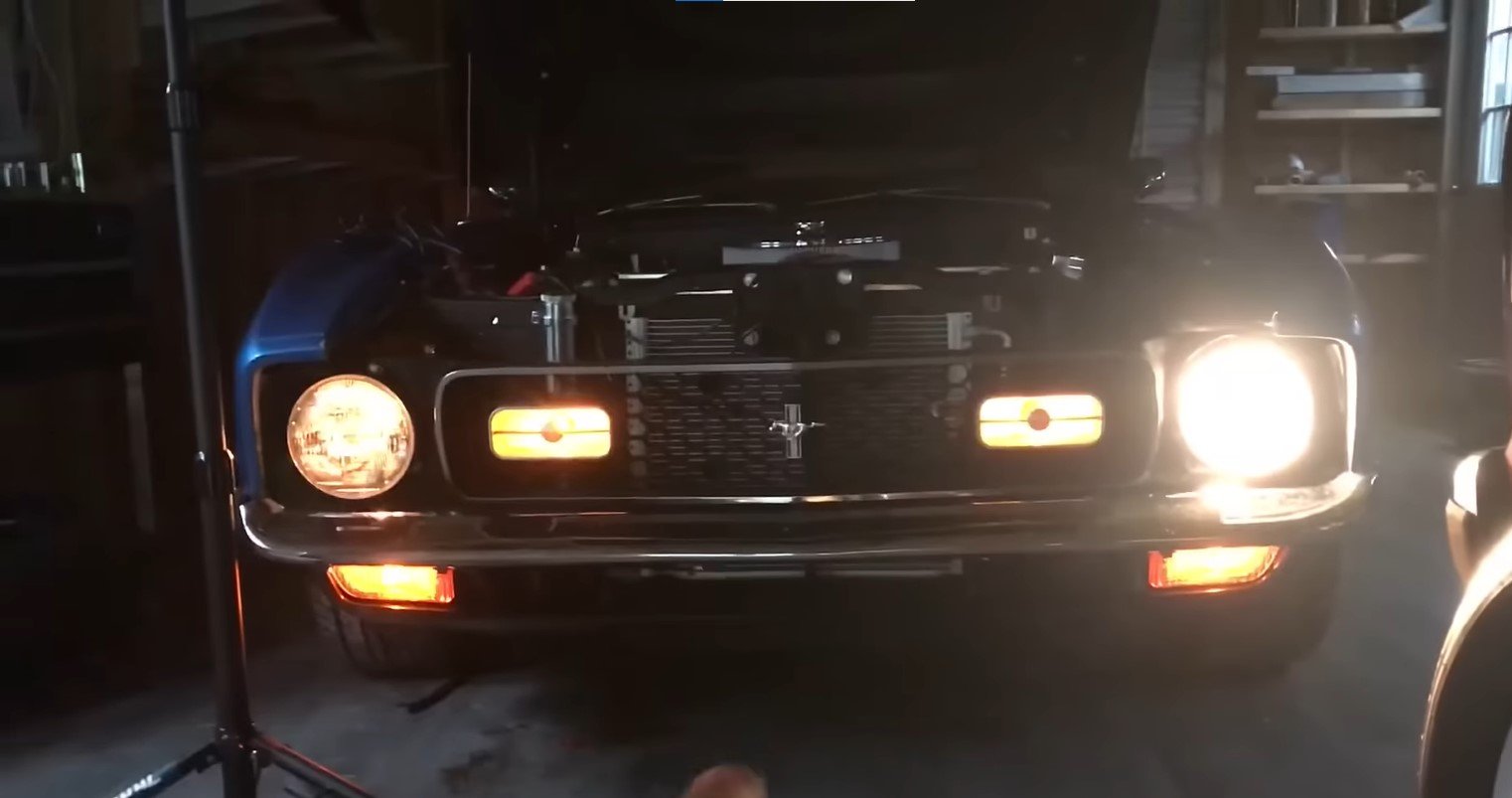
Slight dimming during cranking can be normal. Severe dimming, repeated flickering, or complete cutouts call for inspection of the battery connections and grounds.
4. Electronics Reset or Unrelated Warning Lights Appear
Unstable voltage can reset the clock, reboot the infotainment screen, interrupt power windows, or trigger several dashboard messages at once.
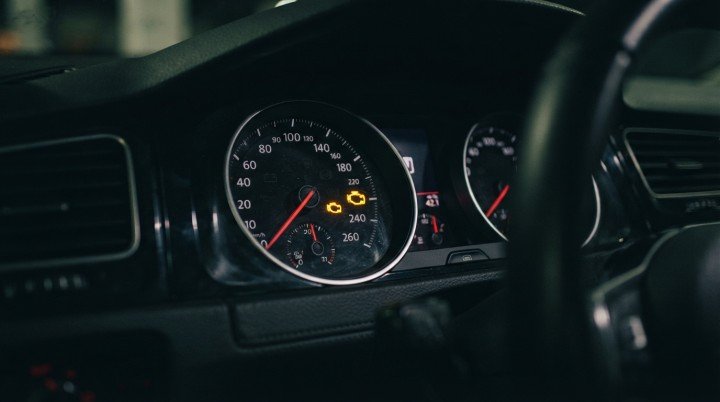
That does not mean every illuminated system failed. Check battery condition and system voltage before treating multiple communication codes as separate problems.
5. The Engine Stalls or Power Cuts Out Over Bumps
A loose main connection can interrupt power while driving. The engine may stall, the cluster may go blank, and electrical assistance may be reduced. A fault triggered by bumps or temperature changes suggests an intermittent connection.

Do not wiggle a cable with the engine running; it can arc, heat up, or damage electronics. Stalling also has many fuel, ignition, charging, and control causes, so this symptom alone cannot condemn a cable.
6. The Battery Keeps Going Low or the Charging Light Comes On
A poor cable or ground can restrict charging and leave a newer battery undercharged. The car may start after charging, run for a while, and struggle again later.
The battery-shaped light is a charging-system warning, not proof of a defective battery. Alternator, belt, fuse, wiring, and cable faults can illuminate it.
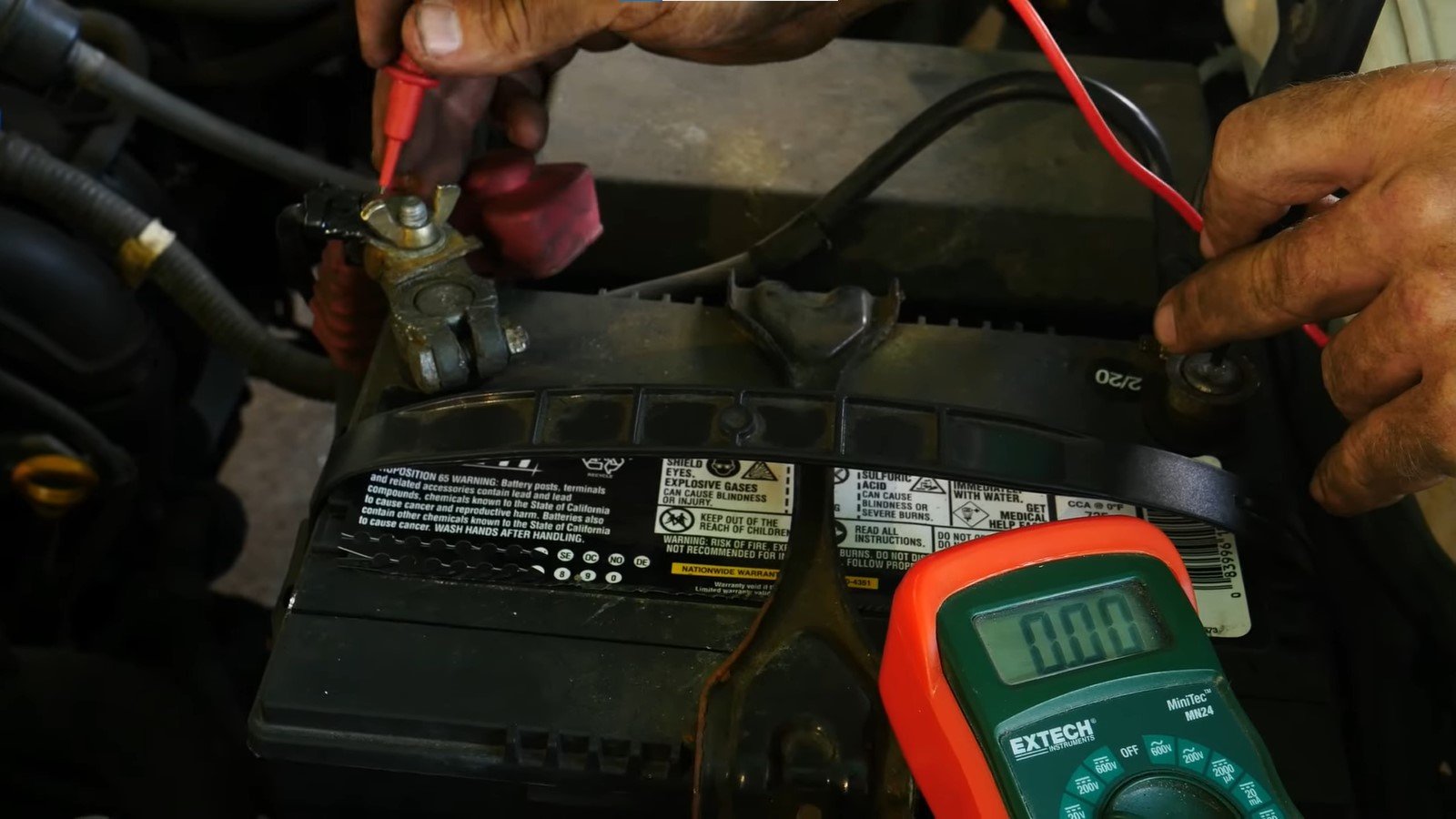
A bad cable rarely creates a true parasitic drain by itself; it more often prevents proper charging. Test an overnight draw separately.
7. Corrosion, Fraying, Swelling, or a Loose Terminal Is Visible
White, blue, or green deposits increase resistance. The cable may also feel stiff, look swollen, or show cracked insulation and broken strands.
Moisture and battery residue can travel under the insulation, leaving green or blackened copper hidden. A clean-looking terminal may still have a conductor or crimp that fails under load.
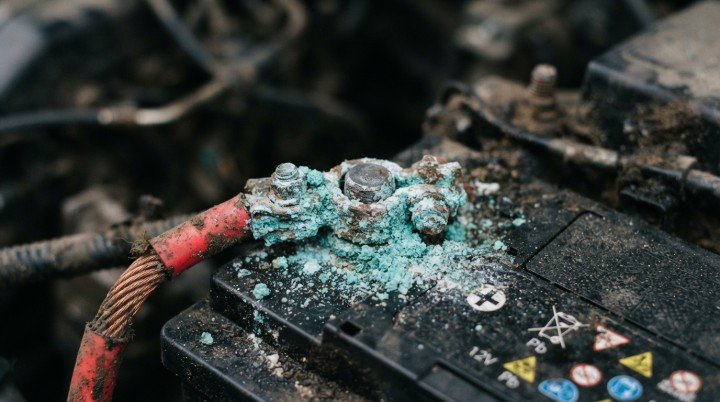
The clamp must sit fully on the post and remain secure. Replace a worn or incorrect terminal; never fill the gap with foil, screws, or improvised shims.
8. A Cable or Terminal Gets Hot, Sparks, or Smells Burned
Resistance produces heat. A damaged cable, loose connection, corroded crimp, or overloaded starter may make one terminal much hotter than the other. Melted insulation, dark metal, smoke, or arcing may follow.
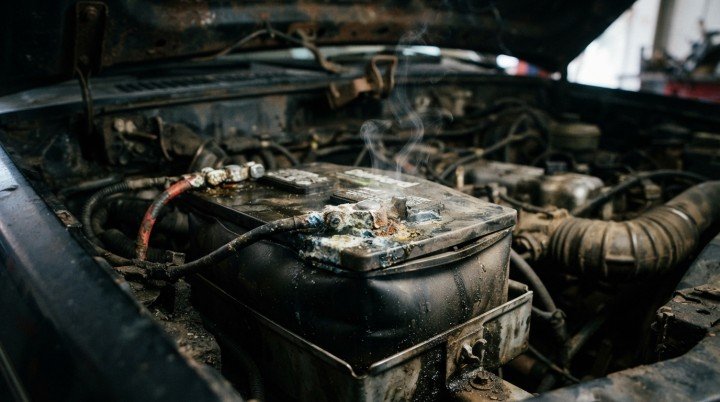
Stop starting attempts. Heat can damage the post, wiring, fuse block, and cable assembly, while arcing near a lead-acid battery is dangerous. Arrange diagnosis or towing.
Positive vs. Negative Battery Cable Problems
Positive and negative cable faults share many symptoms, so guessing by behavior alone is unreliable. Bad battery cable symptoms cannot reliably identify which side has failed; the affected path provides better clues:
| Suspected area | Clues that may appear | Where testing should focus |
|---|---|---|
| Positive cable or connection | Slow/no crank, loss of main power, charging trouble | Positive battery post to starter, distribution point, or alternator circuit |
| Negative cable or ground strap | Slow crank, module resets, unstable electronics, ground-path heat | Starter housing or engine block back to the negative battery post |
| Post-to-clamp connection | Intermittent total power, corrosion, loose terminal | Directly between the actual battery post and terminal clamp |
| Battery | Low capacity and voltage collapse even with good connections | Battery state of charge and load or conductance test |
A failed ground can also force current through smaller unintended paths, such as auxiliary ground wires or mechanical cables. That is why bad battery cable symptoms should not be ignored simply because the vehicle still starts.
Why a Cable Can Look Fine and Still Be Bad
A visual inspection cannot reveal every failure. Copper strands can break inside intact insulation, corrosion can spread from a terminal, and a crimp can loosen after years of vibration. The remaining strands may power a radio but not the starter.
A continuity test can therefore mislead you. It uses little current, so a compromised cable may still beep. Voltage drop while the circuit is loaded is more useful.
How to Inspect the Cables Without Creating Another Problem
Begin with the engine off, key or fob away from the vehicle, and metal jewelry removed. Wear eye protection and gloves, and never bridge a positive terminal to grounded metal.
Do not work around a cracked, swollen, leaking, or frozen battery. Keep sparks and flames away. On hybrids and EVs, this article covers only the 12-volt system; do not touch orange high-voltage wiring.
Inspect the posts and clamps, then trace the positive cable toward the starter and distribution points. Follow the negative cable to the body or engine and check separate ground straps. Remote batteries may add long routes and underbody junctions.
Some newer vehicles place a battery-monitoring sensor on the negative terminal. Others integrate a mega fuse, pyrofuse, or battery safety terminal into the positive assembly. Do not bypass these components or move accessory grounds around a current sensor without vehicle-specific information.
How to Test for Bad Battery Cable Symptoms With a Multimeter
First confirm that the battery is charged and can support a starter load. A deeply discharged battery makes cable measurements unreliable.
Measure from the actual battery posts, not a dirty clamp. Observe battery voltage during a safe cranking attempt to see whether it holds under load.
For the positive-side voltage-drop test, measure between the positive battery post and starter’s main positive terminal while cranking. The reading represents loss through the cable and every connection between those points.
For the ground-side test, measure from the negative post to the starter housing or specified ground while cranking. A high reading identifies excessive loss in the return path.
If total loss is excessive, test smaller sections: post to clamp, clamp to lug, cable to junction, and ground lug to engine or chassis. This locates the failed connection or conductor.
There is no universal voltage-drop limit for every vehicle and load; use model-specific service information. If a cable gets hot or shows excessive loss, check starter current too. A failing starter can overload a marginal connection.
Never disconnect a battery cable while the engine is running to “test” the alternator. That outdated shortcut can create voltage spikes and damage electronic modules.
Is It the Cable, Battery, Starter, or Alternator?
The complaints overlap, but a few patterns help organize the diagnosis:
- A weak battery often loses voltage under a proper battery load test, even when the connections have low voltage drop.
- A faulty cable shows measurable loss between two points while current is flowing. The problem may be intermittent and may leave the battery itself testing good.
- A failing starter may click, crank slowly, draw abnormal current, or remain inoperative even when battery supply and both cable paths test correctly.
- An alternator fault usually appears as inadequate charging while the engine runs. The alternator output cable and ground path must be tested before the alternator is condemned.
More than one fault can exist. A weak battery and corroded terminal, for example, may both contribute to the same slow-start complaint. The presence of familiar bad battery cable symptoms is a reason to test the circuit, not permission to skip the battery and starter checks.
Clean, Tighten, or Replace?
Minor surface corrosion may be cleaned if the post, clamp, strands, and crimp remain sound. Use an approved terminal cleaner and brush, keep it out of battery vents, and investigate corrosion that keeps returning.
A loose but undamaged terminal may only need correct seating and tightening to the vehicle or battery manufacturer’s specification. Over-tightening can damage the post or terminal. If bad battery cable symptoms return after cleaning and tightening, stop treating the problem as surface corrosion and test the loaded circuit.
Replace the cable or assembly for internal corrosion, damaged strands, swollen insulation, a burned or loose crimp, melted fuse housing, or excessive drop after cleaning. Match the original gauge, length, terminals, routing, and safety components.
If battery disconnection is appropriate for the vehicle, the usual sequence is negative off first and negative on last. However, some cars require memory, security, window, steering, battery-monitoring, or other reset procedures. Check model-specific instructions before disconnecting anything.
Can You Drive With a Bad Battery Cable?
It is not a dependable risk. A mildly resistive connection may leave you with a no-start after the next stop. A loose main cable can also interrupt power while driving.
Do not drive if the cable is hot, sparking, smoking, melting, or producing a burning smell. Sudden stalling, a blank instrument cluster, or warnings involving steering and braking assistance also justify stopping safely and arranging roadside help. Even less dramatic bad battery cable symptoms should be diagnosed soon because vibration and heat generally make a weak connection worse, not better.
What Happens If You Ignore the Problem?
Continued resistance can leave the battery undercharged, increase starting difficulty, overheat terminals, and damage nearby plastic or wiring. Repeated low-voltage events may create module resets and misleading diagnostic codes. A poor connection can also shorten battery life and place extra strain on starting and charging components.
Replacement cost varies widely. A short conventional ground cable may be inexpensive and easy to reach. A routed harness containing multiple branches, a battery sensor, fusible link, or safety terminal can cost considerably more and require additional labor or programming. Diagnosis before purchase helps prevent replacing the wrong assembly.
Confirm the Repair Before Calling It Fixed
After cleaning or replacement, repeat the same test under the same conditions. Confirm that the engine cranks normally, positive- and ground-side voltage loss is within the vehicle specification, charging performance is correct under load, and no connection develops abnormal heat.
Then recheck stored low-voltage codes and complete any required battery-monitor reset or vehicle relearn. A repair is complete when the measurement and the original complaint are both corrected—not merely when the engine starts once.
Frequently Asked Questions
Can a bad battery cable drain a battery overnight?
High resistance usually interferes with starting or charging rather than creating a true key-off drain. A damaged cable that is shorting to ground is a different and more urgent fault. Test parasitic current separately if the battery goes flat while parked.
Will a jump-start work with a bad cable?
It might, depending on where the jumper clamps connect and how severe the fault is. A jump that bypasses a weak ground may temporarily improve starting, but that is only a clue—not proof or a permanent repair.
Why does the car start after the cable is moved?
Movement may temporarily restore contact at a loose clamp, broken strand, damaged crimp, ground point, or even an internal battery-post connection. Stop moving it repeatedly and inspect the area with the power off.
Should both battery cables be replaced together?
Not automatically. Inspect and test both sides, then replace the failed component. Replacing both may make sense when they have similar age and deterioration, but diagnosis should guide the decision.
How often should battery cables be replaced?
There is no universal mileage or age interval. Replace them according to condition, test results, damage, or vehicle-specific service guidance rather than an arbitrary schedule.
The Bottom Line
The most recognizable bad battery cable symptoms are slow cranking, clicking, intermittent no-starts, flickering lights, electrical resets, repeated charging trouble, visible cable damage, and overheated connections. Yet the same signs can come from the battery, starter, alternator, terminal, fuse connection, or ground strap.
Inspect the whole path, test it while current is flowing, and repair the exact point of resistance. That approach is safer—and far less expensive—than replacing electrical parts until the problem disappears.
Kevin Nicholas is an automotive mechanic and editor of The Effective Guide. He writes about warning lights, car problems, and diagnostic tools, helping drivers understand what to check before replacing a part.