
You fill the tank and turn the key—but the engine cranks longer than usual, starts roughly, or dies. Later, the Check Engine Light appears. That combination strongly suggests the EVAP purge valve may not be closing when it should.
Bad purge valve symptoms resemble a vacuum leak, weak fuel pump, leaking injector, or damaged charcoal canister. Timing matters: a rough idle that worsens immediately after refueling points more strongly toward unwanted purge flow than one that occurs constantly.
The purge valve should still be tested before it is replaced. An EVAP trouble code identifies the system where the fault was detected; it does not automatically identify the failed part.
The Refueling Clue Most Drivers Miss
A purge valve that leaks while it should be closed can let fuel vapor and air reach the intake. Refueling displaces additional vapor into the EVAP system, so the next start may be difficult.
Watch for a repeatable pattern:
- The car normally starts without trouble.
- It becomes difficult to start right after a fill-up.
- The engine catches, runs roughly, or stalls.
- The problem improves after the engine has run for a short time.
This pattern is more useful than a random hard start, but it is not proof. A saturated charcoal canister or leaking injector can behave similarly.
What the Purge Valve Actually Controls
The evaporative-emissions system stores gasoline vapor in a charcoal canister. When conditions are suitable, the computer commands the purge valve to meter that vapor into the intake to be burned.
It may be called a purge valve, EVAP purge valve, canister purge solenoid, or vapor canister purge valve. Many sit in the engine compartment; others are near the tank or integrated with additional plumbing.
Many are closed when not energized, but designs vary and the computer may pulse the solenoid. Universal resistance, voltage, and “it clicks, so it is good” rules are therefore unreliable.
Stuck Open vs. Stuck Closed
The two failure modes do not produce the same driving experience.
| Failure mode | What happens | More likely results |
|---|---|---|
| Stuck open or leaking | Vapor or fresh air enters the intake when it should not | Hard starting after refueling, rough idle, fuel-trim changes, hesitation, or stalling |
| Stuck closed | The canister cannot purge when commanded | Check Engine Light, incorrect-flow code, incomplete EVAP monitor, or failed emissions inspection |
| Electrical or wiring fault | The computer cannot control the solenoid correctly | Circuit code, intermittent operation, or no commanded purge |
A stuck-closed valve does not automatically explain tank pressure or a gas pump that repeatedly clicks off. Those complaints more often point to a restricted vent valve, blocked filter, damaged line, or saturated canister. These bad purge valve symptoms must be separated from vent-side problems before parts are ordered.
Bad Purge Valve Symptoms: 8 Warning Signs to Watch For
No single item on this list confirms the diagnosis. The most convincing case is a group of bad purge valve symptoms that appears at the right time and is supported by scan data or a functional test.
1. The Check Engine Light Comes On
The Check Engine Light is often first because the computer monitors purge flow and the solenoid circuit. The car may drive normally, especially with a stuck-closed valve or intermittent electrical fault.

Do not replace the valve based on the light alone. A loose gas cap, cracked EVAP hose, wiring fault, vent-valve problem, or leaking canister can illuminate the same warning.
2. The Engine Is Hard to Start After Refueling
Long cranking immediately after filling the tank is one of the most recognizable bad purge valve symptoms. If the valve is leaking, the additional vapor displaced during refueling can enter the intake and temporarily upset the air-fuel mixture.

It may start on the second attempt, run poorly for several seconds, or need slight throttle. Note whether it follows every fill-up, tank top-offs, or unrelated events; that detail shortens diagnosis.
3. The Engine Idles Roughly or Surges
A leaking valve behaves somewhat like an intake leak, except its flow can contain both air and fuel vapor. The computer may need to correct a lean or rich mixture.
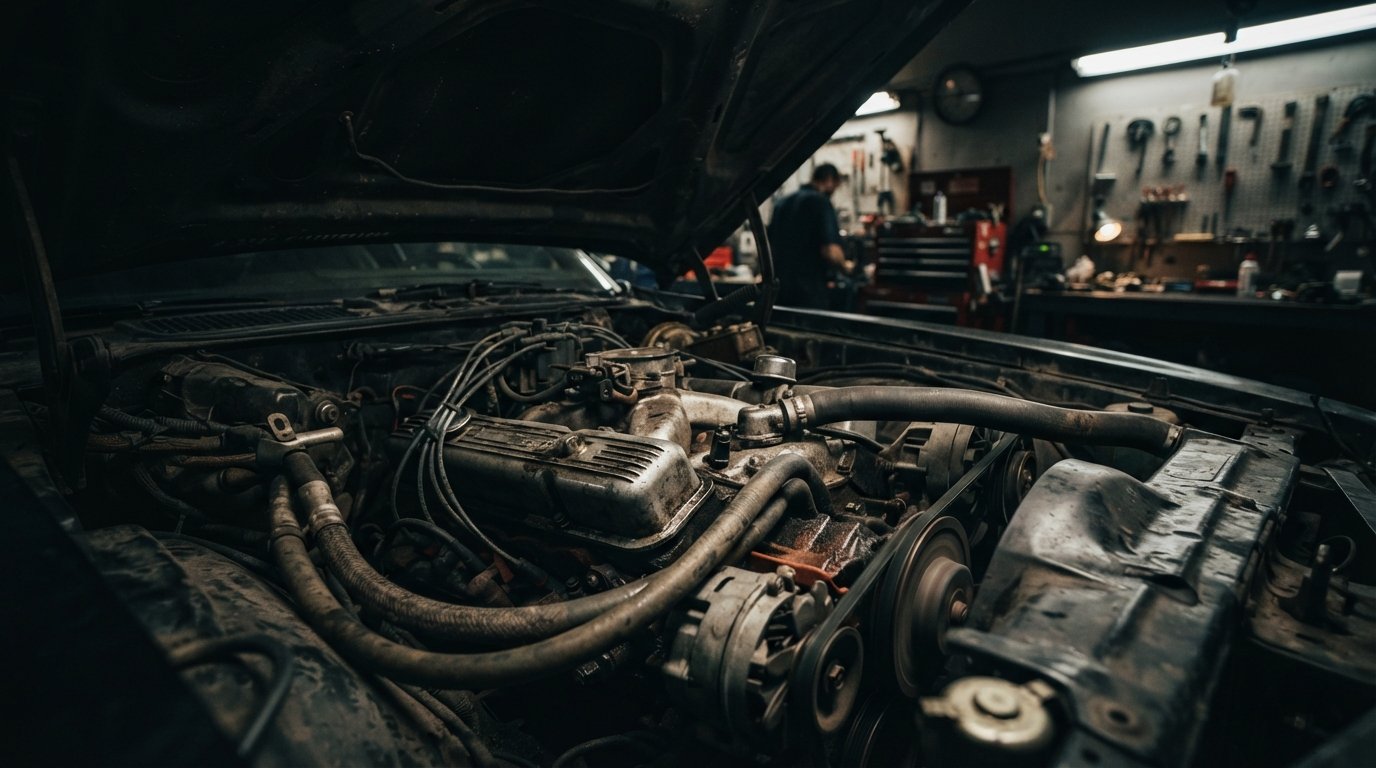
The engine may shake, surge, or wander in RPM. Vacuum leaks, ignition faults, and a dirty throttle body can do the same, so fuel-trim data is more useful than the sensation alone.
4. The Engine Stalls at Idle or After a Fill-Up
If the mixture disturbance is severe enough, the engine may stall while idling, slowing for a turn, or starting after refueling. It may restart normally once the excess vapor clears.
Stalling turns an emissions fault into a safety issue. A vehicle that dies in traffic should not be treated as safe merely because the stored code mentions the EVAP system.
5. Acceleration Feels Hesitant or Uneven
A faulty purge valve can make the engine stumble when you first press the accelerator. The response may feel flat, inconsistent, or briefly weak as the computer tries to correct the mixture.

Acceleration trouble is not among the most specific canister purge valve symptoms. A weak fuel pump, MAF problem, misfire, throttle fault, or restricted exhaust can feel similar.
6. The Engine Runs Rich, Lean, or Misfires
Unexpected purge flow can alter fuel trims. The engine may pull fuel when vapor enriches the mixture or add fuel when extra air makes it lean. Either condition can cause a stumble or misfire.
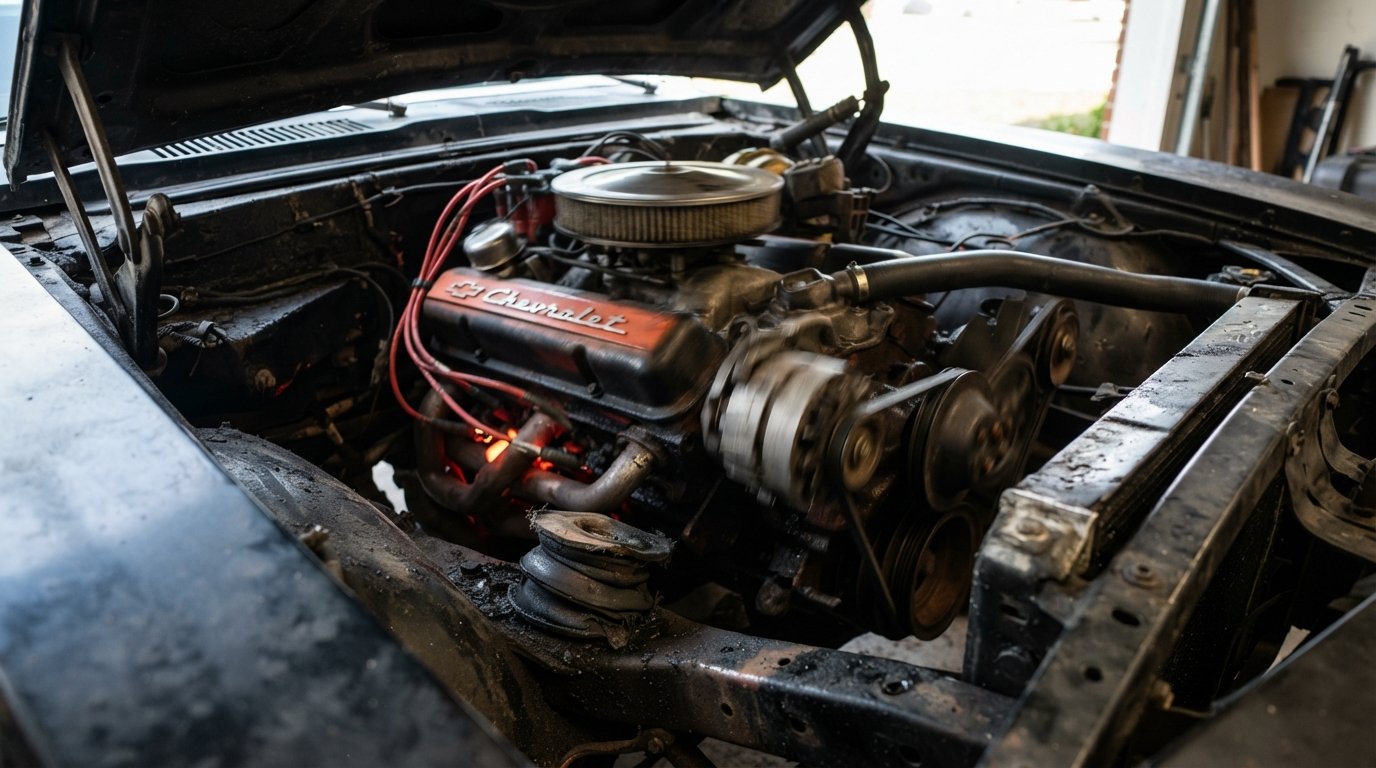
That is why one driver reports a rich condition while another sees a lean code: vapor loading, valve position, engine design, and timing change the result.
7. Fuel Economy Drops
Poor combustion control, repeated rough running, or related faults can reduce mileage.
However, a small change in MPG is weak evidence by itself. Tire pressure, traffic, temperature, driving style, and many engine faults have a larger effect. Treat reduced fuel economy as supporting evidence, not a purge-valve diagnosis.
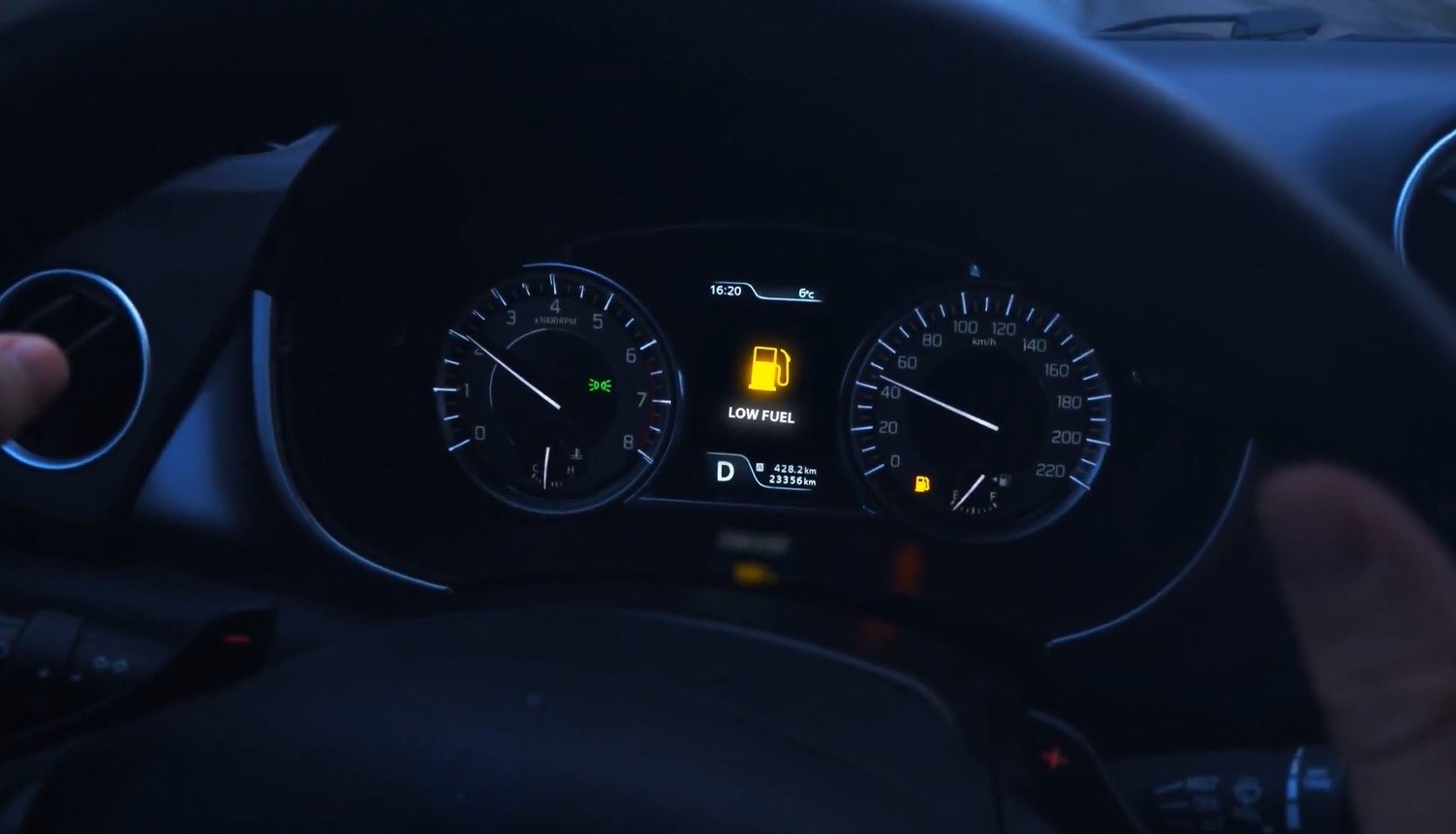
8. You Smell Fuel Vapor or Fail an Emissions Inspection
A failed EVAP monitor, active Check Engine Light, or emissions code can prevent an inspection pass. Clearing codes shortly beforehand can leave readiness monitors “not ready.”

A gasoline smell can accompany an EVAP fault but may come from a loose cap, cracked hose, leaking canister, or liquid-fuel leak. Stop driving if the odor is strong, fuel is visible, or fumes enter the cabin.
What the Trouble Codes Do—and Do Not—Tell You
When bad purge valve symptoms appear with a diagnostic code, the code narrows the search. It still does not authorize a blind parts swap.
- P0441 — Incorrect Purge Flow: The expected EVAP response was missing. The valve, hoses, restrictions, leaks, or another component may be responsible.
- P0443 — Purge Control Circuit: Check the solenoid, connector, wiring, power, control side, and relevant fuse.
- P0444 or P0445 — Circuit Open or Short: These codes point toward an electrical failure, not necessarily a mechanically leaking valve.
- P0496 — Flow During a Non-Purge Condition: Where used, this strongly suggests unwanted purge flow, but the path still needs verification.
- P0455 or P0456 — Large or Small EVAP Leak: The cap, hose, canister, vent valve, seal, or purge valve may be involved.
- P0446 — Vent Control Fault: This generally shifts attention toward the vent side and its circuit, although diagnosis must follow the vehicle’s service information.
Record current and pending codes, freeze-frame information, and readiness status before clearing anything. That evidence may disappear after a battery disconnect or code reset.
Separate the Purge Valve From Its Look-Alikes
The complaint often reveals which branch of the system deserves attention first.
| What the driver notices | More likely direction to investigate |
|---|---|
| Hard start mainly after refueling, followed by rough running | Purge valve leaking, saturated canister, or fuel-system flooding |
| Gas pump repeatedly shuts off while filling | Vent restriction, vent valve, blocked filter, or saturated canister |
| Rough idle all the time with lean fuel trims | Intake/vacuum leak, PCV fault, or purge path leaking |
| EVAP leak code but no drivability problem | Gas cap, hose, seal, vent valve, or small system leak |
| Fuel odor strongest near the rear of the car | Cap, filler neck, tank, canister, vent plumbing, or liquid leak |
| Long crank after the car sits for hours | Fuel-pressure loss, injector leak, ignition issue, or other starting fault |
A purge solenoid may click normally when pulsed. A click confirms movement, not correct sealing or flow. Silence proves little unless the computer is commanding the valve at that moment.
How a Purge Valve Should Be Diagnosed
Because bad purge valve symptoms overlap with several faults, diagnosis should start with the car—not a replacement part.
- Preserve the evidence. Scan current, pending, and permanent codes. Save freeze-frame and readiness information.
- Match the timing. Determine whether the complaint follows refueling, occurs only at idle, or begins when the computer commands purge.
- Inspect the simple items. Check the fuel cap, purge hoses, vacuum lines, electrical connector, pins, and harness for damage or corrosion.
- Watch live data. A capable scan tool may show commanded purge, fuel trims, and fuel-tank pressure. PID names and normal values vary by manufacturer.
- Test sealing and flow. Verify whether the valve seals when it should and responds when commanded, following the service procedure for that vehicle.
- Check the circuit. Measure power, control, and coil resistance against the correct wiring diagram and manufacturer specification.
- Smoke-test the EVAP system if necessary. Approved low-pressure EVAP smoke equipment can reveal leaks that a visual inspection misses.
Do not apply raw battery voltage unless the service procedure permits it; some valves are pulse-controlled. Avoid high-pressure shop air, and never test a fuel-vapor component with your mouth.
What Can Happen If You Ignore It?
Persistent bad purge valve symptoms can cause repeated hard starts, unstable idle, stalling, increased emissions, and an inspection failure. An ignored warning light can also hide a new fault.
Not every failed valve destroys the canister, catalytic converter, or tank. Secondary damage depends on the failure and other EVAP faults. Tank deformation is rare and usually requires excessive vacuum from unwanted purge flow plus a vent path that cannot admit air.
Do not top off after the pump clicks. Liquid fuel can saturate the charcoal canister and create further EVAP problems.
Can You Drive With a Bad Purge Valve?
A short trip to a shop is often reasonable when the light is steady, the car runs normally, and there is no strong fuel odor. Not all bad purge valve symptoms demand an immediate stop, but diagnosis should not be postponed indefinitely.
Arrange diagnosis soon if the car repeatedly starts hard after refueling, idles roughly, hesitates, or cannot complete its EVAP readiness monitor.
Stop driving when the engine repeatedly stalls, the Check Engine Light flashes, the car misfires severely, liquid fuel is visible, or gasoline odor is strong. Those conditions carry risks beyond an emissions failure.
Cleaning, Replacement, and Typical Cost
Most modern purge solenoids are sealed. Cleaning cannot repair an open coil, damaged connector, weak spring, or leaking seat, and solvent may damage plastic or seals. Confirmed failure usually calls for replacement.
For many mainstream vehicles, replacement may run roughly $100 to $400 including parts and labor; integrated assemblies or difficult access can cost more. Diagnosis may be separate, so obtain a vehicle-specific estimate.
Match the part by VIN because configurations can change within a model year. Also check for an applicable recall, warranty extension, technical service bulletin, or service program.
Verify the Repair Instead of Trusting the New Part
After installation, confirm hose direction, connector engagement, and line routing. Clear codes with a scan tool only after the repair is complete, then follow the appropriate drive cycle. The EVAP monitor may need specific fuel-level and temperature conditions before it runs.
The repair is convincing when post-refueling starts are normal, fuel trims remain stable, and the readiness monitor completes without the code returning. If the light returns, continue testing instead of installing another valve.
Frequently Asked Questions
Will a Bad Purge Valve Always Set a Code?
No. A small leak may cause intermittent trouble before the computer runs the necessary monitor. Pending codes or abnormal live data may appear first.
Can a Bad Purge Valve Cause a Complete No-Start?
It can cause a temporary no-start or extended crank after refueling, but a car that never starts also requires battery, starter, ignition, fuel-pressure, and sensor checks.
Does Difficulty Filling the Tank Mean the Purge Valve Is Bad?
Not usually. A nozzle that repeatedly clicks off more often suggests that displaced vapor cannot leave the tank through the vent path. Inspect the vent valve, vent filter, canister, and related lines.
Can a Purge Valve Be Bad Even If It Clicks?
Yes. The solenoid can move and click while the valve still leaks, sticks, or flows incorrectly. Clicking is not a complete functional test.
How Is a Purge Valve Different From a Vent Valve?
The purge valve controls vapor flow from the charcoal canister toward the engine. The vent valve controls fresh-air entry and helps seal the EVAP system during self-testing. Confusing the two is a common reason for replacing the wrong part.
The Bottom Line
The most revealing bad purge valve symptoms are a hard start immediately after refueling, rough or surging idle, unexplained stalling, and an EVAP code that supports a purge-flow problem. A stuck-open valve is more likely to affect how the engine runs; a stuck-closed valve may produce little more than a warning light or failed monitor.
Use the symptom pattern to choose the next test—not the next part. Preserve the codes, inspect the hoses and wiring, verify valve sealing and command response, and rule out the vent valve, charcoal canister, gas cap, and ordinary vacuum leaks. That approach costs less than guessing and gives you a much better chance of fixing the car the first time.
Kevin Nicholas is an automotive mechanic and editor of The Effective Guide. He writes about warning lights, car problems, and diagnostic tools, helping drivers understand what to check before replacing a part.