
A failing PCV valve can make two cars look as though they have unrelated problems. One engine may idle high and whistle; another may push oil through gaskets that never leaked before.
Both patterns make sense once you know what the valve controls. The Positive Crankcase Ventilation system removes blow-by gases without creating excessive engine vacuum. Too much flow can disturb the air-fuel mixture and pull oil into the intake; too little allows pressure and moisture to build.
That is why bad PCV valve symptoms should be read as a group. Rough idle, blue smoke, and oil leaks all have other causes. Identify the pressure pattern before buying a part.
What the PCV System Does in Plain English
A small amount of combustion gas slips past the piston rings in every running engine. These “blow-by” gases enter the crankcase. If trapped there, they raise pressure, contaminate the oil, encourage sludge, and force oil past seals.
The PCV system routes those vapors into the intake to be burned. A traditional valve meters flow according to engine vacuum and helps prevent intake pressure from moving backward. Hoses, a fresh-air inlet, baffles, and sometimes an oil separator complete the circuit.
Not every engine has a removable valve. Many use a diaphragm or oil separator built into the valve cover. Turbo engines may have several check valves, while some diesels use a CCV separator. The design determines the correct test and repair.
Bad PCV Valve Symptoms Begin With Two Different Failure Patterns
Before going through the ten signs, separate the two basic patterns:
| Failure pattern | What changes inside the engine | Clues that fit |
|---|---|---|
| Valve stuck open or diaphragm torn | Too much airflow or crankcase vacuum | Rough or high idle, lean codes, whistling, oil pulled into the intake |
| Valve, hose, or separator restricted | Blow-by cannot escape normally | Oil leaks, positive crankcase pressure, sludge, oil pushed toward the airbox |
| PCV system overwhelmed by engine wear | Blow-by volume exceeds what the system can handle | Pressure remains after PCV repair, smoke, oil use, worn-ring suspicion |
This split prevents a common mistake: assuming every symptom comes directly from the valve. A cracked PCV hose can create the open-valve pattern, while a blocked separator can create the closed-valve pattern. Worn piston rings can overwhelm a perfectly usable PCV system.
10 Bad PCV Valve Symptoms to Watch For
1. The Check Engine Light Comes On
A failed PCV valve does not always have its own trouble code. More often, the engine computer notices the result: unexpected airflow, a lean mixture, high idle, or misfires.
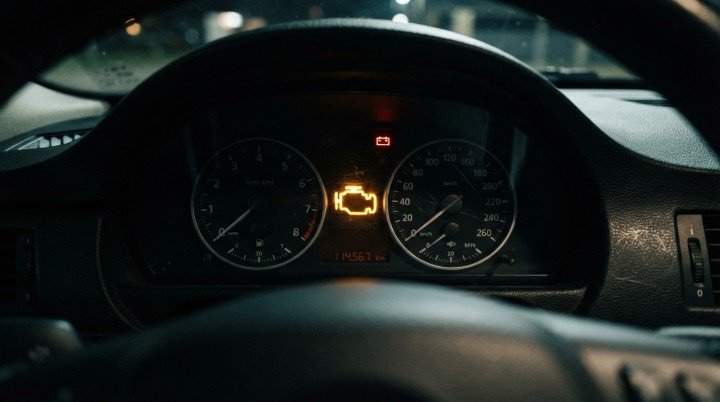
P0171 and P0174 lean codes, P0507 high-idle codes, and P0300-series misfire codes may appear. Some monitored PCV systems can set more specific codes such as P052E or P053A. None of these proves the valve is bad. They only tell you which system needs testing.
Among all bad PCV valve symptoms, the Check Engine Light is therefore a useful starting point—not a diagnosis. Record the codes and freeze-frame data before clearing anything.
2. The Engine Idles Rough, Surges, Runs High, or Stalls
A stuck-open valve or torn diaphragm can act like a vacuum leak. Unexpected air makes the mixture difficult to control, so the engine may shake, hunt between RPMs, idle high, or stall at a stop.
The problem is often clearest at idle when manifold vacuum is high. Cracked intake hoses, manifold leaks, a faulty purge valve, ignition faults, and injector problems can behave similarly, so rough idle alone does not justify replacement.
3. You Hear Whistling, Hissing, or a Low Honking Sound
A torn diaphragm can produce a sharp whistle near the valve cover. A split hose may hiss, while some diaphragm systems make a lower honking or moaning sound.
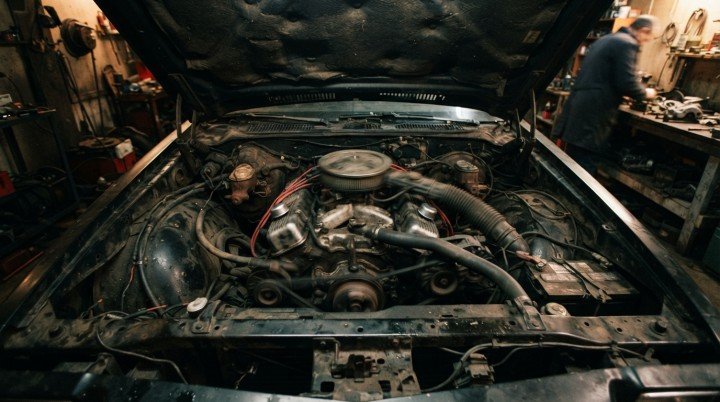
The sound may change with engine speed or when the oil cap is loosened. Keep clear of belts and fans. A sound change locates the pressure path but does not identify the failed component; other vacuum leaks can whistle too.
4. Acceleration Feels Flat and Fuel Economy Drops
Incorrect PCV flow can disrupt fuel correction beyond idle. The engine may hesitate, stumble during throttle changes, or feel less responsive. Computer compensation can also reduce mileage.
Poor fuel economy is among the least specific bad PCV valve symptoms. Treat it as supporting evidence only when it accompanies idle, oil, pressure, or noise clues.
5. Engine Oil Consumption Suddenly Increases
Excessive crankcase vacuum may pull more oil mist through the PCV path than the separator can control. The engine burns that oil, so the dipstick falls without a driveway leak.
Track the level under consistent conditions. A sudden change matters more than one low reading. Heavy wet oil in the PCV hose is relevant, although a light film is normal in many engines.
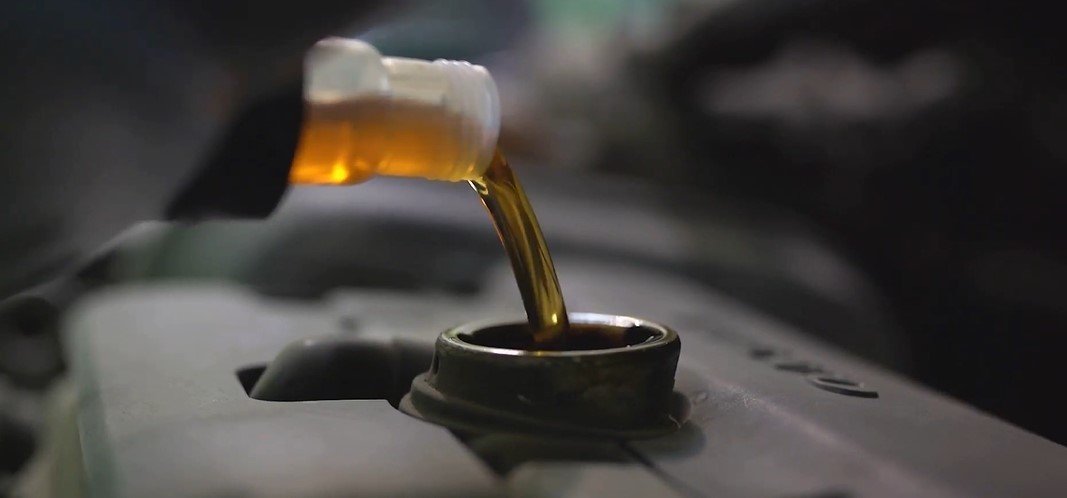
Oil consumption is one of the most important bad PCV valve symptoms, but worn rings, valve seals, external leaks, overfilling, and turbo seals can cause it too—especially if PCV repair changes nothing.
6. Blue-Gray Exhaust Smoke or Oil-Fouled Spark Plugs Appear
Oil drawn into the cylinders may produce blue-gray exhaust after idling, during acceleration, or at startup. It can also foul spark plugs and cause repeated misfires.
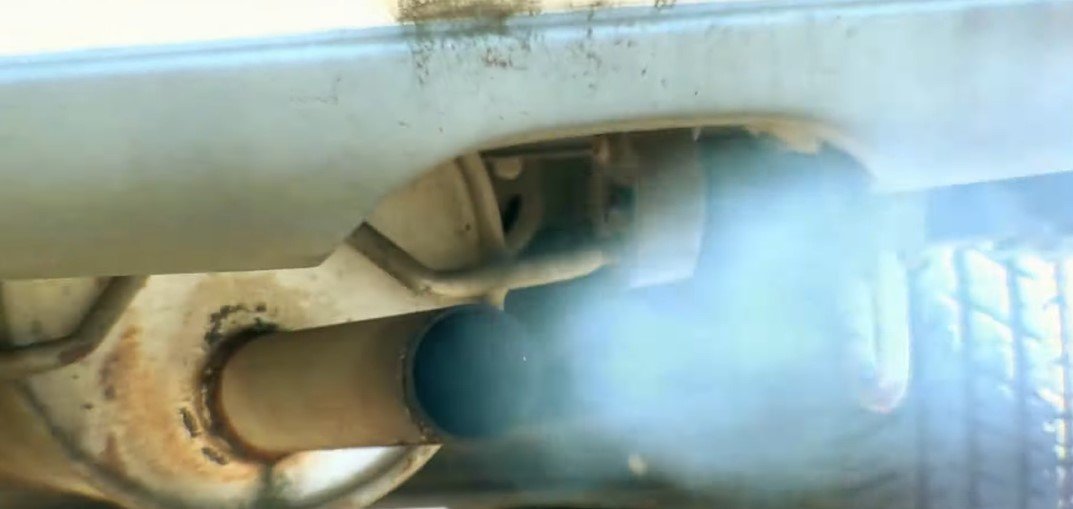
Black smoke points more toward excess fuel, while brief white vapor is usually condensation. Persistent thick white exhaust may indicate coolant. Blue-gray oil smoke can fit PCV failure, worn rings, valve seals, or turbo seals.
7. New Oil Leaks Develop Around Gaskets and Seals
A restricted valve, hose, or separator raises crankcase pressure. Oil may then seep from the valve cover, timing cover, oil pan, cam or crank seals, or dipstick tube.
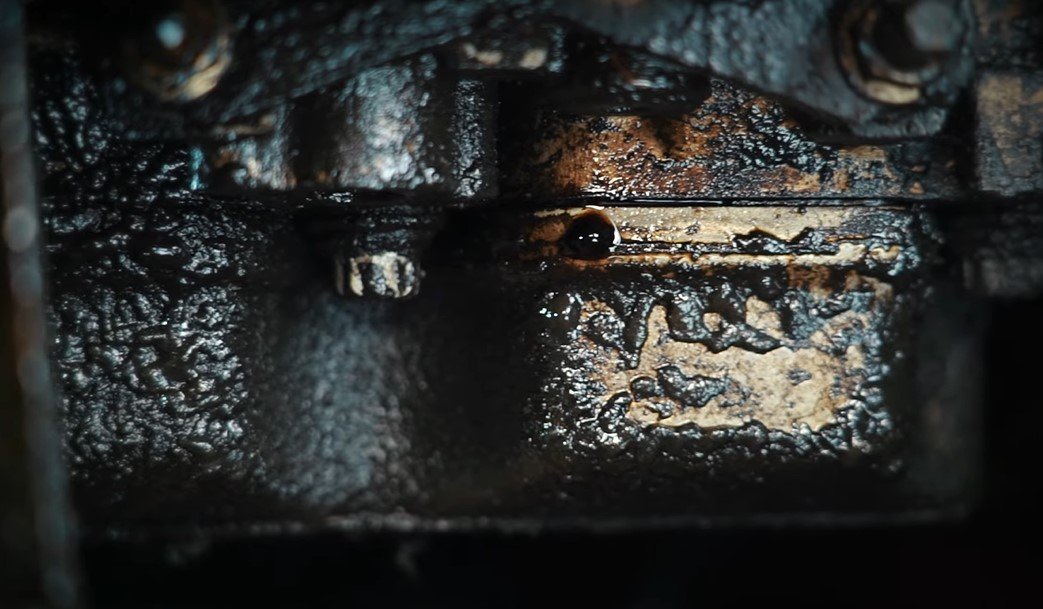
A blocked system may expose a weak seal or worsen an existing leak. Replacing the gasket without correcting the pressure can lead to another failure.
Oil on a hot exhaust can create smoke and a burning smell. Rapid loss, engine-bay smoke, or a low oil-pressure warning requires immediate action.
8. The Oil Cap Has Abnormal Suction—or the Crankcase Has Pressure
Some oil-cap vacuum is normal. An unusually difficult cap, a whistle that stops when it is loosened, or a dramatic idle change can indicate a torn diaphragm or excessive vacuum.
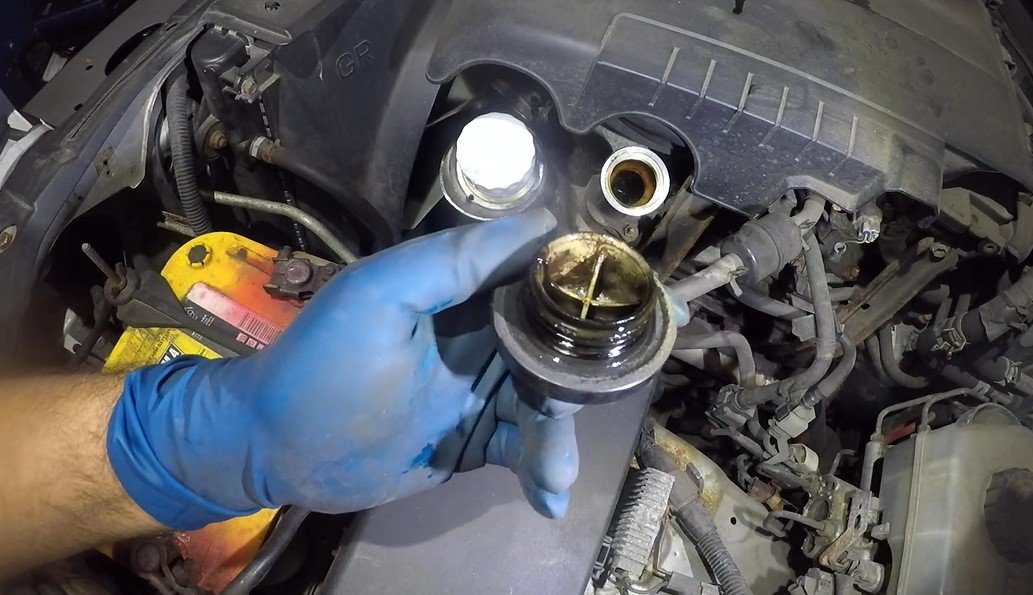
Pressure at the filler or dipstick tube, oil mist, or a lifting dipstick suggests restriction or excessive piston-ring blow-by.
The oil-cap test is not universal. A low-range manometer and the engine’s specification provide a better answer.
9. Excessive Oil Collects in the Intake, Airbox, or Turbo Piping
A failed valve can pull oil into the intake. A restriction may push vapor toward the airbox; turbo engines may collect oil in charge pipes or the intercooler.
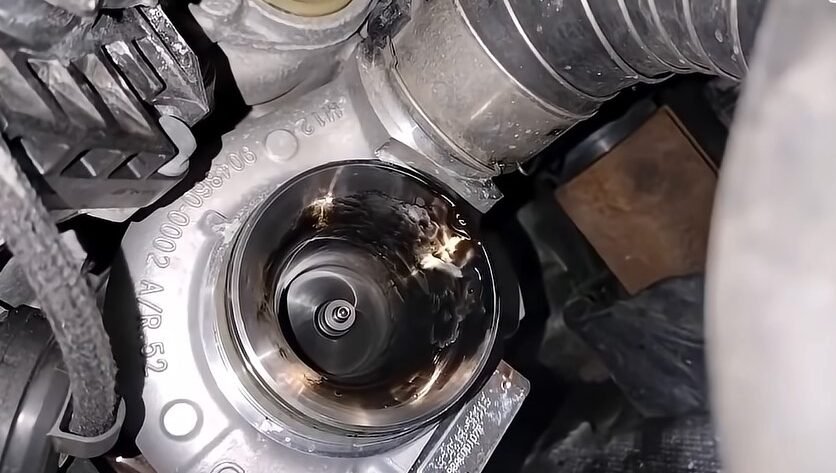
A thin coating can be normal. Pooling oil, a soaked filter, rapid consumption, smoke, or large deposits are more meaningful. Turbo leakage and excessive blow-by can look the same.
10. Sludge, Moisture, or Creamy Deposits Build Up
Restricted ventilation traps moisture, fuel vapor, and combustion byproducts. The oil can thicken into sludge that coats the valve train and blocks passages.
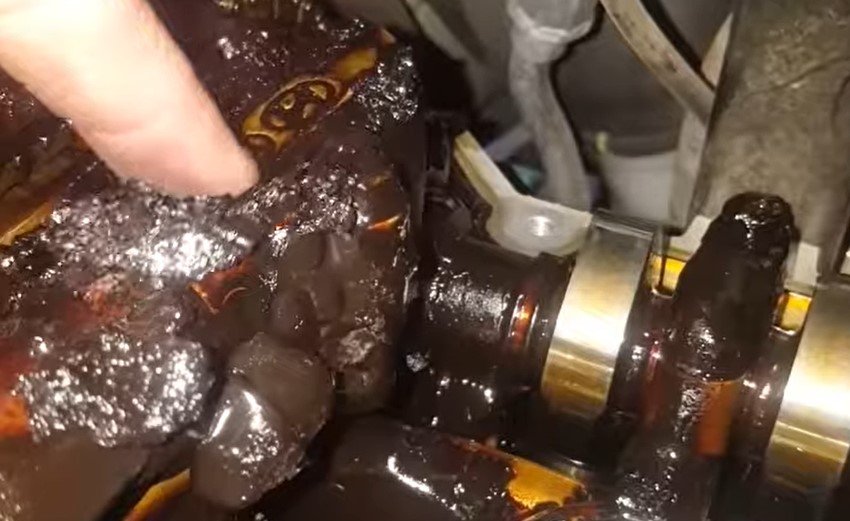
Creamy oil-cap residue needs context. Short-trip cars may not get hot enough to evaporate condensation. A little residue is not proof of PCV or head-gasket failure; widespread sludge, poor flow, contaminated oil, and other bad PCV valve symptoms make the case stronger.
What Can Be Mistaken for a Bad PCV Valve?
PCV problems overlap with faults on both the air and oil sides of the engine. Before replacing parts, consider:
- Cracked intake boots, vacuum lines, or manifold gaskets
- A stuck-open purge valve, dirty throttle body, or MAF error
- Worn spark plugs, weak coils, or a fuel injector problem
- Valve-cover, oil-pan, or timing-cover gasket leaks
- Engine oil filled above the maximum mark
- Worn piston rings or valve-stem seals
- A turbocharger oil-seal failure
- Coolant entering the cylinders and creating persistent white exhaust
The most valuable comparison is PCV restriction versus worn rings. Both can cause pressure, smoke, and oil consumption. If measured crankcase pressure remains high after the ventilation path is confirmed open, a compression, leak-down, or blow-by test may be needed.
How to Check the PCV System Without Trusting a Shortcut
First identify the design. A removable valve in a rubber grommet is tested differently from a valve-cover diaphragm or an oil separator buried beneath an intake manifold. Use engine-specific service information before disconnecting anything.
Inspect the entire path, not just the valve. Look for cracked elbows, collapsed or oil-softened hoses, loose connections, damaged grommets, a blocked fresh-air inlet, and oil around a diaphragm cover. A smoke test can locate leaks that are too small to see.
Scan data can show whether the fault behaves like unmetered air. Lean codes and strongly positive fuel trims at idle that improve as RPM rises often support a vacuum-leak pattern, though they do not identify the PCV system by themselves. A technician can isolate the circuit briefly while watching fuel trims and following the service procedure.
For a pressure complaint, measuring crankcase vacuum with an appropriate low-pressure gauge is more reliable than guessing from the oil cap. If pressure is excessive, the next question is whether the ventilation path is restricted or the engine is generating too much blow-by.
These steps turn bad PCV valve symptoms into evidence instead of a parts-changing exercise.
Why the Rattle Test and Oil-Cap Test Can Mislead You
Shaking a traditional valve can confirm that its plunger moves. It cannot prove that the spring is calibrated correctly, the valve seals in the proper direction, or the airflow rate matches the engine. A valve may rattle and still flow incorrectly. An integrated diaphragm may not rattle at all.
The oil-cap test has the same limitation. Some engines normally have noticeable vacuum at idle; others have very little. Removing the cap also introduces an air leak, so a change in idle is expected on many healthy engines. Use these checks as clues, not verdicts.
Be cautious with internet instructions that require reaching into a running engine bay. Loose clothing, belts, pulleys, and electric fans create real hazards. If the test is not clearly described in the service procedure, leave it to a technician.
Can You Clean a PCV Valve Instead of Replacing It?
Cleaning may free deposits in an old metal valve, but it does not restore a weak spring, worn seat, cracked housing, or torn diaphragm. Strong solvents can damage plastic and rubber, and compressed air can harm delicate integrated parts.
Because a simple calibrated valve is usually inexpensive, replacement is often more sensible than cleaning. Use the correct engine-specific part; similar-looking valves may have different flow rates. If the PCV device is integrated into the valve cover or oil separator, follow the manufacturer’s repair procedure rather than cutting out or modifying the assembly.
Inspect the hoses, grommet, seals, and breather side at the same time. A new valve cannot fix a collapsed hose or blocked separator.
Can You Drive With Bad PCV Valve Symptoms?
A mild whistle or slightly rough idle with a stable oil level may allow time to schedule an inspection, but the problem should not be ignored. There is no fixed safe mileage because the risk depends on whether the system is creating excess vacuum, building pressure, or losing oil.
Stop driving if the Check Engine Light flashes, the engine misfires severely or stalls, heavy blue smoke appears, oil is escaping rapidly, the low oil-pressure warning illuminates, or oil is dripping onto a hot exhaust component. Continuing can damage the catalytic converter, starve the engine of oil, or turn a ventilation repair into a gasket or engine repair.
Replacement Cost Depends on What “PCV Valve” Means
An accessible standalone valve may cost less than many routine service parts and take only a short time to replace. Add a hardened hose, grommet, or awkward location, and the labor increases.
On many modern engines, the diaphragm and separator are molded into a valve cover or larger assembly. The repair may require the entire cover, additional seals, and several hours of access work. Turbocharged systems can have multiple valves and hoses. This is why a cheap valve price online does not always resemble the final estimate.
After repair, recheck idle quality, fuel trims, crankcase pressure, oil leaks, and oil consumption. If the original bad PCV valve symptoms remain, further diagnosis is needed rather than another replacement valve.
Frequently Asked Questions
Does a Good PCV Valve Always Rattle?
No. A rattle only applies to certain traditional plunger-style valves and does not confirm correct flow. Diaphragm, integrated, and electronically monitored designs may not rattle.
How Often Should a PCV Valve Be Replaced?
There is no reliable universal interval. Some manufacturers specify inspection or replacement mileage, while others recommend service only when the system fails. Follow the schedule for the exact engine and inspect hoses whenever symptoms or oil leaks appear.
Can a Bad PCV Valve Cause an Oil Leak?
Yes. A restricted system can raise crankcase pressure and force oil past a weak gasket or seal. The PCV fault may worsen the leak even when the gasket is already aged.
Can a New PCV Valve Fix Excessive Crankcase Pressure?
It can if the old valve was the restriction. It will not solve a blocked hose, clogged separator, or excessive blow-by from worn cylinders and piston rings.
Is a Catch Can a Replacement for the PCV System?
No. A catch can may separate some oil mist when properly designed and maintained, but it does not replace the system’s pressure-control and check-valve functions. Poorly configured modifications can create leaks, freezing problems, emissions issues, or excess pressure.
The Bottom Line
The clearest diagnosis comes from matching the symptom to the failure pattern. Rough or high idle, lean codes, and a whistle point toward excess airflow or vacuum. New oil leaks, dipstick pressure, and sludge point toward restricted ventilation. Smoke and oil consumption can fit either pattern but also demand checks for rings, valve seals, and turbo problems.
Do not let one rattle test, one trouble code, or one oily hose decide the repair. Confirm the PCV design, inspect the complete circuit, and measure crankcase pressure when necessary. Catching genuine bad PCV valve symptoms early can prevent repeat oil leaks, catalytic-converter damage, and avoidable engine wear.
Kevin Nicholas is an automotive mechanic and editor of The Effective Guide. He writes about warning lights, car problems, and diagnostic tools, helping drivers understand what to check before replacing a part.