
Last Updated on October 14, 2026
Brake rotors are an important part of your car’s braking system. They work with the brake pads and calipers to slow your wheels when you press the brake pedal. Worn or damaged rotors can cause vibration, noise, uneven pad wear, and reduced braking confidence. Choosing the best brake rotors starts with proper fitment and sound construction, not simply the highest price.
In this updated 2026 guide, we look at five replacement rotors and explain how to choose between plain, vented, drilled, and slotted designs. We also cover rotor wear, replacement signs, and important measurements to check before buying. None of these individual part numbers fits every vehicle, so confirm the year, make, model, trim, and brake package in a reliable parts catalog.
Best Brake Rotors: Three Front-Rotor Options Compared
These three front rotors fit different applications. Compare their features, then confirm the part number for your vehicle. They are not interchangeable upgrades.
| Feature | ACDelco 18A813A | Centric 120.47018 | ACDelco 18A816A |
|---|---|---|---|
| Product line | Silver, formerly Advantage | Premium | Silver, formerly Advantage |
| Design | Plain, vented front rotor | Plain, vented front rotor | Plain, vented front rotor |
| Coating | Non-coated | Corrosion protection on non-friction areas | Non-coated |
| Main reason to consider | Conventional replacement for a matching application | Protected hat and edge for a matching application | Alternative application-specific ACDelco replacement |
| Before ordering | Check axle, brake package, and quantity | Check axle, brake package, and quantity | Check axle, brake package, and quantity |
Top 5 Best Brake Rotors Reviews for 2026
The following parts are conventional replacement rotors for different applications. The ACDelco models may still appear in older listings as Advantage; that product line is now called Silver. Check the current listing for the exact part number, quantity, and compatibility. These are feature-based recommendations, not results from a side-by-side road test.
1. ACDelco 18A813A Silver Front Disc Brake Rotor
ACDelco 18A813A is a straightforward OE-style replacement for supported front brake applications. Its non-coated cast-iron construction and smooth friction surface make it a practical choice when you need to replace a worn rotor without changing the original brake setup.
Technical Features of ACDelco 18A813A Silver Front Disc Brake Rotor
| Feature | Details |
|---|---|
| Part number | 18A813A |
| Design | Front axle; plain, vented cast-iron disc; non-coated |
| Compatibility | Vehicle-specific; verify manufacturer fitment catalog |
| Important limitation | Non-coated surfaces may develop surface rust; confirm exact fitment. |
| Price |  Check Price and Vehicle Fitment |
Main features: Front axle; plain, vented cast-iron disc; non-coated.
Pros: A simple replacement for everyday use when the catalog confirms fitment. The conventional surface avoids unnecessary drilled or slotted features.
Things to consider: Non-coated surfaces may develop surface rust; confirm exact fitment.
2. Centric 120.47018 Premium Brake Rotor
The Centric 120.47018 is a plain, vented front rotor with corrosion-resistant coating on non-friction areas. Its double-disc-ground surface helps provide consistent pad contact. Check the supplied rotor’s dimensions and minimum-thickness marking against the catalog for your vehicle. Coating is useful for corrosion resistance, but it does not establish fitment.
Technical Features of Centric 120.47018 Premium Brake Rotor
| Feature | Details |
|---|---|
| Part number | 120.47018 |
| Design | Vented cast-iron design; treated hat and edge; double-disc-ground friction surface |
| Compatibility | Vehicle-specific; verify manufacturer fitment catalog |
| Important limitation | Check the listed 5-lug configuration and vehicle-specific fitment. |
| Price | 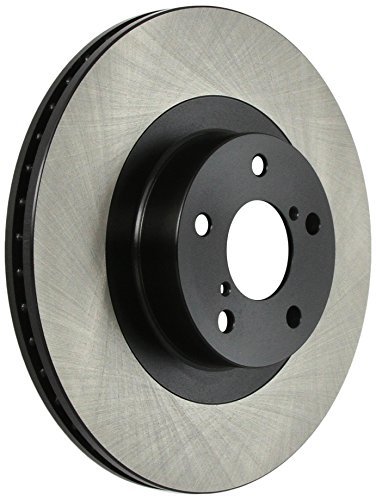 Check Price and Vehicle Fitment |
Main features: Vented cast-iron design; treated hat and edge; double-disc-ground friction surface.
Pros: The protected non-friction areas are helpful where moisture and road salt encourage corrosion. Its plain surface is suitable for routine road use.
Things to consider: Check the listed 5-lug configuration and vehicle-specific fitment.
3. ACDelco 18A816A Silver Front Disc Brake Rotor
This second ACDelco Silver model is another conventional replacement rotor for compatible front-axle applications. It is intended to restore normal braking function when paired with suitable pads and a healthy caliper. Choose between the 18A813A and 18A816A by verified application, not by which looks similar in a photograph.
Technical Features of ACDelco 18A816A Silver Front Disc Brake Rotor
| Feature | Details |
|---|---|
| Part number | 18A816A |
| Design | Front axle; plain, vented rotor; non-coated |
| Compatibility | Vehicle-specific; verify manufacturer fitment catalog |
| Important limitation | This part number cannot be substituted for 18A813A without confirming fitment. |
| Price | 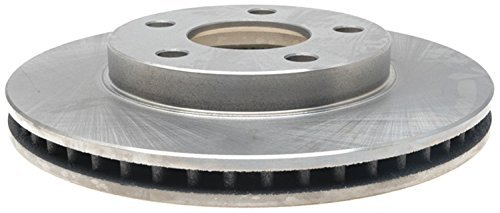 Check Price and Vehicle Fitment |
Main features: Front axle; plain, vented rotor; non-coated.
Pros: A conventional option for vehicles requiring this specific size. GM currently catalogs it as a non-coated Silver front rotor.
Things to consider: This part number cannot be substituted for 18A813A without confirming fitment.
4. DuraGo BR31275 Front Vented Disc Brake Rotor
The DuraGo BR31275 is an aftermarket front vented rotor intended for certain vehicle applications. Ventilation vanes move air through the rotor as it turns, helping manage heat during repeated stops. Its conventional friction surface makes it suited to an everyday replacement when the size and brake package match.
Technical Features of DuraGo BR31275 Front Vented Disc Brake Rotor
| Feature | Details |
|---|---|
| Part number | BR31275 |
| Design | Front vented configuration; machined friction surface; application-specific casting |
| Compatibility | Vehicle-specific; verify manufacturer fitment catalog |
| Important limitation | Match BR31275 exactly; suffixes can identify different rotor versions. |
| Price | 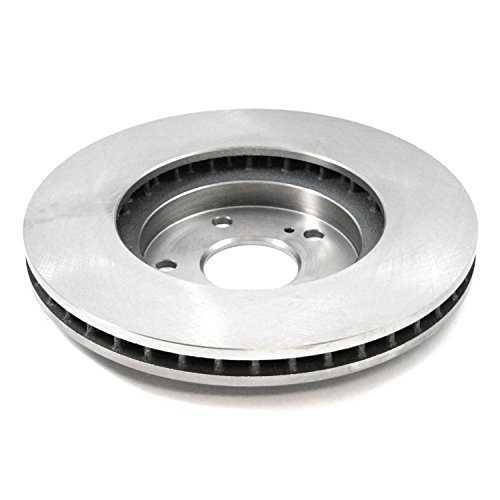 Check Price and Vehicle Fitment |
Main features: Front vented configuration; machined friction surface; application-specific casting.
Pros: Vented construction helps manage heat in compatible front brake systems. It retains a conventional friction surface for normal replacement work.
Things to consider: Match BR31275 exactly; suffixes can identify different rotor versions.
5. ACDelco 18A811A Silver Rear Disc Brake Rotor
The ACDelco 18A811A is a non-coated replacement for certain rear brake systems. Rear rotors can differ substantially from front rotors, including parking-brake hardware and dimensions. Confirm those details before ordering and inspect the rear pads and calipers at the same time.
Technical Features of ACDelco 18A811A Silver Rear Disc Brake Rotor
| Feature | Details |
|---|---|
| Part number | 18A811A |
| Design | Rear brake application; non-coated; replacement-style construction |
| Compatibility | Vehicle-specific; verify manufacturer fitment catalog |
| Important limitation | Rear application only; match the parking-brake design and dimensions. |
| Price | 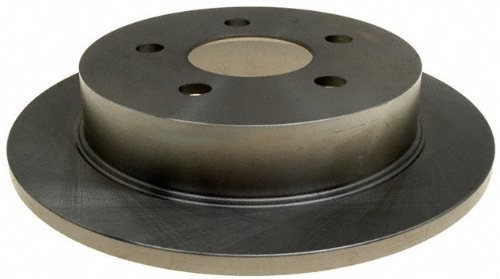 Check Price and Vehicle Fitment |
Main features: Rear brake application; non-coated; replacement-style construction.
Pros: An application-specific rear replacement without paying for cosmetic performance features. It should be evaluated with the rear pads and parking-brake components.
Things to consider: Rear application only; match the parking-brake design and dimensions.
Types of Brake Rotors
Surface design and internal construction are separate choices. A rotor can be both plain and vented: plain describes its smooth braking faces, while vented describes the cooling channels inside it. Drilled and slotted faces can also be used on vented rotors.
Plain or Smooth Rotors
Plain rotors have a continuous friction surface. They are common on factory passenger cars and are often a sensible choice for everyday driving. A quality plain rotor, matched with the correct pads, usually offers dependable braking without the added expense of a performance-oriented design.
Vented Rotors
Vented rotors have internal channels separating two braking faces. As the disc spins, airflow through these channels helps move heat away. Many front brake systems use vented rotors, but some rear systems use solid discs. A solid rotor and vented rotor are not generally interchangeable.
Cross-Drilled Rotors
Cross-drilled rotors have holes through the friction faces. Properly engineered designs can help disperse water and gases and give a sporty appearance. However, drilling changes how stresses spread through the disc, and not every drilled rotor is suitable for repeated extreme-temperature use. Buy only a tested design approved for your application.
Slotted Rotors
Slotted rotors have grooves cut into the friction surface. Slots can help clear water, debris, and worn pad material. Certain performance applications benefit from these features, but slots can also increase pad wear or noise. They are not necessary for most commuters.
How to Choose the Best Brake Rotors
1. Confirm Fitment and Dimensions
Start with the vehicle identification number or the exact year, make, model, trim, engine, and brake package. Compare outside diameter, nominal thickness, center bore, bolt pattern, rotor height, and whether the axle needs a vented or solid rotor. A rotor can look identical in a listing yet be the wrong size. Never force a rotor onto an incompatible hub.
2. Check Material and Coating
Most ordinary replacement rotors are made from cast iron. Some have protective coatings on the hat and outer edge to slow cosmetic corrosion. Coating does not make a rotor permanently rust-proof; exposed friction faces can develop light surface rust after rain or sitting unused. Choose a reputable part with consistent machining rather than assuming a special-looking finish will shorten stopping distance. Fully coated rotors are another option for corrosion-prone climates, but follow their installation instructions: some coatings are designed to wear off the braking faces during initial use.
3. Match Your Driving Conditions
For commuting and highway driving, a suitable OE-style plain rotor is usually a good choice. Towing, mountain driving, and performance use place greater heat demands on the braking system. Follow the vehicle manufacturer’s brake specifications before choosing a different rotor design. Carbon-ceramic systems are specialized, expensive assemblies, not a routine upgrade for ordinary cast-iron brakes.
4. Inspect the Entire Brake System
Even the best brake rotors can develop problems when installed against dirty hub faces, paired with unsuitable or unevenly worn pads, or used with seized caliper slide pins. Ask the installer to inspect pad wear, wheel bearings, caliper movement, mounting hardware, and rotor runout. Pad condition and caliper operation should be evaluated together with the disc.
5. Consider Price and Warranty
Compare the total repair cost, including new pads, any necessary hardware, labor, and possible brake-fluid service. Make sure the listing specifies whether the price is for one rotor or a pair. Read the warranty terms rather than assuming all premium rotors carry lifetime coverage.
Getting the Best Brake Rotors to Work Properly
Have the hub mounting face cleaned and the installed rotor checked for lateral runout using the vehicle’s service limits. Rust or debris trapped behind the rotor can prevent it from sitting flat. Wheel bearings and caliper slide pins should be checked if there is uneven wear or recurring vibration.
Wheel nuts and brake hardware need the specified torque and tightening sequence. Follow the supplied instructions for cleaning new rotors and bedding the pads. Avoid oil or grease on braking surfaces. A coating intended to stay on the rotor should not be removed as though it were shipping oil.
On vehicles with an electronic parking brake, rear brake service may require a manufacturer-specified maintenance mode. Have an installer confirm the procedure before retracting the pistons.
When Should You Replace Brake Rotors?
Brake rotors do not have one universal replacement mileage. They should be inspected at routine service and whenever braking feels unusual. Replace a rotor when its measured thickness reaches the manufacturer’s minimum specification, when it has serious cracking or scoring, or when other defects cannot be safely corrected. Resurfacing is only an option if the manufacturer allows it and the finished rotor meets the specified machining limit with sufficient wear allowance. The machining limit and discard limit can differ; a disc barely above its discard thickness is not automatically suitable for resurfacing.
- Pulsation or steering-wheel vibration under braking: Rotor thickness variation or runout may contribute, but tire, suspension, or hub problems can cause similar symptoms.
- Deep grooves or scoring: These can result from debris or pads worn down to their backing plates. Inspect the pads and calipers too.
- Cracks, blue spots, or severe hot spots: Signs of potential thermal damage call for prompt inspection.
- Below-minimum thickness: Measure with a micrometer at the correct locations; a visual inspection alone is not enough.
- Grinding or poor stopping performance: Have the system inspected promptly. Do not continue driving when braking is compromised.
Should You Replace Brake Pads and Rotors Together?
When installing new rotors, new pads are normally recommended so the friction materials can bed in properly. When only the pads are worn and the existing rotors remain within specification, are free from serious defects, and have an acceptable surface, it may be reasonable to keep the rotors. Replace rotors in axle pairs as recommended for the vehicle, and follow the brake-component manufacturer’s bedding procedure.
Conclusion
The best brake rotors are the ones that match your vehicle, driving conditions, and the rest of its braking system. ACDelco 18A813A, Centric 120.47018, ACDelco 18A816A, DuraGo BR31275, and ACDelco 18A811A offer different application-specific replacement options. None deserves a universal ranking without confirming fitment.
If you drive a typical passenger car, a well-made conventional rotor with correct pads is often all you need. Focus on measurements, reliable manufacturing, and proper installation before paying extra for drilled or slotted designs.
Frequently Asked Questions
1. What are brake rotors?
They are metal discs mounted to the wheel hub. Brake pads press against their surfaces to produce the friction that slows the vehicle.
2. How long do brake rotors last?
Rotor life varies with driving conditions, pad material, corrosion, and maintenance. Use measured thickness and rotor condition rather than a fixed mileage to decide when replacement is needed.
3. What causes a car to shake while braking?
Brake-disc thickness variation or excessive runout can cause pulsation, but worn suspension parts, wheel bearings, or other faults can create similar symptoms. A technician should measure and inspect the system.
4. Are drilled or slotted brake rotors better?
Neither is automatically better for every car. Both may offer specific benefits in tested applications, but a smooth OE-style rotor is often suitable for normal road use.
5. Can I install new brake pads without replacing the rotors?
Often yes, if the existing rotors meet thickness and surface-condition requirements. Replace damaged or under-thickness discs, and inspect both sides of the axle.
6. Should I replace both brake rotors on the same axle?
It is generally recommended to replace rotors as an axle pair to maintain consistent braking characteristics. Follow the vehicle maker’s service guidance.
Brake rotors are an important part of your car’s braking system. They work with the brake pads and calipers to slow your wheels when you press the brake pedal. Worn or damaged rotors can cause vibration, noise, uneven pad wear, and reduced braking confidence. Choosing the best brake rotors starts with proper fitment and sound construction, not simply the highest price.
Russell D. Steele writes trouble-code and repair guides for The Effective Guide. His work helps drivers understand what a code means, what might cause it, and which checks to make first.