
Last Updated on October 15, 2026
If you’re a professional mechanic or a DIYer who regularly works on vehicles, a quality torque wrench should be part of your toolkit. Tightening bolts to the correct specification matters, especially when you’re working on wheels, suspension components, and other important automotive parts.
One torque wrench worth considering is the CDI 2503MFRMH. This 1/2-inch drive tool offers a wide torque range, a straightforward adjustment system, and the kind of construction you’d expect from a wrench intended for professional use.
It’s easy to set, has a readable dual scale, and comes with a metal handle that provides a secure grip. More importantly, it’s designed to deliver repeatable torque measurements when used correctly and kept properly calibrated.
In this CDI Torque Wrench Review, we’ll look closely at the CDI 2503MFRMH, including its specifications, main features, advantages, limitations, and whether it’s the right tool for your garage.
CDI Torque Products has a long association with the Snap-on group and is known for producing precision torque equipment. Its lineup includes mechanical and electronic torque tools for automotive, industrial, and other technical applications.
The CDI 2503MFRMH is one of its micrometer-adjustable click-type torque wrenches. Let’s see what makes it useful and where it may fall short.
Best CDI Torque Wrench Review 2026
If you’re new to torque wrenches or looking for a dependable 1/2-inch drive model, the CDI 2503MFRMH deserves a closer look.
This wrench is designed for tightening fasteners to a specific torque value. Its adjustable micrometer mechanism lets you select the required setting, while the internal click mechanism signals when that torque has been reached.
What makes this model particularly interesting is its dual-direction calibration. Unlike torque wrenches that only measure accurately in the clockwise direction, the CDI 2503MFRMH has specified accuracy ratings for both clockwise and counterclockwise torque applications.
That doesn’t mean you should use it as a breaker bar to loosen stubborn bolts. It’s still a precision measuring instrument, and the tool must be used within its rated range and according to the manufacturer’s instructions.
Technical Features of CDI 2503MFRMH 1/2-Inch Click Torque Wrench
| Feature | CDI 2503MFRMH Specifications |
|---|---|
| Model | CDI 2503MFRMH |
| Drive Size | 1/2 inch |
| Type | Micrometer-adjustable click torque wrench |
| Torque Range | 30–250 ft-lb |
| Metric Scale | 47–332 Nm (manufacturer-specified markings) |
| Adjustment Increment | 1 ft-lb / approximately 1.4 Nm |
| Clockwise Accuracy | ±4% of indicated value |
| Counterclockwise Accuracy | ±6% of indicated value |
| Specified Accuracy Interval | 20%–100% of full scale |
| Overall Length | Approximately 24.4 inches |
| Material | Metal construction |
| Handle | Lightly knurled metal handle |
| Scale | Laser-marked dual scale |
| Ratchet | Fixed-head ratcheting design |
| Locking Mechanism | Spring-loaded pull-down lock ring |
| Torque Indication | Audible and tactile click |
| Calibration Documentation | Individually serialized with NIST-traceable certificate |
| Referenced Standards | ASME B107.14-2004 and ISO 6789 in published product specifications |
| Warranty | Confirm current manufacturer terms and seller coverage before purchasing |
One detail worth noticing is the relationship between the wrench’s adjustment range and its published accuracy specifications.
Although the scale starts at 30 ft-lb, the specified ±4% clockwise and ±6% counterclockwise ratings are stated for 20%–100% of full scale. On a 250 ft-lb wrench, that corresponds to approximately 50–250 ft-lb.
If you regularly work near the lower end of the range and need documented accuracy, consider a smaller-range torque wrench instead.
CDI 2503MFRMH 1/2-Inch Micrometer Adjustable Torque Wrench
The CDI 2503MFRMH is a strong choice for mechanics who want a traditional, heavy-duty torque wrench without relying on batteries or electronic displays.
It has a 1/2-inch square drive, making it suitable for many automotive tasks involving larger fasteners. The 30–250 ft-lb torque range covers a good variety of wheel, suspension, and mechanical applications.
The wrench uses a laser-marked dual scale to help users select their torque settings in foot-pounds or Newton-meters. Its spring-loaded pull-down lock ring helps prevent the adjustment from changing accidentally while working.
The lightly knurled metal handle is another useful feature. It gives your hand a more secure surface to grip, which matters when you’re applying controlled pressure to a fastener.
The click mechanism works in a familiar way. Once the selected torque is reached, you’ll feel a mechanical release and usually hear a click. At that point, stop pulling.
Another advantage is the calibration documentation. The CDI 2503MFRMH is listed with an individually serialized certificate of calibration traceable to NIST. This can be valuable for professional shops that maintain tool calibration records.
However, a calibration certificate doesn’t guarantee permanent accuracy. The tool still needs proper handling, storage, and periodic verification.
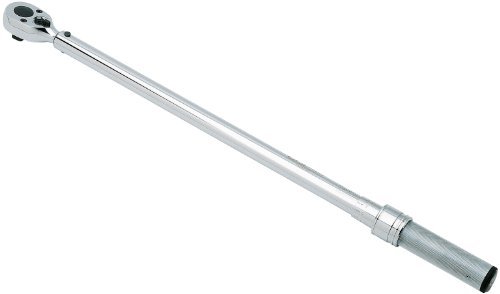
Main Features of CDI 2503MFRMH
- Click-type operation: Provides audible and tactile feedback when the selected torque is reached.
- 1/2-inch square drive: Suitable for many automotive sockets and larger fasteners.
- 30–250 ft-lb range: Covers numerous medium- and higher-torque tightening applications.
- Dual-direction calibration: Provides specified accuracy for clockwise and counterclockwise measurement.
- Laser-marked scale: Helps make torque settings easier to read.
- Knurled metal handle: Offers a secure gripping surface.
- Pull-down lock ring: Helps keep the selected torque setting in place.
- Calibration certificate: Provides documented calibration traceability.
- Protective storage case: Helps protect the tool during storage and transport.
Pros of the CDI 2503MFRMH Torque Wrench
- Rugged construction: Its metal body and handle are designed for regular workshop use.
- Good torque range: Works well for many vehicle repair jobs requiring moderate to high tightening torque.
- Dual-direction capability: A useful advantage when a manufacturer specifies counterclockwise torque measurement.
- Clear adjustment mechanism: The dual scale and lock ring make setting the wrench relatively straightforward.
- Calibration documentation: Individually serialized calibration records are helpful in professional environments.
- No batteries required: The mechanical design doesn’t depend on charging or electronic controls.
- Secure socket handling: The quick-release ratchet arrangement allows convenient socket removal.
Cons of the CDI 2503MFRMH Torque Wrench
- Not ideal for delicate fasteners: Its lower limit and large drive size make it unsuitable for many low-torque applications.
- Relatively long: The approximately 24.4-inch body can be inconvenient in tight engine compartments.
- No digital display: It doesn’t record torque values or provide electronic angle measurements.
- Accuracy varies by direction: Counterclockwise accuracy has a wider tolerance than clockwise accuracy.
- Requires calibration management: Professional use may require regular accuracy verification.
- Higher initial cost: It may cost more than a basic click torque wrench aimed at occasional DIY use.
My verdict: The CDI 2503MFRMH is a capable option for mechanics who need a sturdy, mechanically operated torque wrench with documented calibration and dual-direction measurement. However, its size and working range make it better suited for larger fasteners than delicate or low-torque components.
What Can You Use the CDI 2503MFRMH For?
One reason I like this type of torque wrench is its versatility. A 1/2-inch drive tool with a wide torque range can handle several common jobs around a garage.
Typical applications include:
- Wheel lug nuts: Tightening wheel fasteners to the vehicle manufacturer’s specified torque.
- Suspension components: Working on certain suspension fasteners that fall within the wrench’s rated range.
- Drivetrain components: Tightening specified fasteners during transmission or drivetrain maintenance.
- Automotive engine work: Selected larger engine fasteners requiring controlled tightening.
- Light trucks and equipment: Maintenance jobs where the required torque and access are suitable.
Keep in mind that a torque wrench doesn’t determine the correct torque for you. You still need the manufacturer’s service specifications.
Some fasteners require an initial torque followed by a specific angle, a defined tightening sequence, or replacement with new bolts. These procedures must be followed exactly.
For example, torque-to-yield engine bolts may require an angle gauge and shouldn’t automatically be reused. A click torque wrench alone may not complete the procedure.
How to Use a CDI Torque Wrench Correctly
The CDI 2503MFRMH isn’t difficult to use, but proper technique matters if you want accurate results.
- Check the torque specification. Look up the correct tightening value in the vehicle or equipment manufacturer’s service information.
- Inspect the wrench. Make sure there is no visible damage, unusual resistance, or problem with the adjustment mechanism.
- Unlock the handle. Follow the model’s instructions for releasing the spring-loaded lock ring.
- Set the required torque. Use the appropriate foot-pound or Newton-meter scale and make sure you read it correctly.
- Lock the adjustment. Confirm that the selected value is secured before tightening.
- Fit the correct socket. Use a sound, correctly sized socket that fully engages the fastener.
- Apply steady pressure. Pull smoothly at the intended handle position, without jerking the wrench.
- Stop at the first click. Once the mechanism signals that the selected torque has been reached, stop applying tightening force.
- Store the wrench properly. Return the setting to the manufacturer’s recommended storage position and keep the wrench protected.
Safety Tips for Using a Torque Wrench
Whether you’re a professional mechanic or someone working on a car at home, a few safety precautions can prevent common mistakes.
- Read the instructions supplied with your torque wrench before using it.
- Use the correct torque range and drive size for the job.
- Wear suitable eye protection when working around mechanical components.
- Avoid using damaged sockets or accessories that could slip under load.
- Whenever practical, pull the wrench smoothly rather than pushing it away from your body.
- Keep your hands in the intended gripping area to maintain the correct effective lever length.
- Do not use the wrench beyond its maximum rated torque.
- Stop applying force as soon as the click mechanism activates.
- Do not use a wrench that has been severely dropped, overloaded, or damaged without appropriate inspection or calibration verification.
- Clean and store the wrench properly after use.
Another important point is using socket accessories correctly. An ordinary straight extension generally doesn’t change the effective lever length, but an inline crowfoot or offset adapter may require a torque-setting correction.
Check the adapter manufacturer’s instructions before using offset attachments for precision tightening.
Why Choose a CDI Torque Wrench?
Before buying a CDI torque wrench, it’s worth understanding what separates this brand from more basic options.
Construction
CDI produces torque equipment designed for professional and industrial environments. The 2503MFRMH uses a metal body and a lightly knurled handle that feels appropriate for regular workshop use.
That doesn’t mean the wrench is indestructible. A torque wrench is still a measuring instrument, so it requires more careful handling than an ordinary ratchet.
Drive Size
Different jobs require different drive sizes and torque ranges.
The CDI 2503MFRMH uses a 1/2-inch drive, which is practical for wheel lug nuts and larger automotive fasteners.
If you mainly tighten smaller engine bolts, bicycle components, or delicate assemblies, a 1/4-inch or 3/8-inch drive torque wrench with a lower working range may be more appropriate.
For more options across different price ranges and drive sizes, read our guide to the best torque wrenches for cars and bikes.
Features
One thing that makes the CDI 2503MFRMH appealing is that it focuses on features mechanics genuinely use.
The adjustable micrometer scale, positive lock ring, and dual-direction calibration are practical additions rather than unnecessary extras.
The calibration certificate is also useful, especially in professional workshops where tools may need documented verification.
However, if you need electronic torque recording, angle measurement, or digital alerts, a mechanical click wrench won’t provide those functions.
Grip and Handling
A good grip makes a noticeable difference when using a longer torque wrench.
The CDI 2503MFRMH has a lightly knurled metal handle that helps maintain control during tightening.
Still, keep the handle dry and free of oil. A knurled surface is helpful, but it doesn’t eliminate slipping risks when your hands or tools are contaminated with grease.
Accuracy and Performance
Accuracy is one of the biggest reasons to invest in a quality torque wrench.
The CDI 2503MFRMH is specified at ±4% clockwise and ±6% counterclockwise over the stated portion of its scale.
That makes it suitable for many controlled fastening applications when the required torque, measurement direction, and tolerance fall within its specifications.
However, an accuracy rating isn’t a guarantee that the wrench will remain accurate indefinitely. Calibration condition, user technique, and tool wear all matter.
Price and Value
CDI torque wrenches are often positioned above basic entry-level click wrenches in price.
For a professional mechanic, the extra expense may be worthwhile because of the build quality, calibration documentation, and dual-direction capability.
For someone who only tightens wheel lug nuts occasionally, a less expensive torque wrench may be sufficient.
If you want to compare a more budget-oriented brand, our Tekton torque wrench review covers several other mechanical wrench options.
CDI vs. Tekton Torque Wrench: Which Is Better?
Both CDI and Tekton manufacture torque wrenches, but they’re often considered by different buyers.
CDI is particularly attractive to professional users who value calibration documentation and specific industrial performance ratings.
Tekton appeals to many DIY mechanics who want straightforward tools at a more accessible price.
That doesn’t mean every CDI wrench is automatically more accurate than every Tekton model. Accuracy depends on the specific wrench, its calibration, and its published specifications.
For occasional home maintenance, a suitable Tekton model may be enough. For regular professional use, documented calibration and the CDI 2503MFRMH’s dual-direction capability may justify its higher price.
How to Maintain and Calibrate Your CDI Torque Wrench
Proper maintenance helps protect the wrench’s accuracy and extends its useful life.
After use, wipe off dirt, grease, and moisture. Keep the wrench inside its protective storage case when you’re finished.
For a micrometer click-type wrench, reduce the setting to the manufacturer’s recommended storage position. Do not force the mechanism below its marked minimum setting.
If the wrench has been dropped, overloaded, or exposed to conditions that could affect accuracy, arrange a calibration check before using it for important fastening work.
Professional calibration intervals depend on how frequently the tool is used, its operating environment, and the required measurement tolerance. A yearly check is a common maintenance approach, but it is not a universal rule for every application.
Shops with formal quality procedures may need calibration more frequently or according to a documented tool-management schedule.
Because the CDI 2503MFRMH comes with calibration documentation, keep that certificate and any later calibration records together.
Who Should Buy the CDI 2503MFRMH?
The CDI 2503MFRMH is a good match for:
- Professional automotive technicians who regularly work with 1/2-inch drive sockets.
- Experienced DIY mechanics who want a premium mechanical torque wrench.
- Repair shops that maintain calibration documentation.
- Users who need specified clockwise and counterclockwise torque measurement.
- Mechanics working on fasteners requiring torque within the wrench’s documented accuracy range.
On the other hand, I wouldn’t recommend this as your only torque wrench if most of your work involves small engine bolts or low-torque components.
The large size and 30 ft-lb minimum setting can make it unsuitable for those applications. A smaller-range wrench would be a better companion.
Conclusion: Is the CDI 2503MFRMH Worth Buying?
After looking at its features, specifications, and practical uses, I think the CDI 2503MFRMH remains a strong option for mechanics who want a dependable click-type torque wrench.
It offers a useful 30–250 ft-lb range, a sturdy metal handle, clearly marked adjustment scales, and a positive locking mechanism. The dual-direction calibration and supplied calibration certificate are particularly valuable features.
Its biggest limitations are its relatively large size, higher purchase cost, and the need for regular calibration checks when precision matters.
Before buying, make sure the torque range fits your work and confirm the seller’s current warranty terms. Also check that the supplied tool includes the expected calibration documentation and storage case.
For professional automotive use and frequent higher-torque fastening jobs, the CDI 2503MFRMH deserves consideration. For smaller fasteners or occasional light maintenance, a smaller and less expensive torque wrench may be more practical.
I hope this CDI Torque Wrench Review helps you decide whether this model is suitable for your garage and the repairs you regularly perform.
Frequently Asked Questions About CDI Torque Wrenches
1. What makes the CDI 2503MFRMH torque wrench stand out?
The CDI 2503MFRMH offers a strong metal construction, a micrometer adjustment mechanism, dual-direction calibration, and an individually serialized calibration certificate. These features make it appealing for professional automotive and industrial work.
2. Can the CDI 2503MFRMH measure torque in different units?
Yes. It includes foot-pound and Newton-meter markings, allowing you to select torque settings in either unit. Always confirm the scale before adjusting the wrench.
3. Is the CDI torque wrench suitable for automotive use?
Yes. Its 1/2-inch drive and 30–250 ft-lb range make it useful for many automotive fastening jobs, including selected wheel, suspension, and drivetrain applications. The required torque must fall within the wrench’s rated capabilities.
4. How often should the CDI torque wrench be calibrated?
Calibration frequency depends on use, working conditions, and accuracy requirements. Professional shops should follow their calibration schedule. If the wrench is dropped, overloaded, or shows inconsistent results, have its accuracy checked before further precision work.
5. Does the CDI 2503MFRMH come with a warranty?
Manufacturer warranty coverage should be confirmed with the seller or CDI before purchase. Published reseller information commonly lists a limited manufacturer warranty, but exact coverage and eligibility can vary.
6. Can the CDI 2503MFRMH measure counterclockwise torque?
Yes. This model is specified for both clockwise and counterclockwise torque measurement, with different accuracy ratings for each direction. It should still not be used as a breaker bar for seized fasteners.
Russell D. Steele writes trouble-code and repair guides for The Effective Guide. His work helps drivers understand what a code means, what might cause it, and which checks to make first.