
Last Updated on October 7, 2026
Your car may start, steer, and drive normally even when an airbag warning appears. That makes the light easy to postpone. Unlike an engine problem, an airbag-system fault may not create a sound, vibration, or noticeable change in performance.
But the warning is monitoring one of the vehicle’s most important safety systems. Airbags are part of the Supplemental Restraint System, commonly called SRS. Depending on the vehicle, this system may also include crash sensors, passenger-seat sensors, seat-belt pretensioners, electrical circuits, and a control module.
When the Airbag Warning Light Is ON continuously, the SRS has usually detected a fault or cannot confirm that part of the system is ready. The vehicle may continue operating, but the affected safety components cannot be assumed to function correctly during a collision.
That does not necessarily mean every airbag has failed. It means the warning deserves proper diagnosis instead of being ignored or simply reset.
Quick Answer
If the Airbag Warning Light Is ON after the normal startup check, possible causes include low system voltage, damaged wiring, a passenger-seat sensor problem, a faulty seat-belt buckle or pretensioner, a worn clock spring, a failed impact sensor, an SRS module fault, or an incomplete repair after a previous collision.
The first step is to confirm which warning is illuminated. The main SRS warning light is different from the separate “Passenger Airbag OFF” indicator found in many vehicles.
Is the Light Actually Showing a Fault?
The airbag warning light normally illuminates briefly when the vehicle is switched on. During this period, the system performs a self-check. The exact timing and behavior vary by model, so the owner’s manual should be treated as the final reference.
| What the light does | What it may mean |
|---|---|
| Comes on briefly and then goes out | Normal startup self-test |
| Remains on after startup | Active or stored SRS fault |
| Comes on while driving | A fault was detected during operation |
| Flashes repeatedly | A fault pattern or diagnostic warning |
| Never illuminates at startup | Warning indicator or monitoring fault |
| Only “Passenger Airbag OFF” appears | May be normal depending on occupancy and vehicle design |
Honda’s owner guidance states that an SRS indicator can illuminate for a problem involving the main restraint system, side or curtain airbags, or a seat-belt tensioner. It also recommends service when the indicator remains on or fails to illuminate. Honda Owner’s Guide
A “Passenger Airbag OFF” message is not automatically a malfunction. The passenger sensing system may intentionally deactivate that airbag when the seat is empty or when its conditions for activation are not met. If the status appears incorrect, follow the instructions for that specific vehicle and arrange professional inspection.
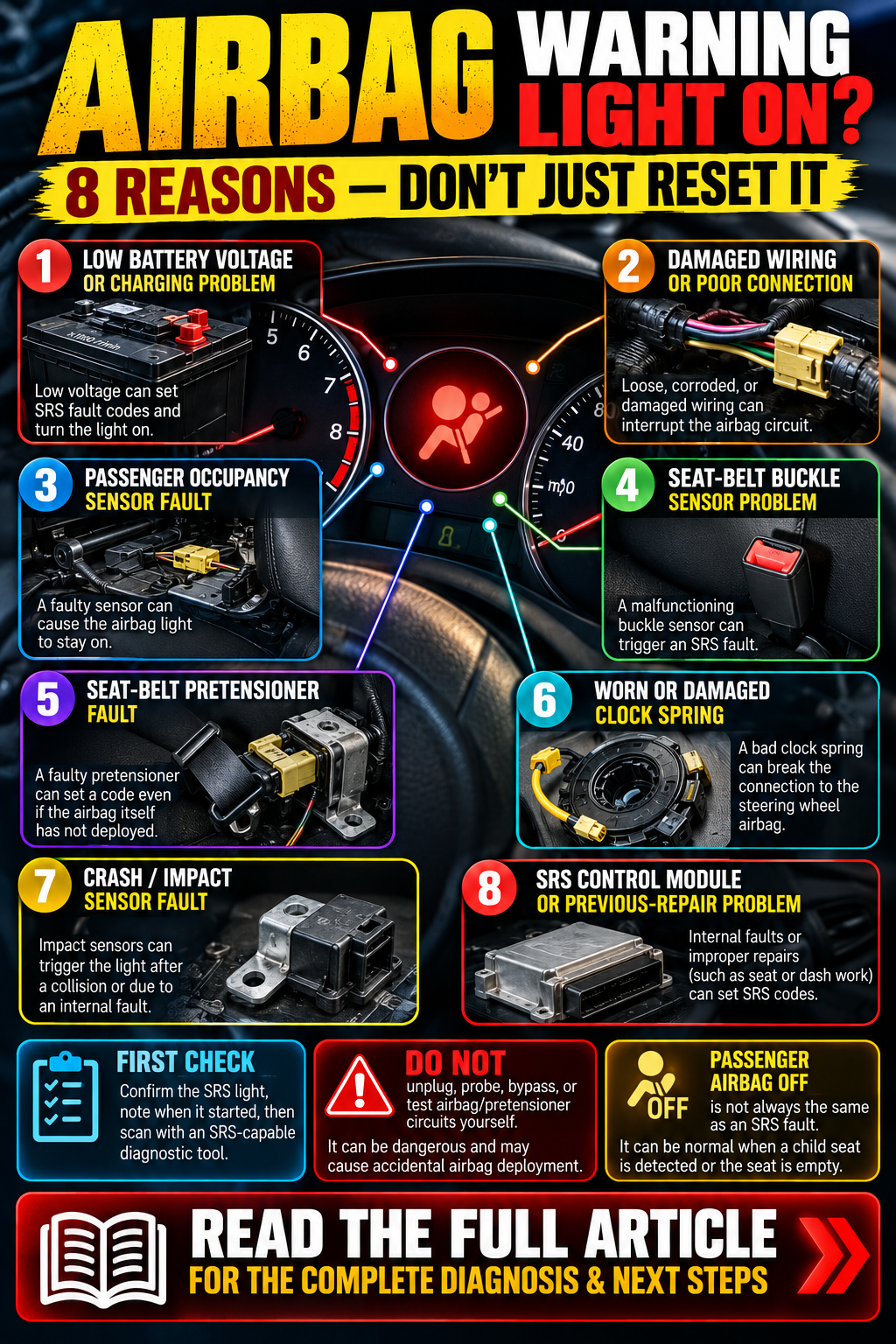
Understanding the SRS Safety Chain
An airbag system depends on a chain of information. It needs stable electrical power, reliable occupant and seat-belt data, an uninterrupted connection to the driver airbag, accurate impact information, and a control module capable of coordinating everything.
A fault anywhere in that chain can turn on the same dashboard warning. This is why the light alone cannot identify the failed part.
The first two possible causes begin in the system’s Power Zone.
The Power Zone
1. Low Battery Voltage or a Recent Charging Problem
The SRS continuously monitors its electrical circuits. In some vehicles, a weak or discharged battery, a charging-system fault, an interrupted power supply, or a significant voltage drop can cause the module to store a low-voltage or communication fault.
The timing offers an important clue. The warning may first appear after the battery went dead, the vehicle required a jump-start, the battery was replaced, or another electrical problem occurred.
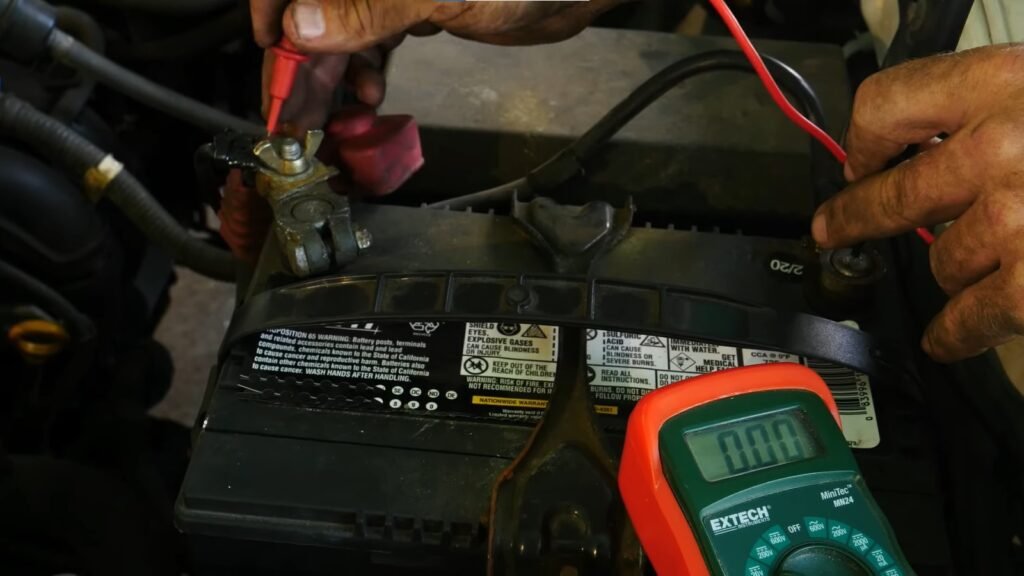
Restoring normal battery voltage does not prove the SRS is ready again. A code may remain stored, or the low-voltage event may have revealed an existing circuit problem. If the warning remains after the charging issue is corrected, the SRS codes should be read with compatible diagnostic equipment.
Do not assume disconnecting the battery will reset the system. It can erase useful information from some modules without repairing the underlying fault.
2. Damaged Wiring or a Poor Electrical Connection
The SRS connects airbags, seat components, pretensioners, sensors, and the control module through a network of wiring. A damaged wire, poor terminal connection, corrosion, or interrupted circuit can prevent the module from confirming that a component is available.
The warning may appear after a seat was moved, interior work was completed, water entered the cabin, or an accessory was installed. Wiring beneath the front seats is particularly vulnerable to movement and interference, but the fault may exist elsewhere in the vehicle.
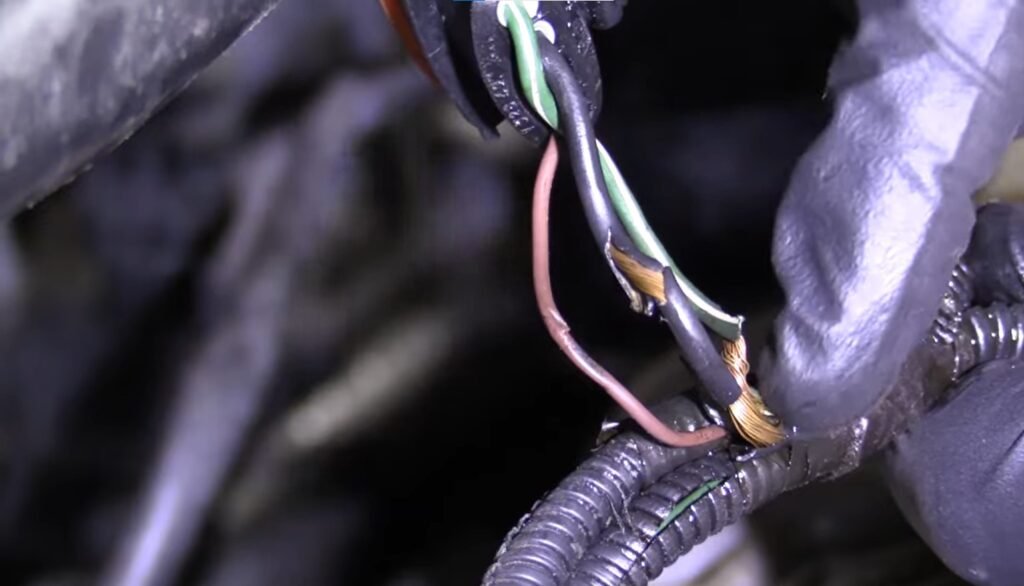
If the Airbag Warning Light Is ON after recent interior or electrical work, tell the technician exactly what changed and when the light first appeared. That history can shorten the diagnostic process.
Do not unplug, probe, bypass, or attempt to repair SRS connectors yourself. Airbags and seat-belt pretensioners require model-specific safety procedures and trained handling. Ford’s owner guidance similarly advises against attempting to service a passenger-sensing or airbag-readiness fault yourself. Ford Owner’s Manual
The Occupant Zone
The next three causes involve the information collected around the seats and seat belts. These components help the SRS determine who is occupying a seat, whether the person is restrained, and which safety devices should be available.
3. A Faulty Passenger Occupancy Sensor
Many modern vehicles use sensors inside or around the front passenger seat to estimate whether the seat is occupied. The system uses that information when deciding whether the passenger airbag should be active.
A damaged sensor, calibration problem, disturbed seat wiring, liquid intrusion, or previous seat repair can produce data the SRS considers unreliable. Depending on the vehicle, the main SRS warning and the passenger-airbag status indicator may illuminate together.
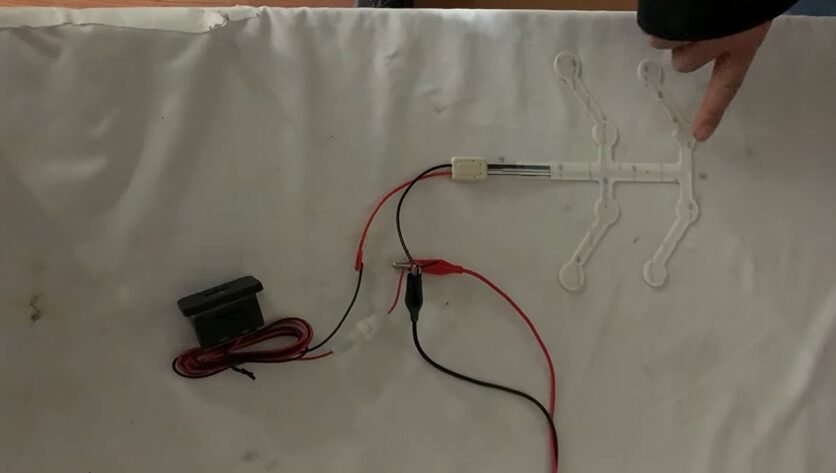
If the Airbag Warning Light Is ON and the passenger-airbag status appears incorrect, avoid guessing based only on whether someone is sitting in the seat. A technician may need to retrieve occupant-classification codes and verify the sensor’s calibration.
Seat replacement, upholstery work, or objects interfering with the seat can provide useful diagnostic clues. Honda documentation confirms that a seat-position sensor problem can activate the SRS indicator. Honda Airbag Guide
4. A Seat-Belt Buckle Sensor Problem
The seat-belt buckle may contain a switch that reports whether the belt is fastened. If that signal is missing, inconsistent, or outside its expected range, the SRS can record a fault.
A buckle sensor issue may appear with a seat-belt reminder that behaves incorrectly, but the two warnings are not interchangeable. The seat-belt reminder tells an occupant to buckle up, while the SRS warning indicates that the restraint system has detected a malfunction.
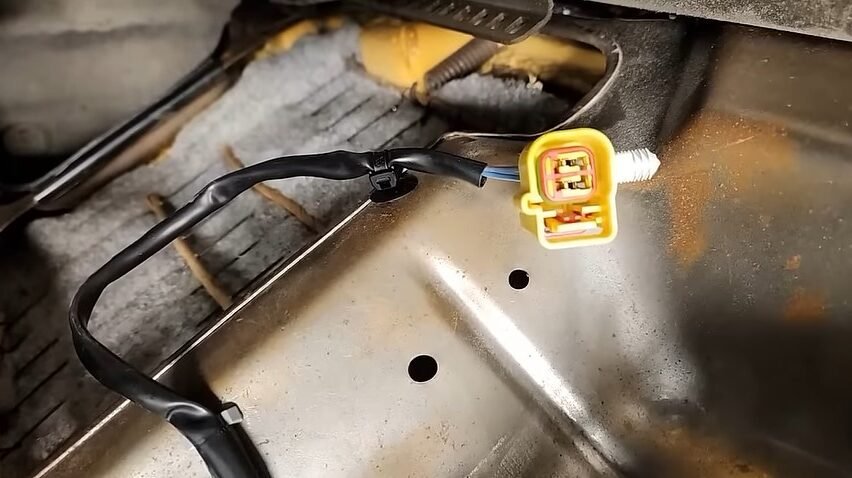
The fault may be inside the buckle, wiring, or connector circuit. The code must be read before the buckle is blamed, since replacing it without confirming the circuit could waste money.
5. A Seat-Belt Pretensioner Fault
Pretensioners are safety components designed to tighten the seat belt during certain collisions. Because they work as part of the SRS, the control module monitors their electrical circuits.
A pretensioner-related warning can result from circuit damage, corrosion, previous collision activation, or an incomplete seat-belt repair. The seat belt may still click into place normally even when the monitored pretensioner circuit has a fault.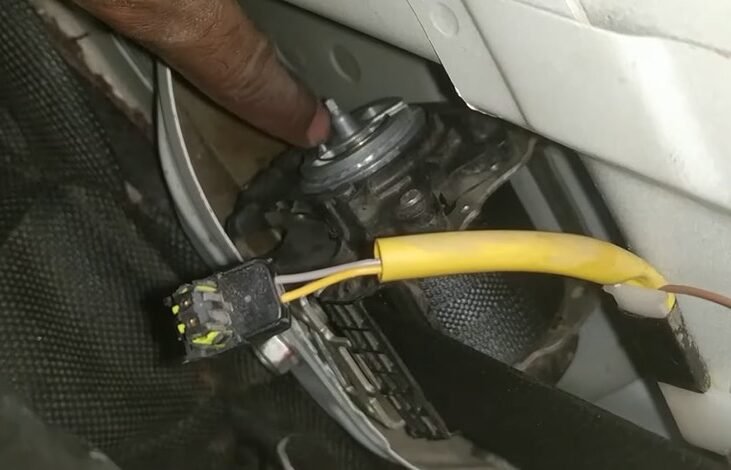
This is why a functioning buckle does not prove the entire restraint system is healthy. Pretensioners require professional diagnosis and should never be bypassed or tested using improvised methods.
The Steering Zone
6. A Worn or Damaged Clock Spring
The driver airbag is mounted in the steering wheel, which must rotate while maintaining an electrical connection with the vehicle. A flexible component called the clock spring allows that communication to continue as the wheel turns.
Repeated steering movement can eventually damage the internal ribbon circuit. If continuity to the driver airbag is interrupted, the SRS module may illuminate the warning light.
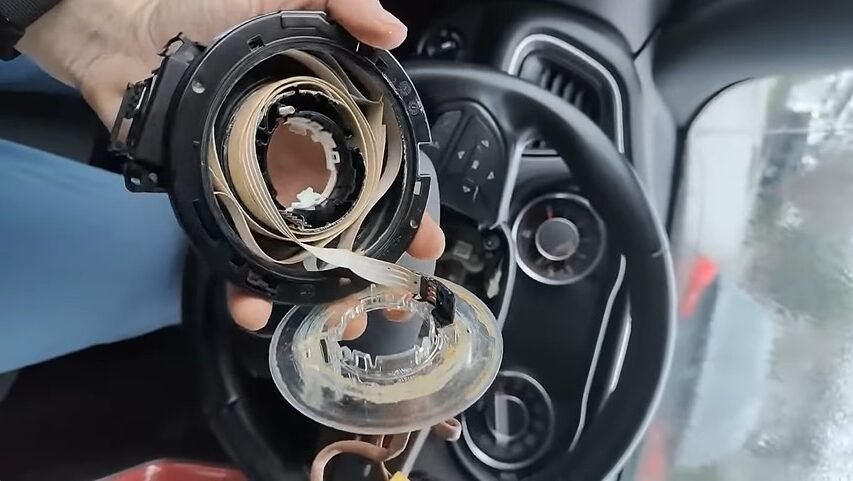
A clock-spring problem can sometimes affect the horn, cruise-control switches, or steering-wheel buttons. These additional symptoms strengthen the suspicion, especially if they change as the steering wheel turns. However, normal horn and button operation does not completely rule it out.
Because diagnosis involves the steering wheel and driver airbag, this is not an appropriate area for casual DIY inspection.
The Crash-Control Zone
7. A Crash or Impact Sensor Fault
Crash sensors provide information the SRS control module uses when evaluating a collision. A failed sensor, damaged circuit, corrosion, communication error, or previous impact can cause the module to question the signal and turn on the warning light.
The light does not necessarily mean an airbag has deployed. It may simply mean the system cannot confirm that a sensor or its circuit is operating correctly.
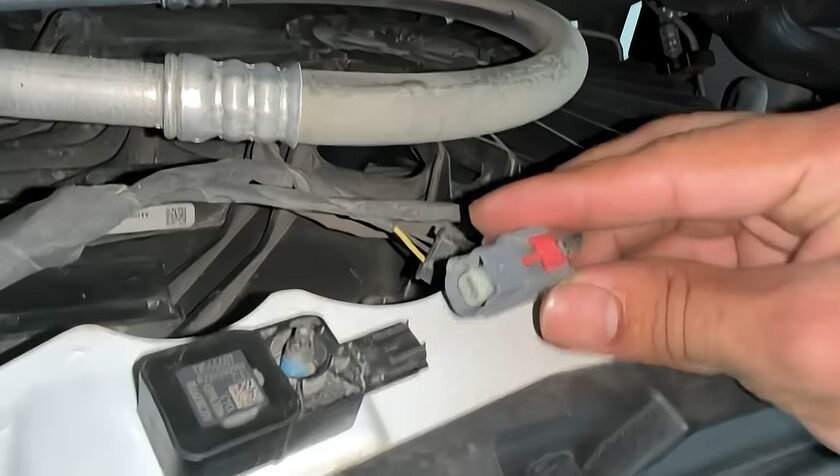
A minor collision can still be relevant even when there is little visible body damage. Tell the technician about recent impacts, bumper repairs, water exposure, or body work so the related circuits can be checked.
8. An SRS Control Module or Previous-Repair Problem
The SRS control module monitors the system, records diagnostic codes, and coordinates restraint-system decisions. Internal failure, damaged wiring, network communication loss, corrosion, or water intrusion can prevent it from completing its self-check.
Collision history is another important clue. After a crash, airbags or pretensioners may have activated, the module may contain collision-related information, or replacement components may not have been installed and configured correctly. A warning can also appear after used seats, steering components, or restraint parts are fitted without the required vehicle-specific procedures.
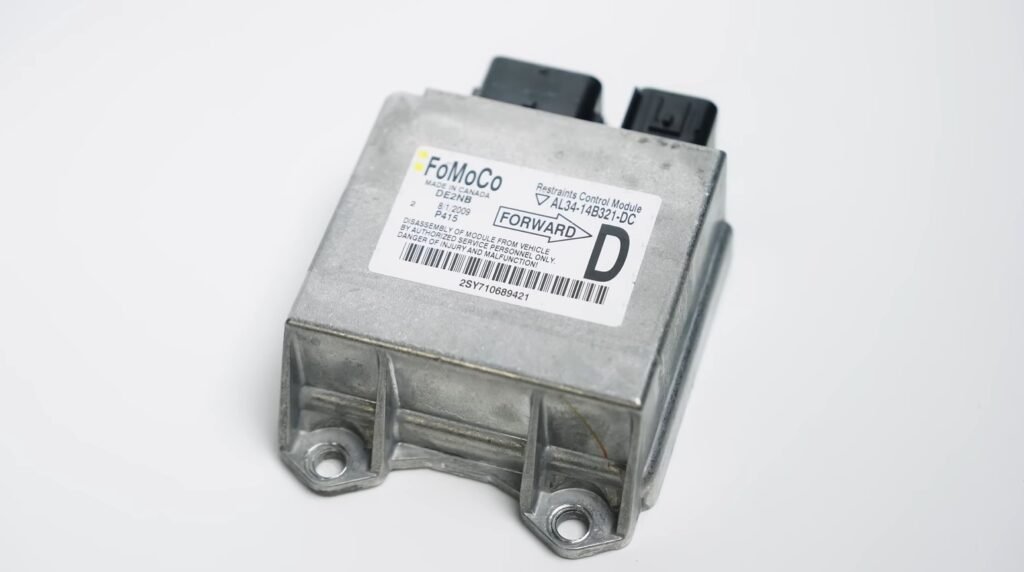
When the Airbag Warning Light Is ON in a used or previously damaged vehicle, do not accept a simple code reset as proof that the system has been restored. The repair history and installed safety components should be verified.
NHTSA advises that airbags used in a crash must be replaced, and US drivers should also check the vehicle’s VIN for open safety recalls. NHTSA Airbag Safety Information
What These Six Causes Have in Common
A seat sensor, buckle switch, pretensioner, clock spring, crash sensor, and control module can all activate the same dashboard warning. The light identifies the affected safety system—not the exact failed part.
The next step is therefore not to buy the most commonly blamed component. Part 3 explains what to do first, how a professional diagnosis narrows down the fault, whether the vehicle should be driven, and why simply clearing the warning is not a repair.
What Should You Do First?
When the Airbag Warning Light Is ON, first observe whether it stays illuminated, flashes, appears while driving, or fails to illuminate during startup. Also note whether the warning began after a dead battery, seat adjustment, interior work, water exposure, or collision repair.
Check the owner’s manual to confirm the symbol and distinguish the main SRS warning from the separate passenger-airbag status indicator. US vehicle owners should also enter their VIN into the official NHTSA recall lookup, since safety-recall instructions take priority over general advice.
Next, arrange an SRS-capable diagnostic scan. A basic engine-code reader may not communicate with the airbag control module.
How the Problem Is Diagnosed
A qualified technician reads the SRS trouble codes and checks the circuit or component identified by the system. Diagnosis may include reviewing voltage history, occupant-sensor data, restraint-system circuits, communication faults, and previous collision information.
The code should guide testing, not automatically authorize parts replacement. For example, a passenger-sensor code could result from the sensor, calibration, wiring, or module communication.
Do not disconnect, probe, bypass, or place test equipment on airbag or pretensioner circuits. These components require vehicle-specific safety procedures.
Can You Drive With the Warning Light On?
The vehicle may continue driving normally, but its collision protection cannot be assumed to operate as designed. When the Airbag Warning Light Is ON, arrange diagnosis as soon as possible and limit unnecessary driving until the cause is known.
If the light appeared after a collision, multiple electrical warnings are present, or an active recall carries a “Do Not Drive” instruction, follow the manufacturer or NHTSA guidance immediately.
Why Resetting the Light Is Not a Repair
Clearing an SRS code does not repair damaged wiring, a failed sensor, an activated pretensioner, or a faulty control module. An active fault will usually return, while temporarily hiding the warning can create false confidence.
The light should be cleared only after the underlying problem has been repaired and the system has completed its required checks.
Frequently Asked Questions
Does the warning mean every airbag is disabled?
Not necessarily. The effect depends on the stored fault, but proper deployment of the affected system cannot be guaranteed.
Is “Passenger Airbag OFF” always a fault?
No. It may be normal when the seat is empty or under conditions described in the owner’s manual. It requires attention when its behavior does not match the seating situation or appears with the main SRS warning.
Can a weak battery trigger the light?
A low-voltage event can store SRS faults in some vehicles. If the warning remains after the battery or charging problem is corrected, the system still needs diagnosis.
Final Thoughts
The eight common causes are low voltage, wiring damage, an occupancy-sensor fault, a buckle-sensor problem, a pretensioner fault, a worn clock spring, a crash-sensor fault, and an SRS module or previous-repair problem.
If the Airbag Warning Light Is ON, do not assume the airbags are ready simply because the car drives normally. Identify the SRS code, verify the root cause, complete the correct repair, and confirm that the warning passes its normal startup self-test.
Kevin Nicholas is an automotive mechanic and editor of The Effective Guide. He writes about warning lights, car problems, and diagnostic tools, helping drivers understand what to check before replacing a part.