
Last Updated on October 15, 2026
Dealing with mice inside your home can be frustrating. They get into food packages, chew through stored materials, and leave droppings in places where you least expect them. Finding a mouse in your kitchen or pantry is enough to make anyone want the problem solved quickly.
The good news is that you don’t always need to call a pest control professional for a small mouse problem. With the right trap, careful placement, and a little patience, you may be able to handle it yourself.
One brand worth considering is d-CON. It offers different rodent control products, including covered mouse traps designed to make trapping and disposal less unpleasant.
In this D-con Mouse Trap Review, we’ll look at the popular No View, No Touch Covered Mouse Trap, its features, advantages, limitations, and how to use it correctly.
We’ll also explain what makes covered snap traps different from traditional traps and why proper placement matters just as much as the product you choose.
If you’re comparing traps with rodenticide products, our guide to rat and mouse poison options explains other approaches to rodent control. However, a non-poison snap trap is often a practical starting point for a manageable mouse problem indoors.
[toc]
Best D-con Mouse Trap Review 2026
Are you tired of seeing signs of mice around your house? The d-CON No View, No Touch Covered Mouse Trap is designed for homeowners who want a straightforward way to catch mice without having to look directly at the trapped animal.
Unlike an ordinary exposed snap trap, the d-CON covered design keeps most of the trapping mechanism enclosed. You add bait, twist the trap into its set position, and place it where mice are likely to travel.
When the trap catches a mouse, an indicator helps you identify its status. You can then dispose of the entire trap without opening it.
This covered design is especially useful for people who dislike handling traditional snap traps. However, it doesn’t make the trap completely risk-free, and it doesn’t eliminate the need for hygiene precautions.
d-CON No View, No Touch Covered Mouse Trap (Our Top Pick)
The d-CON No View, No Touch Covered Mouse Trap is one of the brand’s most recognizable trapping products.
Its enclosed housing is the main attraction. Rather than leaving the trapped mouse exposed, the trap is designed to conceal it inside the housing.
That makes disposal less unpleasant for homeowners who prefer not to see or handle a dead mouse.
The trap also has a simple twist-to-set mechanism. Instead of manually pulling back an exposed metal bar, you turn the upper portion of the trap until it locks into the ready position.
Once set, it can be positioned near walls, behind appliances where safely accessible, or along other routes where mouse activity has been noticed.
Another advantage is that the snap trap doesn’t require chemical poison. You provide a small amount of food bait, such as peanut butter, and the mechanical trap does the rest.
However, this particular No View, No Touch trap is not designed for reuse. After it catches a mouse, the manufacturer’s instructions direct users to dispose of the entire unit.
Technical Features of d-CON No View, No Touch Covered Mouse Trap
| Feature | Description |
|---|---|
| Brand | d-CON |
| Product | No View, No Touch Covered Mouse Trap |
| Trap Type | Covered mechanical snap trap |
| Target Pest | House mice |
| Setting Mechanism | Twist-to-set design |
| Housing | Covered enclosure with mouse entrance |
| Trap Indicator | Indicates set and mouse-caught positions |
| Bait | User-added food bait, such as peanut butter or cheese |
| Rodenticide | No chemical rodenticide used in the snap-trap mechanism |
| Reusable | No; dispose of the entire trap after a catch |
| Recommended Environment | Indoor locations specified on the product label |
| Disposal | Dispose of the enclosed trap and mouse together |
| Children and Pets | Keep inaccessible; covered design does not remove all hazards |
The exact package dimensions and number of traps depend on the retail configuration. Check the current product listing before ordering.
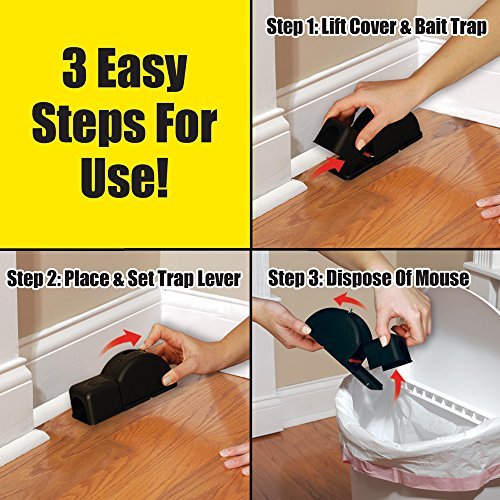
Major Features
- Covered snap trap: Conceals the trapped mouse inside the housing.
- Easy setting: Uses a twist mechanism instead of an exposed spring-loaded bar.
- Mouse-caught indicator: Helps show when the trap has been activated.
- Simple baiting: Accepts a small amount of food bait.
- Disposable design: The entire trap is discarded after catching a mouse.
- Compact shape: Can be positioned along indoor mouse travel routes.
Pros
- Easy to set up by following the printed instructions.
- Conceals the trapped mouse from view.
- Reduces the need to directly handle a dead mouse.
- Doesn’t require chemical poison for trapping.
- Useful in kitchens, pantries, bathrooms, and other appropriate indoor spaces.
- Built-in indicator makes checking the trap more convenient.
Cons
- Single-use design creates more waste than reusable snap traps.
- Requires a new trap after each successful catch.
- May be less economical during a large infestation.
- The trap still needs to be kept away from children and pets.
- Not intended to solve rat infestations or larger rodent problems.
My verdict: The d-CON No View, No Touch trap is a good option for homeowners who want a cleaner-looking mouse control solution and prefer not to handle the animal after capture. Its main drawback is the cost of replacing the entire trap every time it catches a mouse.
Important Safety Features and Limitations
The covered housing is one reason people choose this trap over a traditional exposed snap trap.
It reduces access to the internal mechanism and helps keep the dead mouse out of sight. However, it should not be described as completely safe around children or pets.
There are still a few precautions worth following:
- Keep it out of reach: Place the trap where children and pets cannot investigate or move it.
- Don’t put fingers inside: Never reach into the entrance or attempt to inspect the mechanism while set.
- Follow the label: Use the trap only in locations and conditions covered by its instructions.
- Check it frequently: Prompt disposal helps limit odors and unnecessary contact with rodents.
- Wear gloves: Use protective gloves when handling a trap containing a dead mouse.
- Wash your hands: Follow appropriate hygiene practices after handling traps or cleaning rodent activity.
Even though this trap doesn’t use chemical rodenticide, it is still a mechanical device capable of causing injury if handled carelessly.
d-CON No View, No Touch Covered Mouse Traps — Multi-Pack Option
If you’re dealing with mouse activity in more than one room, buying several covered traps may be more convenient than purchasing a single unit.
d-CON has offered its No View, No Touch design in different pack sizes. The trapping mechanism is generally the same, but the number of included traps can vary by listing.
A multi-pack allows you to place traps in several likely travel areas instead of constantly moving one trap around.
For example, you may have evidence of mouse activity behind the refrigerator, under the sink, and near a pantry wall. Placing separate traps in appropriate locations lets you monitor these areas at the same time.
Just remember that having more traps doesn’t guarantee a faster solution. Their location, the mouse’s travel route, and the availability of other food sources all affect results.
Technical Features of d-CON Covered Mouse Trap Multi-Pack
| Feature | Description |
|---|---|
| Brand | d-CON |
| Product Type | Covered mouse snap traps |
| Packaging | Multi-trap retail configuration; verify current quantity |
| Target Pest | Mice |
| Setting Method | Twist-to-set |
| Baiting | Add a small amount of suitable food bait |
| Trap Housing | Enclosed design |
| Indicator | Shows trap status |
| Reusable | No; each trap is disposed of after a catch |
| Use | Indoor mouse control |
| Disposal | Entire trap discarded after capture |
| Safety | Keep inaccessible to children and pets |
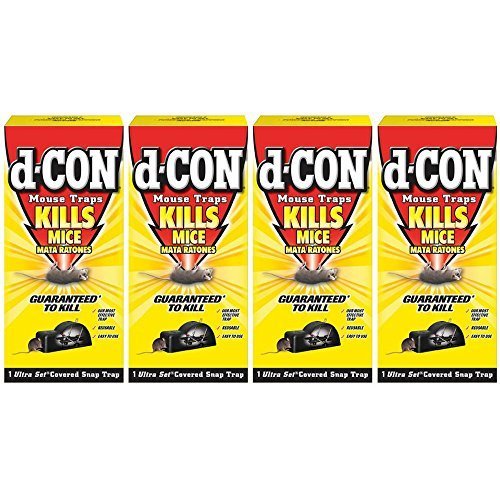
Major Features
- Several traps available in one purchase.
- Covered housing conceals trapped mice.
- Convenient twist-setting mechanism.
- Suitable for placing in multiple indoor areas.
- Each trap can be discarded without opening it.
Pros
- Convenient when activity is found in different rooms.
- Less need to relocate the same trap repeatedly.
- Allows several mouse travel routes to be monitored.
- Simple setting and disposal process.
- May offer better per-trap value than some single-unit purchases.
Cons
- All traps are still single-use.
- Large infestations can require frequent replacement.
- Doesn’t eliminate the need to seal entry points.
- Pack quantities and prices differ between sellers.
My verdict: The multi-pack makes more sense if you already know that mice are active in several places. If you’re only dealing with an occasional mouse, a smaller pack may be enough.
How to Use the d-CON Mouse Trap
Setting the d-CON No View, No Touch Covered Mouse Trap is fairly straightforward. The most important thing is to follow the exact instructions printed on your packaging.
Step 1: Add the Bait
Turn the trap over and locate the bait compartment on the bottom.
Peel back the small self-adhesive label and apply a small amount of bait, such as peanut butter or cheese, to the designated bait area.
Reseal the label properly before turning the trap back over.
A large amount of bait isn’t necessary. Too much can make a mess or interfere with proper placement.
Step 2: Set the Trap
Hold the base of the trap horizontally. Twist the upper cover clockwise in the direction indicated by the arrow until it locks.
When correctly set, the red indicator should appear in the opening labeled “Set,” and the mouse entrance should open.
Keep your fingers away from the opening and follow the manufacturer’s handling instructions.
Step 3: Choose the Right Location
Place the trap gently on a hard, level surface near a wall or another location where mouse activity has been observed.
Mice often travel along edges rather than crossing open spaces, so placement near their normal routes can improve your chances of catching one.
The product instructions recommend using multiple traps approximately 4–6 feet apart in areas where mice are active or suspected.
Choose locations inaccessible to children and pets, and don’t put traps where they could contaminate food preparation surfaces.
Step 4: Check the Trap Regularly
Check the indicator frequently without opening the trap.
When the entryway closes and the red indicator appears at “Mouse Caught,” the trap has been activated.
Handle it carefully and avoid unnecessary contact with any rodent waste.
Step 5: Dispose of the Trap
The manufacturer instructs users to dispose of the entire trap after catching a mouse.
Wear gloves and follow safe rodent disposal procedures. Do not attempt to open the trap and reuse it.
If the trap activates accidentally without catching a mouse, the instructions allow the setting process to be repeated.
That is different from reusing a trap after a successful catch.
How to Dispose of a Dead Mouse Safely
Even though the d-CON covered trap reduces the need to see or touch the mouse, you should still treat disposal as a hygiene task.
Rodents can carry germs, and their urine and droppings may contaminate nearby surfaces.
For safe cleanup:
- Put on rubber or plastic gloves before handling the trap or contaminated materials.
- Follow the CDC’s disinfecting precautions for dead rodents and the surrounding area. Use an appropriate disinfectant and follow its contact-time instructions.
- Place the used trap and enclosed mouse into a plastic bag and seal it.
- Put the sealed bag inside a second plastic bag and seal that as well.
- Dispose of the bags in a covered garbage container according to local disposal rules.
- Clean nearby contaminated surfaces using an appropriate disinfectant.
- Wash your gloved hands before removing the gloves, then wash your hands thoroughly with soap and water.
Don’t sweep or vacuum dry mouse droppings before disinfecting them. This can release contaminated particles into the air.
If you discover heavy contamination, large amounts of nesting material, or rodent activity inside ventilation systems, professional cleaning may be the safer option.
Where Should You Place Mouse Traps for Better Results?
Proper placement is one of the most important parts of mouse control.
A good trap placed in the wrong area may sit untouched for days, even when mice are present in the house.
Start by identifying signs of activity, such as droppings, gnaw marks, damaged food packaging, or nesting material.
Then consider these locations:
- Along walls: Mice frequently use wall edges and concealed routes.
- Behind kitchen appliances: These areas may provide warmth, food scraps, and shelter.
- Under sinks: Plumbing openings can sometimes create access routes.
- Near pantry storage: Look for damaged packaging or droppings, but keep traps away from exposed food.
- Near suspected entry points: Place traps safely along established mouse routes.
- Inside suitable utility areas: Storage rooms and enclosed spaces can attract rodents when food or nesting material is available.
Avoid putting traps in open spaces simply because they’re easy to see. Mouse activity is often concentrated near walls, corners, and hidden routes.
If traps aren’t catching anything, review the placement and look for additional signs of activity rather than assuming the problem has disappeared.
Different Types of Mouse Traps
There are several types of traps available, and each has advantages and disadvantages.
1. Electronic Mouse Traps
Electronic mouse traps use batteries or another approved power source to deliver an electric shock to a mouse after it enters the trap.
Some models use an enclosed chamber to reduce visibility of the captured animal.
They can be convenient, but they cost more than many traditional snap traps and require proper maintenance. They also need to be kept inaccessible to children and pets.
2. Rodenticide Bait Stations
Rodenticide bait stations are different from mechanical mouse traps.
Instead of capturing the animal, they contain a poison bait that rodents consume. The active ingredient, product label, and bait-station design determine how the product should be used.
These products can present hazards to children, pets, wildlife, and other non-target animals if used incorrectly.
If you’re considering this approach, our Tomcat rodent bait review discusses another category of mouse and rat control products.
Always follow current product labeling and local regulations when using rodenticides.
3. Traditional Snap Mouse Traps
Traditional snap traps have been used for many years. They typically use a spring-loaded bar or jaw that activates when the mouse disturbs the trigger.
These traps are relatively inexpensive and many models can be cleaned and reused.
The main disadvantage is that the captured mouse is usually exposed, meaning disposal can be unpleasant.
Covered models such as the d-CON No View, No Touch trap are designed to reduce that problem.
4. Multiple-Catch Mouse Traps
Multiple-catch traps are designed to capture more than one mouse before the unit needs attention.
Some are live-capture designs, while others use different trapping mechanisms.
If you’re considering a live-capture trap, check local regulations and animal welfare guidance. Captured mice require prompt attention, and releasing them doesn’t necessarily prevent them from returning.
5. Glue Mouse Traps
Glue boards use a sticky adhesive to immobilize rodents that walk across the surface.
Although they’re sold for rodent control, glue traps raise significant animal welfare concerns because captured animals can remain alive and distressed for prolonged periods.
They can also trap non-target animals. For these reasons, I would generally choose a properly placed snap trap instead of a glue board for home mouse control.
d-CON Covered Mouse Trap vs. Traditional Snap Trap
Both trap types rely on a mechanical capture method, but they’re designed for different user preferences.
| Feature | d-CON Covered Trap | Traditional Snap Trap |
|---|---|---|
| Mechanism | Enclosed snap mechanism | Usually exposed spring-loaded mechanism |
| Visibility of Mouse | Mostly concealed | Usually visible |
| Reuse | Not intended for reuse after a catch | Many models are reusable |
| Disposal | Discard entire trap | Remove mouse and clean trap if reusable |
| Bait | User-added food bait | User-added food bait |
| Running Cost | Replacement trap needed after each catch | Can be lower with reusable models |
| Safety | Covered mechanism; still requires precautions | Exposed mechanism; requires precautions |
If you’re uncomfortable seeing or handling a mouse, the covered d-CON trap is an appealing choice.
If you expect to catch several mice and don’t mind cleaning reusable equipment properly, a traditional snap trap may be more economical over time.
How to Prevent Mice From Coming Back
Trapping mice is only one part of controlling a rodent problem. If the animals can still enter your house and find food, the problem may return.
For long-term prevention, focus on these steps:
- Seal entry points: Look for small gaps around pipes, utility lines, doors, and wall openings.
- Store food securely: Use sealed containers for cereals, grains, pet food, and other attractive food sources.
- Manage trash: Keep garbage in containers with tight-fitting lids.
- Clean food debris: Pay attention to areas behind appliances and under cabinets.
- Reduce clutter: Remove unnecessary cardboard, stored fabric, and other potential nesting materials.
- Check for recurring activity: Continue monitoring areas where droppings or damage were previously discovered.
Remember that mice can squeeze through surprisingly small openings. Sealing entry points is often more effective for long-term prevention than relying on traps alone.
If you continue finding fresh droppings, damaged food packages, or evidence of nesting after repeated trapping, consider having a qualified pest control professional inspect the property.
Are d-CON Mouse Traps Safe for Children and Pets?
The covered design reduces direct access to the trapping mechanism compared with many exposed snap traps.
However, reduced access doesn’t mean zero risk.
A curious child or pet may still move, bite, open, or otherwise interfere with a trap. The safest approach is to place traps in areas they cannot reach.
Never assume that a product described as child-resistant or safer than traditional traps is completely childproof or pet-proof.
Also, don’t confuse a covered mechanical trap with a poison bait station. These products work differently and require different handling precautions.
Environmental and Non-Target Safety
One advantage of a mechanical snap trap is that it doesn’t need rodenticide to kill mice.
That can help homeowners avoid some of the concerns associated with chemical rodent control products, including accidental exposure and risks to non-target wildlife.
However, mechanical traps can still injure non-target animals if placed carelessly.
Covered traps reduce access to the internal mechanism, but placement remains important.
It’s also worth considering waste. Because the d-CON No View, No Touch Covered Mouse Trap is single-use, each successful catch requires disposal of the entire unit.
Reusable snap traps may create less solid waste over time, provided they are cleaned and maintained safely.
Common Problems With d-CON Covered Mouse Traps
The Trap Isn’t Catching Any Mice
First, check whether you’ve placed it along an active mouse route. Look for droppings, gnaw marks, or evidence of recent movement.
Make sure the trap is set correctly and contains a small amount of appropriate bait.
Also, reduce other accessible food sources. If mice have plenty of food elsewhere, they may not investigate the trap.
The Trap Activates Without Catching a Mouse
An accidental trigger can happen.
Check the trap’s status indicator without reaching into the opening. If it hasn’t caught a mouse, follow the manufacturer’s instructions for resetting it.
If the mechanism is damaged or doesn’t operate normally, replace the trap rather than attempting an unsafe repair.
The Bait Isn’t Being Eaten
Try reviewing the bait amount and location.
A small amount of peanut butter is commonly used because it adheres to the bait compartment.
Don’t overload the bait area or place food outside the designated compartment.
Mice Keep Appearing After Trapping
This usually means the underlying rodent problem hasn’t been fully addressed.
Check for additional entry points, food sources, and nesting areas. Continued activity may require more extensive control measures or professional help.
Conclusion: Is the d-CON Mouse Trap Worth Buying?
After looking at its design, features, and limitations, I think the d-CON No View, No Touch Covered Mouse Trap is a practical option for homeowners who want a simple way to deal with occasional mice.
The enclosed design is its biggest advantage. You can set the trap, monitor its indicator, and dispose of the unit without having to open it and remove the dead mouse.
It’s also easy to operate once you understand the twist-to-set mechanism.
However, the trap isn’t reusable after a catch, and replacement costs can add up during a larger infestation. It also needs to be handled carefully and kept inaccessible to children and pets.
For someone dealing with occasional mouse activity inside the house, it offers a convenient alternative to exposed snap traps.
For a more serious infestation, I would combine appropriate trapping with thorough cleaning, sealing entry points, and professional help when necessary.
I hope this D-con Mouse Trap Review helps you decide whether the covered design is the right choice for your home.
Frequently Asked Questions About d-CON Mouse Traps
1. How does the d-CON No View, No Touch Mouse Trap work?
It uses a covered snap mechanism. You add bait, twist the trap into the set position, and place it where mice are active. When a mouse enters and triggers the mechanism, the trap captures it inside the housing. A status indicator helps show when a mouse has been caught.
2. Is the d-CON Mouse Trap safe around children and pets?
The covered housing reduces direct access to the mechanism, but the trap isn’t completely risk-free. Keep it in locations inaccessible to children and pets and follow the manufacturer’s safety instructions.
3. What bait should I use in a d-CON covered mouse trap?
A small amount of peanut butter or cheese can be placed in the designated bait compartment. Follow the instructions on your specific package and avoid overfilling the bait area.
4. How do I dispose of a d-CON Mouse Trap after catching a mouse?
Wear gloves, follow appropriate disinfecting precautions, and dispose of the entire trap without opening it. Double-bagging the used trap and placing it in a covered garbage container is consistent with CDC rodent disposal guidance.
5. Can the d-CON No View, No Touch Mouse Trap be reused?
No. The manufacturer’s directions specifically state that this covered trap is not intended for reuse after catching a mouse. An accidentally triggered empty trap may be reset according to the instructions, but a trap containing a captured mouse should be discarded.
6. Can the d-CON covered trap catch rats?
This product is designed for mice. Rats are generally larger and may require a different trap specifically rated for rat control. Always choose a device intended for the rodent you’re dealing with.
Kevin Nicholas is an automotive mechanic and editor of The Effective Guide. He writes about warning lights, car problems, and diagnostic tools, helping drivers understand what to check before replacing a part.
3 thoughts on “D-con Mouse Trap Review 2026”
The new commercial that you have running is not in good taste. I do not like the one were there are two mice in the kitchen and one is serving food to the other and he eats it off the plate and drops dead. Every time I see it, it makes me think, Why are they having mice acting like they are human beings in the kitchen and cooking a meal and then the one gets served poison. I think it is in bad taste. I wish the company would take it off the air.
I have used you new bait traps and the mice/rats don’t eat the bait but chew on the out side of the trap. I like the old bait that was pellets, corn and seeds, it actually worked. I will not be buying any more of your product.
Lowes sells your trap i get one mouse out of 10 sets,that tells me your traps do not work! I GONE BACK TO vICTORY tRAPS WITH THE METAL FLAP INSTEAD OF YELLOW PLASTIC.